
Irish Examiner 24th December, 1924.

Photo: EO’D
A sailing vessel with a cargo of coal bound from Kinvara was wrecked on the rocks in Galway Bay during the gale yesterday. The crew escaped without injury and the cargo was saved.
Posts and Podcasts
Irish Examiner 24th December, 1924.
A sailing vessel with a cargo of coal bound from Kinvara was wrecked on the rocks in Galway Bay during the gale yesterday. The crew escaped without injury and the cargo was saved.
Irish Examiner 1st July, 1876 p.5
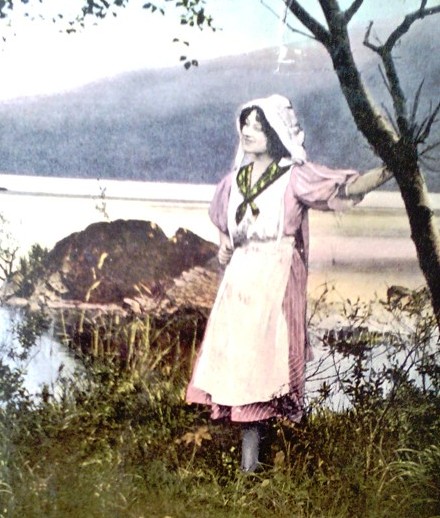
I toast I give – a health I pledge
Here’s to the girls of Galway!
May sorrow blunt its pointed edge
For them, the girls of Galway!
The fleet of foot – the sweet of smile
The warm of heart – the free from guile
Oh, the genuine daughters of the Isle
Are they, the girls of Galway!
Should you a token ask, by which
You’ll know the girls of Galway
Whom grade and beauty most enrich
These are the girls of Galway!
Descended from the noble race
Of Celt and Spaniard, you can trace
Their lineage in each speaking face
Of the dark-eyed girls of Galway!
Dianas in the hunting field
Are they, the girls of Galway!
‘Gainst craven fear their hearts are steeled
Courageous girls of Galway!
And yet no Amazons are they,
But loving, soft and womanly.
Who can withstand their witchery
The lovely girls of Galway?
With more than Andalusian pride
Step out the girls of Galway!
Oh, ‘mid a thousand else beside,
I’d know the girls of Galway!
Where Pleasure holds her festive sway
No eye so bright, no laugh so gay,
No wit so sparkling in its play
As theirs, the girls of Galway!
Impulsive, open as the day,
Are they, the girls of Galway!
Possessed of every generous trait,
Are they, the girls of Galway!
And naught ignoble, base, or mean,
Finds place where every act’s a queen,
Their very “faults to virtue loan”
The high souled girls of Galway!
Then may they proudly flourish long,
The graceful girls of Galway!
The theme of poetry and song,
The peerless of Galway!
Oh, you may search from Pole to Pole,
Ere you can find the perfect whole
Of charms unique and generous soul
To march the girls of Galway!
A toast I give – a health I pledge
Here’s to the girls of Galway!
May sorrow blunt its pointed edge
For them, the girls of Galway!
The fleet of foot, the sweet of smile
The warm of heart, the free from guile
Oh, the genuine daughters of the Isle
Are they the girls of Galway!
A. McC
Connacht Tribune 16th July, 1910 p.10
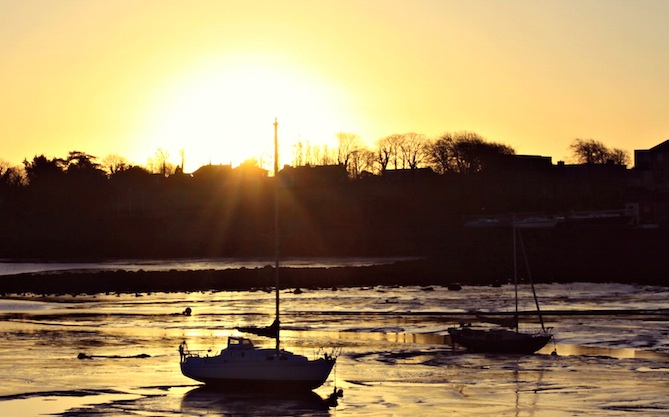
Mr Duffy asked the Chief Secretary whether he was aware that seizures for rent have taken place with the past week in the town of Kinvara; whether the Sharpe estate, on which the seizures have taken place, is at present being sold to the agricultural tenants; and whether he will advise the Estates Commissioners to include the Town Tenants in the general settlement of the property:
Mr Birrell:
I am informed by the police authorities that seizures for rent were made last week in the case of two publicans in Kinvara. The Estates Commissioners cannot identify the estate referred to in the question as pending for sale before them.
The Connacht Tribune, 23rd April, 1910 p.3
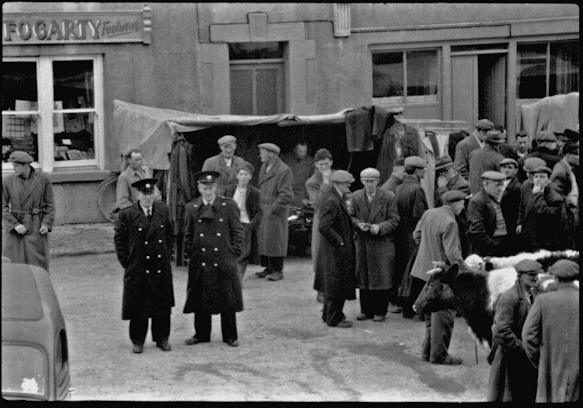
SHARPE ESTATE STRUGGLE – KINVARA’S RALLY ROUND NATIONAL STANDARD
Magnificent monster meeting – other estates involved in the fight
Not for many a year has such a display of enthusiasm been witnessed in Kinvara as that which characterised the monster meeting held on Sunday last under the auspices of the United Irish League and of the Town Tenant’s League. It was as if the town of the Auld Plaid Shawl had suddenly thrown off the lethargy that has hung over it for the past decade, and once again taken its proper place in the agitation for a people’s rights, and as if her sons had girded on their armour and taken their position in the fighting race of this nation.
more details on theburrenandbeyond.com
Connacht Tribune 4th April, 1953 p.21
The Tostal Committee for Kinvara have arranged the following events for the Tostal:
Sunday, April, 12th:
Gaelic football match between Kinvara and Bellharbour;
Juvenile sports;
Tostal dance and fancy dress parade in Kinvara New Hall.
Sunday, April, 19th:
Seven-a-side hurling competition;
During the week ended Saturday, April, 18th, a dance will be staged.
Connacht Tribune 25th April, 1969 p.1
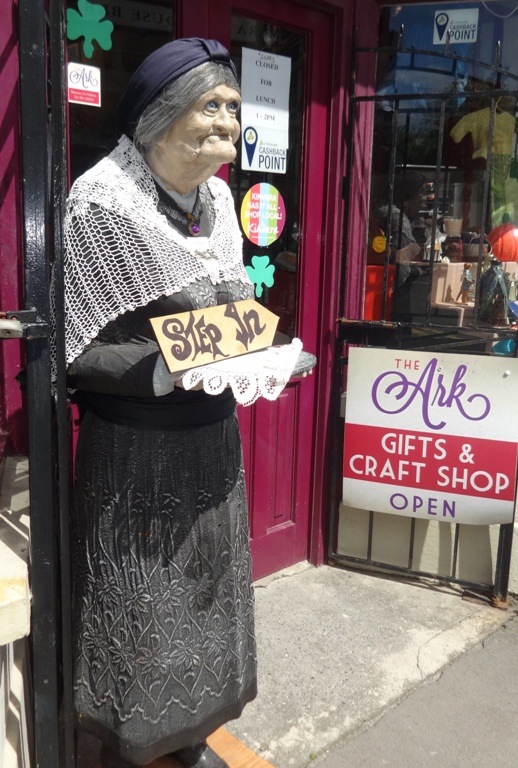
The Kinvara Handcraft Co-Operative have begun to make preparations for temporary display rooms in Main Street, Kinvara, in the shop of Mrs. Forde. In order to exhibit the large number of hand-knit garments which they have now for sale they will use these rooms until the new building is completed at The Square. North American buyers are expected to visit the display soon.
Connacht Tribune, 7th May, 1910 p.5
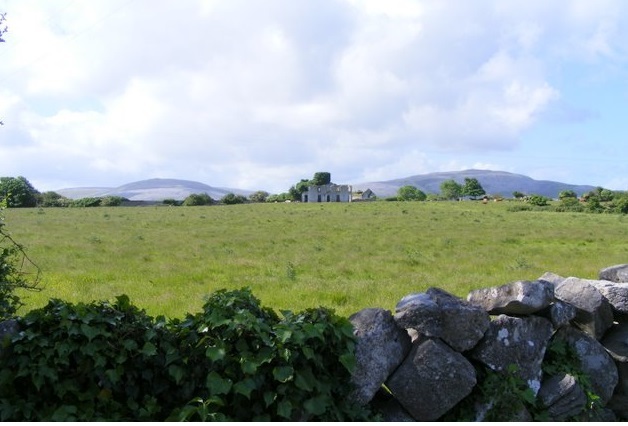
(Air: “Ireland, Boys, Hurrah!”)
On through Kinvara town they came,
Those men so loyal and brave,
Each a trusty Irishman;
No traitor, coward or knave –
To drive the grazier’s cattle back
To Cloughalalard that day,
From good old Duras, brave old Duras,
Duras, boys, hurrah!
Chorus
Duras, boys, hurrah! Duras, boys, hurrah!
Here’s to Duras! Brave old Duras!
Duras, boys, hurrah!
Like men of grit they bonded all
To join the cattle-drives;
For all there loved their homes as dear,
Or dearer than their lives.
They loved their country’s glory, too,
And the light of freedom’s day,
In fond old Duras! Brave old Duras!
Duras, boys, hurrah!
Chorus
We’ve heard their praises oft before;
Yes, even from their foes.
We know that nought can check them now,
When once they’ve boldly rose.
Then grazier, grabber, tyrant all,
Make haste to clear away
From grand old Duras! Brave old Duras!
Duras, boys, hurrah!
Chorus
A lovely sea-bound Duras,
And her land so fair and green,
Where peaceful hamlets one time rose
The graziers’ cows are seen.
Dismantled homes bear witness there
Of black eviction’s sway,
In brave old Duras! Lovely Duras!
Duras, boys, hurrah!
Chorus
The West’s awake, the West’s awake,
Thank God that news is true,
From North to South, from East to West
And with a vengeance to.
Oh! with a vengeance in their hearts
For wrongs of many a day,
In brave old Duras! Wronged old Duras!
Duras, boys, hurrah!
Chorus
Those men from Geeha, north and south,
Knockaculleen and Newtown,
From Traught, from Cluish and Cregboy,
All would their lives lay down,
To keep the children of their hearts
From sailing far away,
From dear old Duras, brave old Duras!
Duras, boys, hurrah!
Chorus
Then here’s to Duras once again,
Here’s to her o’er and o’er.
May Heaven protect her in her need
And its gifts upon her pour.
Long may her gallant children live
In freedom’s glorious ray.
In brave old Duras! whipping Duras!
Duras, boys, hurray!
Chorus
BRIDGET BRUEN, KINVARA
Irish Independent 23rd July 1908 P.9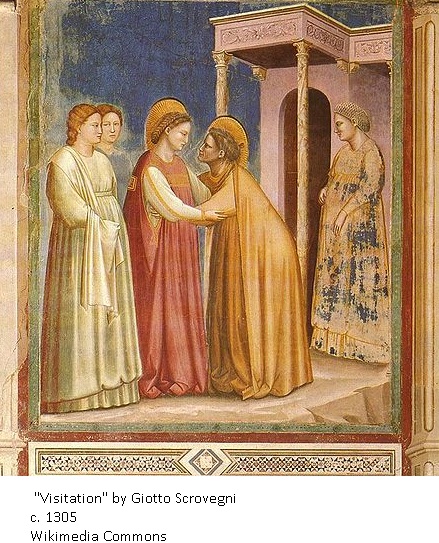
The Board of Guardians of Gort Union will, at their meeting on Saturday, the 1st day of August, appoint a Midwife for the Kinvara Dispensary District, at a salary of £40 per annum.
The person appointed most possess qualifications in Medicine and Surgery, as well as in Midwifery, and must reside in the Town of Kinvara.
Applications, accompanied by copies (only) of testimonials to be lodged with me by 12 o’clock noon on the above date.
Myles J. Burke
Clerk of Union
Clerk’s Office, 18th July, 1908
Connacht Tribune 17th October 1969 p 29

On the invitation of Lady C. Ampthill, Dunguaire Castle, the Athenry Players travelled there on Saturday night and staged a one act play, “Riders to the Sea” for Lady Ampthill and friends. This was followed by a short concert. The production was very favourably received.
Irish Independent 5th January, 1959 p.8 (abridged)
Mr. Kieran Moylan N.T., Kinvara, has many memories and mementoes of a versatile and full career as a teacher, entertainer and businessman. Among his most prized souvenirs is a little book entitled “My Village in Ireland.” It was written by two young people from New York, Sonia and Tim Gidal of Mount Vernon, and was published in New York. What makes it appeal especially to Mr. Moylan is the fact that on a flyleaf is a personal dedication of the book to him by the two authors: “our friend and constant source of information in gratitude for his unwavering co-operation.”
The book is one of a series specially written to bring before American youth a true picture of the life, customs and manners of the young people of other lands. In this particular book, an Irish boy, Patrick, tells in simple language the story of his home, school, work and play – in other words, a complete picture of life in the Irish countryside.
For their view of a typical Irish countryside the authors chose Kinvara, one of the loveliest stretches of countryside we have. They wrote about the children, the postman, the Parish Priest, Mr. Moylan in his school, the potato diggers in the field, fowl keeping, turf-cutting. etc.
During their stay they received invaluable assistance from Mr. Moylan, one of the county’s best known characters. An authority on the area, he is a prominent contributor to pantomime. His accordion is a land-mark (if I may put it that way) and no festive occasion in the whole area would be considered complete without Kieran and his music.
 The Burren and Beyond