Posted in Posts and podcasts

Kinvara – 1922

Connacht Tribune 1922 (abridged)
Photo: EO'D
Photo: EO’D

Official I.R.A. Galway, issued the following on Monday evening;
Having received information at Galway that post offices were being raided at Kinvara and Ardrahan, five men under Captain Farrelly O’Rourke were dispatched to Kinvara by Motor. Upon arrival they were told that the raiders had left in the direction of Gort. The official party pursued them hotly, and on reaching Gort, were told that the men had gone into the barracks. These men wore uniforms and carried arms, and their names were given to the Official I.R.A. party at Kinvara. Subsequently a man left the barracks, was pursued, and escaped. A sum of one pound ten shillings was taken from Kinvara Post Office.
Posted in Posts and podcasts

Newtownlynch, Duras – 1910

Connacht Tribune 7th May, 1910 p.5  (abridged)

Photo: Pikaluk Wikimedia Commons
Photo: Pikaluk
Wikimedia Commons

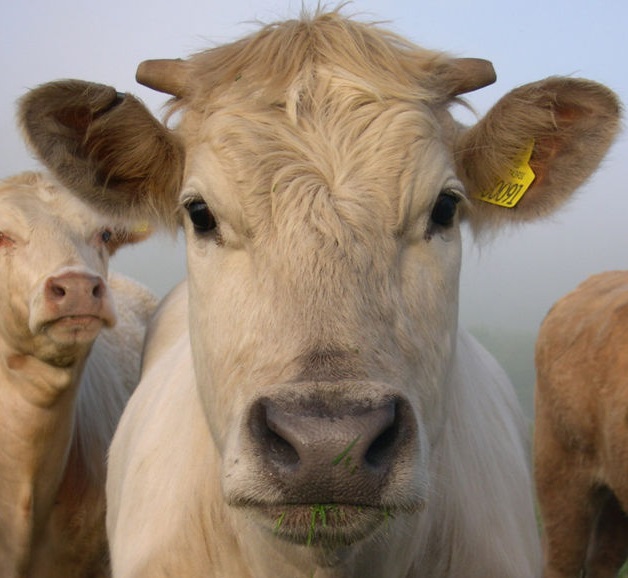
On Monday morning last at about 8 o’clock, Newtownlynch farm at Duras was the scene of a large cattle drive. Men, women and children, all tenants on the estate of Major Lynch, assembled to the number of over one hundred, and went to the farm, which was guarded by police. When the police saw the people coming towards the farm they advanced and called on the crowd not to enter the lands, but they were met with defiant shouts of “No surrender!” While the police were engaged with the people on the road, a number of men managed to get on the lands, and drove a large number of horses, cattle and sheep off the farm. The police in another portion of the farm who were guarding the stock during the night, apparently were asleep, and were only awakened by the noise of the cattle. The farm was cleared with the exception of three horses.

The police called on them to stop and drew their revolvers. The men replied with shouts of “Faugh-a-ballagh,” and “We will drive them to h___.” Some of the police then started for Kinvara for reinforcements. The “drive” continued in the direction of Kinvara en route for Clarenbridge, where the owner of the stock resides. Large numbers joined the “drive” on the road. Sergeant Mulligan, in charge of a cordon of police, attempted to stop the stock within one and a half miles of Kinvara, but failed.

Posted in Posts and podcasts

Kinvara – 1951

Connacht tribune 28th April, 1951 p.7

MAin Street Kinvara
Kinvara – Cresswell archives

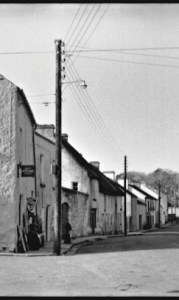
In the Dáil last week Mr. R. Lahiffe asked the Minister for Industry and Commerce what were the reasons for the delay in bringing rural electrification to Kinvara. The Minister stated that a canvass of the area had not met with sufficient response to make the scheme financially sound. He understood, he stated, that a local committee was endeavouring the increase the number of potential consumers and he could give no assurance as to when electricity would be brought to that area.

Posted in Posts and podcasts

W.S.O’Brien – Corcomroe – 1857

Connaught Telegraph 14th October, 1857 p.3 (abridged)

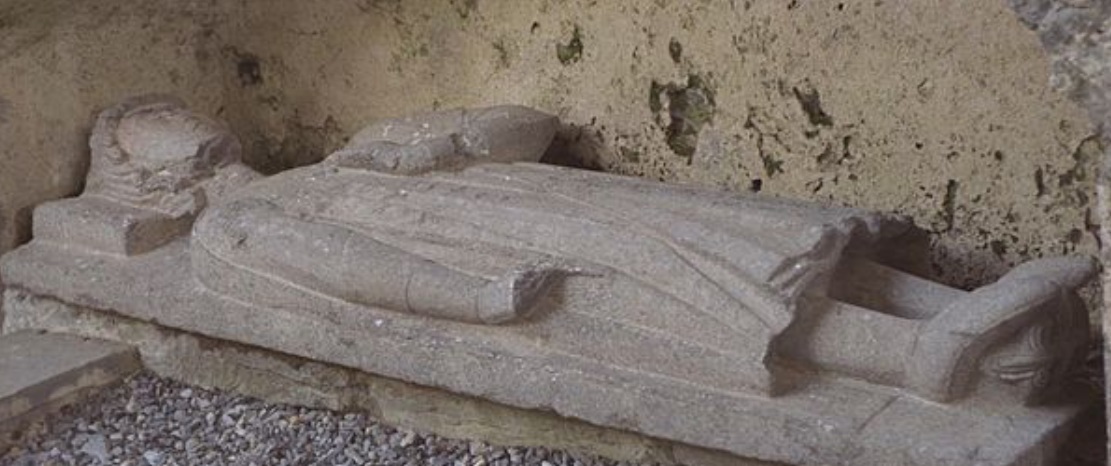
Effigy King Conor O Brien, Corcomroe Abbey Photo: Andreas F. Borchert Wikimedia Commons
Effigy King Conor O Brien, Corcomroe Abbey
Photo: Andreas F. Borchert
Wikimedia Commons

On Monday, W.S.O’Brien Esq., arrived in Ballyvaughan from St. Catherine’s and drove on to see the ruins of the Abbey of Corcomroe in which lies a stone figure of one Connor O’Brien,  a monk in the monastery about 600 years ago.  After Mr. O’Brien returned in the evening, he proceeded to Lisonaid. A number of people lighted tar barrels and the unusual accompaniment was presented of a canoe or currough on fire to welcome him to his native county. Mr. O’Brien came out, and having briefly thanked the people for their reception of him the crowd dispersed and returned homewards, cheering so lustily that the distant sounds might be heard through the valley of Gleneraga, and even to the old Castle of Glenenagh.
Munster news.

Posted in Posts and podcasts

Kinvara hero – 1952

Connacht Tribune 27th March, 1954 p.19

Photo: EO'D
Photo: EO’D

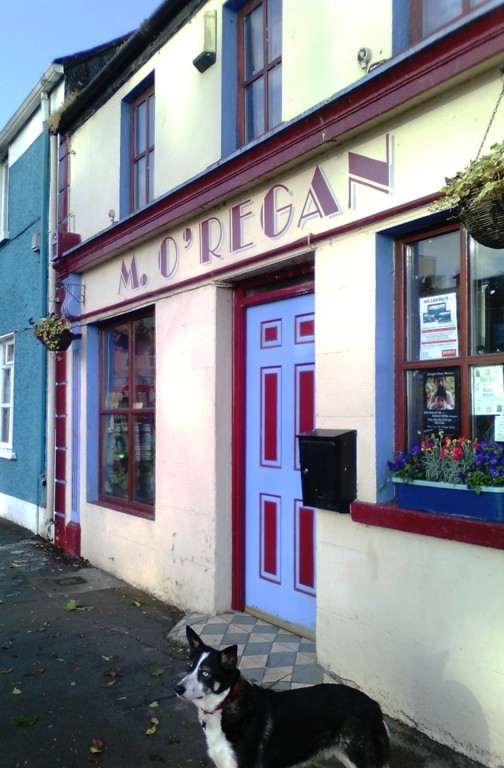
The rescue of a three year old girl from drowning at the Quay, Kinvara, Co. Galway on September, 2nd 1952, was recalled at Galway Court on Thursday when Justice T.G. Burke presented to Kevin O’Regan (18) of Kinvara, a certificate for bravery on behalf of Comhairle na Mire Gaile.
The citation stated that at 6.30 p.m. on September, 2nd, 1952, a little girl, who was playing with another child at The Quay, Kinvara, fell into the sea.
Mr O’Regan, who was working nearby, dived fully clothed into the water, swam about five yards, and caught the child who was then sinking. He swam back with the child, carried her up on the quay, and with the assistance of his sister, applied artificial respiration until the child recovered consciousness.
The sea, concluded the citation, was fairly rough at the time and the tide was ebbing. The water was nine feet deep with a drop of six feed from the quay to water level.
Justice Burke congratulated Mr O’Regan on his brave rescue. It gave him great pleasure, he said, to present the award.
He is son of Mr M O’Regan, Merchant, Kinvara, and is a prominent member of the Kinvara hurling and football teams.

Posted in Posts and podcasts

Kinvara – October – 1916

Tuam Herald 7th October, 1916. p.4

Stormy weather, Kinvara Photo: EO'D
Stormy weather, Kinvara
Photo: EO’D

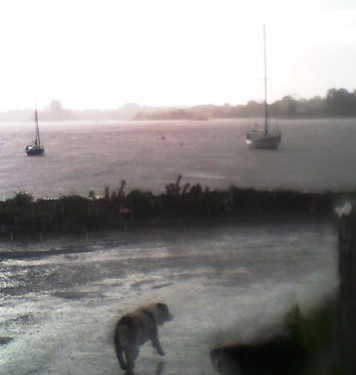
A severe storm raged over Kinvara on Monday night, blowing off some slates, window shutters, and upset through the country cocks of hay, corn etc.

Posted in Posts and podcasts

The Electric Telegraph – 1851

Tuam Herald 22nd November, 1851 p3.

Kinvara Quay Photo: EO'D
Kinvara Quay
Photo: EO’D

The Electric Telegraph
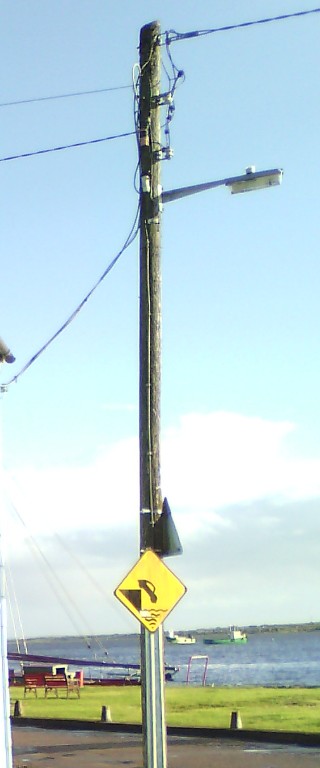
The Pocket states that the Midland Great Western Railway Company have made arrangements for the immediate erection of the electric telegraph wires between Dublin and Galway. The work will be done without a moment’s delay, and it is hoped that the telegraphic communication will be completed before the arrival of the first trial steamer from America.

Posted in Posts and podcasts

Kinvara – 1920

Connacht Tribune 19th June, 1920

The Quay, Kinvara Photo: TO'D
The Quay, Kinvara
Photo: TO’D

Village invaded
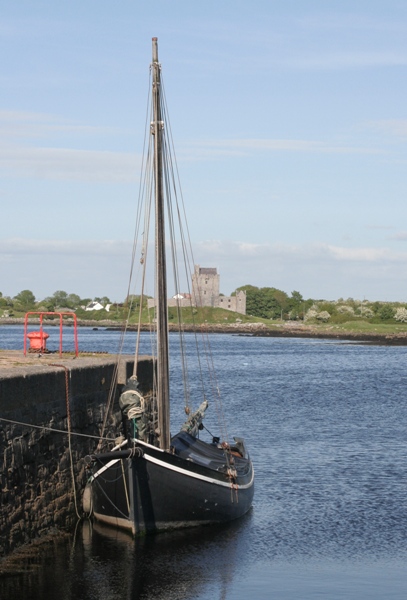
On Sunday night Kinvara was invaded by a crowd from Kiltartan and Ardrahan returning from the Belharbour sports who kicked up a noise that the people were in fear and terror of their lives all night. The crowd made a sweep on a Connemara hooker that was lying at the quay and commanded the skipper, with a loud shout of “Hands up,” to hand over a jar of poteen which he had in the boat. On getting it they carried it off in triumph. After imbibing a bit too freely of the contents, a row arose over the division of the spoils and the jar was smashed to atoms.
The owner of the boat took a bicycle from the fellow who captured the poteen and in throwing the machine into the boat he missed the mark and it fell into the tide. The owner of the bike and his confreres cycled to Duras to intercept the boatman “homeward bound,” and after chartering a small boat they were informed that the bike had been thrown into the sea at Kinvara.
They returned to Kinvara and kept shouting and singing at intervals until seven or eight pm. One or two of the party took possession of a ladder and went on the roof of a thatched house, and with lighted candles threatened to set it on fire. Another batch of them threw cars and everything they could lay hands on into the tide and did a lot of damage, while broken bicycles were found on every road.

Posted in Posts and podcasts

Galway – 1892

Irish Examiner 1st October, 1892 p.12

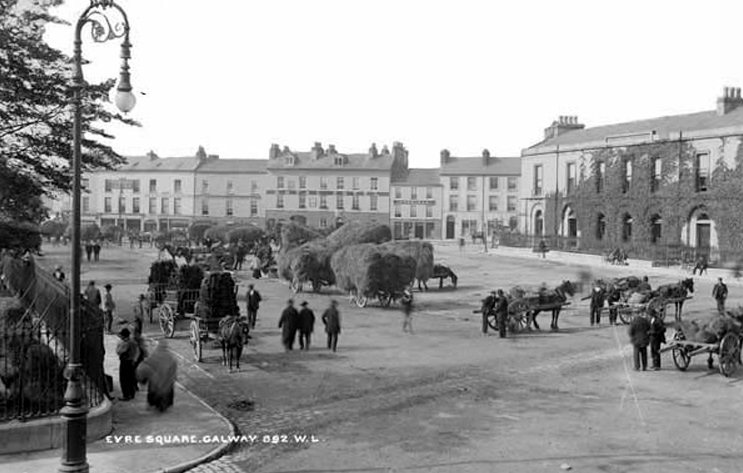
Eyre Square, Galway c.1897 National Library of Ireland Wikimedia Commons
Eyre Square, Galway c.1897
National Library of Ireland
Wikimedia Commons

The old city of Galway will celebrate with more than ordinary enthusiasm the 400th anniversary of the discovery of the New World, for in that fine old city was born William Eyre, the Irishman who sailed with Columbus on his first voyage. The daring and love of adventure characteristic of his race prompted him, no doubt, to embark in the perilous expedition. He was in Palos at the time and had no difficulty in getting engaged as a sailor.
He was one of the thirty-eight whom Columbus left in garrison in the fort of La Natividad, the first European settlement in America, which Columbus built at Christmas, 1492, before returning to Spain. The following year the fort was stormed by an Indian chief and the whole garrison slain. The Galway sailor was among the first white men whose blood was shed.
The names and fate of the slaughtered men who remained in the fort after the return of Columbus to Europe were found in a published proclamation at Seville, calling on the relatives of the deceased to come forward and draw their pay. There is no record of any of the relatives of William Eyre applying for the money due to him from the Spanish Government.

Posted in Posts and podcasts
Photo: Norma Scheibe

May you see God’s light on the path ahead
When the road you walk is dark.
May you always hear,
Even in your hour of sorrow,
The gentle singing of the lark.
When times are hard may hardness
Never turn your heart to stone,
May you always remember
when the shadows fall—
You do not walk alone.