Posted in Posts and podcasts

Corcomroe Abbey – 1929

Connacht sentinel 20th August, 1929 p.2 (abridged)
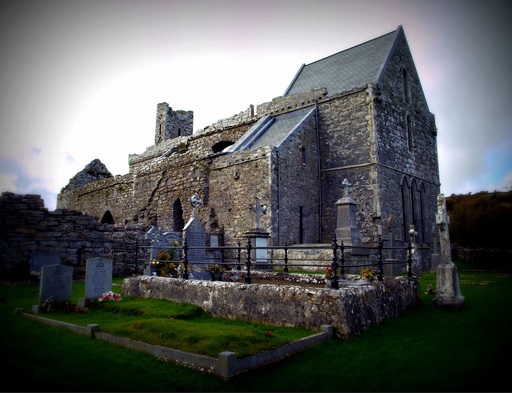
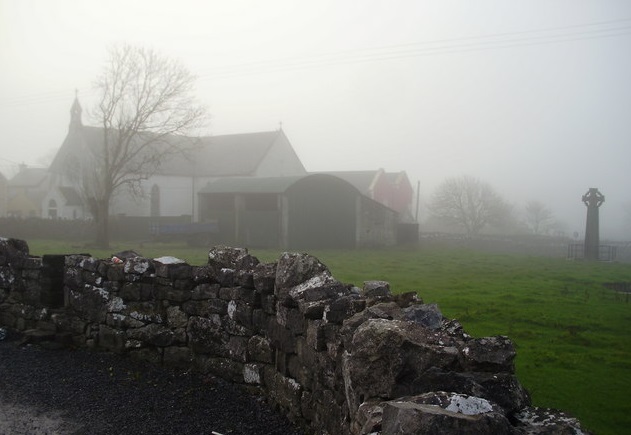
 Corcomroe Abbey Photo: Shaun Dunphy Wikimedia Commons

Corcomroe Abbey
Photo: Shaun Dunphy
Wikimedia Commons

Corcomroe Abbey is in Co. Clare.  It is about four miles from Kinvara and five miles from Ballyvaughan. “Corcomroe” (in Irish, Corcomoruadh) means the descendants of Moruadh who is said to have been a son of Queen Maeve. Corcomroe Abbey is a Cistercian abbey. Like other Cistercian abbeys, it was dedicated to the Blessed Virgin and had a special name – “de petra fertile” (of the fertile rock) or “de petra saxo” (of the green rock). In his Ordnance Survey letters, O’Donovan states that according to local tradition it was founded by the son of Conor na Siudaine O’Brien on the spot where Conor was killed c. 1267 by Guaire O’Shaughnessy of Dun Guaire, near Kinvara.  In his “Manuscript Materials of Ancient Irish History,” O’Curry states that it was founded by Conor na Siudaine O’Brien. Ware and Archdall are in doubt as to whether it was founded in 1200 by Conor’s father, Donogh Cairbrech O’Brien, or in 1194 by Conor’s grandfather, Donal Mor O’Brien. Other writers state that it was founded by Donal Mór O’Brien in 1182. It is, therefore, certain that the abbey was provided by the O’Briens, and it is probable that it was founded by Donogh Cairbrech O’Brien about 1200.

The following are the most important historical events connected with the abbey;

Soon after its foundation it established a branch at Kilshanry in County Clare. In 1249 it became subject to the abbey of Furness in Lancashire. Not far from it, at Sindaine, which, according to the Ordnance Survey maps, is near Newtown Castle, a battle was fought in 1267 between Conor na Sindaine O’Brien and his uncle, Donal Connachtrach O’Brien who was aided by the O’Connors and the O’Loughlins of Burren. Conor was killed; he was buried in the chancel of the abbey church, and his grave was covered by a stone effigy which is still in existence. In 1317 another battle was fought near the abbey between Murtagh O’Brien, the Chieftain of Thomond, and his cousin, Donogh O’Brien, who endeavoured to depose him and who was assisted by the English. Donogh and the English were defeated, and the bodies of Donogh and his followers were interred in the abbey church. In 1418 the abbot, who seems to have been a very distinguished man, became Bishop of Kilmacduagh. In 1544 the abbey was dissolved, its monks were banished, and its possessions were granted to Murrough, Earl of Thomond.
Posted in Posts and podcasts

Duras House -1962

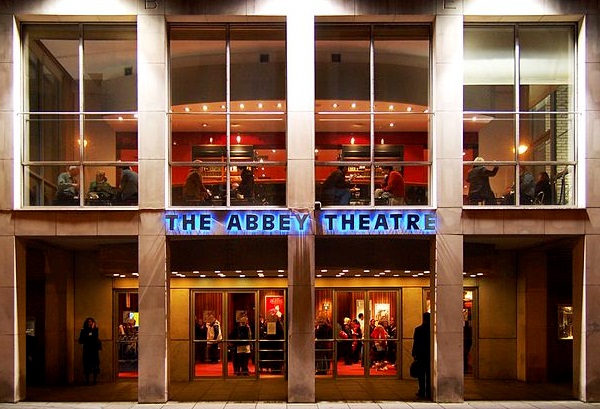
The Abbey Theatre Wikimedia Commons
The Abbey Theatre
Wikimedia Commons

Connacht Tribune August, 25th 1962 p.25 (abridged)

The Kiltartan Society will meet at Duras House Kinvara, on Sunday next to celebrate the first anniversary of the rebirth of this romantic house, which was presented to the nation as a Youth Hostel by Denis and Adrian Elrill of Limerick.
A paper will be read entitled “The colourful de Basterots 1793-1904.” In “Dramatis Personae” Yeats wrote:

I first spoke to Lady Gregory in the grounds of a little country house at Duras, on the sea-coast, where Galway ends and Clare begins (1897).  She had brought me to see the only person in Galway, perhaps I should say in Ireland, who was in any sense her friend – Florimond Count de Basterot.  In his garden, under his friendly eyes, the Irish National Theatre, though not under that name, was born.”
Happily, since last year, a plaque commemorates that historic meeting.  Lady Gregory wrote that her son and his young friends liked to go out in a hooker at Duras and see the seals showing their heads, or to paddle delicately among the jelly-fish on the beach.  It was a pleasant place to pass an idle day.
When Count de Basterot died in 1904, Lady Gregory wrote:

I know that there is many a prayer said on the roads between Kinvara and Burren and Curranrue and Ballinderreen for him who was never without a bag of money to give in charity, and who always had a heart for the poor.
Guy de Maupassant and Paul Bourget, two eminent French writers of his day, spent holidays with the Count in this remote spot near Kinvara.

Posted in Posts and podcasts

Ballyvaughan – 1920

Irish Independent 22nd September, 1920 p5.

Ballyvaughan, Co. Clare Photo: Velela Wikimedia Commons
Ballyvaughan, Co. Clare
Photo: Velela
Wikimedia Commons

A report reached Ennis that the police barracks at Ballyvaughan was attacked.  Military went from Ennis to the assistance of the garrison.  All wires in the district were cut.  A Republican flag floating from the roof of the Town Hall was removed by military and another which was replaced there was also removed.


Posted in Posts and podcasts

Mistletoe – 1933

Western People 18th March, 1933 p.5

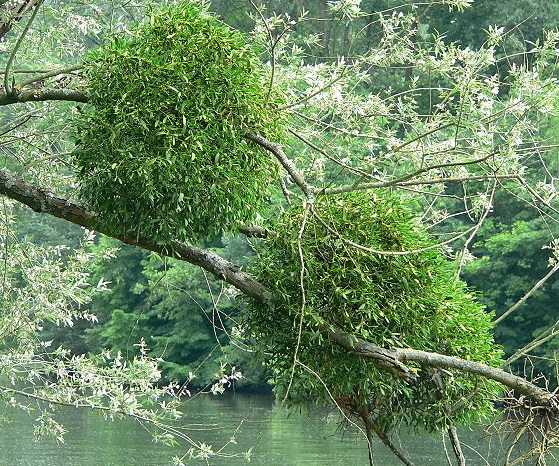
Mistletoe Photo: David Monniaux Wikimedia Commons
Mistletoe
Photo: David Monniaux
Wikimedia Commons

(abridged)
Since our great woods were destroyed,  mistletoe is not very common in this country.  In ancient times  mistletoe was one of the most famous of all plants. As it grows as a parasite on trees, and has no root in the ground, it was supposed to have come direct from the gods as the preternatural product of a sort of virgin birth. The Druids cut it with a golden sickle (for iron must not be used for the purpose) and they let it fall upon a sheet lest it should touch the common earth. The Druids sacrificed two white bulls in its honour. Pliny tells us that in Gaul they cut it on the sixth day of the moon, because then the moon was in its youthful strength and presumably this gave the plant more power or virtue. In north Italy they cut it on the first day of the moon for the same reason.

Posted in Posts and podcasts

An Interesting Discovery – 1864

Irish Examiner 19th July, 1864 p.4

Church of St.Fachta and one of the Kilfenora High Crosses Photo: Eirian Evans Wikimedia Commons
Church of St.Fachta and one of the Kilfenora High Crosses
Photo: Eirian Evans
Wikimedia Commons

To the editor of the Nation
Lisdoonvarna, County Clare, 13th July, 1864
Dear Sir,
Within the last ten days, in the vicinity of this far-famed watering-place, near the ancient town of Kilfenora, a statue of the Virgin and Child was discovered by a poor man who had been employed in cutting turf in an adjacent bog. The statue is of carved oak. The face of the Virgin is in perfect preservation, the folds of the dress most accurately delineated, and although the face of the infant in her arms is somewhat disfigured, it is wonderful how perfect the statue is after the lapse of perhaps several centuries. The statue is about two feet six inches in height, and was found some eight feet beneath the surface of the bog. Several persons, not only from this locality, but from the adjoining districts, have felt particular pleasure in observing this memorial of the past, which is now to be seen in the sacristy of the Catholic Church of Kilfenora, County Clare.
I am, dear sir, your obedient servant.
A. Visitor

Posted in Posts and podcasts

New Quay – 1933

Connacht Tribune 27th May, 1933 p.6 (abridged)

New Quay, County Clare Wikimedia Commons
New Quay, County Clare
Wikimedia Commons

No progressive or prideful village, however small it may seem to those who do not live in it, likes to be isolated from the main stream of traffic. Yet this is what will happen to the village of New Quay if the present scheme of steamrolling the road between the bridge at Currenroo on the Clare border and Ballyvaughan is persisted in. For the purpose of saving six hundred yards, it is proposed to make what would be virtually a new road through the Ballaghdhine boreen, once made by Barton Bindon for the purpose of watering his horses. Thus the level road to New Quay would be altogether ignored and traffic would be diverted from a village which is a fishing and seaside resort. It is obvious that little saving could be effected by the alternative road, for, inasmuch as the New Quay highway would still have to be maintained at the public expense, an additional stretch would be added to maintenance costs. Moreover, there are a number of ratepayers interested on the New Quay road, whereas there are one on the proposed new thoroughfare. In all the circumstances, it would seem that the wisest, if not the only, course would be to follow the line of the old road which possesses the added convenience of a post office and public telephone service – often a matter of importance on a lonely highway.

Posted in Posts and podcasts

Eyre Square – 1890

Tuam Herald November 15, 1890 p2.

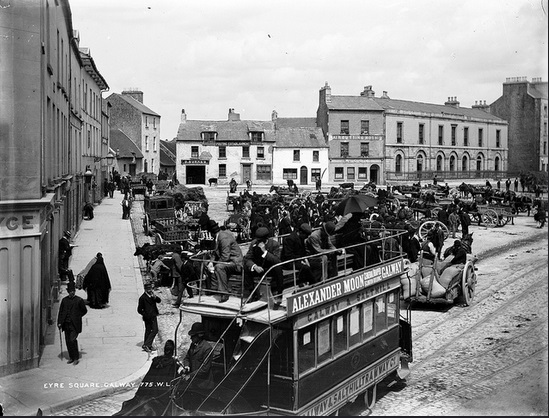
Eyre Square, Galway c.1885 National Library of Ireland
Eyre Square, Galway c.1885
National Library of Ireland

On Saturday night some soldiers of the Connaught Rangers, a detachment of which was under orders to proceed to Malta, on the 14th, attacked the police in Eyre Square with stones. Were it not for the timely arrival of assistance, Sergeant Redington would have been badly injured. Tuesday night the disturbance was renewed, and all the available police were brought out. Sergeant Boylan had his skull fractured from a stroke of a belt by one of the soldiers whose conduct was very violent. The police used their batons, and ultimately the soldiers were got to the barracks.

Posted in Posts and podcasts

Ballyvaughan Races – 1927

Connacht Tribune 3rd September, 1927 p.15

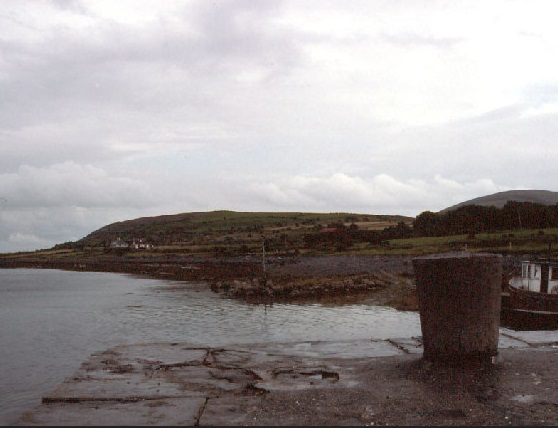
Ballyvaghan Harbour and Pier Photo: Dr Charles Nelson Wikimedia commons.
Ballyvaghan Harbour and Pier
Photo: Dr Charles Nelson
Wikimedia commons.

After a lapse of three years the popular Ballyvaughan races are being revived again. Owing to the scarcity of flappers (horses) for the past few years, the committee thought it advisable not to hold any meetings, but they are assured of good patronage this year, and on September 7, all roads will lead to this little next ‘mid the Burren mountains.

Posted in Posts and podcasts

Curranrue – 1831

Kerry Evening Post 4th May, 1831 p.2 (abridged)

Photo: EO'D
Photo: EO’D

We have just received the account of one of the Terry Alt party being shot at Curranrue. The particulars, as have been related to us, are as follows;
A party of the 28th regiment were out on patrol on Saturday night, the Officer behind his party.  A country man, who was behind a wall, presented a musket at him and endeavoured to fire, but burned priming. Two of the party, who formed the rear guard, immediately fired, and this daring ruffian was shot on the spot. He had an elegant musket with him.

The Terry Alts were one of a number of secret societies operating during the 18th Century.  They were involved in agrarian agitation in pre-Famine Ireland. The heartland of the Terry Alts was County Clare. The “Whiteboys”, “Oakboys”, “Rockites”, and “Ribbonmen” were other such societies.

Posted in Posts and podcasts

Lisdoonvarna – 1899

Freemans Journal 18th July, 1899 p.6

Lisdoonvarna Wikimedia Commons
Lisdoonvarna
Wikimedia Commons

To the Editor of the Freeman’s Journal.
Lisdoonvarna, July 16th 1899
Sir,
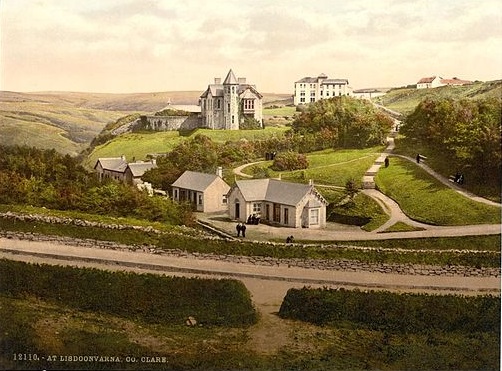
As one who has spent most enjoyable holidays in Lisdoonvarna, permit me to give my views to the public with regard to this most picturesque spot as a health resort.  Situated, as Lisdoonvarna is, in the centre of wild mountain scenery, and possessing, as it does, the most salubrious air, and the best mineral waters in the world, it is not surprising that it has been called “The Cheltenham of Ireland.” The air blowing from the Atlantic is genial and bracing, and in my experience of health resorts nowhere have I found the air so invigorating as in Lisdoonvarna and its vicinity. With regard to the medicinal qualities of the waters, Dr. Mapother, a distinguished medical man, in one of his able works says;
“It is not proposed to discuss at any great length the actions of sulphuretted waters or the respective advantage of the various sources in the treatment of cutaneous affections, but merely to call attention to one within twenty hours journey from London.”
Dr. Westropp and Dr. Forster, the resident physicians have given these mineral waters their careful studies for many years, and their experience of its effects on the human system will make their advice valuable for those who follow it. Most enjoyable excursions can be taken from Lisdoonvarna to the cliffs of Moher, to Lahinch Spanish Point, to Kilkee, to Ballyvaughan, either by the sea-coast or more directly by the famous cork-screw hill, to Corcomroe Abbey, interesting ruins in the centre of the romantic Burren hills, and the Lakes of Inchiquin, rich in scenery, are certainly well worth a visit.
For the information of intending visitors I am glad to be able to state that the dispute which existed between the local landowners and the inhabitants has been brought to a final and satisfactory settlement. The whole matter has been peaceably and amicably arranged. A local improvement committee has taken charge of all the wells and baths, and under their management considerable improvements have been already made. The plot of land around the sulphur wells has been neatly planted; the house over the springs has been completely renovated; competent and experienced hands have been employed to distribute the waters; the bath rooms have been put in order so that hot and cold sulphur and spring water baths are available daily from 6a.m to 9 p.m. In conclusion permit me to remind those who have sought in vain to regain health and strengths in English and Continental spas that they will do well to visit Lisdoonvarna, where the waters, baths and pure air are sure to prove more effectual than those already tried.