
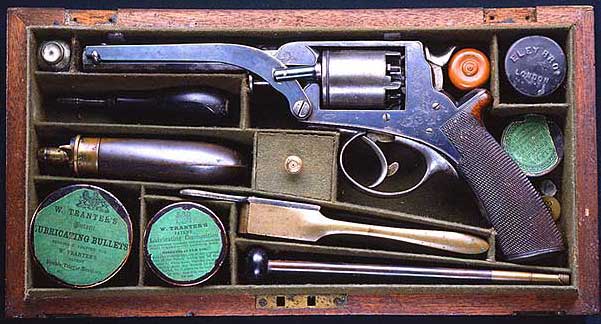
Tranter revolver, in 1863 given to Confederate Major General James Ewell Brown “Jeb” Stuart by his prussian (german) Staff Major Heros von Borcke (1835-1895)
HOW TO SILENCE A FOOL
https://widgetworld3.wordpress.com/podcasts/
A Galway gentleman once entered a coffee house in London and called for tea. His brogue attracted the attention of a scented civilian in the opposite box, who relying on his superior accent, resolved to have a jest at the expense of the stranger. The civilian called for tea too; the Irishman called for muffins, so did the civilian, toast, milk, sugar, &c, were severally called for by the Irishman, and as severally called for by the fop, who enjoyed in his corner the supposed embarrassment to which he was subjecting the Galway gentleman. At last, with the greatest composure, and, if possible, with a richer brogue, the Irishman desired the waiter to “bring up pistols for two!” The jester’s echo was suddenly silenced, and he quickly made his exit.
Category: Posts and podcasts
Posts and Podcasts
Galway Ghost causes chaos – 1891
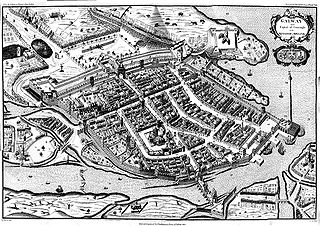
Wikimedia commons
A GHOST AT THE WINDOW
https://widgetworld3.wordpress.com/podcasts/
It would seem (says England and the Union) that Galway is not going to be behindhand in the matter of belief in the supernatural, judging from the state of excitement created a few nights ago by the rumour that a ghost had made its appearance at one of the windows of a house in Abbeygate Street, directly opposite the sacristy of the Pro Cathedral of St Nicholas.
This house, it must be mentioned, was lately occupied by a woman who died after a very short illness. Since her death it became tenanted by another person, but from some cause or another, the last mentioned left, and the place remained unoccupied till last week. On the night it was occupied some children were passing to attend devotion at the chapel, when they say they observed a sort of unusual light in the house, and a woman standing near the open window, who, in a sepulchral voice, said, “offer one prayer for me.” Some of the children fainted on the spot, and this caused others going to their devotions to inquire into the cause.
The tale of the spectre at the window spread like wildfire and in a quarter of an hour no less than 2000 persons had congregated outside the haunted house. The streets on each side became blocked. The crushing and jostling to get a glimpse at the “visitor from the other world” was such as has never been equalled in Galway. Several persons were thrown down and trampled upon, and it was with the greatest difficulty a strong force of police, after about three hours’ incessant labour, succeeded in clearing the streets sufficiently to allow pedestrians and cars to pass. The tramcars were even compelled to stand still in the streets.
The following nights the same state of things have prevailed, but up to the present the real cause of the rumour has not been satisfactorily explained. Several versions of what the object really was that created such a sensation are given, but the adult portion of the community say that fifty years ago there was also “something seen” in the house, it having been the scene of a most brutal murder – namely the assassination of a woman named Maxwell by her husband. From the description now given of the late apparition by the children, who say they saw it, the older people say it is one and the same ghost, which has to put up alternate half-centuries in this world and the other. The police are stationed near the place, where four streets meet, and it is as much as they can do to keep the curious from congregating. It is most surprising that amongst this class are to be found some of the most respectable, and, it might be expected, enlightened people in the town, both male and female. The strangest thing of all is that, notwithstanding the thousands who congregate nightly, not one – even the police – have the courage to try to unravel the mystery.
Seemed like a good idea at the time – 1906

Wikipedia.org
EXPENSIVE ANTICShttps://widgetworld3.wordpress.com/podcasts/
Two young men who played the part of ghosts in Galway, Ireland, with extraordinary success, found it an expensive pastime. An elderly woman was acting as caretaker of a vacant house, and the young men gained an entrance to the upper rooms, where their antics so convinced the woman that the house was haunted that she left the place. The owner on his return found feather beds and pictures missing, and for these the two lively ghosts have been sentenced to six months hard labor.
Galway’s Giant Ghost – 1907

The Damned Soul
Galleria degli Uffizi, Florence
circa 1525
BISBEE DAILY REVIEW, APRIL 27 1909 P8
GALWAY HAS A GIANT GHOST
Apparition Eight Feet High Leaps into the River
Dublin – A spectral figure, grey in color and about eight feet in height is said to have haunted the railway line near Galway for nights.
The apparition, which is described as “tapering toward the top,” walks from the railway viaduct across the bank of the stream and then disappears.
A number of people have visited the place toward midnight when the apparition is due to appear. One man declares that he saw it jump from the top of the viaduct into the Corrib where it disappeared.
It was not “drowned”, however, for on the succeeding night it was seen again by a number of students from Queen’s college Galway. One of the students volunteered to go over and talk to it, but when it appeared he changed his mind.
On a Sunday evening a party of six men, armed with shotguns, revolvers and sticks, sallied forth to “lay the ghost.” They had been in ambush but a short time only when the specter loomed up before them. One of the men raised a revolver, but before he could fire he fell in a swoon. The expedition was abandoned and the man was taken into Galway where he was medically attended.
These strange reports have created excitement in the district, and search parties are out nightly for the purpose of unravelling the mystery.
Avoiding tax – the odds were good in 1910/11

Wikipedia.org
https://widgetworld3.wordpress.com/podcasts/
Part 1
THE HAWAIIAN STAR JULY 22, 1911 p17
The Galway County Council has found a bold man who has undertaken, on a 50 per cent commission basis, to collect all the back taxes due from the inhabitants of the south and middle isles of Aran. These sturdy farmers and fishermen have not paid for more than five years and, if the new collector succeeds in getting in all that is owing he will pocket $500 for himself. He has arranged for a government steamer and a big force of police, and he expects to invade the islands in a few days.

Wikipedia.org
Local betting in strongly in favor of the Aran islanders. The exports of cattle from the islands to the mainland have been heavy during the past week and there cannot be many head left on the islands now. Most of the fishing boats are provisioned and ready to put to sea at short notice, and a man who was on the islands last week says there isn’t much furniture left in any of the cottages. The probabilities are that when the collector arrives he won’t find much salable (sic) property to seize. If he is a wise man, too, he will see that his steamer is well moored or anchored and guarded at night, for the currents about Aran are treacherous and boats have been known to slip their moorings and drift away.
 Part 2
BISMARCK DAILY TRIBUNE SEPTEMBER 2, 1910
TAXES NEVER ARE COLLECTED
Irish Islanders fight off officers in Annual battle.
The Irish peasants dwelling on the bleak islands of Aran and Valentia, off the stormy coast of Galway, absolutely decline to pay taxes. The Galway tax collectors each year storm the islands and endeavor to compel the peasants to pay their taxes. A battle always ensues, and the collectors are driven back to the mainland.
The islanders call the collectors “black soldiers”, and their annual battle with them is looked forward to with as much interest as the peasants elsewhere look forward to the annual county fair day.
This year the Galway county council had difficulty in finding men who would tackle the job of collecting taxes from the islanders, but finally one of the clerks undertook the contract. He has not yet had the courage to proceed to the island battlefields with his assistants.
Hint taken – 1905

The Broad Ax., March 11 1905 p 4
TAKEN AT HIS WORD
Canon McAlpine recently delivered an address to Irish unemployed at Clifden, Co Galway, declaring that people would be fools to starve “so long as fat sheep were grazing on the hillside or sleek kine were browsing on the plain”.
A few nights afterward a humorist stole all his reverence’s turkeys and left a note thanking him for the hint.
Perspective

EO’D
https://widgetworld3.wordpress.com/podcasts/
IRELAND AS SHE IS
In Horace Greely’s “Glances at Europe” published in New York in 1851, page 317 we find the following passage:
“Walking with a friend through one of the waste streets of Galway, (Ireland,) beside the outlet of the lakes I came where a girl of ten years old was breaking up hard brook pebbles into suitable fragments to mend roads with; we halted, and M asked her how much she received for that labor, she answered: “Six pence a car load.”
“How long will it take you to break a car load?”
“About a fortnight.”
Further questions respecting her family and c., were answered with equal correctness and propriety, and with manifest truth.
Here was a mere child, who should have been sent to school, delving from morning till night at an employment utterly unsuited to her sex and her strength, and which I should consider dangerous to her eyesight, to earn for her poor parents a halfpenny per day.”
Such being the miserable pittance paid for labor of the hardest kind, is it any wonder the population of Ireland is, at this time, a million and a half less than it was seven years ago; that her poor houses are crowded and that every vessel which leaves her shores is crowded with men, women and children!!!!
Home
Wikipedia.org
https://widgetworld3.wordpress.com/podcasts/
HOME, SWEET HOME – J.J.FLEMING, ALLEGHENY, PA., U.S.A.
I would love to be in Galway when the flowers begin to bloom,
And the hawthorn scents the air for miles around.
When the birds begin to warble their welcome to the spring
No sweeter spot on earth can e’er be found;
When Croagh Patrick starts to brighten and clad in verdant green,
I dream about its slopes and sadly moan;
As I listen to the Claddagh rippling onward to the sea,
I would love to be in Galway, “Home, Sweet Home”.
I would love to be in Galway when the tide breaks on the shore.
And the silver mists are rising from the sea.
When the summer sun in brightness lights the valleys all around,
And nature’s jewels are sparkling, I can see
The little old thatched cottage and the ivy creeping round
And the skylark thrilling in the vaulted dome:
Among quiet nooks and dells fairy music softly swells.
I would love to be in Galway. “Home, Sweet Home”.
I would love to be in Galway in the autumn of the year,
When the gentle sighing zephyrs sweep the vales;
And the turf fire burning brightly as the children cluster nightly
To listen to those dear old fairy tales.
Then my thoughts go home to mother and my home across the sea.
In dreams across Atlantic’s wave they roam.
I would love to be in Galway just to close my eyes and rest.
Oh, I would love to be in Galway,
“Home, Sweet Home.”
————————————————————-

Wikipedia.org
THE FAR CALL – JUDD MORTIMER LEWIS
The Galway roads are calling, calling to the Galway-born;
They can see the dew-wet hedges shining jeweled in the morn!
They can hear the heart-born laughter of each childhood-known gossoon,
And o’nights they hear the fiddles in a well remembered tune,
And the Galway voices call them where the Galway children play.
And their hearts turn back to Galway
Aye, from half the world away!
And the Devon roads are calling, calling to the Devon-born;
They can smell the English roses in the sweetness of the morn;
They can see the white winged fishers homing when the day is done,
On a sea all crimson glory form the setting Devon sun;
And the blue-eyed Devon lassies call them from the long ago,
And their hearts are sick for Devon when the sun is red and low.
And the Scottish hills are calling – call the Scottish banks and braes;
And the Holland dikes and lowlands;
and call loud Italian ways.
From wherever men were children,
North or South or East or West,
Comes the call to those who’ve wandered when their faltering limbs would rest,
It is not the home ways calling when the evening sun sinks low,
It is lost youth calling, calling; but they never seem to know.
Cu Chulainn – Cricket Champion!

Wikipedia.org
https://widgetworld3.wordpress.com/podcasts/
Freeman’s Journal Thursday 9 July 1908
CRICKET IN ANCIENT IRELAND
A Hole in the Ground as Wicket
Mr Andrew Lang, in an article in the “Morning Post” on the evolution of bowling, says that originally the batsmen defended no stumps, but a hole in the ground. The object of the bowler was to get the ball into the hold, whether by a daisy-cropper or a full pitch. The wicketkeeper- or hole-keeper- stumped or rang out the batsmen in the same way, by putting the ball in the hold. Cricket was played thus in the “Late Celtic” or “La Tene” period in Ireland; of about 200 B.C.-220 A.D. In the most ancient Irish epic of mingled prose and verse, which reflects the institutions of the aforesaid “Late Celtic” period we have the score of a match:- Cuchulainn against One Hundred and Fifty Colts of Ulster.
Ulster. b. Cuchulainn……….0
Cuchulainn, not out………….-
The figures of the hero’s score are not given, but if he made a single he could “declare”. In this match we have to reckon with the Celtic tendency to exaggeration. It is improbable that Cuchulainn’s analysis read: “Balls 130, wickets 150, wides 0, no-balls 0.”
Still, ,we see the nature of the Game
A Mermaid in Connemara 1820
Wikipedia.org
https://widgetworld3.wordpress.com/podcasts/
The Sydney Gazette and New South Wales Advertiser 16th September, 1820
MERMAID
We extract the following article from The Galway Advertiser:-
Naturalists have hitherto doubted of the existence of mermaids and mermen:
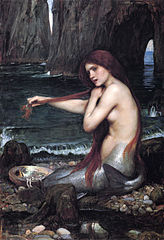
We have it now in our (sic.) to set at rest the doubts of sceptics upon this duplex order of animals, one having been lately discovered basking upon the rocks of Derrygimla, in Errisberg (Connomara), after the ebbing of the tide. It was discovered by a female of the lower order, who was then about four months pregnant; she was suddenly startled by a kind of scream, which was followed by the plunging of an animal, half female and half fish, her lower extremities having the conformation of a dolphin. This woman was so terrified as to miscarry, and has never been able to leave her bed since.
The tide being out, the animal had some difficulty in reaching the water. Thomas Evans, Esq. of Cleggan, a Gentleman well known to many of our readers, just arrived upon the coast in time to witness her last plunges. Having gained the water she disappeared for a few moments, but again appeared perfectly composed. Mr. Evans now had a favourable opportunity of examining this so long-doubted genus; it was about the size of a well grown child of ten years of age; a bosom prominent as a girl of 16; a profusion of long dark brown hair; full dark eyes; hands and arms formed like the human species, with a slight web connecting the upper part of the fingers, which were frequently employed throwing back her flowing locks, and running them through her hair. Her movements in the water seemed principally directed by the finny extremity; for near an hour she remained in apparent tranquillity, in view of upwards of three hundred persons, until a musket was levelled at her, which having flashed in the pan, she immediately dived, and was not afterwards seen. Mr Evans declares she did not appear to him to possess the power of speech for her looks appeared vacant, and there was an evident want of intelligence.
As this is the season of the fishery, we are in hopes some of our fishermen may draw her in their nets, as it is extremely probable, at the time she was first discovered, she was in search of some place to deposit her young. We understand several depositions upon oath as to this animal’s appearance are to be made. We are promised a more minute description which we shall be happy to lay before our readers.
 The Burren and Beyond