Posted in Posts and podcasts

Mary Glynn, Feakle – Survivor of The Titanic – 1912

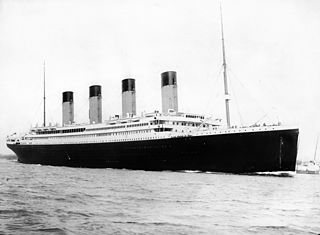
RMS Titanic departing Southampton on April 10, 1912 Wikipedia.org
RMS Titanic departing Southampton on April 10, 1912
Wikipedia.org
https://widgetworld3.wordpress.com/podcasts/
THE WASHINGTON HERALD, 22ND APRIL, 1912 P5
STEERAGE SURVIVOR TELLS STORY OF WRECK
======================================================
Miss Mary Glynn,visiting relatives in Washington, praises heroism of passengers on Titanic – women tried to save men.
(Miss Mary Glynn, nineteen years old, was en route from her home in Feakle, Co Clare, Ireland, to the home of her cousin, Mrs D.D. Courtenay, 715 North Capitol Street.

Miss Glynn arrived in Washington last night, and gave a detailed story of the disaster. She declared that the Titanic was running at top speed when she struck the iceberg, and bases her statement on the fact that she was infomred by a member of the crew, just before retiring on the night of the accident that the Titanic “was being thoroughly tested, all of her boilers being in use for the first time.”
Miss Glynn’s story of the accident, the escape of the few passengers who were saved, and the final plunge of the ill-fated ship, is interesting.

In a rich Irish brogue she commanded attention from the beginning of her recital, and covered thoroughly every detail of the disaster. Miss Glynn siad;
“When the Titanic left Queenstown several of the steerage passengers were given compartments in the bow. They were so near the engine room that they were unable to sleep, and after the first day we other passengers shared our compartments with them. At the time of the disaster, six persons, instead of the regulation four, were asleep in my compartment. The Titanic struck at about 11.45 o’clock, and all of us were thrown from our bunks. We were badly frightened, but the idea that the ship was in danger never entered our minds. We did not think it possible that such a giant boat could have been so badly damaged.
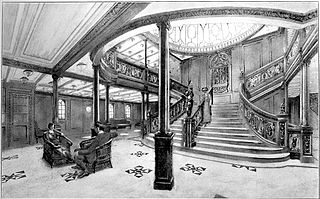
Grand Staircase of the RMS Titanic 1912 From "White Line Triple Screw Steamers" booklet, White Star Line Wikipedia.org
Grand Staircase of the RMS Titanic 1912
From “White Line Triple Screw Steamers” booklet, White Star Line
Wikipedia.org
CREW DENIED DANGER
“When we asked members of the crew what the trouble amounted to, they ridiculed our fear, saying the boat was in absolutely no danger and we would proceed at once. Several minutes later, however, we were aroused and told to make for the lifeboats. There never was a more courageous set of men and women than the occupants of the steerage. The men behaved admirably. The acme of heroism was reached when several of the single women, who had been conversing in a secluded corner, came forward and insisted that they remain behind, and that husbands be permitted to accompany their wives. It was splendid.
“When our boat was lowered it contained forty-odd passengers, the only men in the boat being two Celestials, who were so badly scared that they cowered in the bottom and refused to move, and the members of the crew. While we were being lowered, the tackle became caught in some manner, and a lifeboat descending from the upper deck was about to strike us. One of the girls in our boat, who was one of the party which so gravely proposed the escape of the husbands as well as the wives, with rare presence of mind took a small clasp knife from her pocket and severed the rope. The sailors then began to pull with might and main in order to clear the boat from the danger zone.
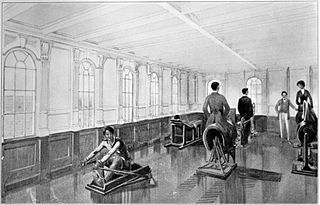
Gymnasium of the RMS Titanic 1912 From "White Line Triple Screw Steamers" booklet White Star Line Wikipedia.org
Gymnasium of the RMS Titanic 1912
From “White Line Triple Screw Steamers” booklet White Star Line
Wikipedia.org
“NEARER MY GOD, TO THEE”
“When we were about half a mile away they rested on their oars and we watched the Titanic, rolling and bobbing like a cork. All her lights were burning, and over the water we caught the strains of “Nearer, My God, to Thee”. Finally the Titanic ceased rolling, seemed to hesitate a moment, and plunged her bow into the ocean, and, a moment later was engulfed by the waves. Several moments after she had disappeared there was a terrific explosion, which threw the water in a turmoil, and fragments of the ship were hurled high into the air. I supposed the boilers had exploded.
“After picking up two men who were swimming we proceeded to row around and the women in the boat made torches of their hats, handkerchiefs, and other articles of clothing, thinking a passing ship might thus be attracted. This availed nothing, however, and after we had been drifting more than seven hours, we hailed the Carpathia and were taken aboard.

MAN DISGUISED AS WOMAN
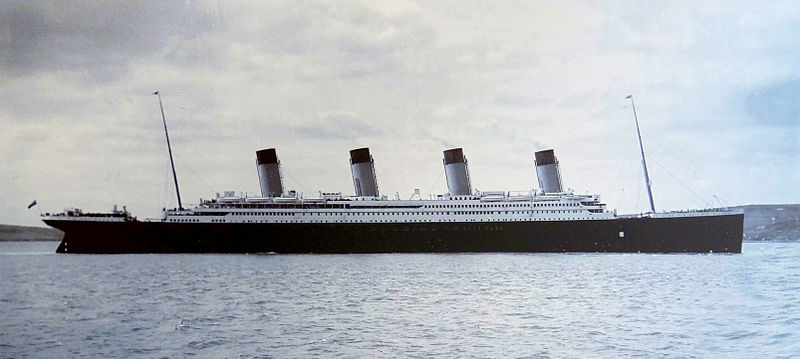
The Titanic pictured in Cobh Harbour, 11 April 1912 Cobh Heritage Centre, museum in Cobh, Ireland. Wikipedia.org
The Titanic pictured in Cobh Harbour, 11 April 1912
Cobh Heritage Centre, museum in Cobh, Ireland.
Wikipedia.org

“Most persons think the report that one of the men disguised himself as a woman in order to escape is a manufactured tale. It is not. That man occupied a seat in the boat I was in, and I never looked with greater disdain upon any creature than he. He was an object of scorn to every man, woman, and child in our boat. Just imagine, a strapping man, twenty-two years old, who admitted that he donned feminine attire and wrapped a towel around his head in order to fool the officers who were placing the passengers in the boats.”

Miss Glynn saved nothing from the he wreck, except the clothing she wore. She said that she was well treated on the Carpathia and commended Capt. Rostron, of that ship, for his bravery. Miss Glynn declared that a lifeboat was sighted two days after the wreck, but the Carpathia crew found only two dead bodies in the boat and they were not taken aboard.

It is probable that Miss Glynn will be summoned to testify before the Senate asinvestigating committee, as she is the only steerage passenger who seems to have a clear conception of the conditions existing in the steerage on the morning of the wreck.
Posted in Posts and podcasts

Better late…1913

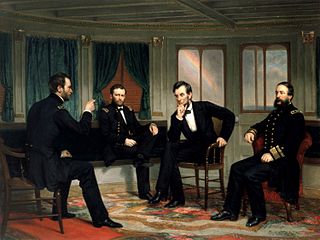
The Peacemakers Sherman, Grant, Lincoln and Porter, discussing plans for the last weeks of the Civil War, March 1865  Oil on canvas -  c. 1868 by George Peter Alexander Healy (1818-1894) White House Historical Association
The Peacemakers
Sherman, Grant, Lincoln and Porter, discussing plans for the last weeks of the Civil War, March 1865
Oil on canvas – c. 1868 by George Peter Alexander Healy (1818-1894)
White House Historical Association
https://widgetworld3.wordpress.com/podcasts/
THE CITIZEN 5TH AUGUST, 1913 – OUR MAGAZINE PAGE (6)
GOSSIP FROM WASHINGTON

From County Clare, Ireland, recently came $250 to the conscience fund of the treasury. It was the first contribution from Europe in many years and was sent by a civil war veteran, who said that during the conflict he had made “false returns”.

Posted in Posts and podcasts

Lola Montez 1905

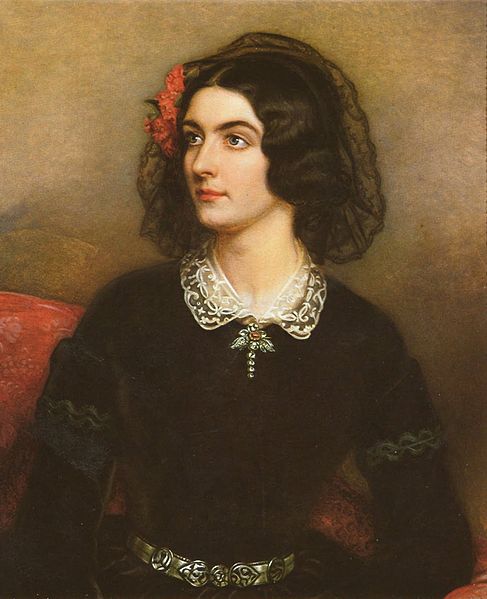
Lola Montez by Joseph Karl Stieler Wikipedia.org
Lola Montez by Joseph Karl Stieler
Wikipedia.org
https://widgetworld3.wordpress.com/podcasts/

The Star, (PA) 9th August 1905 p 1
LOLA MONTEZ

At one time there was much commercial and social intercourse between Ireland and Spain. Galway and Waterford were the chief Irish ports engaged in this trade. To this day the Spanish type of beauty is discernible among the Galway girls. Probably the most famous result of the blending of Spanish and Irish blood was the actress and dancer Lola Montez. Her true name was Marie Dolores Eliza Rosanna Gilbert. She captivated European monarchs as well as popular audiences and was for a year or so practically the ruler of Bavaria until a revolution compelled her to flee.

Posted in Posts and podcasts

Here and there – 1896

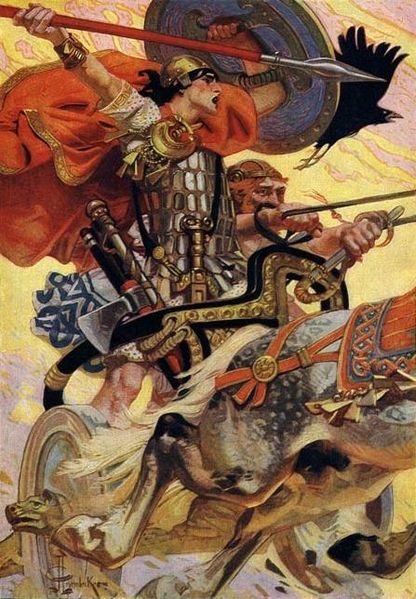
T. W. Rolleston, Myths and Legends of the Celtic Race, 1911 Illustrator: Joseph Christian Leyendecker
T. W. Rolleston, Myths and Legends of the Celtic Race, 1911
Illustrator: Joseph Christian Leyendecker
https://widgetworld3.wordpress.com/podcasts/
The Chronicle, 3rd October, 1896 p35
EXCERPT FROM REVIEW OF “HERE AND THERE MEMORIES,” BY H.R.N.
During Lord Mulgrave’s, or a preceding Lord Lieutenant’s, rule in Ireland, there was a curious thing never traced to its source and never explained. In the east of Kildare, at Kill, a strange woman gave a piece of kindled peat to a man, with the injunction to pass it along to the next person on the Naas road, that person to repass it westward still alight, and so on westward.
If the turf were let go out before a new piece were substituted from a living hearth, misfortune would come.
That was on an autumn evening.
Within twelve hours the ‘burnt turf’ had been carried to Galway Bay, across Kildare, the Queen’s and King’s counties, and Galway. No one ever published an explanation of the affair.

Posted in Posts and podcasts

Memories of Galway 1907

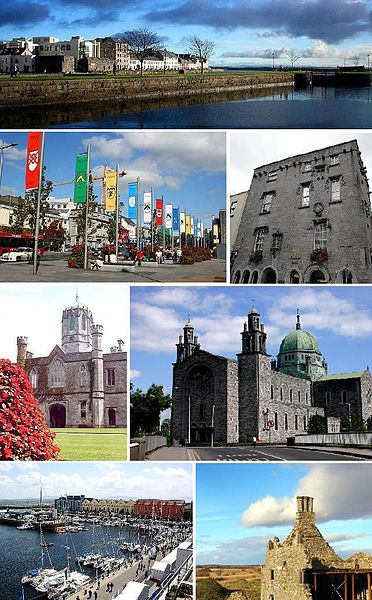
Galway Photo: Creative Commons - Sleepyhead2
Galway
Photo: Creative Commons – Sleepyhead2
https://widgetworld3.wordpress.com/podcasts/
THE INTERMOUNTAIN CATHOLIC 15TH JUNE, 1907 P6
GALWAY MEMORIE
S
Well worth seeing and well worth remembering, dear old Galway; Galway of the stalwart gray houses that have stood for centuries the storms and buffets and driving rains of the Atlantic; Galway of the narrow, winding quiet streets; Galway of the beautiful bay, where of an evening the sinking sun touches with its dying splendor the quaint-colored sails of the fishing boats rocking at anchor.

Pleasant Galway it is, where the people are erect, and sturdy, and kindly, and the children – real, rosy country children – smile at you out of deep blue eyes as you pass; where you are awakened in the early morning by the complaining, musical cry of the shawled and barefoot fishwives.
“Fresh herring! Fresh herring!” they chant, as they trudge, baskets on hip, along the cobbled street. Oh, a quaint, old-world town is Galway, and a good old-world people are they that live there.
It chanced late last summer that a wanderer, weary of the noise and stress of modern life, strayed into the old town, and instantly felt the rest and quiet comfort of the atmosphere, and, going forth to stroll among the streets, found a throng wending their way on some great purpose bent, and so, following, came to an old arched gateway, in a strange little nook, under which these people disappeared. The curious one, going in, was received with prompt and courteous hospitality by the members of the Gaelic League, and was made a free and delighted spectator of the proceedings.

It was the “Feis Connacht,” the great annual gathering of the local country people, who were assembled to hear the old tongue spoken, the old songs sung, and the old stories told, not, as so familiarly known to them, around the cabin fires or on the breezy hillsides, but in the great “town”, in a hall, where judges would listen to their efforts and award prizes and honors to those they liked best.

So it was in the old, long, low-ceiled, whitewashed hall they met, and they thronged from far and near, young and old, the ancient village favorite, white headed and frieze-clad, who was received with shouts of applause, the worthy matron, conscious of her dignity, the young earnest farmer lad, with deep, ever burning hope of Ireland’s freedom in his deep and earnest eyes, and the troops of sunny-faced children, fresh and sweet material these, for the work of keeping the old tongue alive. The old people knew it; they would pass, but it was these tiny ones whose little lispings were listened to with greatest attention by the judges – for within their curled palms lies the future of the Irish language.

They sang, these children with their clear fresh voices, in the soft accents of the old tongue, the ancient songs of their race, and while they sang, one read in their bright eyes and fair, Greuze-like faces, the hopes of the land for the future. Oh, the sweet old songs, “Kathleen-ni-Houlihan,” solemn and mysterious, “Paistin Fionn,” with its wailing refrain, and the slow, stately strains of the “Coolin.”

Even the wild, gypsy-like children of the famous Claddagh were there sturdily chanting and (yet more to their taste) answering back, in the “conversation contest,” with a free, brisk promptness, the questions put by the judges. It was a Claddagh lassie, with a great shawl drawn about her, like unto her elders, who seated herself with much composure, and begun a long story in Gaelic, which convulsed her hearers with merriment that found its origin in the twinkle of her shrewd gray eye.

And it was a Galway matron who, also draped in her shawl, danced with dignity and decorum, the many and difficult steps of the old Irish jig, to the lively strains of an ancient piper, upon a platform, laid for the occasion, upon the stage.

How independent they were, those Connacht people! No sign of shyness or mauvais honte. They stepped up and recited, sung, danced, whatever it might be, with earnestness, and industry. How fine was that old orator, who had his tale to tell, and his say to say (concerning the legitimate freedom of ireland) and who would say it, ignoring the tinkle of the judge’s bell (intimating that his time limit had expired), and indeed, upbraiding those with upraised hands and nodding heard, as he perforced abandoned the rostrum and descended to his place among his fellows.

Good humor and appreciation are ever the order of the day. One and all, fisher and farmer and kirtled housewife, “old men and maidens, young men and children,” and the “quality” mingle in perfect democratic unison on the common ground of “land and language”.

The very remoteness of this region from the hustle and distraction of the world, would seem to militate strongly in favor as an educational field. There is time here, “all the time there is,” to be given to the study of and development of the language, and there is the earnestness, intelligence and independence of a people whose life is spent in the open air, brightened by God’s sunshine and inspired by God’s free winds, and the ever-sweet, salt breath of the ocean, here in the old historic town, whose every stone, every time-worn arch and buttress, and strange, old gray building is a reminder of ancient glories and sorrows.
GERALDINE M. HAVERTY

Posted in Posts and podcasts

Don’t upset the girls from Cregg – 1908

EO'D
EO’D
https://widgetworld3.wordpress.com/podcasts/
Kentucky Irish American 22nd February 1908 p3

Exciting scenes followed an attempt to serve processes for rent due by the tenants on the Rodney estate, near Cregg, County Galway. A crowd of women and girls, armed with balls of mud, attacked the process server and his police guard and caused them to beat a hasty retreat.

Posted in Posts and podcasts

Caherglissane strikes…Lead! 1850

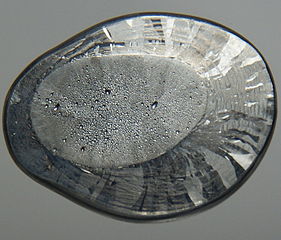
imagesofelements.com Creative Commons
imagesofelements.com
Creative Commons
https://widgetworld3.wordpress.com/podcasts/

The South Australian Register Thursday 27th June, 1850
The Galway Vindicator says:-

‘Considerable excitement prevails in the neighbourhood of Gort by the discovery of extensive lead mines at Caherglissane, containing a larger percentage of silver than the celebrated mines in South America, and far surpassing anything at present known in her Majesty’s British dominions. The quantity of ore raised in one week by that enterprising and energetic gentleman, Win. Collett, far surpassed anything before experienced, in Ireland,’

Posted in Posts and podcasts

Banshee Lament – 1909

https://widgetworld3.wordpress.com/podcasts/
THE INTERMOUNTAIN CATHOLIC, NOVEMBER 20,

Photo; EO'D
Photo; EO’D
1909
THE BANSHEE LAMENT

The Banshee is famale fairy attached to ancient Irish houses. Her province is to foretell the near approach of death or disaster to members of the family by mournful wailings or unearthly cadence. Every ruling house had its own supernatural retainer. During centuries of invasion and foreign misrule, families lost titles and estates by confiscation and now their descendants may be found in every land. But through all vicissitudes the Banshee remains faithful to the “ould stock,” and has never transferred her allegiance to the comparatively mushroom conquerors who supplanted the original rulers of the soil.” – Boston Traveler.

O’er Erin’s sea girt isle,
Two thousand leagues away,
The gentle spring wind sighed
One peaceful night in May.

On surf’ lashed northern coast
The waves dashed fast and free,
And ‘cross the meadows came
Salt odors of the sea.

On Ennis Eoghan Head
The grey old castle stands,
Where in dark ages past,
The lord of all those land

The grim old warrior prince –
Ruled stern, yet kind and just;
Ten centuries have passed
Since his body turned to dust.

O’er turret, hall and keep,
The moon shone wierd and bright,
And blazed toward the west
A track of silver light.

The clouds obscured the moon,
And night birds screamed and cried;
The ancient church bell clanged
Across the ebbing tide.

And the Banshee wailed and mourned,
As she pointed to the west,
For a daughter of the race,
Was passing to her rest.

The princess of her people
Lay dying far from home,
Two thousand leagues to westward,
Across the ocean foam.

And the lonely night birds screamed
While the gentle night winds sighed,
And the Banshee moaned and grieved,
In time with the ebbing tide.

CHARLES HENRY STEVENSON.

Salt Lake City, Utah.
Ed Note – Charles Henry Stevenson, who died in this city last fall, was a native of Ireland. He wrote the “Banshee’s Lament” after the death of his only daughter, a beautiful girl of 20. Several months after his death Mrs Stevenson found the poem among his papers.

Posted in Posts and podcasts

!!! – 1904 – Crime?

https://widgetworld3.wordpress.com/podcasts/

Photo: EO'D
Photo: EO’D

THE INTERMOUNTAIN CATHOLIC, SEPTEMBER 17, 1904 P4
CRIME IN IRELAND
The prisons board have again to repeat their complaint that magistrates do not make use of their powers under the juvenile offenders’ act to avoid sending children to jail. “It is disappointing to find so many juvenile offenders imprisoned.”
The board gave a list of cases.
The worse came from Cork. No fewer than eight children between the ages of 9 and 11-12 were sent to jail from Cork in 1903 for “obstructing the footway.”
In Galway a little girl of 10 was sent to jail for seven days for trespass! Is it too much to say that the magistrates who did these things should get as many months as these children got days in prison!

Posted in Posts and podcasts

Courage in Curranrue – 1847

https://widgetworld3.wordpress.com/podcasts/

Photo: EO'D
Photo: EO’D

THE MAITLAND MERCURY AND HUNTER RIVER GENERAL ADVERTISER
20th March, 1847 p4
FEMALE INTREPIDITY.-On Monday, as the Misses Crow, of Derriwillan, were returning from the sea shore, to their lodge, at Curranrue, they heard a shriek, and, on turning, saw a little boy running towards them, exclaiming that his brother was drowning in the sea. Both young ladies hastened to the spot, and arrived as the youth made his appearance a second time on the surface of the water. In a moment he was down again, and Miss Crow, throwing away her cloak and bonnet, rushed into the water to save him, but the place being very steep, before she was able to reach him she got beyond her depth, and down she went also.
Miss Lucy Crow, seeing her sister in such imminent danger, plunged into her rescue, but had not proceeded many yards when she found she could not go further without placing herself in the same perilous position, and that then all would be lost. In agonising suspense she stretched forth her hand to save her; alas! it was useless; they were too far asunder, and down her sister went again, overpowered by the weight of the little boy, who got entangled with the grasp of the dying in her hair and neck. But as if Providence would have it so, this time she was carried by the force of the waves on to a rock in the water, and, for a moment, resting her foot upon it, the brave girl reached forward so as lo be enabled to meet the outstretched arm of her intrepid sister, who, at length, succeeded in bringing herself and her young charge in safety to the shore.

One is at a loss which to admire, the intrepid bravery of the one or the judgment and presence of mind of the other of these young ladies, who, on returning to Derriwillin, will carry with them the blessings of the parents and friends of the youth whose life they thus, at the risk of their own, pro-videntially saved.- Galway Mercury. [What a beautiful subject for the poet and the painter.]