
 https://widgetworld3.wordpress.com/podcasts/
JAMESTOWN WEEKLY ALERT, APRIL 21, 1887, P1
THE CRY OF THE BANSHEE
There is now living in Bristol ad Mrs Linahan, an old Irish woman, who has not seen her own country for forty years. She is old, poor, bed ridden and suffering, but patient and cheerful beyond belief.
Her strongest feeling is love for Ireland, and she likes talking to me because I am Irish. Many a time, sitting in her little close room, above the noisy street, she has told me about banshees and phookas and fairies, especially the first. She declares solemnly she once heard the cry, or caoin of a banshee.
“It was when I was a little young child,” she told me,
“And knew nothing at all of banshees or of death. One day mother sent me to see after my grandmother, the length of three miles from our house. All the road was deep in snow, and I went on my lone – and didn’t know the grandmother was dead, and my aunt gone to the village for help. So I got to the house, and I see her lying so still and quiet I thought she was sleepin’. When I called her and she wouldn’t stir or speak, I thought I’d put snow on her face to wake her. I just stepped outside to get a handful, and came in, leaving the door open, and then I heard a far away cry, so faint and yet so fearsome that I shook like a leaf in the wind. It got nearer and nearer, and then I heard a sound like clapping or wringing of hands, as they do in kneeling at a funeral. Twice it came and then I slid down to the ground and crept under the bed where my grandmother lay, and there I heard it for the third time crying, “Ochone, Ochone,” at the very door. Then it suddenly stopped; I couldn’t tell where it went, and I dared not lift up my head till the woman came in the house.
One of them took me up and said: “It was the banshee the child heard, for the woman that lies there was one of the real old Irish families – she was an O’Grady
Category: Posts and podcasts
Posts and Podcasts
And far away…1910
https://widgetworld3.wordpress.com/podcasts/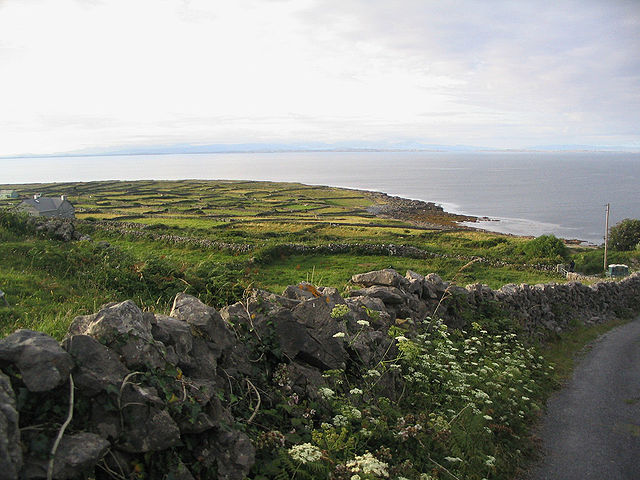
Photo: Creative Commons
THE WEST AUSTRALIAN 25TH JUNE, 1910
EXCERPT FROM ‘THE LAND OF THE WESTERN GLEAM’ BY E. LONGWORTH DAMES (VI – Galway of the Tribes)
…And far away, far out across Galway Bay, there is a faint vision of the mysterious Aran Islands, some of the fairy isles of the west, the last retreat, it is said, of a very ancient people called the Fir Bolgs, a primeval tribe which was in Ireland before even the Gods came there. This is what lies dimly and half seen on a gray horizon against gray skies colouring at evening, and Galway, dreaming away its life in a soft Western langour, with a pale glory of the past about it, like last daylight lingering, looks out upon these for evermore. Ptolemy is said to have spoken of Galway as then existing under the name of Nagnata. And when twilight settles down in a silence that is full of old voices, one may well fell that the place and the country round it, are of far off beginnings and ageless.
Burren memories – 1890
Wikipedia.org
THE ADELAIDE ADVERTISER 18TH MARCH, 1890
ST. PATRICK’S DAY – CELTIC DEMONSTRATION
Excerpt from Mr Patrick MacMahon Glynn M.P (President Irish National Federation) address;
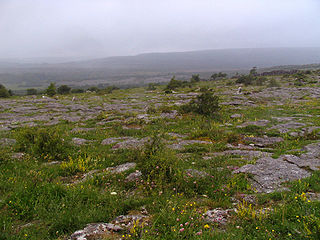
…”Some of you may have, like myself, been born in the West. There by a road which winds along the side of the Burren Mountains is a spring of clear cold water such as the water which fills our day dreams but not our throats, when the mercury is dancing a South Australian hornpipe between 100 degrees and 110 degrees in the shade. It is called Patrick’s Well. Why, I am not sure. I may have been baptised there and don’t remember. Some say that my great namesake once or twice opened his flask by that spring. If he did it is proof that he had a taste for more than spring water, for the sight commands a splendid view of Galway Bay. It was there that I first felt the romance of the sea, as I watched with the wondering eyes of childhood the turf boats glide down between Aughinish and the mainland on the swift ebb of the tide. This is one of the characteristic reaches of a western bay. Outside on the shimmer of the horizon are the wild islands of Arran against whose bold cliffs beat for ever the breaking swell of the Atlantic. It is there that you can feel the glory of Shakespeare’s rebuke of the surges that “Wash both heaven and hell.”
The Ark – County Clare – 1930
THE CATHOLIC PRESS, 16TH JANUARY, 1930
“THE ARK” IN IRELAND
Primitive Church in County Clare.
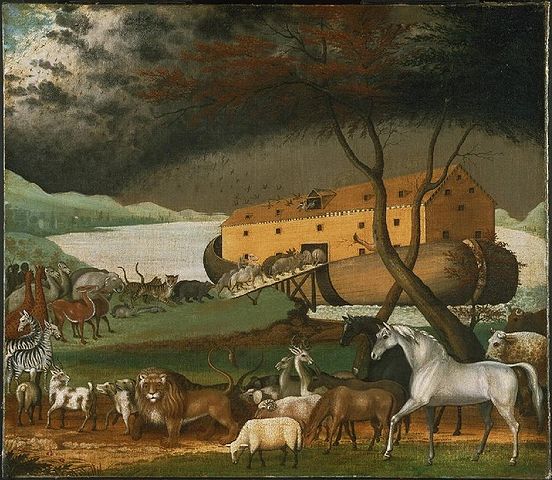
A primitive “church on wheels” is still preserved as a memorial of old times in a country church in County Clare, not far from Loop Head. In this region of small villages and scattered farms and cottages the parish priest, some 80 years ago found it impossible to obtain from the Protestant landlords even the smallest site for a church. He had a little wooden chapel made, very like the foreman’s hut one sees where a new road is being made or a building erected.
A shelf at one end provided a support for an alter stone. The door at the other end was opened wide when Mass was said. The hut was placed on four small wheels and moved round the district, now to one cross-road or roadside grass patch, now to another, for the Sunday Mass.
In the fine parish church long since erected, the hut that once was a movable chapel is kept on a raised platform in the aisle. It is locally known as “The Ark.” The beams that form the framework of its base show numerous marks of the knife, for emigrants starting for America, and later soldiers going to the Great War, took with them chips from “The Ark” as something like relics from the wooden chapel consecrated by so many Masses said in the old days, often to congregations kneeling in the mud and driving rain of a winter Sunday.
Adventurous Boys from County Clare – 1853!
Creative Commons
https://widgetworld3.wordpress.com/podcasts/
ADVENTUROUS BOYS
On last Saturday, there passed through Galena, by stage, two boys, one of four and the other seven years of age. They left the county of Clare, Ireland, the first of January, for Dubuque (Dublin?) and came the whole way unattended by relatives or particular friends. When they left New York, on their journey westward, they had but $2.50 with which to pay their expenses; but when they arrived at Chicago, the sum had grown to $6.
Weakness and confiding faith are, often, ever a surer protection than strength. Whatever may be the defects in the American character, at the present times, a want of sympathy is not due of them. – Galena Gazette
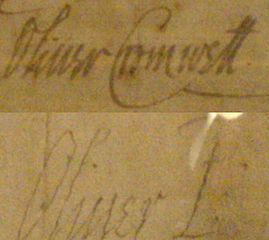
Cromwell’s slaves – 1658
Wikipedia.org
THE INTERMOUNTAIN CATHOLIC 1ST JULY 1905, P3
CROMWELL IN IRELAND
IRISH PEOPLE SOLD INTO SLAVERY
The London “Athenaeum” has published the following letter:
23 Leeson Park, Dublin
In your issue of April 29, Mr W.F.P. Stockley remarks that “many people would like to have the evidence for and against Cromwell’s sending Irish prisoners to the West Indies.” Prendergast, in his “Cromwellian Settlement of Ireland,” (London, Longman 1865) quoting in part from the Ofder Books of the Commonwealth of England for the Affairs of Ireland, preserved in the Record Towre (sic.), Dublin Castle, wrote as follows:
“After the summer Assizes of 1658, Sir Charles Coote, Lord President of Connaught, and Colonel Sadleir, governor of Galway, were directed to treat with Colonel Stubbers or other merchants about having a properly victualled ship for eighty or one hundred prisoners ready to sail with the first fair wind to the Indian Bridges, the usual landing place in the Barbadoes, or other English plantations, thereabouts in America. These were proprietors who had been sentenced to death for not transplanting but had been pardoned by his excellency. At Barbadoes the prisoners were to be delivered to certain merchants (who were to pay the cost of transportation), all except ten, who were to be consigned to a person to be speedily named. This was a Mr. Edward Smyth, a merchant resident at the Barbadoes. His lot, however, was afterward increased to twelve, ten men and two women, and upon receiving them at the Indian Bridges, or elsewhere in that island, he was to pay Colonel Stubbers four pounds per man for transportation and victuals.”
Prendergast gives in a series of footnotes references to the various pages of the Order Books in which the entries are to be found which justify his statements. In Hardiman’s “History of Galway”, p 134 it is stated that Stubbers transported from the city to the West Indies no fewer than 1,000 persons, whom he there sold as slaves. A letter to Lord Byron in Carte’s “Collection,” vol. II, p. 412 asserts that the thirty survivors of the citizens and garrison of Drogheda “all that were left of them” after five days of massacre were shipped to the West Indies to be sold as slaves.
WILLIAM F. DENNEHY
O’Keefe 1231 – A Giant of a Man
Wikipedia.org
THE MAITLAND WEEKLY MERCURY 28TH MAY, 1910
An interesting archaeological discovery was made at Ballinahalla, near Moycullen, County Galway, Ireland. Some workmwn came upon a complete skeleton measuring 8ft 5½in. and subsequently unearthed an old sword bearing the following inscription, in Gaelic – “Donach OKeefe, A.D. 1231.
Lynch – 1864
Wikipedia.org
QUEENSLAND TIMES, IPSWICH HERALD AND GENERAL ADVERTISER
28TH MAY, 1864 P4
ORIGIN OF LYNCH LAW
The office of Warden of Galway has become memorable in the literary world since Maturin dramatised the story of the rigid justice administered by Warden Lynch in ordering the execution of his son, in the year 1500. Hardiman, in his History of Galway, gives the particulars at length, which are shortly as follows:-
Warden Fitzstephen Lynch formed a friendship with Gomez, a rich merchant of Cadiz, and had his son, a youth of nineteen, with him on a visit. The Warden’s only son, two years older than young Gomez, and the Spaniard were constant companions and friends. Young Lynch became attached to Agnes, the daughter of a neighbouring merchant, but she preferred Gomez. Lynch, maddened by jealousy, stabbed his friend with a pinnard on the brink of the sea, and hurled the body into the sea. Immediately repentance came, he accused himself of murder, and was conducted to prison.
His own father sat as magistrate in judgment upon him, and from his lips sentence of death was pronounced. The populace became tumultuous, and mediated a rescue, when so rigid was the magistrate in the administration of justice, and so exalted his virtue, that on the night before the day appointed for the execution he embraced his son, led him out, and had him executed from a window!
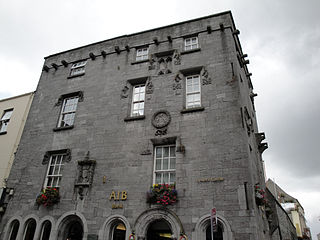
The house still stands in Lombard street, which is yet known by the name of the “Dead Man’s Lane.” Over the window may be seen, carved in black marble, the representation of a human skull with two bones crossed underneath, and is “supposed,” says Hardiman, “to have been put up by some of his family as a public memorial.” This house is always an object of interest to the tourist, and the first to which his attention is directed by his guide in Galway.
Fox, Canary, Parrott, Rabbitt – 1911
Rembrandt (1606-1669)
The Yorck Project – Wikipedia.org
HOPKINSVILLE KENTUCKIAN NOVEMBER 21ST 1911, P2
QUEER KINDS IN MARRIAGE
ANSONIA, CONN
“My grandfather married a Fox, my father a Canary, my brother a Parrott, and I’ll go them one better”, said John R. Welsh, who will soon wed Mrs Eleanor Rabbit of this town.
In 1838 Michael Welsh Married Mary Fox at Feakle, County Clare, Ireland.
Twenty-five years afterward his son Peter led Alice Canary to the alter in New Haven
Richard, the eldest son of Peter, last year found his bride in Miss Edna Parrott, and John, next in age, will contribute to the list with Welsh Rabbit, as he puts it.
In Derby recently Walter Graves married Miss Anita Coffin.
Thinking ahead – 1930
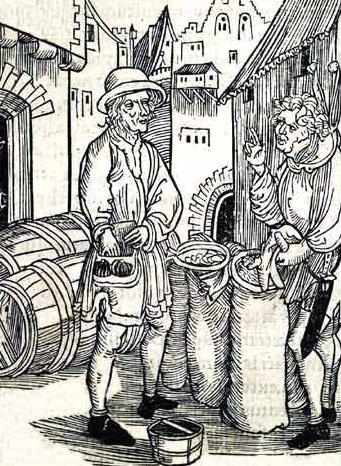
Attributed to Albrecht Dürer – 1471 -1528 (Woodcut)
The Cumberland Argus and Fruitgrowers Advocate 1st December 1930
AHEAD OF HIS TIME – 1930
A Galway shopkeeper, who died a few months ago was firmly convinced that the time would come when the banks would not honor their notes, and that the notes would be worthless. In a number of hiding places in his house and shop he kept his savings hidden in the shape of gold and Treasury notes. In one room he had £200 in gold in a jar concealed under the door. He had another £200 in a chest on the landing of the stairs. Altogether he had over £800 secreted. After his death the hiding places were discovered.
 The Burren and Beyond