Posted in Posts and podcasts

Notes on Kinvara – 1936

Connacht Tribune 4th January 1936 p 13
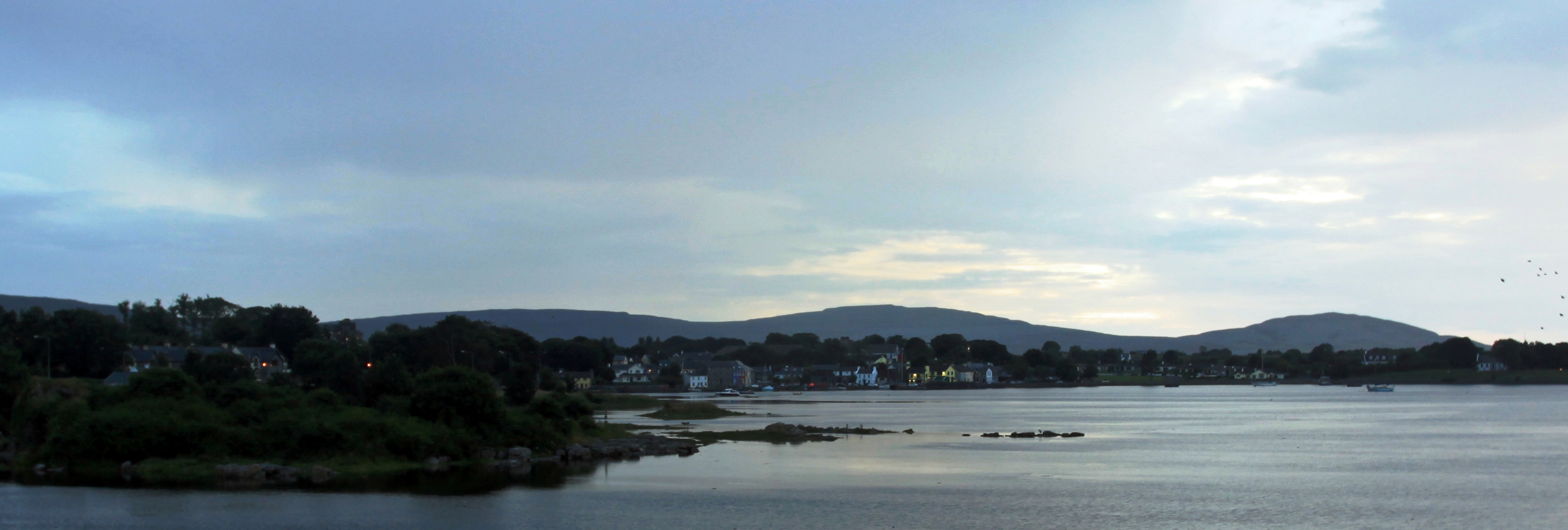
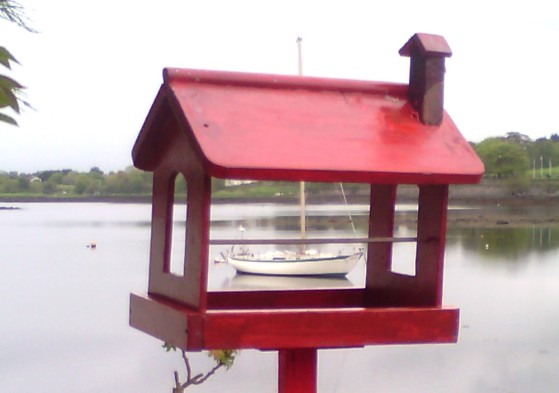
Kinvara Photo: EO'D
Kinvara
Photo: EO’D

About the reign of Henry VIII Rory Mór Darag O’Shaughnessy took the Castle of Doon from Flan Killikelly, totally demolished it, and erected one near its site which he named Doongorey. In 1612 it became the property of Thomas Taylor, who encircled it with a strong baun or wall, and it is now in a good state of preservation.
On 1st of November 1755, the day of the earthquake at Lisbon, a castle on the western boundary of the parish, which had formerly belonged to the O’Heynes, was destroyed to its foundation and a portion of it swallowed up, and at the same time the chimneys and battlements of Caherglissane rocked and then fell into a chasm which was formed by rending the rock to the depths of several fathoms.
A quay about fifty yards long was build here in 1773 by the late J French Esq (great-grandfather of the present Baron de Basterot) which was lengthened and raised in 1807 and such an addition made to it in 1908 as converted it into a kind of dock. At high tide there is 12ft of water at the pier, which is then accessible to vessels of 150 tons burden.
There are some remains of the old church, which was for ages the burial-place of the O’Haynes and Magraths, no others being allowed to be interred within its walls. Near the shore are two extensive subterranean caverns. A castle stood near the pier, but its materials have been used in building.
Posted in Posts and podcasts

The Ballinderreen Corps – 1914

Connacht Tribune 25th July, 1914 p.6

Courthouse Lane with Corless's top right Photo: Cresswell archives
Courthouse Lane
Corless’s top right
Photo: Cresswell archives

The Ballinderreen Corps marched from the town to Kinvara on Sunday under the command of Mr J. Linane and Mr L Quinn. On arrival at Kinvara, they drilled in front of Mr. T.P.Corless’s hotel, after which Mr. Corless entertained them. Afterwards they marched back to Ballinderreen, when the corps sang “A Nation Once Again,” and then dispersed.

Posted in Posts and podcasts

This strange and lovely land – 1956

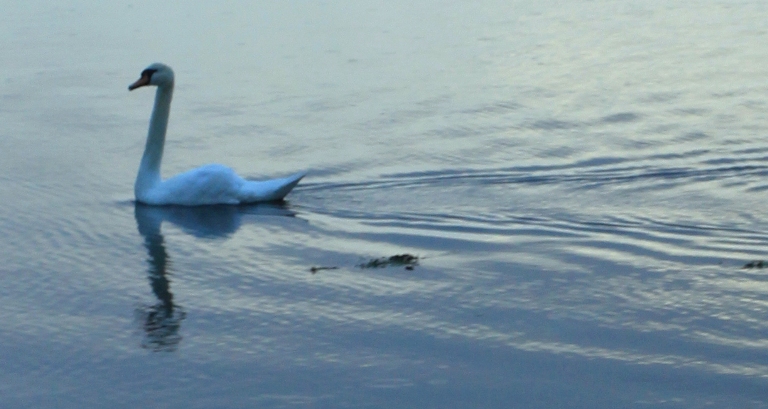
Swan on Kinvara's blue Photo; Norma Scheibe
Swan on Kinvara’s blue
Photo; Norma Scheibe

Oh, for the gift of a fairy brush
And magic to guide my hand.
I’d paint, in the peace of a spellbound hush,
This strange and lovely land.

Cloud shadows on a barren hill,
On the rocky coast of Clare,
A watered sky, that goes drifting by,
And salt in the morning air.

Small fields of stone with rocks around;
A smiling woman at a door,
And always on our ears the sound
Of the sea, on the murmuring shore.

A grey keep in a field of green
Swans on Kinvara’s blue,
White pebbles on the sand, washed clean,
Age old, but ever new.

A wheeling gull, a curling wave,
The hiss of spreading foam,
Cliffs, and a distant secret cave,
Some ancient hero’s home.

Captain Meany

Posted in Posts and podcasts

The art of making rebels – 1920

Connacht Tribune 3rd July 1920 p4

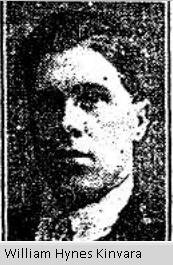
William Hynes Kinvara. Photo: Connacht Tribune 1920
Photo: Connacht Tribune 1920

(abridged) How the Government Persecuted a Kinvara man and his friends. Mr William Hynes, Kinvara, one of the hunger strikers recently released from Wormwood Scrubbs, was arrested at Abbey, Loughrea, early in spring and confined in Galway prison. He was remanded on a few occasions while “The minions of the law” were trying to make a case against him, but subsequently he was released without a stain on his character. The Government, not to be outdone, arrested him a few weeks later, and deported him to Wormwood Scrubbs along with Mr Patrick Kilkelly, now the chairman of the Gort District council, and hundreds of others. Mr Hynes is the youngest son of Mr Patrick Hynes, Doongora, Kinvara and comes of a good old stock of fighting Nationalists. He is grandson of the late “honest Bartly Hynes,” of Killina, the first man in Ireland to be prosecuted for having his name in Irish printed on his cart, and who, to credit be it said, refused to pay the fine imposed by a pair of British “Removables.” His brother Mr Michael Hynes, was arrested after the Rebellion of 1916, and imprisoned at Frongoch. His cousin, the late Mr Patk Hamberry was jailed, following the Rebellion, and died as a result of his cruel treatment immediately after his release.

Posted in Posts and podcasts

Kinvara promenade and swimming pool – 1959

Connacht Tribune 5th December, 1959 p.10

Kinvara  Photo: EO'D
Photo: EO’D

Galway County Council decided,on the proposition of Senator R. Lahiffe, to approach Bord Failte with a view towards; (a) giving a grant towards the building of a promenade along the convent road from the quays at Kinvara and the erection of a swimming pool opposite Seamount College; (b) giving a grant towards the development of the beach at Traught, Kinvara.

Posted in Posts and podcasts

Patrick Pearse and the Kinvara hero – 1919

Tuam Herald 22nd February 1919 p.4

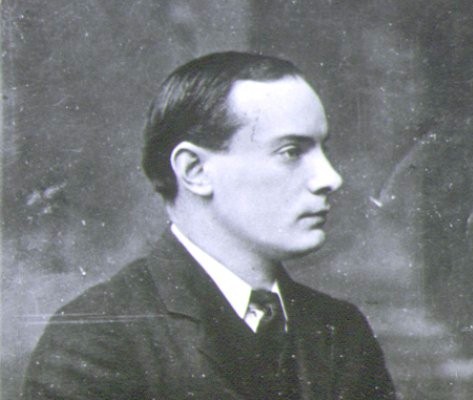
Patrick Pearse Wikimedia Commons
Patrick Pearse
Wikimedia Commons

(abridged)
Patrick Pearse was a barrister, but he may be said not to have practiced as he gave himself up to the work of education at which he was most successful. He once appeared in a Galway case. It was to defend the Kinvara Hero who, despite the law, persisted in having his name painted in Irish on his cart. The police prosecuted him and he was duly fined but he triumphed. Lady Gregory and Edward Martyn took up his case and Pearse ably fought it in the Dublin courts with the result that such stupid and silly prosecutions were abandoned and the brave Kinvara man, Bartley Hynes  became a hero in spite of himself.

Posted in Posts and podcasts

Kinvara Carnival – 1961

Connacht Tribune 24th June, 1961 p6

Kinvara G.A.A.
Kinvara G.A.A.

Kinvara’s Big Day
Sunday marks the opening of Kinvara Carnival which runs for three weeks and ends with the opening of the £3,500 Gaelic pitch which, with previous carnivals, it helps to pay for.
Begun three years ago this new pitch, the only enclosed playing pitch in the South Board area, requires only a successful carnival “run” to clear it of debt.
The Carnival opens on Sunday at Kinvara Pier at 5 p.m. when the Kinvara Dramatic Society arrives by boat and performs a pageant based on an adaptation of Lady Gregory’s “Rising of the Moon” by Mrs Thomas Donnellan, N.T. At the conclusion of the performance the Queen of the Pageant will be crowned and a fancy dress parade will take place through the streets of the town.
The dancing marquee is the main attraction of the Carnival and a Fancy Dress Ball will be held on Tuesday night, July 4th.
The new G.A.A. pitch will be formally opened on Sunday, July 16th when two games will be played, one between Fohenagh, 1960 County Champions, and Liam Mellowes.
The St. Patrick’s Brass Band, Galway, will be in attendance for the occasion.

Posted in Posts and podcasts

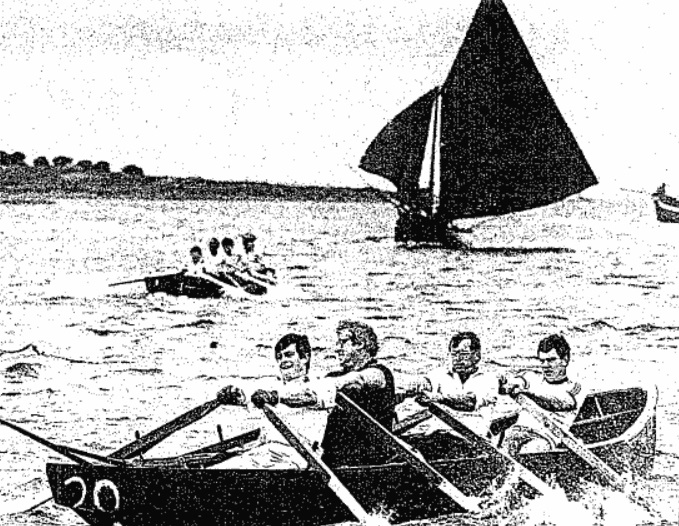
Cruinniú na mBád

Connacht Tribune 14th August, 1987 p.22

Photo: Connacht Tribune

(abridged)
For the curious there is a fascinating connection between Connemara badoirí and Kinvara Pier – pointed out by that brilliant Cruinniú organiser and founder, Tony Moylan.
Along the pier wall is a capping of concrete applied in the 19th century. Here and there in the concrete are footprints. The legend is that while the concrete was drying some boats of turf arrived from Connemara and the badoirí in clambering ashore sank their footwear in it.

Posted in Posts and podcasts

No turf in Kinvara – 1919

Connacht Tribune 23rd August, 1919 p.4

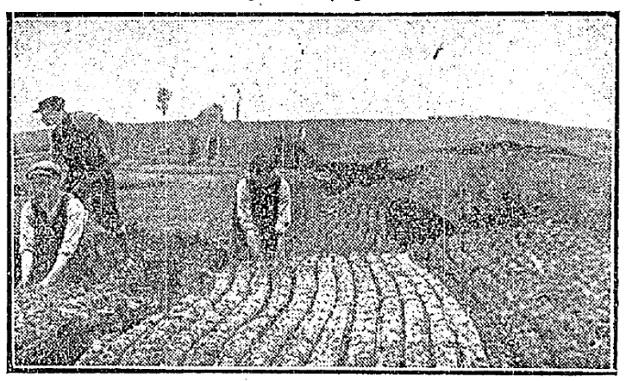
Photo: Irish Independent 2nd October, 1919.

Kinvara is presently suffering from a turf famine, which is attributed to a notice put up under the heading of “Kinvara Sinn Fein Club”, fixing the price, owing to the exorbitant prices hitherto paid for seven cart loads at £6. Turf sellers have decided not to bring any further supplies to the village until the price – hitherto £7 10s per six cart load – be fixed.