Posted in Posts and podcasts

The Flight of the Dishes

A tale from Kinvara, County Galway.
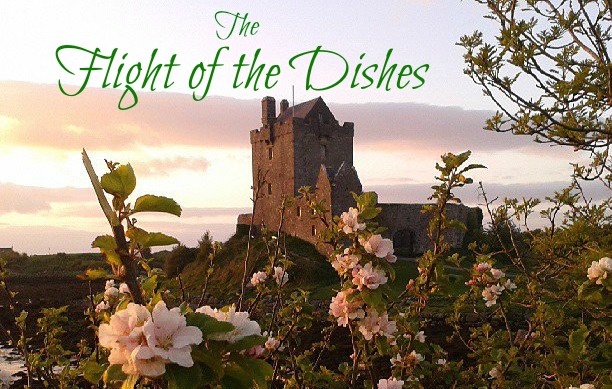
Dunguaire Castle, Kinvara, County Galway. Photo: Norma Scheibe.


(An adaptation©EO’D)

Dunguaire Castle, ‘the Fort of Guaire’ stands on a hill just outside Kinvara, County Galway. Surrounded by water on three sides it commands a fine view of the village, the Burren Mountains and the sparkling waters of Galway Bay. From minute to hour, sun and sky brings change to its walls and to the angles of its battlements. Dunguaire itself rests as constant as the mountains beyond.
It’s a fitting seat for a King, and no less than five Kings of Connaught made their seat here. The castle got its name in memory of the most famous one of all – Guaire. His reign was a time of plenty for the region. He served and protected all in his kingdom and he did right by them. He took from his tenants only what they could spare and ensured no person was left in need. He sheltered those who suffered loss or hardship, he made fair judgment in times of crisis, and he treated nobleman and tenant with the same dignity and respect due all humanity. For that, he was much-loved. It was said he gave so generously that the ‘dint’ of giving caused his right arm to grow longer than his left.
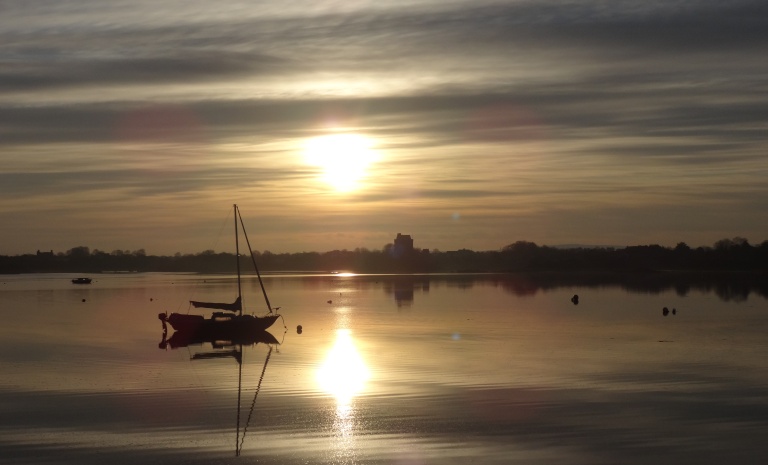
It was a fitting seat for a king. Photo: Norma Scheibe
It was a fitting seat for a king.
Photo: Norma Scheibe

Each time he sat down to eat he said grace. It was a simple entreaty and in keeping with his reputation as a benevolent ruler.
“May the great God look down on us as we break bread together.” he would say.
“And if any in my kingdom are more in need than I, then I pray they have this bounteous food to sustain them; and welcome.”

Those prayers were answered when, one fine day, his dishes took flight…

(more on theburrenandbeyond.com)
Posted in Posts and podcasts

A respectable young man – 1886

Fort Worth Daily Gazette, 2nd February, 1886, p.4

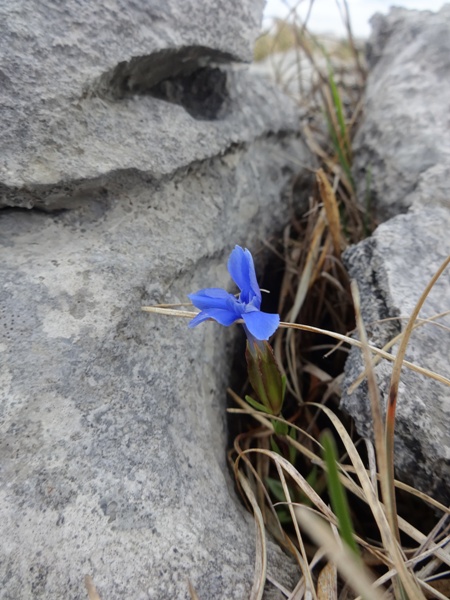
Blue Gentian Photo: EO'D
Blue Gentian
Photo: EO’D

The other day there left Dublin for Galway by the Midland railroad, a respectable young man who could not speak or understand one word of English. He has never spoken any other language than Irish.
He had been a fortnight in Dublin and during that time required, in the capital of his native country, to be accompanied everywhere by an interpreter.

Posted in Posts and podcasts

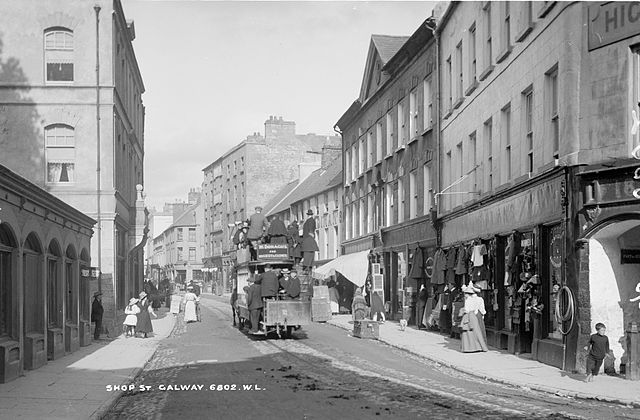
Kinvara Quay – and Tram – 1838

Tuam Herald 28th September, 1839 p.2

Horse drawn Tram, Shop Street, Galway. National Library of Ireland on The Commons Wikimedia Commons
Horse drawn Tram, Shop Street, Galway.
National Library of Ireland on The Commons
Wikimedia Commons

(excerpt of letter from Mr T. Bermingham to “To the Guardians of the unions of Loughres, Gort, Ballinasloe and Tuam, especially – and to the inhabitants of the County Galway in General.”)

I have lately examined the southern coast of the Bay of Galway, and from the trade at present existing at Kinvarra and the New Quay, I have no hesitation in recommending the building there of two good piers, to protect the boats engaged in the fishery and seaweed trade, and as asylums for vessels of moderate burden, to encourage still further their spirited trade in corn, with a view of being a proper point of communication with the town of Galway by means of a steam tug – a plan which has been long agitated by the inhabitants of Galway.  Tram roads for horse power are perhaps more adapted to the present trade of this county than more expensive railways for locomotive power.

With the experience that I have had in constructing a short line of railroad on cut bog, the property of Lord Clonbrock in this county, I can almost confidently state that a double line of rails of dimensions adapted to the present trade, can be constructed for three thousand pounds per statute mile – upon which one horse can draw a load weighing ten tons upon the level. Of course it would be necessary to have relays of horses to assist at some of the elevations – which upon the route that I propose to take, would be but few.

More on Kinvara in the news archives at theburrenandbeyond.com

Posted in Posts and podcasts

An Piast – Loughrea – 1935

Southern Star 4th May, 1935 p11

Photo: BO'D
Photo: BO’D

Lough Ness has not all the honours to itself.
Loughrea is now plagued by some strange animal (in olden times it would be called a Piast), which is very fastidious in its choice of food.
Its menu consists of eggs, fish, poultry and lamb. It does not recognise any rights of property. A local organisation is offering a reward of fifty pounds to any person that will capture or destroy it.

Additional information on the Piast may be accessed from T.J. Westropp’s A Folklore Survey of County Clare at
http://www.clarelibrary.ie/eolas/coclare/folklore/folklore_survey/chapter8.htm

Posted in Posts and podcasts

The Cuckoo – 1848

Tuam Herald 13th May, 1848 p.4

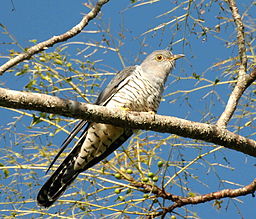
Cuckoo Photo: Aviceda Wikimedia Commons
Cuckoo
Photo: Aviceda
Wikimedia Commons

A Cuckoo shoots across my path,
Well pleased I mark its arrowy flight,
And see it reach the neighbouring rath,
And on an aged thorn alight.

In haste I turn my dexter car,
To catch the luck-portending sound;
And fancy, as those notes I hear,
‘Tis fairy music from yea mound.

Such airy, softly plaintive tones,
Did echo breath, with love forlorn,
While pining to a shade, her moans,
Were on the mountain breezes borne.

On such soft notes mine ear has hung
At dewy eve – soul-soothing hour!
When haply viewless Bards have strung
Their harp AEolian near my bower.

Mysterious bird! where has thou been
Since last I heard thy mellow cooing?
Say in what far distant scene
Hast thou been the echo wooing?

Didst thou to Grecian nations rove
Fair lands of arts and posey
To woo the secrets of the dove,
That keeps the Delphic mystery?

Or Egypt has thou visited,
Cradle of mythologic lore;
And from her lovely Pyramid
Thy lonely descent didst thou pour?

Or far as Araby, the best
Did thy unwearied wing aspire,
To see the Phoenix on her next,
Kindle the renovating fire?

Or has thy winter all been given
To slumber, in some mossy cell:
One of the feathered sleepers, seven,
Entranced, as if by magic spell?

I hail thee Phoenix of our year!
For at thy coming nature’s womb
Revives, and all her charms appear
Arrayed in renovated bloom.

I hail thee o’er the woodland ranging,
Chasing thy mate from tree to tree:
And with thy mellow pipe unchanging,
Swelling the Sylvan minstrelsy

Posted in Posts and podcasts

New Quay – 1907

Nenagh News 17th August, 1907p3 (abridged)

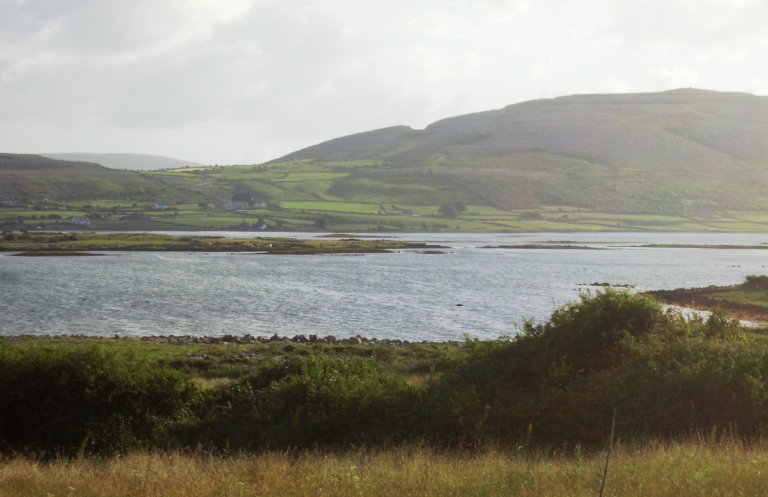
Across the way. Photo: BO'D
Across the way.
Photo: BO’D

New Quay is encircled on the south side by the rugged range of the Burren Mountains showing the ancient ruins of Corcumroe Abbey, Aughmama Abbey, Mucknish castle, and other castellated ruins along Bellharbour Bay, with the villages of Curranroe, Kinvara, Bellharbour, Ballyvaughan and Finavara, in the immediate vicinity. The air at this district and its surrounds, filled with the ozone and saline of the salt sea of the Atlantic Ocean infuses new life and vigour into one accustomed to living in inland places where the air is entirely devoid of those health giving properties and less embracing.

There are two bathing centres in New Quay supplied with bathing boxes, and a splendid range of sanded strand, one at New Quay and the other at Old Quay, a short distance away towards the Flaggy Shore. The circle of sea surrounding New Quay extends from Curranroe, at the boundary of Clare and Galway, by Munna and Carton, along one of the northern peaks of the Burrin Mountains and continuing on by Old Quay, the Flaggy Shore, Finavarra, Martello Tower and Scanlan’s Island. At this point the entrance is to Bellharbour Bay by a narrow strait dividing Finavarra from Mucknish castle and Ballyvaughan and continuing inland by the southern slopes of Finavarra demesne, and Corcumroe Abbey to Bellharbour Quay and circling outward in the opposite direction by Muckinish Castle, Oughmama Abbey and Ballyvaughan, under the shade of the Burren Mountains.

In fine weather the open sea from the mountain heights and verdant plains of this district, presents one crystal sheet of sparkling surface, with ships, steamers, trawlers, and every style of sailing boat strewn here and there along the surface of the water, from the coast to the circle of the horizon, touching the Atlantic Ocean in the West where the top rigging of the largest barque afloat is seen as a speck above the curvature of the sea, until the full sails and hull of the vessel are exposed to view as it approaches nearer along the surface of the sea.

In stormy weather this open expanse of sea presents an entirely different appearance form what it is in fine weather. To residents of the district the disturbed and placid surfaces of the sea are as familiar as the rising and setting of the sun, but to the visitor or tourist unaccustomed to the fury of the tempest, a short sojourn at New Quay brings the extreme changes caused by the elements into view.

There are intermediate phases in the elements and surface of the sea which only add to the enjoyment of a sail in open boats, but woe betide the boats or even larger vessels, tossed about like shells on the surface of the mountain waves, rolling in silvery breakers from the Atlantic ocean against the cliffs and rock-bound coast.