Posted in Posts and podcasts

Kinvara, Duras, Kiloveragh – 1932

Connacht Tribune 25th June, 1932 p22 (abridged)
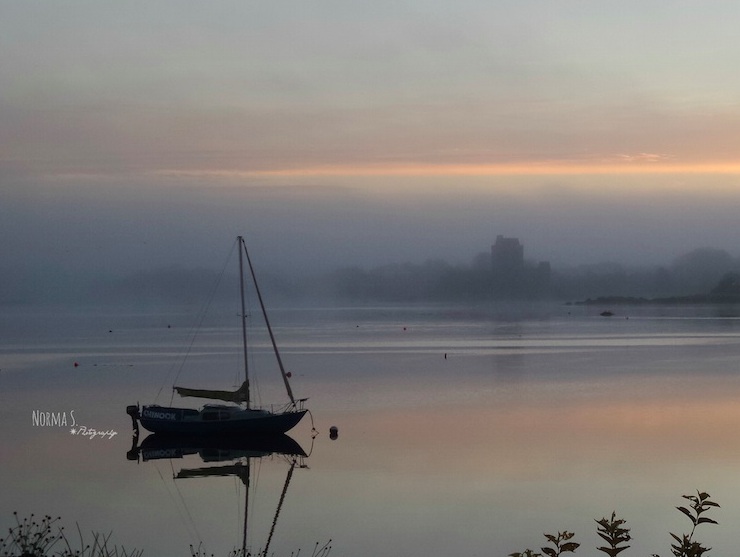
Ballybranigan Photo: Norma Scheibe
Ballybranigan
Photo: Norma Scheibe

Interesting Lecture at Gort by P. J. Murray, N.T.

Patrick French, son of Roebuck, waa a Catholic. He was a very generous donor to the Kinvara church, his gifts including a beautiful chalice.

James, French, brother-in-law of Oliver Martyn, Tullyra, spent much of his iife in France, owing to the delicate health of his children. His daughter Frances, married Bartholomew De Basterot, who thus became heir to the Durus property. The establishment of his claim, however, involved him in a legal suit extending over thiee years. The enormous expense thus entailed so impoverished him that he was forced to sell some of the property.

It was purchased by Robert Gregory, Coole Park, and Mark Lynch, Galway. The latter erected Durus chapel for the convenience of the tenantry. As this occurred in the eighteenth century we may conclude that the penal code was not rigorously enforced in all parts of the country.

Robert Gregory continued the erection of the Kinvara pier and quay which had been begun by James French. To do so it was necessary to demolish the fine old chiefs (sic.) of Kiloveragh which stood opposite Dun Guaire Castle. Though displaying little reverence for the historical monuments of the district, this gentleman showed a commendable enterprise of more material value to inhabitants.

James De Basterot built a new residence at Durus and planted extensively. He was an artist of merit and some of his pictures are still to he seen in Kinvara church. His son, Bartholemew, was a distinguished writer. Though one of the absentee landlords, he manifested a kindly interest in his tenants.

Tiirowen House was purchased about 1650 by Christopher French. The latter was Mayor of Galway during its siege by Ludlow who added considornbly to the Tirowen estates, probably after his betrayal of Galway. Early in the eighteenth century, a daughter of his married the Hon. Mary St. George, hence the Tirown Frenches were afterwards known as the St. Georges.
Posted in Posts and podcasts

A trip to Kinvara – 1912

Tuam Herald August, 31st 1912 p2 (abridged)

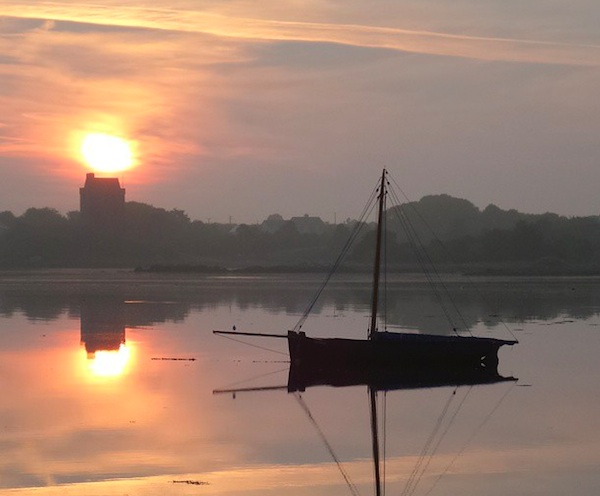
Dunguaire Photo: c.  Norma Scheibe
Dunguaire
Photo: c. Norma Scheibe

Mr Jack Yates and Mrs Yates are staying at Coole Park with Lady Gregory. He is a distinguished artist of the new school of Irish art. On Sunday a party from Coole drove to Dungory Castle – the fine old castle owned by Edward Martyn – and lunched there. It is said Mr Yates will paint a large picture of it.
It is one of the finest ruins in Ireland – kept in excellent preservation by Mr Martyn who pays a caretaker, Mr Hanbury, to look after it. The wall which surrounds it is complete. It overlooks an arm of the little Bay of Kinvara, itself an arm of Galway Bay and around and about are countless springs of fresh water bubbling up from the ground and coming by subterranean ways from the lake of Coole, six miles off as the crow flies.
The water of Coole itself comes from the Devil’s Punch Bowl at Gort, outside Lord Gough’s beautiful demesne, where a seething bottomless pool of water may be seen, one of the wonders of nature. it is never empty, always in motion like a vast cauldron stirred by a giant.

Posted in Posts and podcasts

Galway/Clare – 1851

Pembrokeshire Herald and General Advertiser

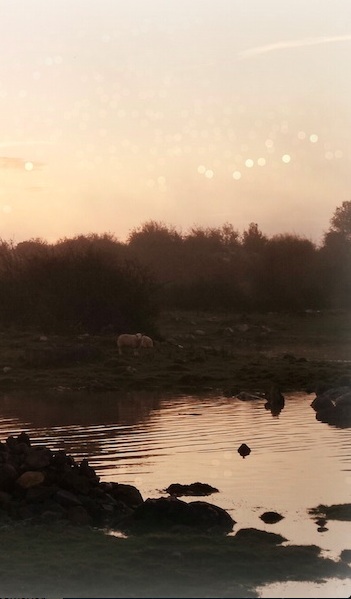
Photo: Norma Scheibe

3rd October, 1851
(abridged)

The Boards of Guardians of the different Unions persist in their refusal to make rates for the repayment of the Government advances. Among the repudiators whose proceedings are recorded this week, are the Guardians of the Galway and Clare Unions and a meeting has been called of deputies from all the Unions in the province of Munster, with a view to oppose the demand of the Government.

Posted in Posts and podcasts

Ballinderreen – 1880

Nation 10th July, 1880 p3 (abridged)

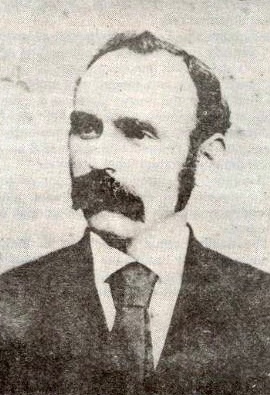
Michael Davitt Founder of the Land League Wikimedia Commons
Michael Davitt
Founder of the Land League
Wikimedia Commons

A monster meeting was held on tho 20th ult. at Ballinderreen, a village on the sea-coast, adjacent to Kinvarra. The meeting was convoyed for the purpose of forming a branch of the Land League, and it was in every respect a great success. A deputation from the Athenry branch, with the temperance band, attended.

The little village was handsomely decorated with green bunting. The eye could scarcely rest on anything not tinged with the national colour. Pretty devices spanned the entrance to the village. Conspicuous amongst them was one bearing the words “Cead mile failte to the men of Athenry.”

The proceedings commenced late in the day, owing to the heavy rain prevailing. A Government note-taker occupied a prominent place on the platform. The Rev. Mr. Forde, P.P., occupied the chair, and addressed the meeting at length, counselling them to be prudent in all their actions, and advising all to join in the movement.

Resolutions condemnatory of the present land system, and advocating a peasant proprietary and other changes, were proposed and adopted, and spoken to at great length by Mr. St. George Joyce, Clare Independent; Mr. Peter P, Broderick, Athenry Land League; Mr. P. C, Kelly, do; Rev. P. J. McPhilpin, CC., &c. At the close of the proceedings the rev. chairman, in very complimentary terms, thanked the deputation from Athenry. Most of those present were enrolled in the Land League.

Posted in Posts and podcasts

Welcome home – Kinvara – 1910

Connacht Tribune 24th Dec 1910 p5 (abridged)

Kinvara Photo: Norma Scheibe
Kinvara
Photo: Norma Scheibe

On Monday morning the Kinvara cattle drivers, M.H. Donohoe, Gortnaclogh; T. Gorman, John Hynes, P. Healy, Bartly Quinn, Moy, and John Smith, Kinvara, were released from Galway Jail after undergoing a term of six months’ imprisonment. They were tried at the Summer Assizes and sentenced by Judge Kenny for driving cattle off the lands of Funshinbeg. The severity of the sentence and the respectability of the prisoners evoked the greatest sympathy at the time, and the Nationalists of the district vied with one another in doing the farm work and harvesting for their families ever since.

They were met at the door of the prison as they emerged, by Mr. Ml. O’Donohoe, J.P., Co.C, and seven cars, laden with members of the Kinvara hurling ciub. They were sumptuously entertained by Mr. O’Donohoe, and started from Eyresquare after “doing” Salthill, about 3 p.m. for Kinvara. They were loudly cheered passing through Oranmore and Clarenbridge, and on reaching Kilcolgan they were greeted with illuminations. They were met outside Kilcolgan by a big contingent with cars and horses, from the Kinvara and Duras branches U.I.L., consisting of Messrs. T. P. Corless, D.C., president; M. Curtin, B, Quinn, M. Melia, Pat Hanlon, Bryan Kilkelly, T. Keane, Joe Forde, Pat Halvey, P. Callanan, P. Whelan, Ml Carty (Secretary), Michael Huban, A. Connors, C. O’Loughlin, P. Noone, J. Moylan, John Glynn, etc., who cheered them loudiy. As Ballinderreen was approached it was seen that every house was illuminated, bonfires were ablaze on every hill, and lighted torches lit up the horizon. A noticeable feature in Ballinderreen was a big force of police, under arms on the outskirts of the crowd.

A hurriedly convened meeting was held under the chairmanship of Mr. Michael O’Donohoe, Co.C, J.P., who thanked the sterling Gaels and fearless Nationalists of Ballinderreen for the great reception they had given the prisoners (cheers). He would never forget it. He reminded them of the early days of the Land League Movement and of the proclaimed meeting in 1879, and said he was glad to see the same spirit animating them today. Mr. T. P. Corless, D.C., also addressed the meeting.

Amidst a scene of great enthusiasm the procession, which had now assumed enormous dimensions, started for Kinvara. The houses along the route were illuminated and bonfires and torches blazed at Pollough and Toreen.

At Ballyclera the whole village turned out and the procession passed with great difficulty through a virtual sea of fire. Dungora Castle presented a grand appearance with its many and various coloured lights. Overlooking the town and harbour, the lights could he seen for miles. The turrets on the top were beautifully lighted and arranged in such a way as to resemble a huge harp. A bonfire was ablaze in front of the Castle as the prisoners were passing.

Kinvara town was brilliantly illuminated and an immense bonfire was lighted in a field opposite the Convent of Mercy.
In Moy and Gortnaclogh, the homes of the prisoners, bonfires and illuminations were kept up until morning.
Mr. Cruise, D.I., and a number of extra police were drafted into Kinvara, but notwithstanding the greatest excitement, everything passed off quietly.