
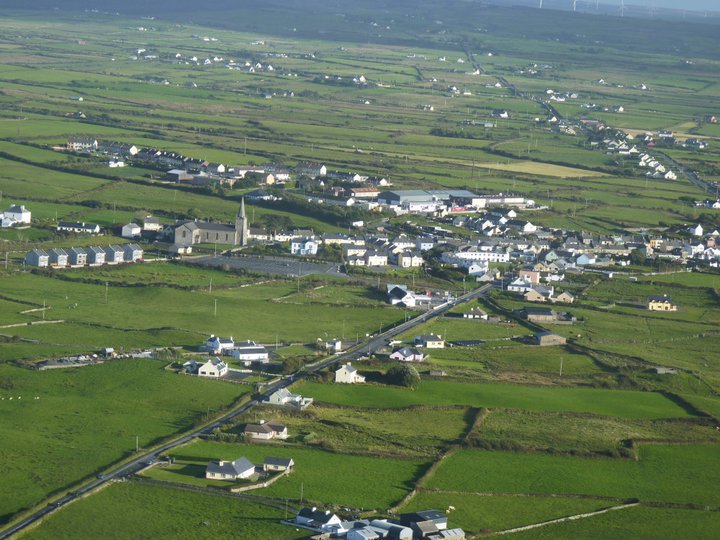
Photo: John Treacy
Wikimedia Commons
MR MARKHAM OF Miltown-Malbay died and was interred recently. Soon after the body, with coffin, was mysteriously abstracted from the grave and afterwards found standing upright between two posts in the vicinity.
Month: March 2014
The Kinvara League – 1889
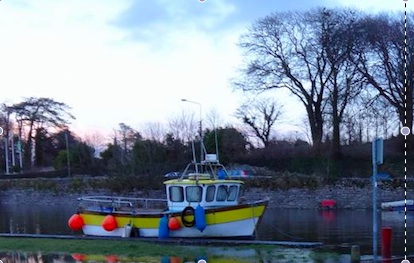
At last meeting of the Kinvara League, Rev. J. Moloney presided.
Other members present;
Dr. W.J.Nally Messrs. Burke, Tallman, Halvey, Shaughnessy, Spellman and Corless, Hon Sec.
The Hon. Sec. reported the receipt of a cheque for 3 pounds from Mr Harrington M.P. amount of grant voted by the Central League to Michael Tracy, the evicted tenant of Cahercon.
A communication from John Hall of Kinvara, relating to a dispute he had with the landlord of his house, Richard Burke, and complaining of the treatment he had received at his hands was next read and considered.
John Burke of Killina stated he was being persecuted by his landlord, Mr Langan of Dublin, he having sold Burke’s holding for a nominal sum to one Kendall of Clifden.
Kinvarra bazaar – 1899
New Zealand Tablet Vol XXVII Issue 42 19th October, 1899 P 9
Irish News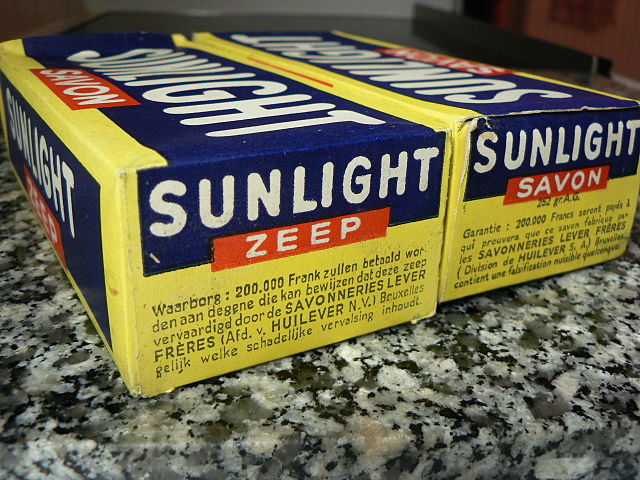
Wikimedia Commons
A most successful bazaar in aid of the Convent of Kinvarra was held about the end of August. The affair concluded with athletic sports in the convent grounds. A somewhat novel and certainly most interesting incident in the ‘athletic’ contest was ‘the Sunlight Soap Washing Competition; for handsome prizes, presented by Messrs Lever Brothers. No other item on the programme produced so much excitement and amusement. There were eight young lady competitors. Miss Doolin won the first prize and Miss Hehir the second. Charity and entertainment were never more happily associated with what should prove a very fetching advertisement.
Lough Cutra to Kinvarra – 1878
Wikimedia Commons
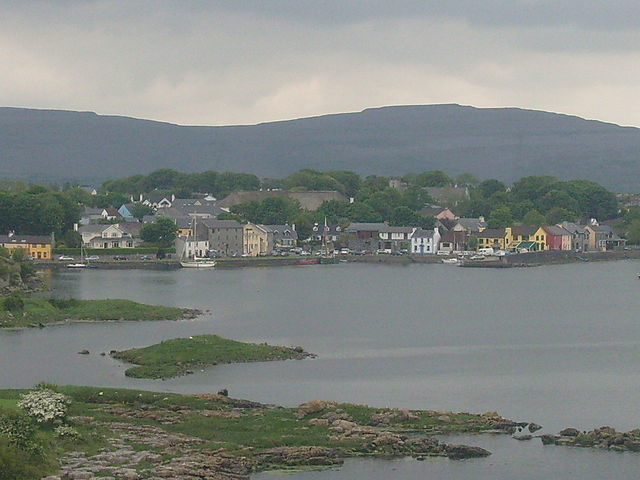
Lough Cooter Castle, one of the “slow places” of the western counties, stands on the edge of the lake from which it takes its name, two miles from the town of Gort, in Galway county. The castle is quite modern, having been erected at a cost of about £80,000 by the second viscount, from plans by Nash, the renovator and architect of the newly added portion of Windsor Castle. It is described as built in “the severe Gothic” style. The walls are of massive solidity, and constructed of beautifully chiselled limestone. The lake covers an area of nearly eight square miles, and is studded with wooded islands. One of these has been for years the home of innumerable herons and cormorants; perhaps the only instance on record of an island in a fresh-water lake being inhabited by the latter birds.
The Gort river flows out of the lake and, at a romantic glen known as “The Punchbowl,” falls into a deep rocky abyss, totally disappearing underground until it reaches Cannohoun. Here it rushes out of a rocky cavern and then flows through Gort where it turns several mills and, falling again, makes it way – appearing and sinking several times – through the sands into Kinvarra Bay, six miles from Gort.
‘Nor wood to bury a man’ – 1823
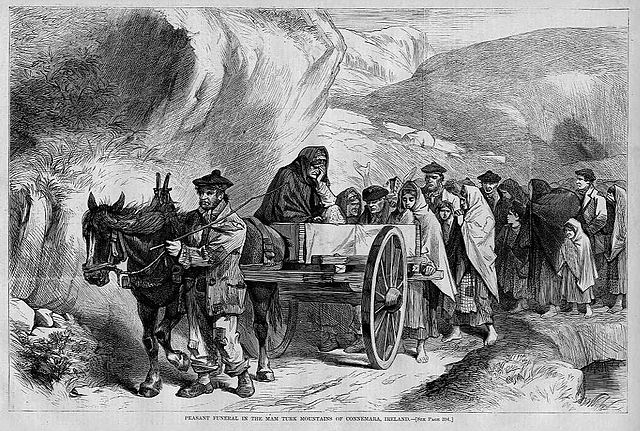
Harper’s Weekly June 1870
Galway, Ireland
May 15, 1823 (abridged)
VESTRY CESS- PARISH COFFINS
We are anxious as any for economy in the concerns of the Parish; and we have so frequently alluded to some matters, in the expenditure of which very important savings may be made.
We made it our business to look over the different items in the levy book; but it never struck us that any saving
could be made in the way of Parish Coffins; and, above all things, we never imagined that the strictest economist or well-wisher of the town could think of doing away altogether with those Parish Coffins for the Poor who are not
able to purchase any.
The new plan for burying the dead Poor is certainly outlandish:-
As soon as one expires, or when it is thought necessary to inter him, a shell, or in other words, a Coffin with a sliding bottom, is sent to his residence. In this new constructed machine he is to be taken to the grave-yard, and there dropped from out of it into the grave.
This, no doubt, may appear very economical; but we may safely assert, that the inhabitants of this town, in general, had rather even increase this impost than to see those poor people hurried into the gound like animals of the brute creation. We are not sticklers for old customs, nor foolish enough to think that it is of any importance where or in what manner the human frame shall be deposited after the vital spark shall have been extinguished; but we do confess, that it is a melancholy reflection for the poor man to think that after having spent his life in honest but unprofitable industry, and paid his town-taxes and vestry-cess regularly, or as well as he was able, his poverty should force him to consign to the grave, after the manner of the brute creation, his relative, whom he esteemed, or his wife, or father, or sons whom he loved, and whose memory he would respect.
 The Burren and Beyond