Posted in Posts and podcasts

Westward of Arran – 1882

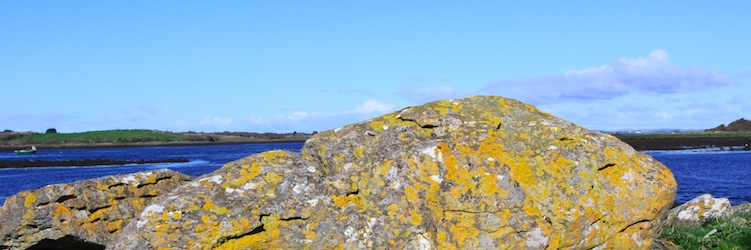
Photo; Norma Scheibe

POEMS BY DENIS FLORENCE MAC CARTHY

DUBLIN. M. H. GILL AND SON, 50 UPPER SACKVILLE STREET

1882

(excerpt Ara of the Saints)

Westward of Arran as I sailed away;
  I saw the fairest sight eye can behold--
Rocks which, illumined by the morning's ray,
  Seemed like a glorious city built of gold.
Men moved along each sunny shining street,
  Fires seemed to blaze, and curling smoke to rise,
When lo! the city vanished, and a fleet,
  With snowy sails, rose on my ravished eyes.

Thus having sought for knowledge and for strength,
  For the unheard-of voyage that I planned,
I left these myriad isles, and turned at length
  Southward my bark, and sought my native land.
There made I all things ready, day by day,
  The wicker-boat, with ox-skins covered o'er--
Chose the good monks companions of my way,
  And waited for the wind to leave the shore.


Posted in Posts and podcasts

Croagh Patrick – 1914

Croagh Patrick Photo: Bart Horeman Wikimedia Commons
Croagh Patrick
Photo: Bart Horeman
Wikimedia Commons

CROAGH PATRICK.

Freeman’s Journal – 10th September 1914

THE GREAT ANNUAL PILGRIMAGE. OVER 15,000 PEOPLE ATTEND. (abridged)

The Croagh Patrick pilgrimage was once again convincing proof of the abiding homage of the Irish people for their National Apostle. From near and far, from every county in Ireland, and from Australia, America, South Africa and Great Britain, pious pilgrims assembled at the Holy Mountain to pay tribute of faith and devotion at St. Patrick’s venerated shrine. It is estimated that over 15,000 people ascended ‘The Reek,’ where some thirty priests celebrated the Votive Masses of the saint from seven until noon. Nearly 7000 passengers from Cork, Limerick, and the Connaught and Midland districts poured into the town from the ten special excursion trains run yesterday morning.

On Saturday three special trains brought big contingents from Dublin and intermediate stations.  Hundreds of pilgrims kept vigil on the mountain all night, undeterred by cold, blustering showers, and the bleak, shelterless mountainside. By the first faint light of dawn the thronging thousands began to wend their way to the Holy Hill. Throughout the morning an unending stream of vehicles covered the road from Westport to Murrick, the starting point of the climb. Along the roads trudged thousands more. It was certainly an inspiring and a deeply affecting spectacle. The climb is a most arduous one of some three miles, with scarcely a level foothold the whole way, but no one seemed any the worse for the journey.


Posted in Posts and podcasts

Creating Irish Crime – 1911

Photo: Hopklaver (Medicago lupulina) Creative Commons
Photo: Hopklaver (Medicago lupulina)
Flowering Shamrock
Creative Commons

North Otago Times, 13th April, 1911
CREATING IRISH CRIME

The Connaught Tribune, a leading Nationalist newspaper published at Galway recently printed, on the authority of “a reliable correspondent,” the following extraordinary story of “loyalist” methods in agitating against Home Rule;

Many of the strange and meaningless outbreaks that have recently occurred in County Galway are not the result of any land agitation at all, but the direct outcome of a sinister secret organisation financed by men who are, and have all their lives, been enemies of Ireland, and who are prepared to resort to any desperate mans to prevent this country securing Home Rule.

The statement may appear at first sight very far-fetched (says the correspondent), but I am in possession of information that leads me to believe that a certain despicable class of non-resident landlords are prepared to do all in their power, and have at their disposal unlimited funds, for the purpose of blackening the fair name of this country.

I could lay my hands on over half a dozen men in County Galway who have no visible means of subsistence and who yet always appear to have plenty of money. These men are “in the know” of everything, and it is notorious that they make frequent secret journeys to distant and secret destinations. They are nothing short of “village bums,” and yet they pose as patriots.

But, unless I am very much mistaken, they are the aiders and abettors of the treacherous enemies who are today stabbing us in the back and keeping the progress of our country back half a century by encouraging, if not actually siding in the perpetrating of these outrages that have absolutely no other meaning, and can effect no other purpose whatever except to do untold injury to the country.

Posted in Posts and podcasts

Here’s to the County Galway – 1896

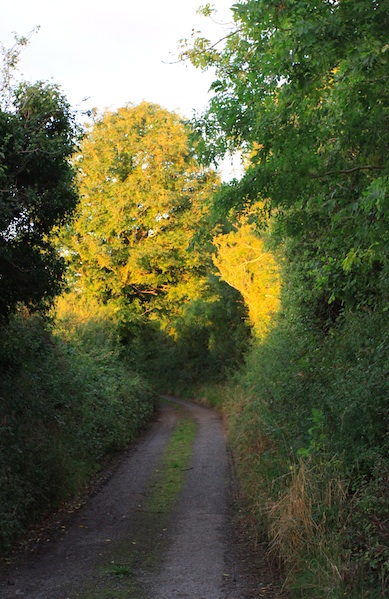
Photo: Norma Scheibe
Southland Times, I 13385, 22nd February 1896 p6
Here’s to the County Galway (abridged/anon)

No matter wheresoe’er I roam
In foreign lands across the foam,
My thoughts will always fly to home,
To home and County Galway.
And though, alas, I had to part
And hear the sting of sorrow’s dart,
There’s still a soft spot in my heart
For home and County Galway.

’Tis there the hills are towering high,
They seem to kiss the azure sky,
And peep at heaven on the sly,
Those towering hills of Galway.
There is no fairer spot I ween,
The sun’s more bright, the grass more green;
There’s poetry in every scene
Around the County Galway,

For rosy lips and laughing eyes
That beam as bright as sumer skies,
In which some subtle charm lies,
Give me the girls of Galway.
They’re mild and gentle as a dove,
Are full of virtue, truth and love-
There’s nothing under heaven above
Just like the girls of Galway.

The men are all from six feet four
To seven feet six and sometimes more
’Tis very few can stand before
A fighting lad from Galway.
They’d jump a hurdle eight foot high,
Catch cannon balls upon the fly.
And for old Ireland dare or die,
Those rattling boys from Galway.

Then here’s to Galway’s maids and bells,
To Galway’s men and Galway’s swells,
To Galway’s lakes and Galway’s fells
Here’s to the County Galway.
May angels weave their mystic spells,
O’er every home where virtue dwells,
O’er Galway’s hills and Galway’s dells
There’s no place else like Galway.

Posted in Posts and podcasts

Intimidatory notices – Kinvara – 1910

Intimidatory Notices (Kinvara).

HC Deb 10 March 1910 vol 14 cc1619-201619 Continue reading “Intimidatory notices – Kinvara – 1910”

Posted in Posts and podcasts

Typhus in County Galway – 1942

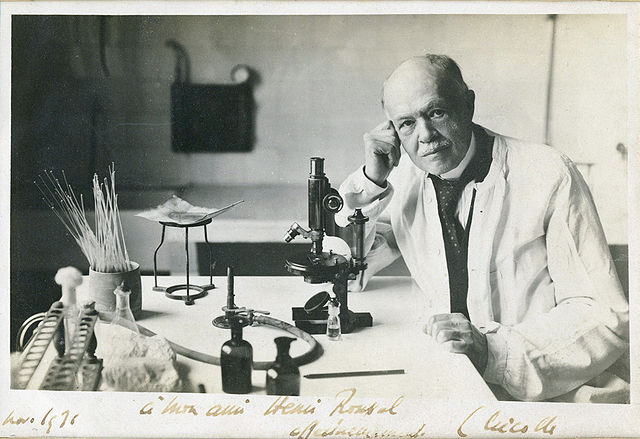
Charles Nicolle received the 1928 Nobel Prize in Medicine for his identification of lice as the transmitter of epidemic typhus. Photo: Roland Huet Wikimedia Commons
Charles Nicolle received the 1928 Nobel Prize in Medicine for his identification of lice as the transmitter of epidemic typhus.
Photo: Roland Huet
Wikimedia Commons
EVENING POST VOLUME CXXXIV ISSUE 125 23RD NOVEMBER 1942 P4
TYPHUS IN COUNTY GALWAY

Thirteen cases of typhus are reported in the coastal area of County Galway. One death has occurred. Schools within an area of 175 square miles have been closed.

Posted in Posts and podcasts

Advance notice – 1909

Coole Park, Gort Photo: AMcCarron Wikimedia Commons
Coole Park, Gort
Photo: AMcCarron
Wikimedia Commons
Hansard Commons Deb 28 June 1909 vol 7 c195W

Mr. DUFFY asked the Chief Secretary whether he is aware of the fact that the sergeant of the Royal Irish Constabulary stationed at Kinvara, county Galway, sends a telegram to the police authorities at Gort on each occasion that Mr. Michael O’Donohoe, J.P., county councillor, Kinvara, visits Gort in discharge of his public duties; will he state the cause or justification for such action, having regard to the fact that Mr. O’Donohoe discharges his duties conscientiously to all concerned?

§Mr. BIRRELL
I do not know whether the facts are as alleged, and I see no reason to inquire as to the manner in which the Constabulary authorities exercise their discretion in a case of the kind.

Posted in Posts and podcasts

Kinvara Harbour – Tolls – 1901

Kinvara  Harbour Photo: Norma Scheibe
Kinvara Harbour
Photo: Norma Scheibe

HC Deb 13 August 1901 vol 99 cc607-8 607
§ MR. DUFFY (Galway, S.)
I beg to ask the Chief Secretary to the Lord Lieutenant of Ireland whether he is aware that there is no available authority to compel the receiver of tolls at Kinvara Harbour to take such measures as will facilitate the entrance of vessels; and, seeing that the payment of tolls is levied for that purpose, he will institute inquiry as to the manner in which a remedy can be provided.

§ MR. WYNDHAM
I have nothing to add to my previous reply except that I will give the matter my personal attention during the recess.

Posted in Posts and podcasts

Rent reduced – Kinvarra – 1893

NEW ZEALAND TABLET VOLUME XXI, Issue 23, 24th March 1893 p9

J Brady Murray, 11 Pembroke Road, Dublin and Northampton House Kinvarra, has given a reduction of fifty per cent to his kinvarra tenants. Mr Murray is son of the late P Brady, Soliitor, Danby, Ballyshannon, and nephew of Mrs John Stephensen, Castle Street, Ballyshannon

Posted in Posts and podcasts

Kinvarra Petty Sessions – 1886

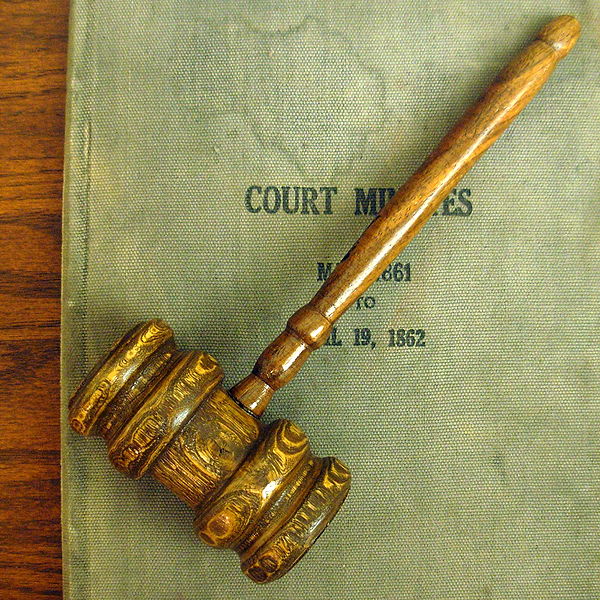
Wikimedia Commons
Wikimedia Commons
NEW ZEALAND TABLET VOLUME XIV ISSUE 34 17TH DECEMBER, 1886 P 19

At the Kinvarra Petty Sessions on September 22 before Colonel Mallon, R.M. and major Blake, 37 men were charged with unlawful assembling and breaking the fences on the lands of Cahergilssane, the property of Arthur Persse. The first Crown witness, a man named Clayton, refused to give evidence, and was committed for eight days. Three other witnesses were examined, who gave evidence as to the assembly of a crowd, but could only identify one of the defendants as forming a part of it.
On cross-examination by Mr McDonagh, it was elicited that there was a hurling match on a neighbouring field, not the property of Mr Persse, and that the cattle were frightened by the noise and runaway, breaking through the fence. Mr McDonagh asked for a dismiss on the merits, to which the bench agreed, and also to the liberation of Clayton, who refused to give evidence, seeing the failure of the Crown cae.