
Agnes – at The Ark – coming soon… all about Agnes
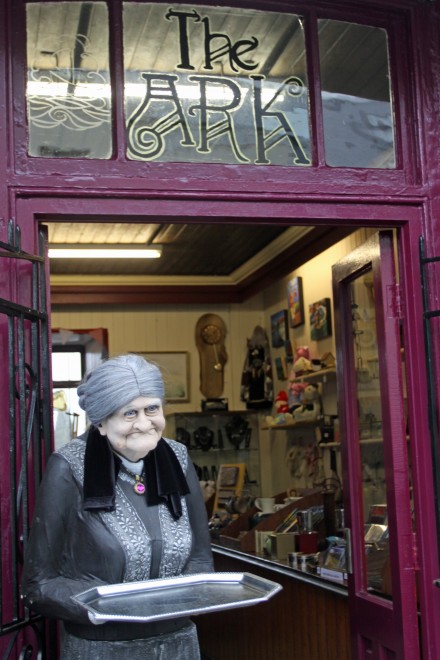
Photo: EO’D
Agnes – at The Ark – coming soon… all about Agnes
https://widgetworld3.wordpress.com/podcasts/
THE INTERMOUNTAIN CATHOLIC 1ST JANUARY, 1910 P.6
CURIOUS DOG STORY
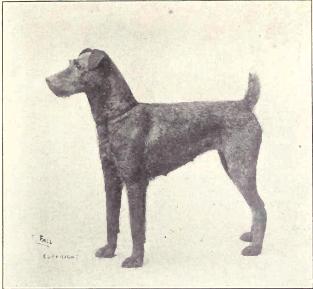
A rather curious story comes to me this week. An Irish terrier was sent all the way from Rome by its owner, a great lady of the Italian capital, to be buried in Ireland. The lady was passionately fond of the dog, and when it died recently she had it embalmed and encased in an elaborate and expensive coffin.
She immediately communicated with a firm of London lawyers, requesting them to find some place in Ireland where her pet could be buried and its remains rest undisturbed. As a result, she was put into communication with J….. L….., B……… L…., the famous race horse owner. He agreed to allow the dog to be buried on his estate, and the coffin from the Italian woman duly arrived from Rome. After the interment the bereaved owner of the Irish terrier paid Mr L…. a check for a substantial sum for the burial ground – probably two square feet – and also left the wherewithal to purchase a tombstone.
https://widgetworld3.wordpress.com/podcasts/
THE BURROWA NEWS 1ST JANUARY, 1897
THE COAST OF CLARE
Fancy being brought face to face with the great ocean representing on the map an expanse of water between the Irish and the American shores of no less than five thousand miles. No intervening territory meets the eye the whole length of this prodigious waterway, no strip of land, no cliffs, not even a bare rock on which a sea bird might perch. As a Clare boatman once said to a party of tourists;
“Just throw a stone from where you are now and it will fall into another world, barring it didn’t sink in the water.”
The surpassing grandeur of the great Atlantic ‘in breeze, or gale, or storm’ is in itself something to gaze upon. There behold the mighty sea, almost along the entire shore, rolled back ‘from dusk till dawn, and from dawn till dusk again,’ in masses of foam against huge frowning, raven-coloured rocks. The din of the conflict scarcely ever ceases, while day and night those sable cliffs valiantly repulse their fierce assailants.
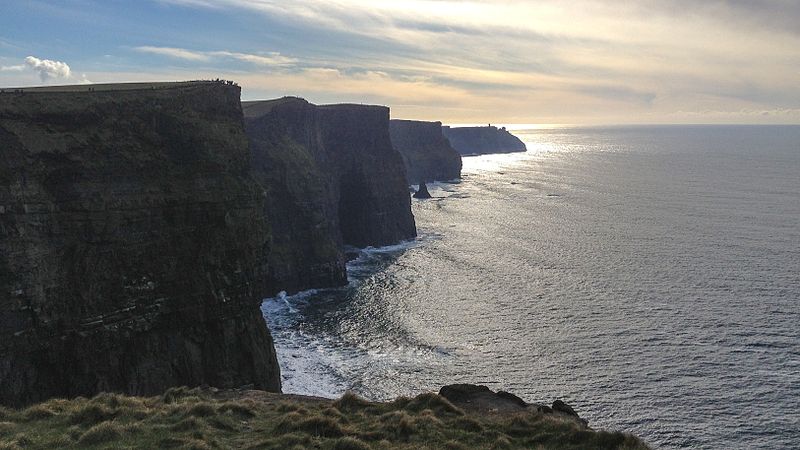
The cliffs of Moher, lining the coast of Clare for five miles, are in themselves a simple marvel. Moher, an iron-bound barrier, erected by Nature to repel the lashing fury of the ocean, is pronounced on all bands to be the finest pile of rock that guards the margin of our sea girt land. Try and imagine a serried array of boulders rising abruptly at low water mark to an altitude ranging from 600 to, it is said, 1,000 feet, and this is Moher.
These towers of the sea are not so tall as others in Ireland – for instance, in Crohahawn in Achill, or Slieveneague in Donegal. It is to be remembered, however, that the precipitous cliffs on the Mayo coast repose in their sockets at an angle of about 45 degrees; but the Clare Peaks, sheer perpendicular elevations, stand rooted and immovable against the rage of the tempest, and are more than proof against almost perpetual winds from the west.
Some notion may be formed of the violence of western hurricanes on the coast of Clare by the fact that trees planted inwards fifty miles from the Cliffs of Moher acquire a bend towards the eastern horizon. The power of the blasts off sea is enhanced by the indented character of the shore in this portion of Ireland.
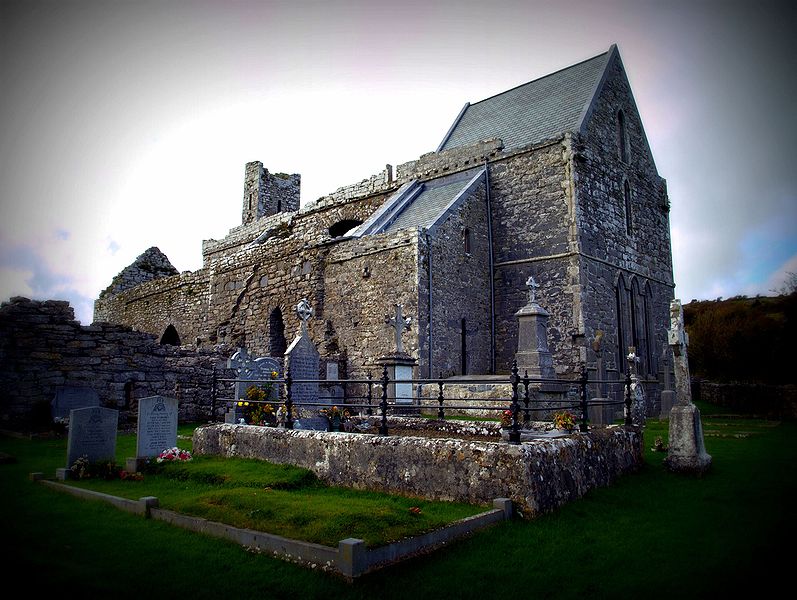
Huge recesses of the Atlantic are frequent, and add immensely to the fascinations of the Clare Coast. From Liscanor (sic) to Doonbeg the ocean forms a spacious bay at Corcomroe and other charming inlets of smaller size. The fresh invigoration breezes, surcharged with ozone, that play around on all sides of the coast of Clare acknowledges no compeer anywhere.
https://widgetworld3.wordpress.com/podcasts/
THE GRAND HAVEN NEWS 16TH MAY 1860 P1
THE NEW GALWAY STEAMERS – STILL MORE RAPID COMMUNICATION WITH EUROPE
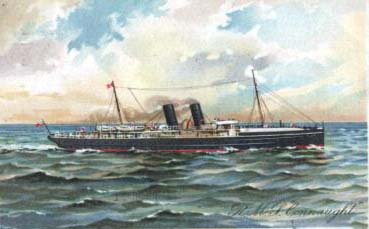
The steamship Connaught, the first of the four new Galway steamers to be called after the four provinces of Ireland, was to have been launched yesterday, and will probably be soon on her way to this continent. The company has entered into a contract with the government binding themselves to convey mails and telegraphic dispatches to and fro between Galway and St. Johns respectively, in six days by the steamers of this line.
This is certainly a bold stipulation. It is quite an American idea, and if carried out will bring the two continents into closer communication than they ever were before. The distance between the two ports is about 1,650 miles, and if it is made in 144 hours, these vessels must run at a uniform speed in all weathers of nearly twelve miles an house. it is said, however, that they will be able to run twenty miles an hour if required.
If they fulfill the terms of the contract, nothing can beat this rapidity of communication except Wise’s balloon or the Atlantic telegraph.
(N.Y. Herald, May 23)
https://widgetworld3.wordpress.com/podcasts/
THE BELMONT CHRONICLE, AND FARMERS, MECHANICS AND MANUFACTURERS ADVOCATE. 2ND SEPTEMBER, 1853 P1
IRELAND
There is a religious movement in progress in Ireland that promises important results. Through the influence of emigration and proselytism the relative numerical strength of the Protestants and Roman Catholics is undergoing a rapid change, and the former are gradually gaining the ascendency. It has been predicted by the London Times that “in fifty years Ireland well be Protestant to a man.” A concealment of the fact is no longer attempted by the Roman Catholic press. The Dublin (R.C.) Nation says;
“There can be no longer any question that the systematized proselytism has met with immense success in Connaught and Kerry. It is true that the altars of the Catholic Church have been deserted by thousands, born and baptized in the ancient faith of Ireland. The West of Ireland is deserting the ancient fold.”
The Dublin Tablet says;
“We repeat, it is not Tuam, nor Cashel, nor Armagh, that are the chief seats of successful proselytism, but this very city in which we live.”
The Dubin Evening Post says:
“We learn from unquestionable authority that the success of the proselytisers in almost every part of the country, and, as we are told, in the metropolis, is beyond all the worst misgivings we could have dreamt of.”
This testimony is further corroborated by the report of the Irish Missionary Societies, which characterize the movement above spoken of as the “New Reformation.” Ireland can scarcely be regarded as a Roman Catholic country inasmuch as, out of a population of six millions and a half, nearly one-third is Protestant. To effect this result divers influences have contributed, prominent among which are the labors of “The Society for Irish Church Missions to the Roman Catholics,” organised in 1840, under the presidency of the Duke of Manchester. This society has now 142 agents. In the district of West Galway where in 1810 no 300 Protestants were to be found, there were, in May 1852 nearly 6,000 converts attending church services, while 3,500 children were taught in the bible schools. In Dublin and various other places mentioned the missions and schools are prosperous.
Journal of Commerce.
https://widgetworld3.wordpress.com/podcasts/
THE MORETON BAY COURIER, 10TH MARCH, 1849 P4
BRITISH EXTRACTS.
A VAGRANT (abridged)
An ingenious defence was made in a case tried at Galway at the present assizes. M. Connelly was placed at the bar and arraigned, the grand jury having presented him as a vagrant. The evidence adduced against him clearly proved that he was a notorious bad character. He had no settled place of residence, was constantly brought before the magistrate at petty sessions on charges of sheep-stealing and killing sheep; he has publicly sold in markets legs of mutton at 6d each, and was committed for trial both at quarter sessions and assizes; but so ingeniously did he continue to commit these offences that evidence could not be adduced legally to convict him. That he was a public nuisance was proved by four gentlemen, two of whom were magistrates, namely, J.B. Kernan, R.M., and – Jopdell Esq., before whom the prisoner had been frequently brought, and upon the corpulent appearance of the second named gentleman the prisoner made part of his defence.
The case for the prosecution having closed, and the prisoner being called on for his defence, made a few observations in Irish, which Mr. W. Bourke stated he would, for the information of the court, translate, the statement of the prisoner being both ingenious and poetic. Baron Lefroy expressed his thanks to Mr Bourke.
Mr Bourke said, “my lord, the prisoner submits that all the evidence given on the part of the prosecution must be construed in his favour, and that the fact of his being so often tried, and on no occasion convicted, clearly shows he must be an honest man -(laughter).
For the same reason, my lord, as the prisoner states, that the more frequently gold is molten in the furnace and tried for its genuine character the purer it becomes” (loud and continued laughter, in which Baron Lefroy heartily joined).
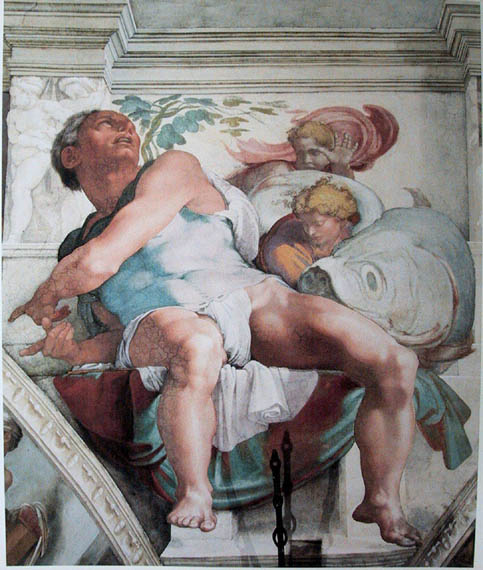
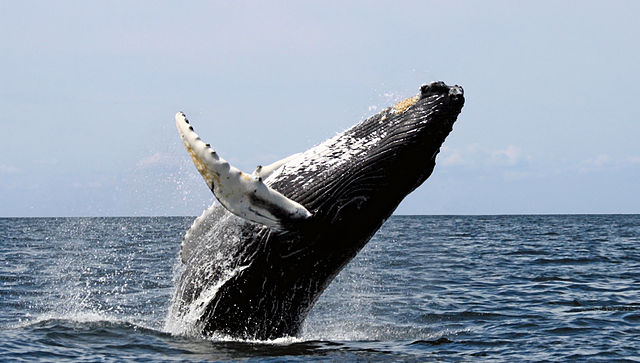
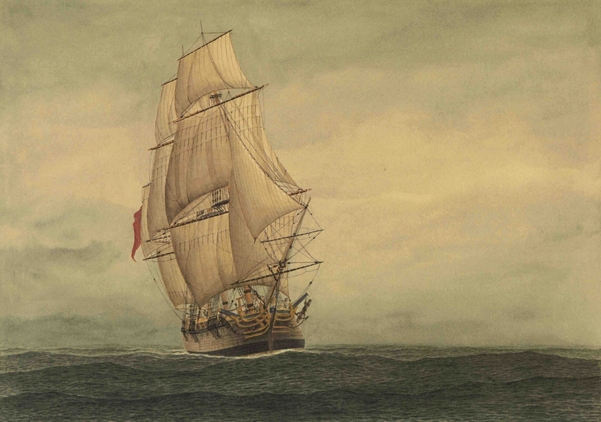
“He further submits, my lord, that his case is analagous to that of Jonas in the whale’s belly (laughter). When Jonas escaped from the belly of the whale he went forth an untainted character. The prisoner insists he should be considered a Jonas as he escaped from the clutches of Mr. Lopdell, who is very like a whale, and who sought to devour him” (loud laughter).
He further, my lord, insists that the fact of his having meat frequently in his possession, and having gone about the country selling legs of mutton, demonstratively proves his innocence, for that it is merely evidence to show he is a man of industrious habits prosecuting his trade as a butches (loud laughter).
He submits, my lord, to go into the dock and stand his trial for sheep stealing or any other offence that may be brought against him; but he denies the existence of a power in the jury to find him guilty as a vagrant, the whole weight of the evidence, in his opinion, going to prove that he is an honest man (loud laughter).
Under these circumstances the prisoner, whose statement I have literally translated, submits he is entitled to an acquittal.”
Baron Lefroy, who was greatly amused during Mr. Bourke’s delivery of the translation of the prisoner’s statement, said it was a defence very proper for a jury to deal with, which the gentlemen in the box did, by finding the prisoner “guilty”. He was sentenced to the usual penalty in such cases, namely, to find security within three months for his future good behaviour, or in default thereof to be transported for seven years.
Daily News, August 26
 https://widgetworld3.wordpress.com/podcasts/
MARLBOROUGH EXPRESS 5TH MARCH 1887 P3
A NEW AMERICAN SLAVE TRADE.
The New York Journal says :—There is in New York a moneyed and well organised society which trades in human flesh and blood. The society is composed of the owners of those houses that disgrace the city. The head and front of it is a wretch keeping a place in Chrystie Street, and who boasts of a fortune of 300,000 dollars.
The society has got in its employ a dozen women who make trips regular to Europe. They go to Paris, London, Berlin, Rome, Vienna, Edinburgh and Dublin. They live in “great style.” They go to public parks and squares, win the confidence of young women, and by specious promises induce them to come to New York.
Their favorite dodge is to have the girl recorded on the passenger list as a “lady’s maid.” One woman was known to bring five girls on one trip. When the girls reached this city coaches await them, and they drive off, knowing no one, speaking a strange language, and ignorant of American laws or customs, they are at a loss as to what to do, and usually yield to their fate.
Two weeks ago a handsome, silken roben woman flashing with jewellery, and carrying a fat purse, appeared in Loughrea, County Galway, Ireland. She went to a farmhouse occupied by an honest old farmer. She remained there four days,, and before she left she induced the farmer’s daughter, Katie ——, an innocent girl about 17 years old, to start for this city. She said she knew the girl’s sister, who resided in New York, and that her sister was anxious that Katie should come to America to enjoy her wealth. She also showed her parents a cable dispatch asking that Katie should be sent out.
The unsuspecting girl started off, and embarked at Liverpool on the steamship City of Chigago as cabin passenger. The vessel reached New York on Friday afternoon at 2 o’clock, and they took a coach and went off with two men employed on board the vessel. At 3 o’clock yesterday morning Officer Peter W. ——–, of the Fourteenth precinct, saw the coach at Grand and Elizabeth Streets. Two women and two men alighted. The contrast; between the women struck him. He knew at once that the girl was an immigrant who was not yet a day in the city. He tapped her on the arm and bade her go with him, and he took her to the Mulberry-street Station. She told him the whole story about the way in which she was induced to come to America.
Later on he arrested the woman who brought Katie to this city, and he managed to find Katie’s sister in an unsavoury neighborhood.
https://widgetworld3.wordpress.com/podcasts/
WAIRARAPA DAILY TIMES 7TH NOVEMBER, 1912 PAGE 4
A COLONIAL JOURNALIST’S “SCOUP.”
(abridged)
That the great scoop of the War should be scored, by a colonial journalist is very pleasing to his brethren. Turkey is full just now of distinguished war correspondents, who have all been striving to do what Mr Martin Henry Donohoe accomplished in the graphic account of the Turkish debacle published a few days ago.
According to a Christchurch paper,’Mr Donohoe was born in County Galway, Ireland, just 43 years ago this week/but he began his journalistic career on the French newspaper of Sydney in 1892, and subsequently joined the “Evening News” staff, and further emphasised his Australianisation by marrying a clever Australian teacher, who was identified with various women’s movements.
While on the “News,” he was an undistinguished, but most painstaking,’ hard-working, and deservedly-liked reporter, and in that capacity pricked the Rougemont bubble. His real career, however, was destined to be in a wider field than Australia afforded. He was interested in volunteering. He became a member of the crack New South Wales Lancer Regiment (now the First Australian Horse), and made one of the contingent which went to Aldershot for training. There it was noted for its efficiency, and set out for home via the Cape, having done well what it was sent to do. But when it reached Capetown it found the Boer War in full swing, and in spite of the extraordinary decision of the War Office that it did not want mounted men from the colonies, it volunteered, was at once sent to the front, and, under General French, highly distinguished itself, and formed a text from which tho purblind individuals in the War Office suddenly saw light and reversed their previous decision.
With the forces was Mr Lambie, an Australian journalist acting for the London “Daily Chronicle” and Australian papers, and on his death the journalistic member of the Lancers immediately took up his despatches, and did so well that he was speedily made the “Chronicle’s” regular correspondent and detached from his troop. Mr Donohoe did distinguished work in every big movement in the war; incidentally was captured, and released at the fall of Pretoria; went through the Russo-Japanese war with the first army under Kuroki, travelled extensively for his paper, doing great functions for it, was in Constantinople when it fell to the Young Turks and through the revolution, was the first to interview the new Sultan, and got a similarly exclusive scoop of the Portuguese revolution, escaping from Lisborn with his account of the street fighting.
And now he has made a bigger scoop still by being the only correspondent to get away an account of the last great battle. One factor has been Mr Donohoe’s excellent French, an accomplishment which his wife shares with him. It has helped him immensely in foreign campaigns, and it has made him, when not on the warpath, Paris representative of the “Daily Chronicle,” installed in a delightful suite, where he is tho same competent, unassuming, good-hearted fellow to his old friends that he was when he was a reporter on the Sydney “Evening News.” Martin Donohoe deserves every success that comes to him.
https://widgetworld3.wordpress.com/podcasts/
EVENING POST 18TH JUNE, 1926 P13
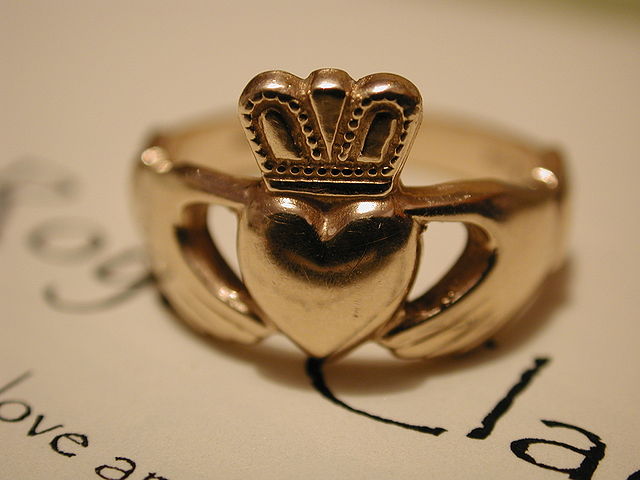
Among quaint old marriage rings, prized and sought after by collectors, the Claddagh ring is probably the rarest. Claddagh is a little district in the north-west of Galway, and its people are popularly supposed to date back to the Armada. Colour has been lent to this belief because the people are tall and dark, and quite unlike other Galway folk, but it is certain that they date far behind and beyond the Armada and their origin is a mystery.
The Claddagh people rarely marry outside their own race. They have always used as marriage rings heavy gold bands, with hands clasped round a heart, and for many centuries these rings have passed from father to son, and each has been given to many a dark-browed bride. On the inner surface of the band the initials of the man and the woman are engraved.
In one ring, which is hundreds of years old, the initials, some roughly carved, almost cover the time- smoothed gold. Irish jewellers make many replicas of these mysterious old rings, but the expert collector can easily detect the modern imitation, and owners of the genuine antiques prize them greatly. The one mentioned had been sought for seven years before a lucky chance brought its present posessor into contact with an old Galway woman who was willing to sell her treasure.

CAMBRIAN 27th July, 1805
Custom-House, Dublin.
15th July, 1895. (abridged)
Sir,
A.Marsden, Esq. Secretary to the Lord Lieutenant, having by his letter of the 13th inst. transmitted to the Board a copy of one received on that day from Admiral Young, dated Hamoaze, the 8th, containing intelligence respecting the combined squadrons of the enemy.
Enemy consists of seventeen sail of the line and several frigates, which were seen on the 17th of last month in lat.53.12. long 57. steering N.E. Reported to have a highly infectious fever in many of the ships. Suggests that precautions be taken to prevent the communication of the infection.
If any of those ships are captured, it should be sent to any port in Ireland,
In pursuance of his Excellency’s desire, signified by Mr Marsden’s said letter, the Board communicate this information to you.
In the event of any of the squadron being brought in, proper precautions may be taken accordingly.
By order of the Commissioners.
A.Maclean
 The Burren and Beyond