Posted in Posts and podcasts

Irish Fairy Tales – 1893

Freemans Journal 1st November, 1893 (abridged)
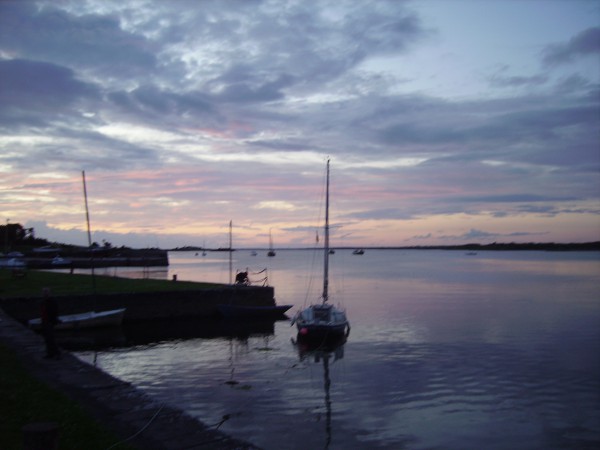
Kinvara Twilight Photo: BO'D
Kinvara Twilight
Photo: BO’D

Mr W. B. Yeats delivered an interesting lecture on “Irish Fairy Tales” at 15 D’Olier Street last evening, under the auspices of the Young Ireland League. Mr Henry Dixon presided.
Mr Yeats, who was received with applause,  said that night was sacred to the fairies in general and to the phouca in particular. The phouca sometimes appeared as a horse, sometimes as a donkey, sometimes as an eagle and, indeed, took innumerable four-footed and two footed shapes.

The night of Samhain in old Pagan days was the commencement of winter, over which presided the phouca, whom the people considered the spirit of decay. They believed it was dangerous to go abroad on that night because the fairies might carry them off into their kingdom.  That night also the dead were believed to come out of their graves and ride upon the white sea waves, and there were stories of fishermen, who, having escaped the waves and come ashore, found the dead grasping them from behind.

Mr Yeats related a number of interesting fairy tales and said that folklore afforded the most beautiful material for literature and they could not do better than encourage people to use it for such. Every country in the world had these beliefs and universal belief like that meant some universal need for it. If there was not deep down in the human soul some need to think about imaginary beings more beautiful and more powerful than the men and women they met in ordinary life, these things would not have arisen.   Forelore gave a beautiful and most ample expression for their vast emotions –  emotions which were always struggling to express themselves but were beaten down by the sordid interest of real life.  Poets were folklorists who had listened to the voice of the people.  They had taken the stories of the old men and women and had made them the delight of the most profound minds of all nations.
Posted in Posts and podcasts

By the roadside – 1893

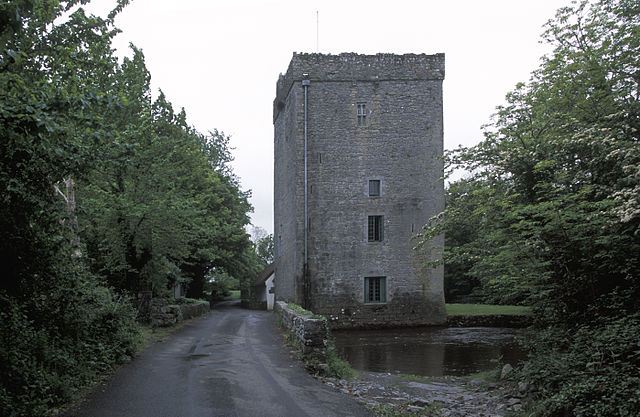
Thoor Ballylee Photo: Jerzy Strzelecki Wikimedia Commons
Thoor Ballylee
Photo: Jerzy Strzelecki
Wikimedia Commons
Excerpt from The Celtic Twilight – W.B. Yeats (1893) abridged
p232/3
LAST night I went to a wide place on the Kiltartan road to listen to some Irish songs. While I waited for the singers an old man sang about that country beauty who died so many years ago, and spoke of a singer he had known who sang so beautifully that no horse would pass him, but must turn its head and cock its ears to listen. Presently a score of men and boys and girls, with shawls over their heads, gathered under the trees to listen. Somebody sang a Muirnín Díles, and then somebody else Jimmy Mo Mílestór, mournful songs of separation, of death, and of exile. Then some of the men stood up and began to dance, while another lilted the measure they danced to, and then somebody sang Eiblín a Rúin, that glad song of meeting which has always moved me more than other songs, because the lover who made it sang it to his sweetheart under the shadow of a mountain I looked at every day through my childhood.

The voices melted into the twilight and were mixed into the trees, and when I thought of the words they too melted away, and were mixed with the generations of men. Now it was a phrase, now it was an attitude of mind, an emotional form, that had carried my memory to older verses, or even to forgotten mythologies. I was carried so far that it was as though I came to one of the four rivers, and followed it under the wall of Paradise to the roots of the trees of knowledge and of life. There is no song or story handed down among the cottages that has not words and thoughts to carry one as far, for though one can know but a little of their ascent, one knows that they ascend like medieval genealogies through unbroken dignities to the beginning of the world.

Folk art is, indeed, the oldest of the aristocracies of thought. Because it refuses what is passing and trivial, the merely clever and pretty, as certainly as the vulgar and insincere, and because it has gathered into itself the simplest and most unforgetable thoughts of the generations, it is the soil where all great art is rooted.

Posted in Posts and podcasts

The Merrow – 1888

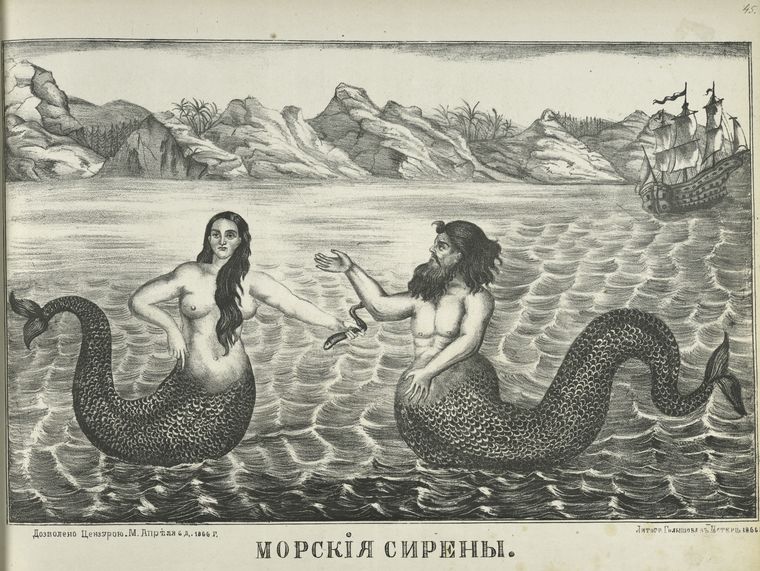
Mermaid and Merman - Anon - 1866 New York Public Library Wikipedia.org
Anon – 1866
New York Public Library
Wikipedia.org
Fairy and Folk Tales of the Irish Peasantry, edited and selected by W.B.Yeats
Walter Scott, London, New York (1888)
THE MERROW (abridged)

The Merrow, or Moruadh/Murrúghach, comes from muir, sea, and oigh, a maid, and is common, they say, on the wilder coasts of Ireland. The fishermen do not like to see them, for it always means coming gales. The male Merrows have green teeth, green hair, pig’s eyes, and red noses; but their women are beautiful, for all their fish tails and the little duck-like scale between their fingers.
Sometimes they prefer, small blame to them, good-looking fishermen to their sea lovers. Near Bantry, in the last century, there is said to have been a woman covered all over with scales like a fish, who was descended from such a marriage. Sometimes they come out of the sea, and wander about the shore in the shape of little hornless cows. They have, when in their own shape, a red cap, called a cohullen druith, usually covered with feathers. If this is stolen, they cannot again go down under the waves.

Posted in Posts and podcasts

Francis A. Fahy – New York Tribune 1902

https://widgetworld3.wordpress.com/podcasts/

Rjensen at en.wikipedia

NEW YORK TRIBUNE, FEBRUARY 11 1902 PAGE 9
HIGH PRAISE FOR FRANCIS FAHY

Joseph Devlin or Ireland, who is at the Hoffman House with William K. Redmond, M.P., one of the leaders of the United Irish League, said last night:“Although I have just reached America for the first time, I rather suspect that the present literary product of Ireland is but slightly known in America. You all know Tom Moore, of course, but do you know our three leading poets of this generation. W.B.Yeats, Lymal Johnson and Katherine Tynan? W. B. Yeats, whose verse has a mystic strain running through it, is probably the widest read in England, and perhaps here. Another of our writers who deserves attention is Francis Fahy, who write the jolliest sort of songs, bright and witty. Many of them have been set to music by Mrs A. Needham. They are well worth while to read or sing.

Posted in Posts and podcasts

Near Kinvara at the fall of day… W.B. Yeats

https://widgetworld3.wordpress.com/books-and-more-books-2/

Stories of Red Hanrahan and the Secret Rose W.B.Yeats

London: MacMillan and Co. Ltd – 1927

THE TWISTING OF THE ROPE.

Hanrahan was walking the roads one time near Kinvara at the fall of day,and he heard the sound of a fiddle from a house a little way off the roadside. He turned up the path to it, for he never had the habit of passing by any place where there was music or dancing or good company, without going in.

Posted in Posts and podcasts

The Celtic Twilight

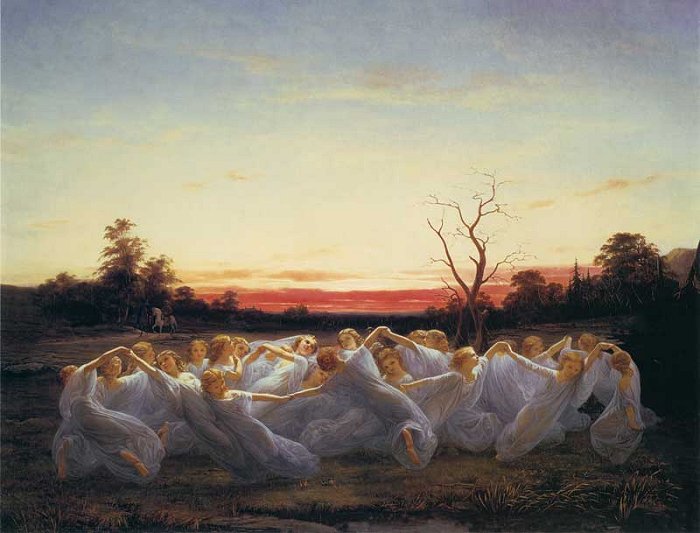
Nils Blommér (1816–1853)   Meadow Elves  Wikipedia.org Nils Blommér (1816–1853)
Meadow Elves
Wikipedia.org[/captioi
https://widgetworld3.wordpress.com/things-that-go-bump-in-the-night/

It was one night,” he says, “after walking back from Kinvara and down
by the wood beyond I felt one coming beside me, and I could feel the
horse he was riding on and the way he lifted his legs, but they do not
make a sound like the hoofs of a horse. So I stopped and turned around
and said, very loud, ‘Be off!’ and he went and never troubled me after.

The Celtic Twilight (1902)
W. B. Yeats