Posted in Posts and podcasts

A curious thing – 1896

Chronicle 3rd October, 1896
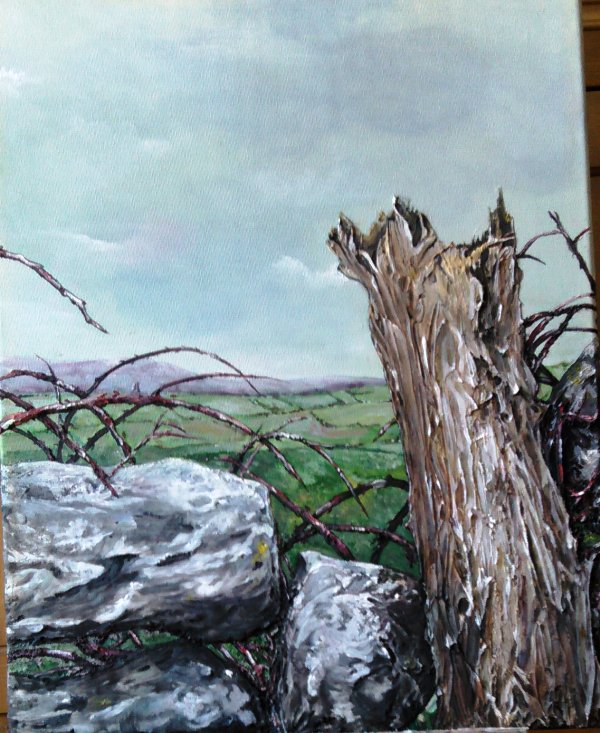
Westward Acrylic on canvas EO'D
Westward
Acrylic on canvas
EO’D

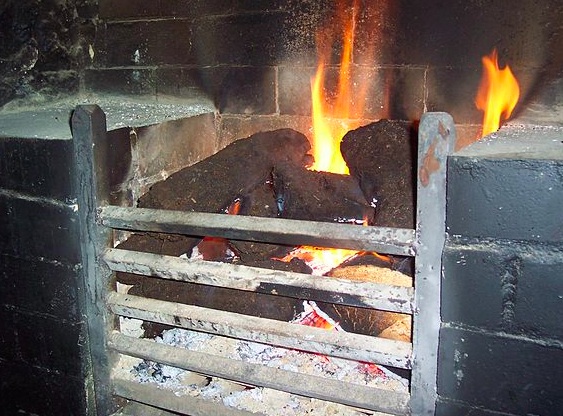
During Lord Mulgrave’s, or a preceding Lord Lieutenant’s rule in Ireland, there was a curious thing never traced to its source and never explained. In the east of Kildare, at Kill, a strange woman gave a piece of kindled peat to a man, with the injunction to pass it along to the next person on the Naas road, that person to repass it westward still alight, and so on westward. If the turf were let go out before a new piece were substituted from a living hearth, misfortune would come. That was on an autumn evening. Within twelve hours the ‘burnt turf’ had been carried to Galway Bay, across Kildare, the Queen’s and King’s counties, and Galway. No one has ever published an explanation of the affair.
Posted in Posts and podcasts

The ‘lament’ of Padraic O’Conaire – 1943

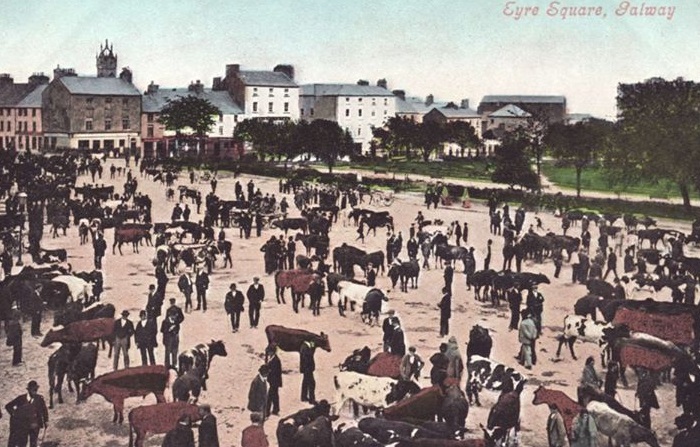
eyre sq
Cattle Fair, Eyre, Square, Galway

Connacht Sentinel 13th April, 1943 p.2
In 1935 Eamon de Valera veiled a statue of Padraic O’Conaire in Eyre Square, Galway. The Square was used for a variety of purposes including a turf dump during the Emergency. The storage of turf at Eyre Square ended in the late 1940s. Mr Kevin McDonagh marked its departure, from Padraic’s perspective, with the following poem.

O dreadful change! O piercing sight!
O prospect ugly, bleak and bare!
I’ve half a mind to stand upright
And part forever from the Square.

The crafty folk who jeer and scoff
At things that poets find most sweet.
Have tumbled down and carried off
Those noble piles of rich brown peat.

I’d fondly hope they had been stacked
To lend a rustic atmosphere
To my surroundings and distract
My brooding mind from every care.

‘Tis many a time they raised in me
A thrill as when (with eyes agog)
I’d notice floating lazily.
The Mist That Does Be On the Bog!

I’d e’en had hopes – a foolish batch
That soon a cottage might arise
Amid the peat with golden thatch
And blue smoke curling to the skies.

Exit now, my dreams are shattered quite,
And, like the peat, dissolved in air,
I’ve half a mind to stand upright,
And part forever from the Square.

Kevin McDonagh

Posted in Posts and podcasts

No turf in Kinvara – 1919

Connacht Tribune 23rd August, 1919 p.4

Photo: Irish Independent 2nd October, 1919.

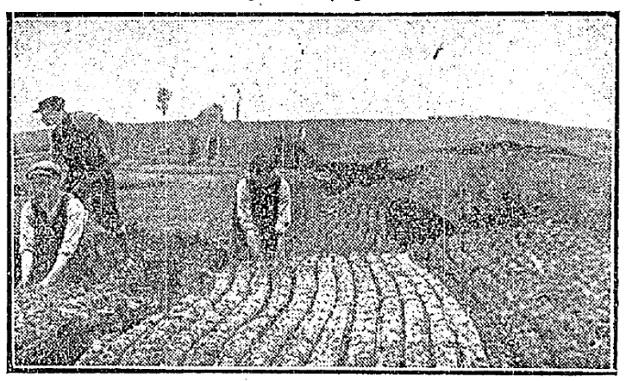
Kinvara is presently suffering from a turf famine, which is attributed to a notice put up under the heading of “Kinvara Sinn Fein Club”, fixing the price, owing to the exorbitant prices hitherto paid for seven cart loads at £6. Turf sellers have decided not to bring any further supplies to the village until the price – hitherto £7 10s per six cart load – be fixed.

Posted in Posts and podcasts

The many uses of Peat – 1917

The Minneapolis journal, 6th April 1901 p 7

Feu de tourbe Photo: Cqui (talk) Wikimedia Commons
Feu de tourbe
Photo: Cqui (talk)
Wikimedia Commons

Many uses of Irish Peat
A large Dublin manufacturer has a room entirely furnished with irish peat. The carpets on the floors, the curtains at the windows and paper on the wall are made from this substance. For years he has experimented with the material, which is now very largely exported as fuel, and he has discovered that from it, it is possible to produce almost any kind of fabric.

Posted in Posts and podcasts

Here and there – 1896

T. W. Rolleston, Myths and Legends of the Celtic Race, 1911 Illustrator: Joseph Christian Leyendecker
T. W. Rolleston, Myths and Legends of the Celtic Race, 1911
Illustrator: Joseph Christian Leyendecker
https://widgetworld3.wordpress.com/podcasts/
The Chronicle, 3rd October, 1896 p35
EXCERPT FROM REVIEW OF “HERE AND THERE MEMORIES,” BY H.R.N.
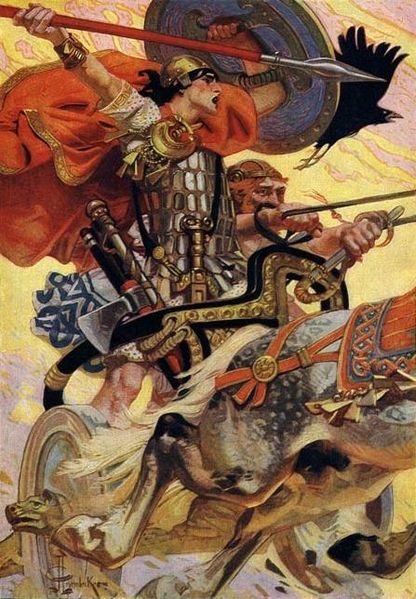
During Lord Mulgrave’s, or a preceding Lord Lieutenant’s, rule in Ireland, there was a curious thing never traced to its source and never explained. In the east of Kildare, at Kill, a strange woman gave a piece of kindled peat to a man, with the injunction to pass it along to the next person on the Naas road, that person to repass it westward still alight, and so on westward.
If the turf were let go out before a new piece were substituted from a living hearth, misfortune would come.
That was on an autumn evening.
Within twelve hours the ‘burnt turf’ had been carried to Galway Bay, across Kildare, the Queen’s and King’s counties, and Galway. No one ever published an explanation of the affair.