Posted in Posts and podcasts

Stormy weather – 1891

Tuam Herald 2nd September, 1891 p.3
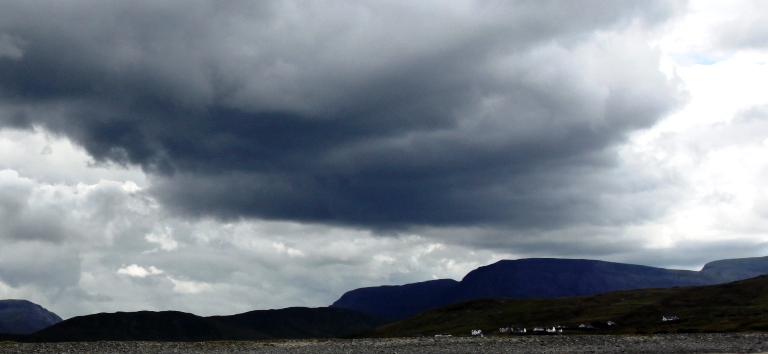
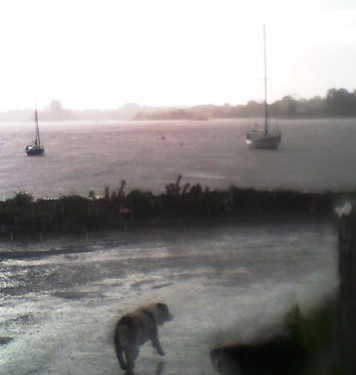
Photo: Norma Scheibe

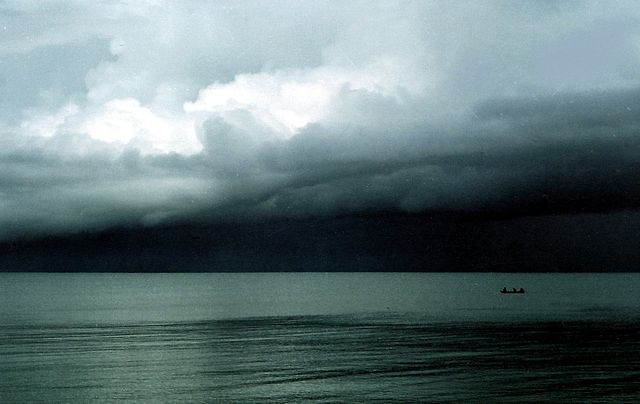
A thunder-storm of very peculiar character broke over this town yesterday morning about half past ten o’clock. The sky all round the horizon was clear, and there were no clouds anywhere to indicate what was about to take place, when we were startled by a loud peal, almost directly over us. On looking up, a dark gathering was now perceived about the zenith, but the general brightness of the atmosphere, so unlike anything that we had ever before observed during a thunder-storm, reminded us of the phenomenon considered by the ancients as a proof of the existence of Jupiter, when thunder claps were heard in a cloudless sky. The darkness above, however, quickly increased, and clouds – coming no one knew whence, but seeming to grow suddenly out of the disturbed air – began to settle over the town in dense masses interlaced with continual streams of vivid lightning.
A grey veil of rain soon appeared to hang down along the entire of the bay, dimming the brightness of the Burren hills, which were evidently at the time in full sunshine. The thunder roll was now almost incessant, and the display of lightning was, perhaps, the finest we ever witnessed. The immense length of the jagged shafts from the zenith to the horizon, and from the horizon back again to the zenith, crossing the sky several other directions, was among the most striking features of the display. The height of the storm was from four to five miles, and it continued stationary for almost an hour, when it slowly moved towards the north-east, leaving us again in bright sunlight.
But all was not yet over, for about two o’clock the sky began to darken toward the south-west, and the thunder recommenced. At half past two a white stream of lightning, accompanied by an explosion of a most terrific character, with a metallic ring in the sound, seemed to fall in the neighbourhood of the square, and we were soon after informed that the Bank of Ireland had, in fact, been struck by the electric fluid. After this the electric discharges continued with little intermission on every side, and shortly before three o’clock there was a shower of immense hailstones, accompanied by rain of such character as might almost suggest the outpouring of a celestial lake, and the streets became flooded almost instantaneously. This shower, fortunately for the hay and other crops about Galway, continued only for a few minutes, while it probably embraced but a narrow tract of country on its route; and it is to be hoped that but little harm was done anywhere by the storm in proportion to its apparently formidable character.
Distant thunder was heard for the remainder of the day. On inquiry at the bank we were kindly shown over the place by the manager, Mr. McDowell, when we found that the lightning first struck one of the chimneys, displacing several stones at the top and throwing one large one bodily into the yard at a distance of several feet from the house. Descending the chimney it penetrated the ceiling of one of the rooms making a very small hole and scattering the plaster in various directions. It then ran along a bell-wire under the ceiling on which it left several deposits that suggested a metallic character by their various iridescent colors of pink, yellow, blue &c.  Reaching another apartment, strange to say, it forsook the wire and entered between the stucco plastering and the wall by rather a large breach, and there all further trace of its course was lost.
Several of the inmates of the house were severely affected by the concussion, either violently shaken or thrown down, and one of the servants was rendered insensible for some moments. One of the gentlemen in the bank office saw the lightning, as it appeared to him, playing among the iron railing outside which may, possibly have acted partially as a conductor, attracting a great portion of the electric fluid, and thus saving a great catastrophe.
Happily we enjoy a comparative immunity from thunder storms in Galway. Anything approaching the phenomenon of yesterday has not occurred with the memory of the oldest inhabitant.
Galway Vindicator.
Posted in Posts and podcasts

Kinvara – October – 1916

Tuam Herald 7th October, 1916. p.4

Stormy weather, Kinvara Photo: EO'D
Stormy weather, Kinvara
Photo: EO’D

A severe storm raged over Kinvara on Monday night, blowing off some slates, window shutters, and upset through the country cocks of hay, corn etc.

Posted in Posts and podcasts

Storm – 1861

Freeman’s Journal 8th August, 1861 p4kinvara oil
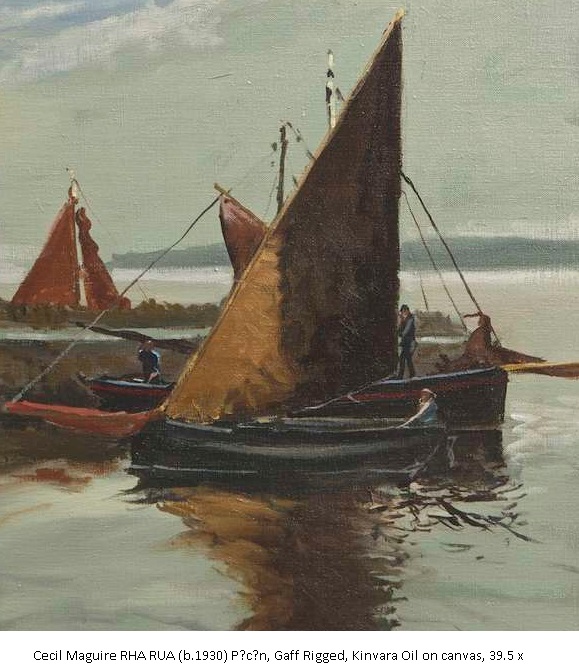
Monday evening the poor Claddagh fishermen went out in great numbers, hoping to profit by the myriads of herrings that swarm our bay. It was blowing moderately at the time from the N.W., but a few hours later it blew a regular gale from the westward, scattering the hookers in all directions, obliging them to run, some for Kinvara, and others for Ballyvaughan and Newquay. With difficulty they reached those places of shelter, and we regret to learn that many of the poor people lost their nets and fishing gear in the storm. They mostly returned today and loud are the lamentations of many a poor family in the Claddagh for the loss of the instruments of their labours.

Posted in Posts and podcasts

Stormy weather – Galway – the bay of Kinvarra – 1771

Finns Leinster Journal 13th February, 1771 p.1

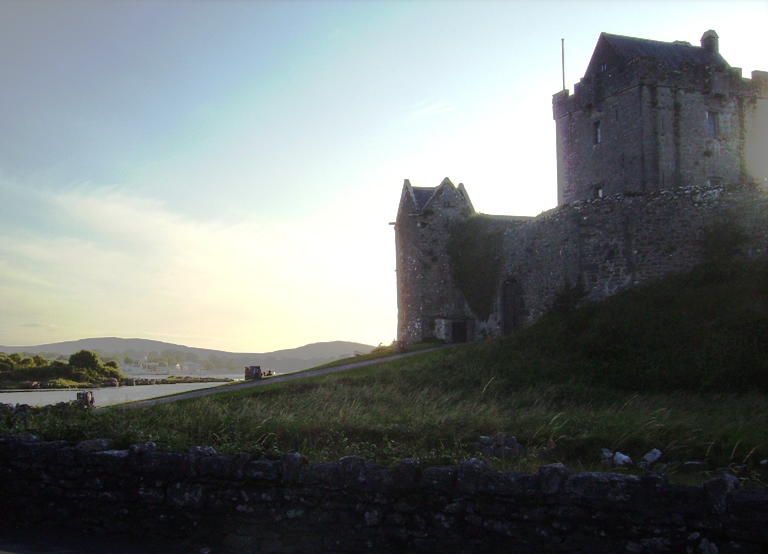
A fine evening Dunguaire, Kinvara Photo: EO'D
A fine evening
Dunguaire, Kinvara
Photo: EO’D

Galway, Feb 4.
Last Wednesday and Thursday were so prodigious a storm that the spring tides on those days swelled so high as to overflow the Quay and parts adjacent. In several houses in the neighbourhood, the water was above three feet high; but on Thursday a circumstance happened which much surprised all that observed it, as the like was never perceived here before. Whilst it was flowing, the tide, as if by some violent emotion, was twice within the space of an hour, suddenly raised above its usual height, and as suddenly subsided, which made many think there had been an earthquake.

A sloop, said to be from Limerick, bound for Rotterdam with butter, has been for some days past in the Bay of Kinvarra, opposite this coast, her name or the master’s name not intimated; but it is said she has lost her rudder and is otherwise damaged by the tempestuous weather.

Posted in Posts and podcasts

December storms – 1705

Boston News-Letter

Photo: Robert Stirrett

Limerick, 7th December, 1705 (abridged)

On Thursday last about one in the morning, there was the most violent storm, and floods occasioned by it, that ever was known by any living, or ever heard of here.

It lasted till 9. The water rose so violently of a sudden, and to that height, that most of the cellars in the town were full of water, by which the Merchants, Vintners, Ale-sellers and other People suffered very much. The inhabitants of the suburbs of the town were forced to crawl naked from the inside to the tops of their cabins, whence some fell down being benumm’d and not able to hold longer.  God knows what the losses in the country are.

It’s certain all the cattle and corn in the low lands near the Shannon are lost, as well as the corn and rape in stack as that in ground. Many houses in town and country were untiled, and some blown down; two ships that lay at the Key, taking in their lading, and one empty were got on the top of the Key; two are got off, but the third, a Dutch Ship of 80 Tons, lyes now just at Key Gate.

They are taking out her goods and breaking down the Key, in hopes to get her off. I hear the Queen Ann of London of 400 Tuns, from Jamaica, with Sugar, Indigo, etc. is put ashore at a place called Glinn, about 11 Leagues down the River.  The Anna of Rotterdam, with Beef, Butter, Hides and Tallow, is driven ashore upon Fines Island, 8 Leagues down, and is 2 or 300 yards higher in the Fields than ever the Tide came before. It’s said the Queen Ann is not bulged but very far up, and buryed in the sand very deep. Our barge was bulged and sunk. The Watch-house and three other houses were blown down on the Key. Two of the garrison gates were blown to pieces.  The magazines and guardhouses were almost quite unflated and unglazed, and the sentry boxes broken to pieces.

Posted in Posts and podcasts

Lahinch – 1930

The Catholic Press 17th April, 1930 p36

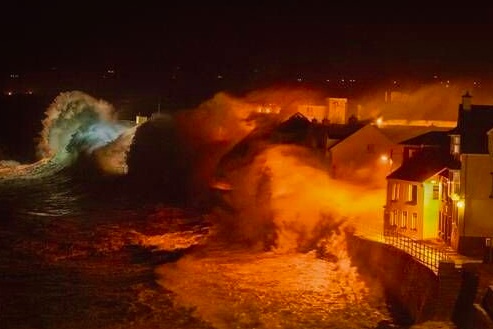
Lahinch Photo: George Creative Commons
Lahinch
Photo: George
Creative Commons

County Clare Threatened by the ocean.

Lahinch is doomed unless £16,000 can be expended on defences to cheek the ravages of the sea. Slowly but surely it is giving way before the battering of the Atlantic, writes an ‘Irish Independent’ special representative in mid-February.

Permanent defences must, be erected, because patchwork is only a waste of time and money. This is the opinion of experts and of residents who are watching with growing apprehension the estimated yearly inroads of four yards along the beach.

Only one who has visited the place can appreciate the terrific force of the waves here. Giant breakers are pounding relentlessly against the promenade wall, and heavy stones dislodged from a high cliff about 310 yards away are being hurled against it with a force that only the most massive defences could withstand.

The past winter. has been one of the worst experienced in Lahinch within living memory.

The long, high ridge of stones and shingle at the western end of the promenade has been, I was told, pushed back about 15 or 20 yards by the sea during the past few months. During high tides or storms waves break on top of it and are carried inland in clouds, of spray. Soon, it is feared, the sea will claim the low-lying land at the back and cut off the famous golf course from the town. In places at the back of the links the sea has eaten in up to 50 yards, I was told, during the past 25 years.

Mountainous Seas.

So mountainous has the sea been here since Christmas that not only have the waves come over the promenade, 27 feet high, on several occasions, but the spray has fallen in showers on the roofs and chimneys of houses — some of them three storeys high. The sea has even coursed along one of tho principal streets, and 25 yards away from the promenade edge has torn, up the tarred surface of the road, compelling householders to build temporary defences outside their floors.

In one untenanted house facing the Atlantic steel shutters are used outside the timber shutters to keep out the waves, but they offer poor resistance, being dislodged almost every night. Only by constant vigilance during the past month has the town been saved.

On one occasion about a fortnight ago the sea was prevented from breaking through by workers throwing dozens of bags of sand into a break suddenly created. Had the sea got through, residents are convinced that half the town would have been swept away.

Because the ground is much lower to the back, and as many houses are built on a sandy foundation, they would fall an easy prey to the sea.

Constant Repair Work

‘They talk about Greystones and other places,’ said Mr, Considine, a County Council clerk of works, ‘but here you have the full force of the Atlantic.’ He was in charge of a gang of men carrying out a slow and most laborious work.  In the hope of preventing the sea from eating under the promenade, they arc putting down concrete protections. To prevent the tide from carrying away the day’s work during the night, it has to be covered with timber, and two feet of shingle and stones, all of which has to be removed every morning before work can be begun. Were it not for the constant attention of Mr. Considine and his workers, one can conjecture what the fate of Lahinch would be.

The. people have now centred all their hopes on tho Coast Erosion Committee, because the financial resources of the County Council are -unable to cope with this most difficult problem.

This famous beauty spot is almost solely dependent on visitors. Over 2000 persons are often present during golf tournaments. So much do the people fear the headway tho sea has made in recent years that all new houses, are now being built a considerable distance inland.

County Surveyor’s Opinion

‘There is no doubt about it, Lahinch must go if the Government do not build sea defences there,’ said Mr. F. Dowling, County Surveyor, to me. ‘And even if they ‘ do build them the place will be still in danger; but I would like to see the defences tested.

Every year, since the winter of 1923 when two houses had to be vacated, the County Council has spent £300 on repair work, he explained. The sand and clay on which some of the town, is built make no fight against the sea, and he did not believe that there were such seas and wind in any other part of Ireland as in Lahinch.

It was unfair, he said, to expect the rate payers to expend money here year after year. If the sea got in at the promenade it would sweep away the whole town. His estimate for the defences, which would consist of reinforced concrete, with a stone, facing, was about £16,000.

At Cappa, on the outskirts of Kilrush, the occupants of two homes are in danger of being washed out during a storm or high tide. For about a mile between Kilaysart and Labasheeda, the road along which the mail car deliveries are made is being attacked by the Shannon to such an extent that in some places there is scarcely room for one cart. Mr. Dowling ‘s proposal was to divert the road at an estimated cost of £2000, but the County Council turned that down owing to lack of funds.

At Kilkee in recent years tho sea has made tremendous caverns through the rock,and these cut clean under the road. People were living in houses over caverns and were not even aware of it. As most of Kilkee, however, is built on rock there is no immediate danger.

Posted in Posts and podcasts

A Terrific Storm – 1841

Photo: Fir0002 WikimediaCommons
Photo: Fir0002
WikimediaCommons
https://widgetworld3.wordpress.com/podcasts/
THE CORNWALL CHRONICLE (LAUNCESTON, TAS) 30TH OCTOBER, 1841, P2
It seems that Ireland has lately been visited by a terrific storm of thunder and lightning, accompanied at the same time by a severe shock of an earthquake. Cattle and horses were killed by the lightening, and in the county of Galway the lives of three individuals fell a sacrifice to the electric fluid. So frightful and devastating a storm has not been witnessed in Ireland in the memory of its oldest inhabitant, and it is to be hoped that it will be long before the occurrence of such weather.