(abridged).
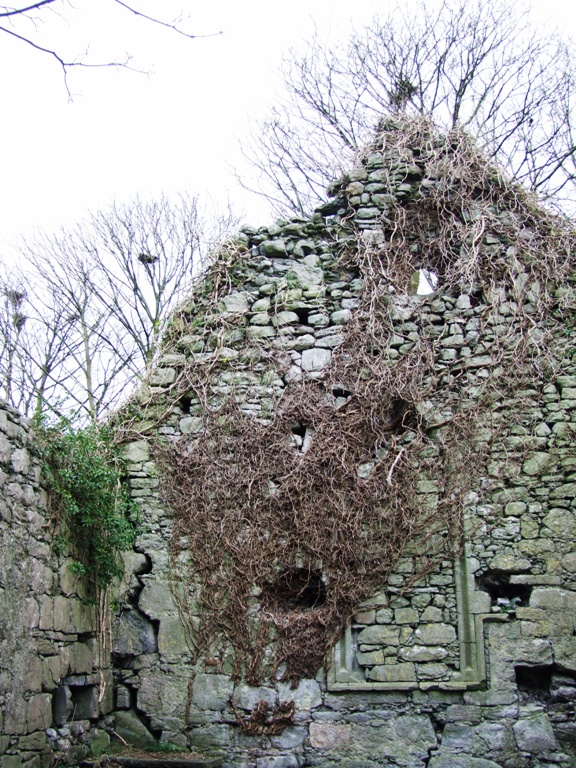
Another branch of the Magraths had some possessions in the vicinity of Kinvara, in the district of Hy-Fiachra-Aidhne, County of Galway, but a few only of their descendants are to be met with in that county at the present day. Of this branch the church of Kinvara was the burial place, and until late years this sacred edifice, the foundation of St. Coman, of whom mention is made in the ancient tale known as the Imramh, or Expedition of the sons of Ua Corra, was exclusively the place of interment of the Magrather O’Hynes. The possessions of the Hy-Fiachrain Magraths lay around the Bally magrath, near Ardrahan; but the proprietors thereof, having taken an active part in the disturbances of 1641-9, the lands of Balymagrath and Kilteenan were granted by Cromwell to the family of Taylour, or Taylor.
The Privy Council met yesterday in the Council Chamber at 3.30.
Present:
Excellency the Lord Lieutenant, the Lord Chancellor, the Recorder, Right Hon. J.Napier, Mr. Justice O’Hagan, the Chief Secretary, Mr. Justice George, and the Lord Bishop of Meath. The Attorney-General and Solicitor-General attended.
In re the Churchyard of Kinvara, County Galway;
This matter came before the council on an application by the Poor Law Guardians of the Gort Union, for an order to close the ancient churchyard of Kinvara, on the ground of its being in a state dangerous to the public health of the district.
Mr. Blackburne and Mr.Mullins appeared on behalf of the parishioners of Kinvara, who memorialled (sic.) the Privy Council against the closing of the churchyard. The memorial against the closing was signed by Dr. McEvilly, the Roman Catholic Bishop of the diocese; by the Parish Priest; Mr. Lynch, a magistrate and upwards of 200 families living in the district, all testifying that it was not necessary to close the churchyard, that it was not overcrowded and that up to the present some portions of it had not been used for the purpose of interment. There was no danger of its becoming overcrowded, as the population of the district had very much diminished. The people of the district, counsel stated, were most anxious that the right of interment in this ancient burial ground should be preserved to them, for there were few families in the district who had not relative interred in it. If it were closed they would be under the necessity of having a new burial ground opened, for which it would be difficult to get a suitable site. It was admitted that some ten or twelve of the graves were scantily covered with earth, but that was a matter which a few workmen could remedy in a short time.
The Parish Priest of Kinvara was then examined by Mr. Blackburne, and his evidence was with a view of showing that the graveyard was not injurious to public health. He admitted portion of the earth in the eastern end had given way, but the bones exposed were the bones of persons interred at a remote period, from which no injurious miasma could possible arise. There was but little mortality in the district and it was not likely the graveyard would become overcrowded. The claim of the parishioners to the churchyard was on the ground of their ancestors being interred there.
The Recorder said it was very natural the parishioners should entertain a strong feeling on the subject. He inquired if upwards of 700 persons did not still claim the right of sepulture there. The Parish Priest, in reply, stated it was not likely more than 200 would claim the right. The Recorder said that there was no doubt as long as the churchyard was left open all would have the liberty.
After some discussion the Council determined not to grant the request of the Gort guardians, so the cemetery will remain open as usual.
The Council during its sitting considered a requisition sent to it by the guardians of the Gort Union to close Kinvara burial ground, alleging that it was overcrowded and intramural. The inhabitants petitioned the Council not to close the burial ground, stating that there was ample accommodation, and that the sanitary condition of the town would not be injured by the burial ground being left open. The Rev Francis Arthur P.P. attended the council to support the petition. The council having considered that there was not sufficient reason for closing the burial ground refused to make an order for enclosing. The petitioners were represented by Messrs Blackburne, Mullens and Mr R B Forster.

 The Burren and Beyond