
Creative Commons Photo: Postdlf
https://widgetworld3.wordpress.com/podcasts/
In 1842/1843 Tomas L Cooke rambled around Kinvara, Co. Galway and published accounts of his travels in the Galway Vindicator. Dunguaire Castle was one of the sites he visited, which he describes as…
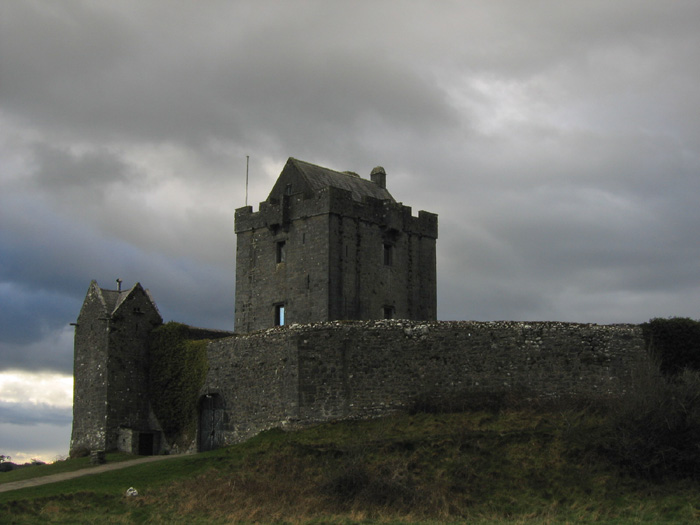
a square building in the fashion of Queen Elizabeth’s reign, and of several stories in height, standing some distance outside the town upon a small elevated peninsula, surrounded by the sea, with the exception of one low and narrow isthmus, that connects it with the main land. A strong and high wall built along the verge of the declivity encloses the court-yard, or bawn. The outer gateway is large, and has an embattled wall with embrazures overhead. It is flanked on the right by a small quadrangular bastion, or tower, which commands it and the outward wall on two sides. In the sides of the tower, just mentioned, there are set in masonry some large stones, perforated with round holes of five or six inches in diameter, apparently intended for exposing the muzzles of small ordnance.
These defences were sorely tested. In Mr Cooke’s words...
The Castle of Kinvarra was, until very recently, used as a Barrack by a military detachment quartered here. The walls circumscribing the bawn, have, in former days been shattered in two of the angles, apparently by the fire of artillery from a sod battery thrown up about two or three hundred yards off, in the direction of Tubbermacduach. The platform of this ancient battery is still visible, and on it are placed at intervals some very large rocks, which, in all probability, served as shelter to the gunners against the fire of matchlocks or other small arms from the castle. It is not very likely that the besieged were altogether inactive or without using fire-arms, during the investment of the place…
Dunguaire Castle – built to last the test of time – and conflict.

