Posted in Posts and podcasts

Waterways – 1803

The Sydney Gazette and New South Wales Advertiser 26th March, 1803 p2
DUBLIN – AUGUST
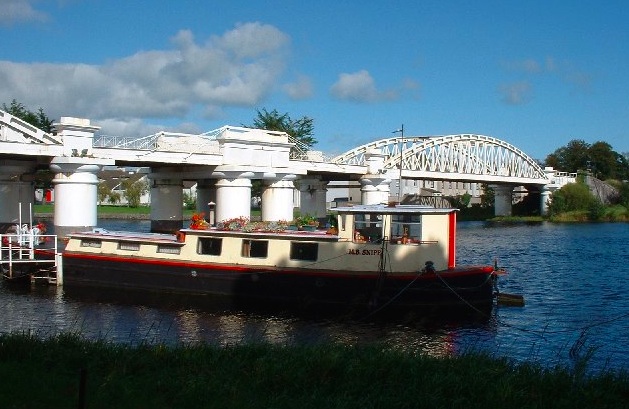
On Monday, 23d inst. the foundation stone of the last Lock of the Grand Canal, where that work unites with the river Shannon, near Banagher, was laid by Richard Griffith, Esq., one of the Directors of that Company.
We congratulate our country on the near approach which this great national undertaking makes towards completion We have
watched it progress with anxious pleasure for many years past, and we have seen the beneficial effects of the progress in the advancement of agriculture into the heart of
the kingdom. When we look to its junction with the Shannon, and behold that noble river extending its fertile banks, 180 miles in length, through Roscommon, Galway, Mayo, Leitrim, Westmeath, King’s country, Tipperary, Limerick, and Clare, made navigable at public expense, free from toll, and brought by its junction with the Grand Canal, into contact with the market and port of Dublin, we are at a loss how to calculate the extent of public advantage, or to compute the amount of well-earned private gain which will result from the accomplishment of so bold and so well-conducted an undertaking.
We understand that the works between Tullamore and the Shannon, are proceeding with uncommon vigour, and that there is every reason to expect they will be completed within 12 or 14 months.
Posted in Posts and podcasts

Killaloe – 1929

Evening Post Vol CVIII Issue 108 2nd November 1929 (abridged)

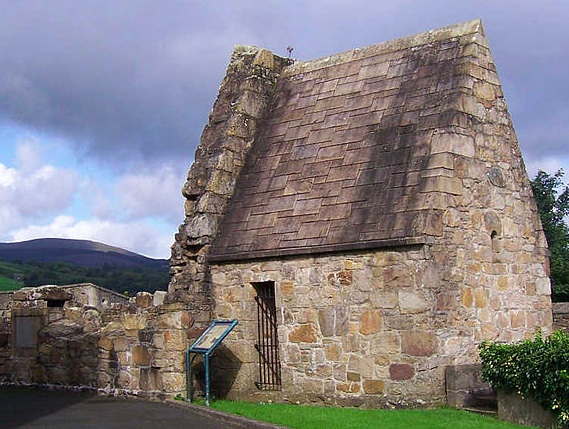
St Lua's church, Killaloe Uploaded by Chris55  Wikimedia Commons
St Lua’s church, Killaloe
Uploaded by Chris55
Wikimedia Commons

AN ISLAND GOES.

Friar’s Island, Killaloe, where eight centuries ago the pious monks of St. Lua’s Oratory preached Christianity to the Irish, will soon be a memory that has sunk beneath many waters. The waters are those of the Shannon, which will rise to cover it when the reservoirs for the new power scheme for distributing electricity about the countryside are filled.

Ireland could not see the old place go without a look, without a sigh, and without a prayer, so on a Saturday in July many people from Tipperary, Limerick, and County Clare gathered there to bid the island farewell and hear the priests celebrate Mass there for the last time. Mass had not been said there since the Oratory fell to ruin all those centuries ago. The monks have gone, the voices which were heard at Matins or at Vespers are for ever silent, and now the island itself has followed them to rest.

Posted in Posts and podcasts

Shannon Bridge – 1851

Freeman’s Journal 4th December, 1851 p4

  © Copyright Robert Bone  Creative Commons
© Copyright Robert Bone Creative Commons

The crowning finish was given on Saturday the 19th of July to the great line of railway from Dublin to Galway, by placing the last rail on the Shannon Bridge. This splendid structure is 500 feet in length and constructed of wrought iron girders, with openings of 165 feet in the clear.

Mr Hermans, the chief engineer of the line, came with a staff of assistants to witness the completion of the bridge and test its strength by driving the locomotive over it. By ten o’clock at night, after great exertion, the closing rail was cut and laid in place, and amidst the cheers of a great crowd of spectators, the Venus engine was driven four times rapidly from end to end of the bridge, which bore the weight without the slightest apparent deflexion. The line was to be inspected for the Government in the course of the ensuing week and would be open to the public on the 1st of August

Posted in Posts and podcasts

Shannon Floods – 1910

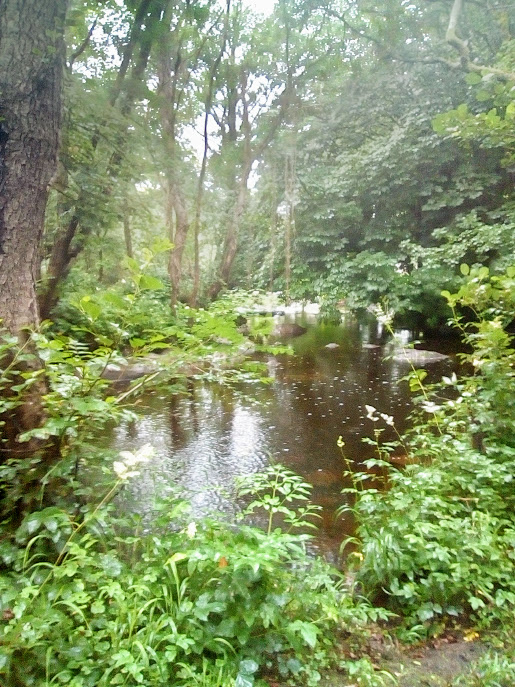
The Shannon Pot - traditional source of the River Shannon Photo: Gerard Lovett Wikimedia Commons
The Shannon Pot – traditional source of the River Shannon
Photo: Gerard Lovett
Wikimedia Commons
THE SALT LAKE TRIBUNE 27TH MARCH 1910 P5
Ireland has had her share of floods and can sympathize with France. Along the Shannon in some places the water invaded the country for miles at each side, compelling people living near to hasten from their homes. In one or two places the inhabitants of entire villages sought shelter elsewhere. Some of these people suffered great loss as their entire farm produce was swept off on the swollen river. So great was the flood that the powerful cargo boats could scarcely make headway.
The district near Athlone suffered much and a considerable number of men were thrown out of work. The greatest sufferers are the inhabitants of the islands in Lough Ree, where the water rose to an alarming height. They were completely cut off from the mainland for days and unable to obtain supplies of food or fuel.