There are few villages throughout Ireland near which there is not a hill, cliff, glen or cave which takes its name from the Pooka, but very few indeed know what sort of spectre the Pooka is. A poet once said that he is in existence “since the time of the flood,” and he assumes many shapes – a huge black dog, a cat, a horse, human, rabbit or hare.
The Pooka is wont to give a ride to anyone he meets out at night when he is on the walk; and he does it in two ways. When you meet him in human shape he claps you up on his back, head towards the ground, feet aloft, facing his back. The creature then seizes your ankles and carries you off over mountain and glen, over lake and lakelet, up and down the hills until you, poor rider, are tired, worn and weary. Only then will the Pooka fling you on the ground and let you on your way.
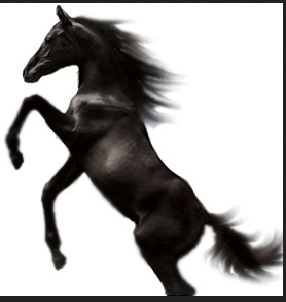
When the Pooka takes the shape of a horse it is up to the poor traveller to keep his grip or bones could well be broken.
Now and then the Pooka meets a smart fellow, who lets him know he can’t play his tricks always. There was a merchant long ago who came to Connemara ere roads were made. He got lodgings of course, for in those days “a welcome and twenty of them” awaited the traveller and wayfarer, and the hospitality of the people of Iarconnaught was spoken of with praise near and far. The merchant let his horse out in the fields and went to sleep. When he had slept his fill, he took his meal and prepared for the road.
He called his horse to harness it but what came across the field instead was the Pooka. The Pooka clapped the merchant on his back and off he started. At first he went in a trot; soon this became a gallop. He went like the wind, over marsh and crag, across river, up and down hill, but failed to throw the man. He gave another rush and came near a large river. The Pooka was on the point of jumping it when the merchant remembered he had his spurs on his heels. He gave a strong dart with his two heels and sent the rowels to the quick into the Pooka. The creature shivered and quaked with fear and besought the merchant to take off the spurs, and that he would let him off. The merchant did so and the Pooka flung him down and away with him across the river in a jump.
But the merchant regretted he had let him off so easily and thought to coax him back so that he would make him cease his pranks. So he asked him to cross the river again.
“Have you the spurs on yet?” said the Pooka.
“I have so.”
“If you have,” says the Pooka, “you may stay as you are. I’ll not go next or near you. But if I ever find you without the spurs, I’ll let you know the differ, or ‘lose a fall’ by it.”
The Capricornian 17th May, 1890Domestic Goose Photo: Noodle snacks Wikimedia Commons
Folk-tales for Little Folk by Uncle Will (abridged)
Long ago, out of a hill in Leinster there used to emerge, as far as his middle, a plump, sleek, terrible steed, a Pooka, who spoke in human voice to each person about November day, and he was accustomed to give intelligent and proper answers to such as consulted him concerning all that would befall them, until the November of next year. And the people used to leave gifts and presents at the hill until the coming of Patrick and the holy clergy.’
In some places the Pooka came out in the form of the Neck of Scandinavia, or Water-Kelpie of Scotland. About the Martinmas time the Pooka used to appear near the sea or a fresh water lough in the form of a horse. He went tearing about at a great rate. If any one were bold enough to go between him and the water, be could be caught and bridled, and then made a splendid steed. If at any time, however, he came in sight of water, he made for it. Were any one on his back, then it was all the worse for the rider, for the Pooka would plunge in, and tear him to pieces at the bottom.
As a man riding on a Pooka horse could not go far in Ireland without seeing deep water, not many would use them. A boundary rider out west might: have one for some considerable time without seeing as much water as would drown him.
Here is a story about the Pooka, translated literally from the Irish of the Leabhar Sgeulaiyheachta, by Douglas Hyde.
THE PIPER AND THE PUCA.
In the old times there was a half fool living in Dunmore, in the county Galway, and although he was excessively fond of music, he was unable to learn more than one tune, and that was the ‘Black Rogue.’ He used to get a good deal of money from the gentlemen, for they used to get sport out of him.
One night the piper was coming home from a house where there had been a dance, and he half drunk, when he came to a little bridge that was up by his mother’s house he squeezed the pipes on, and began playing the ‘* Black Rogue’ (an rogaire dubh). The Pooka came behind him, and flung him up on his own back. There were long horns on the Pooka, and the piper got a good grip of them, and then he said
‘Destruction on you, you nasty beast, let me home. I have a ten-penny piece in my pocket for my mother, and she wants snuff.’
‘Never mind your mother,’ said the Pooka,
‘But keep your hold. If you fall, you will break your neck and your pipes.’
Then the Pooka said to him,
‘Play up for me the Shan Van Vocht’ (an tsean bhean bhocht).’
‘I don’t know it,’ said the piper.
‘Never mind whether you do or you don’t, said the Pooka.’
‘Play up, and i’ll make you know.’
The piper put wind in his bag, and he played such music as made himself wonder.
‘Upon my word, you’re a fine music master,’ says the piper/
‘But tell me where you’re bringing me.’
‘There’s a great feast in the house of the Banshee, on the top of Croagh Patrick to-night,’ says the Pooka,
‘I’m bringing you there to play music, and, take my word, you’ll get the price of your trouble.’
‘By my word, you’ll save me a journey then,’ says the piper.
‘Father William put a journey to Croagh Patrick on me, because I stole tbe white gander from him last Martinmass.’
The Pooka rushed him across hills and bogs and rough places, till he brought him to the top of Croagh Patrick. Then the Pooka struck three blows with his foot, and a great door opened, and they passed in together, into a fine room. The piper saw a golden table in the middle of the room, and hundreds of old women (cailleacha) sitting round about it. The old women rose up, and. said,
‘A hundred thousand welcomes to you, you Pooka of November (na Samhna). Who is this you have with you ?’’
‘The best piper in Ireland,’ says the Pooka.
One of the old women struck a blow on the ground, and a door opened in the side of the wall, and what should the piper see coming out but the white gander which he had stolen from Father William.
‘Myself and my mother ate every taste of that gander, only one wing, and I gave that to Moy-rua. It was she told the priest I stole his gander.’ The gander cleaned the table, and carried it away, and the Pooka said,
‘Play up music for these ladies.’ The piper flayed up, and the old women began dancing, and they were dancing till they wore tired. Then the Pooka said to pay the piper, and every old woman drew out a gold piece, and gave it to him.
‘By the tooth of Patrick,’ said he,
‘I’m as rich as the son of a lord.
‘Come with me,’ says the Pooka,
‘And I’ll bring you home.’
They went out. then, and just as he was going to ride on the Pooka, the gander came up to him, and gave him a new set of pipes. The Pooka was not long until he brought him to Dunmore, and he threw the piper off at the little bridge, and then be told him to go home, and says to him,
‘You have two things now that you have never had before, you have sense and music (ciall agus ceol).’
The piper went home and knocked at his mother’s door, saying,
‘Let me in, I’m as rich as a lord, and I’m the best piper in Ireland.’
‘You’re drunk,’ said the mother.
‘No, indeed,’ said the piper,
‘I haven’t drunk a drop.’
The mother let him in and he gave her the the gold pieces.
‘Wait now,’ says he,
’Til you hear the music i’ll play.’
He buckled on the new pipes, but instead of music, there came a sound as if all the geese and ganders in Ireland were screeching together. He wakened the neighbours, and they were all mocking him until he put on the old pipes, and then he played melodious music for them. After that he told them all he had gone through that night.
The next morning when his mother went to look at the gold pieces, there was nothing there but the leaves of a plant. The piper went to the priest, and told him his story, but the priest would not believe a word from him, until he put the new pipes on him, and then the screeching of the geese and ganders began.
‘Leave my sight, you thief’ says the priest. But nothing would do the piper till he would put the pipes on him to show the priest that his story was true. He buckled on the old pipes, and he played melodious music, and from that day till the day of his death, there was never a piper in the county Galway as good as he.
Photo: Wikimedia Commonshttps://widgetworld3.wordpress.com/podcasts/ THE SUN 1ST NOVEMBER, 1908 P10
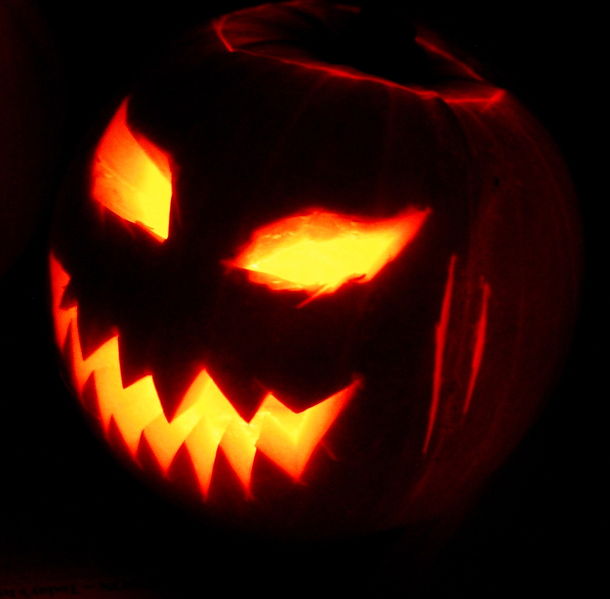
*abridged Halloween, or Samhain night according to the old Druidical division of the year, comes on the last day of summer. It is the gloomiest night of the whole twelve months to the fairy folk. The Fe-fiada, or spell of enchantment, is removed from all the fairy hills and raths as the last bit of daylight fades and all the fairies come trooping forth to moorlands and mountains to join in a mad revel with the ghosts and witches and banshees and, that most demonic spirit of all, the dreaded Pooka.
If you think you hear the wind wailing over the housetops on that night, you are mistaken. It is not the wind but the great lament or Caoin that the fairies make for the dead summer.
As the fairies are allowed to leave their hills, so mortals are allowed to enter them, and many a venturesome lad has gone into the depths of the raths and brought back wonderful tales of fairy palaces and gardens and the like.


 The Burren and Beyond