Posted in Posts and podcasts

Farewell from Kinvarra, Duras and Killinna – 1867

Freeman’s Journal 16th December, 1867 p3 (abridged)
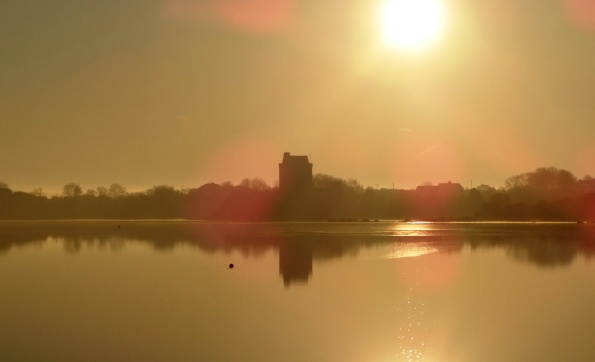
Dun Guaire, Kinvara Photo: Norma Scheibe
Dun Guaire, Kinvara
Photo: Norma Scheibe

Address of the parishioners of Kinvarra, Duras and Killinna to the Rev. Francis  P.P. Croughwell and Ballimana.
Rev. Dear Sir,
We have been deputed by our fellow parishioners of the united parishes of Kinvarra, Duras and Killinna, to offer you in the first instance their sincere and heartfelt congratulations on your recovery from your late severe and dangerous illness, and in the next to convey to you their, and our own, deep regret at your having been so soon after removed from amongst us.
For four and twenty years have you discharged the onerous duties of Pastor to these parishes with a pious zeal truly edifying, and the benefits conferred on religion and morality by your counsel and teaching during that eventful period it is not in our power to convey an adequate idea of, but we fondly cherish the hope that they will be appreciated by Him whose faithful servant you have ever been and who is sure to reward those who faithfully do His work.
It would be difficult, Rev. Sir, to enumerate all the advantages which your late Parishioners have derived, both spiritually and temporally, from the interest you have ever evinced in their welfare.
Need we refer to your exertions in their cause when famine and all its sad consequences, fever, cholera, &c, &c, stalked abroad, and like and avenging angel was devastating the land.  Then, indeed, it was that the good and zealous Priest of Kinvarra proved the interest he felt in his flock, in not only being found day and night in the midst of contagion and approaching dissolution, ministering to their spiritual wants, but also in relieving by his purse, and frequent appeals in their behalf to the charitable throughout the kingdom, their distressed condition.
We would be ungrateful and unworthy of the benefits conferred on the parish by him did we omit the name of your respected and beloved Curate in this address, of him  who, which on the mission amongst us, has won for himself not only our esteem and affection, but the respect and regard of all those who had the happiness of hearing his exposition of the Word of God during his mission in the parish.  We felt much, and were truly sorry to learn, that your respected Bishop had resolved on removing you, Rev. Sir, to another parish, but which removal we, however, sincerely hope will prove to you a well-merited reward for your past invaluable services in this.
We cannot give expression to the feelings of regret entertained by all when it was ascertained that his Lordship felt it necessary to remove the Rev. Mr McDonogh also from amongst us.
In conclusion, we beg to observe that, although the scene of your labours is now elsewhere and amongst other people, we are convinced that your prayers will still be offered to the Throne of Mercy for those who have commissioned us to present you with this Purse and its contents as a trifling token of the love and esteem in which you have ever been and will be held by them, as well as by your sincere and ever faithful friends.
Signed on behalf of the Committee.
Isacc B. Daly, Chairman
D.J. Hynes, M.D.(Vice Treasurer)
Martin Kerin (Vice Treasurer)
Posted in Posts and podcasts

Kinvara Quay – and Tram – 1838

Tuam Herald 28th September, 1839 p.2

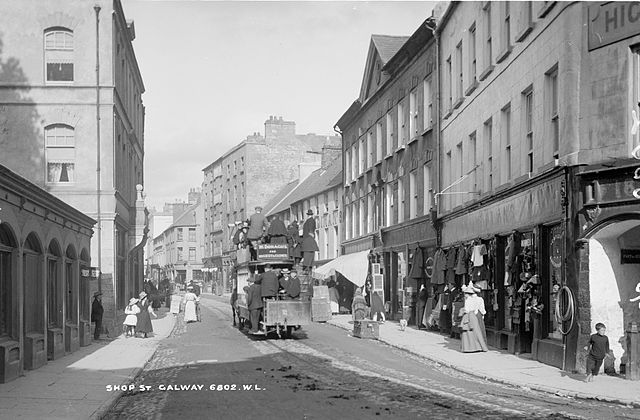
Horse drawn Tram, Shop Street, Galway. National Library of Ireland on The Commons Wikimedia Commons
Horse drawn Tram, Shop Street, Galway.
National Library of Ireland on The Commons
Wikimedia Commons

(excerpt of letter from Mr T. Bermingham to “To the Guardians of the unions of Loughres, Gort, Ballinasloe and Tuam, especially – and to the inhabitants of the County Galway in General.”)

I have lately examined the southern coast of the Bay of Galway, and from the trade at present existing at Kinvarra and the New Quay, I have no hesitation in recommending the building there of two good piers, to protect the boats engaged in the fishery and seaweed trade, and as asylums for vessels of moderate burden, to encourage still further their spirited trade in corn, with a view of being a proper point of communication with the town of Galway by means of a steam tug – a plan which has been long agitated by the inhabitants of Galway.  Tram roads for horse power are perhaps more adapted to the present trade of this county than more expensive railways for locomotive power.

With the experience that I have had in constructing a short line of railroad on cut bog, the property of Lord Clonbrock in this county, I can almost confidently state that a double line of rails of dimensions adapted to the present trade, can be constructed for three thousand pounds per statute mile – upon which one horse can draw a load weighing ten tons upon the level. Of course it would be necessary to have relays of horses to assist at some of the elevations – which upon the route that I propose to take, would be but few.

More on Kinvara in the news archives at theburrenandbeyond.com

Posted in Posts and podcasts

Kinvarra Waterworks – 1935

Irish Independent 21st February, 1935 p7

Rath Durlais Kinvarra, Co. Galway Photo: BO'D
Rath Durlais
Kinvarra, Co. Galway
Photo: BO’D

Kinvarra Waterworks.
A waterworks scheme has just been completed at Kinvarra, Co. Galway at a cost of £2,000. The well at Cartron has been enlarged and a windmill has been erected to drive the water a distance of about 250 yards to the reservoir on a hill overlooking the town.

Posted in Posts and podcasts

Killeeny – 1837

From A Topographical Dictionary of Ireland, 1837

Photo:  Ragesoss  Creative Commons/ Wikimedia Commons
Photo: Ragesoss
Creative Commons/ Wikimedia Commons


KILLEENEY, a parish, partly in the barony of DUNKELLIN, but chiefly in that of KILTARTAN, county of GALWAY, and province of CONNAUGHT, 4 ½ miles (N. W.) from Gort, near the road from that place to Kinvarra; containing 820 inhabitants, and 5931 statute acres, as applotted under the tithe act. The land is very coarse and rocky, and the only seat is Normangrove, the residence of John Burke, Esq. It is a vicarage, in the diocese of Kilmacduagh, forming part of the union of Kilcolgan; the rectory is appropriate to the see, the deanery, and the vicarage of Ardrahan.

The tithes amount to £98. 0. 6., of which £21 is payable to the Ecclesiastical Commissioners, £7. 7. to the dean, £42 to the incumbent of Ardrahan, and £27. 13. 6. to the vicar. There are some remains of the old church, with a small burial-ground attached. About a mile from Kinvarra is a hole in the rock, called the Pigeon Hole, which leads to a natural cavern, three or four hundred feet in extent. Here are the remains of the castle of Cahir Irlane, which is said to have belonged to the Killikellys.

libraryireland.com

Posted in Posts and podcasts

Kinvarra – 1916

HANSARD 1803–2005 → 1910s → 1916 → November 1916 →14 November 1916 → Written Answers (Commons) →DISTURBANCES IN IRELAND.

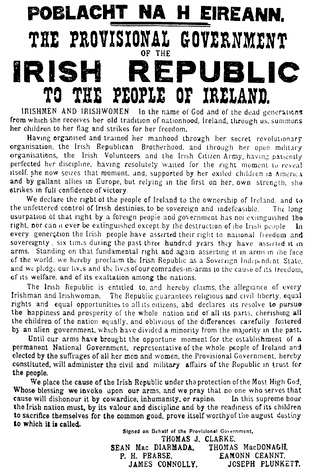
Easter Proclamation - 1916 Jtdirl:  Wikimedia Commons
Easter Proclamation – 1916
Jtdirl: Wikimedia Commons

PRISONERS.

HC Deb 14 November 1916 vol 87 cc619-21W619W
§Mr. DUFFY
asked the Home Secretary whether he is aware that the view held generally in Ireland that the continued imprisonment of political prisoners at Frongoch is a fruitful policy leading to unrest and exasperation, and certain to keep open the sore created by the Easter Week disturbances in Ireland; whether representations have been made to him respecting the cases of John Kilkelly, John Glyn, Patrick Hansberry, John Burke, John Whelan, and David Hanlon, from the Kinvarra district, county Galway; and whether he will review their cases with a view to their discharge?

Mr. SAMUEL
With regard to the first part of the question, I would refer the hon. Member to what my right hon. Friend the Chief Secretary and I said in the course of the Debate on 18th October. With regard to the second part, I had received no representations about the men mentioned before the question appeared on the Paper; but their cases are now being dealt with in accordance with the general statement which I made in this House on 10th October in reply to a question by the hon. Member for North Galway.

Posted in Posts and podcasts

Timber for sale, The Quay, Kinvarra – 1862

The London Gazette, 13th June, 1862 isa 2264 3077

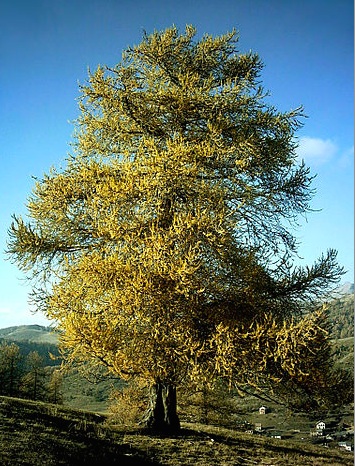
"Mélèze en Automne"  Photo: Antony.sorrento. Wikimedia Commons -
“Mélèze en Automne” Photo: Antony.sorrento. Wikimedia Commons –

RE: Winter, a Bankrupt.
To Timber Merchants, Builders and others.
To be sold by auction by Mr E. Staunton, at the Quay, Kinvarra, near Galway, in the county of Galway, on Thursday the 19th day of June, 1862, the sale to commence at 2 o’clock in the afternoon precisely, in one or more lots to suit purchasers.

A quantity of well seasoned timber, consisting of about 6,000 yards of propwood, and about 400 yards of larch timber. The timber is now lying on the Quay at Kinvarra where it may be viewed, and affords every opportunity for immediate and cheap shipment. The purchaser to pay the usual commission of 5 per cent.

For further particulars apply to the Auctioneer, at Galway or to James Black hurst, Solicitor for the Assignee, No 18 Basnett Street, Liverpool.

Posted in Posts and podcasts

Kinvarra to Penzance – 1893

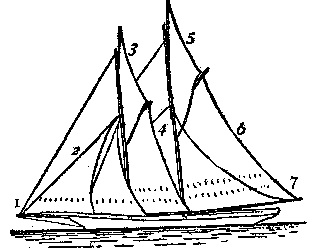
Schooner rigging: 1) Bowsprit; 2) Jib, followed by fore staysail; 3) (Fore) gaff topsail; 4) Foresail; 5) Main gaff topsail; 6) Mainsail; 7) End of boom Wikimedia.org
Schooner rigging: 1) Bowsprit; 2) Jib, followed by fore staysail; 3) (Fore) gaff topsail; 4) Foresail; 5) Main gaff topsail; 6) Mainsail; 7) End of boom
Wikimedia.org
THE TEESDALE MERCURY 1ST MARCH, 1893 P3

SAD FATALITY AT SEA

The schooner Jeffery, of Jersey. Captain Davey arrived in Penzance Harbour on Sunday afternoon from Kinvarra, Galway Bay and reported having experienced terrific weather on the voyage.

In her voyage from Ireland the Jeffery has been out between four and five weeks, and some anxiety had been felt respecting her safety. On Wednesday last E—- C—-, one of the seamen, was washed overboard. Captain Davey threw a lifebuoy to him and he succeeded in getting inside it. An attempt was then made to get a boat out, but there was such a tremendous sea running that on getting over the side of the ship the bottom of the boat was stove in, thus rendering it useless.

The crew then tried to get the vessel down to the man by wearing round, but they were unable to reach him.

Posted in Posts and podcasts

Election time – Kinvara – 1923

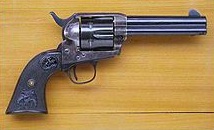
"Colt Autentica" by Ricce - Wikimedia Commons -
“Colt Autentica” by Ricce – Wikimedia Commons –

Recorder 17th August, 1923 p1


Eight persons were wounded in a fight at an election meeting in Kinvarra on the border of Clare and Galway in which revolvers were used.

Posted in Posts and podcasts

Kinvarra Cailíns – 1924

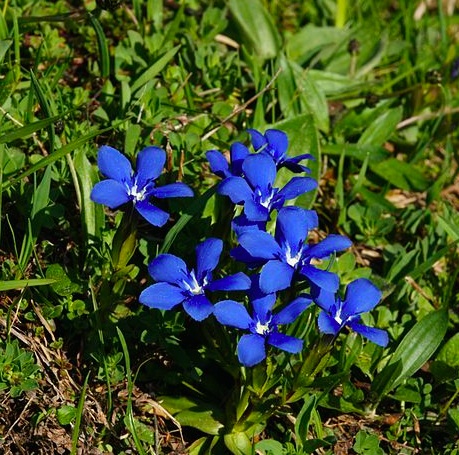
Burren Gentian Photo: Friedrich Böhringer  Wikimedia Commons -
Burren Gentian
Photo: Friedrich Böhringer Wikimedia Commons –

“Black as the storm frown of Cruachan;

glossy as the shimmer of sun-glad Corrib;

trusty as the unclenching granite of Achil’s wave-vexed shore;

beauteous as the dream cailins of Kinvarra!

… In Connacht, some day they will be telling the tale of Grainne’s wondrous courage and tireless arrowy speed.

In Connacht they will twine garlands of bog-flower and shamrogue to deck your silky mane.

“Failte!” they will shout, to greet our return.”

The Catholic Press 30th October, 1924 p 49
Excerpt from Chpt XVII
The Sword of the O’Malleys by Justin Mitchell

Posted in Posts and podcasts

Marine Works – Kinvarra – 1905

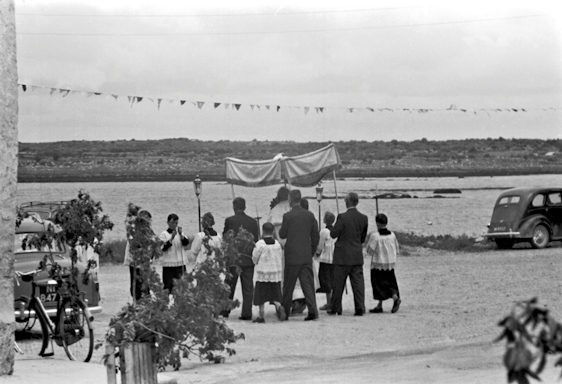
Corpus Christi Procession Kinvara Quay c 1950 Cresswell Archives
Corpus Christi Procession Kinvara Quay c 1950
Cresswell Archives

Enhanced British Parliamentary Papers on Ireland
Seventy-fourth Annual Report of the Commissioners of Public Works in Ieland, with appendices for 1905-1906
MARINE WORKS ACT, 1902
2nd Ed. VII., c 24 p8
Since our last Report the only additional work taken in hands under the Marine Works Act, was that at Kinvarra, County Galway. The marine work at this place, comprising the restoration of the pier and wharf walls, together with a new storm wall and other minor improvements, was certified by Their Excellencies the Lords Justices under the Act in July 1905. It was put in hands at once under the direction of the Board’s own officers, and it has been satisfactorily completed since the close of the financial year.