

circa 1840
Wikimedia commons
His Eminence Cardinal Logue received last week the religious professions of two nuns at the Convent of Mercy, Dundalk. During the ceremony his Eminence delivered a touching address on the duties, obligations, and privileges of the religious life. The young ladies professed were Miss Delia Corless, in religion Sister Mary Ethnia, of Kinvara, County Galway, and Miss Kate Flatley, in religion Sister Mary Lucy, also of Kinvara.
Tag: Kinvara
Saints and wonders – 1906
Wikipedia
p8
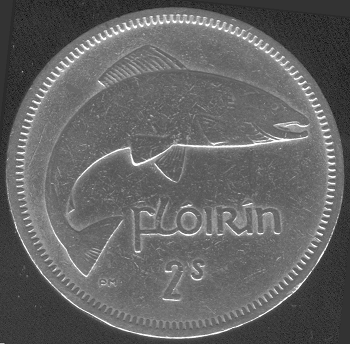
…But if Brigit belonged to the east, it is not in the west she is forgotten, and the people of Burren and of Corcomruadh and Kinvara go every year to her blessed well that is near the sea, praying and remembering her. And in that well there is a little fish that is seen every seven years, and whoever sees that fish is cured of every disease. And there is a woman living yet that is poor and old and that saw that blessed fish, and this is the way she tells the story:
“I had a pearl in my eye one time, and I went to Saint Brigit’s well on the cliffs. Scores of people there were in it, looking for cures, and some got them and some did not get them. And I went down the four steps to the well and I was looking into it, and I saw a little fish no longer than your finger coming from a stone under the water. Three spots it had on the one side and three on the other side, red spots and a little green with the red, and it was very civil coming hither to me and very pleasant wagging its tail. And it stopped and looked up at me and gave three wags of its back, and walked off again and went in under the rock…
N67 – archives – 1910/22
Wikimedia Commons
17 December 1910 – 17 June 1922 p9
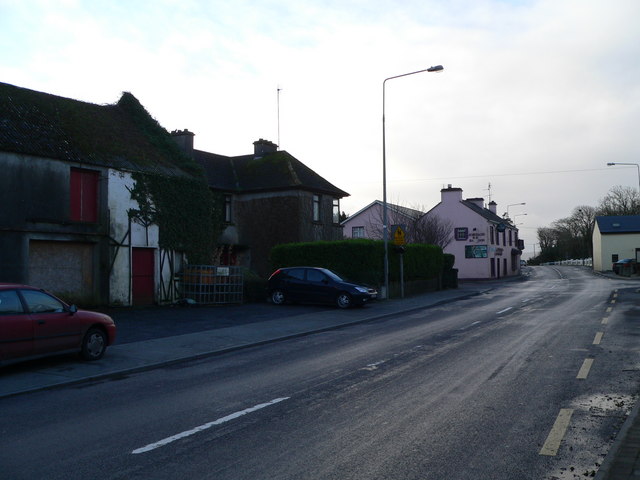
‘Resolved – That we disapprove of the action of the County Council in endeavouring to change the route proposed by the Road Board from Kinvara to Kilcolgan (through Ballinderreen) and having it changed in another direction from Kinvara to Kilcolgan (through Ardrahan) as we believe the former road is through a congested area, and by the sea, would be more frequented by tourists, and would be the better road to have steam rolled as it is the mail road between Galway and Clare through Ballyvaughan’ (p122).
The N67? – 1822 – Part 1
10 Jun 1822-3 Jul 1822
NAI REF: CSO/RP/1822/348
ORIGINAL REF: CSORP1822/857 (abridged)
The Registered Papers of the Chief Secretary’s Office (National Archives) includes a letter
‘from Alexander Nimmo, civil engineer, Dublin, to Alexander Mangin, clerk, Civil Department, Dublin Castle, offering observations respecting implementation of public works schemes in region of Connemara, County Galway: also indicating intention to report on a road at Kinvarra, with a view to making repairs, as proposed by Arthur St George…’
Local Spirit(s) – Kinvara, Duras, Ballinderreen – 1920
Photo; Norma Scheibe
Second series, G.P. Putnam’s Sons, New York and London
The Knickerbocker Press 1920
https://widgetworld3.wordpress.com/podcasts/
A FAIRY FORT
A woman I know had business one time in Ballyvaughan, and when she was on the road beyond Kinvara a man came to her out of a fort and he asked her to go in and to please a child that was crying. So she went in and she pleased the child, and she saw in a corner an old man that never stopped from crying. And when she went out again she asked the man that brought her in, why was the old man roaring and crying. The man pointed to a milch cow in the meadow and he said, “Before the day is over he will be in the place of that cow, and it will be brought into the forth to give milk to the child.” And she can tell herself that was true, for in the evening when she was coming back from Ballyvaughan, she saw in that field a cow dead, and being cut in pieces, and all the poor people bringing away bits of it, that was the old man that had been put in its place. There is poison in that meat, but no poison ever comes off the fire, but you must mind to throw away the top of the pot.
A GATHERING OF SPIRITS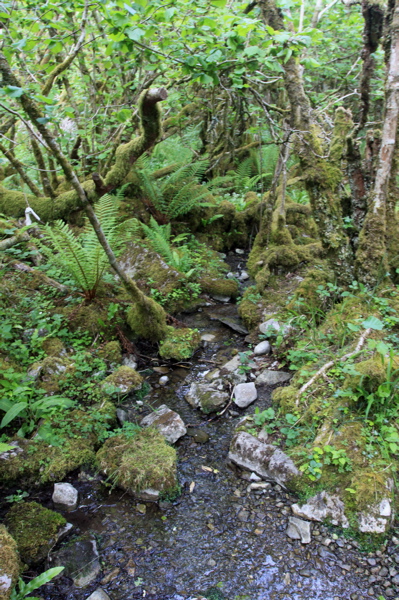
The Burren
Photo: Norma Scheibe
There’s a bad bit of road near Kinvara Chapel, just when you get within sight of the sea. I know a man has to pass there, and he wouldn’t go on the driver’s side of the car, for it’s to the right side those things are to be seen. Sure there was a boy lost his life falling off a car there last Friday week. And I knew him, a quiet boy, and married to a widow woman; she wanted the help of a man, and he was young. What would ail him to fall off the side of an ass-car and to be killed?
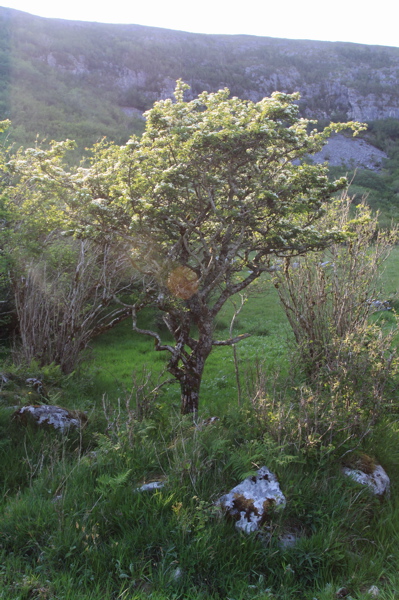
It’s by the big tree outside Raheen (where you take the turn to Kinvara) that the most things are seen. There was a boy living in Gort that was out before daylight with a load of hay in a cart, and he sitting on top of it. He was found lying dead just beside the tree, where he fell from the top of the cart, and the horse was standing there stock-still. There was a shower of rain fell while he was lying there, and I passed the road two hours later, and saw where the dust was dry where his body had been lying.
And it was only yesterday I heard a story of that very same place. There was a man coming from Galway with a ton weight of a load on his cart, and when he came to that tree the linching of his wheel came out, and the cart fell down. And presently a little man, about two and a half feet in height, came out from the wall. He lifted up the cart, and held it up till he had the linching put up again. And he never said a word but went away as he came, and the man came in to Gort.
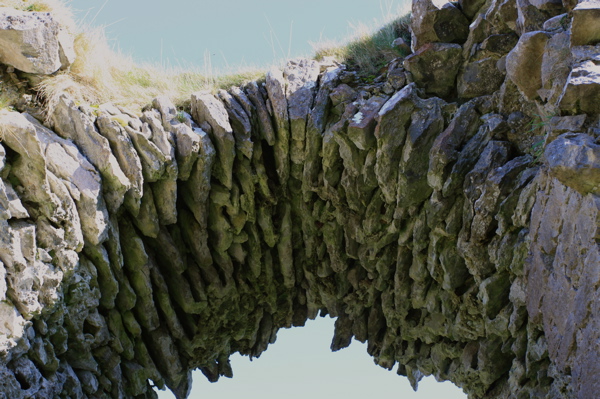
Photo: Norma Scheibe
I heard a churning one time in the hill up by the road beyond. I was coming back from Kinvara, and I heard it plain, no mistake about it. I was sorry after I didn’t call down and ask for a drink. Johnny M— did so, and got it. If you wish for a drink and they put it out for you, it’s no harm to take it, but if you refuse it, some harm might happen to you. Johnny H——— often told that he heard churning in that spot, but I wouldn’t believe the sun rising from him, he had so many lies. But after that, I said, “Well, Johnny H——– has told the truth for once.”
THE MONSTER
There is a monster of some sort down by Duras, it’s called the ghost of Fiddeen. Some say it’s only heard every seven years. Some say it was a flannel seller used to live there that had a short fardel. We heard it here one night, like a calf roaring.
THE BANSHEE
There is a boy I knew near Ballinderreen, told me that he was going along the road one night and he saw a dog. It had claws like a cur, and a body like a person, and he couldn’t see what its head was like. But it was moaning like a soul in pain, and presently it vanished, and there came most beautiful music, and a woman came out and he thought at first it was the Banshee, and she wearing a red petticoat. And a striped jacket she had on, and a white band about her waist. And to hear more beautiful singing and music he never did, but to know or to understand what she was expressing, he couldn’t do it. And at last they came to a place by the roadside where there were some bushes. And she went in there and disappeared under them, and the most beautiful lights came shining where she went in. And when he got home, he himself fainted, and his mother put her beads over him, and blessed him and said prayers. So he got quiet at last.
Agnes – 2013
Agnes – at The Ark – coming soon… all about Agnes
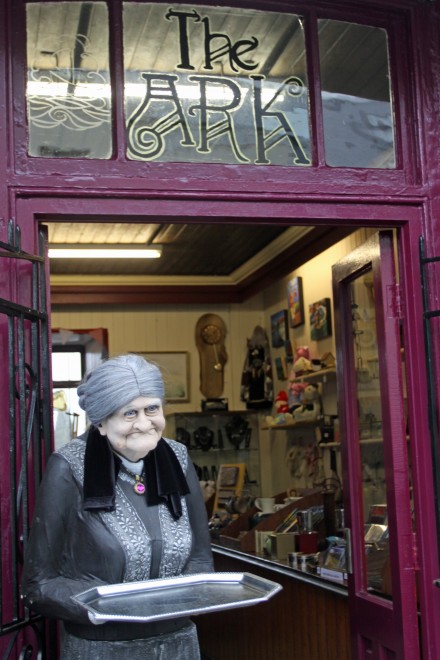
Photo: EO’D
Travels – Kinvara, Aughinish 1917
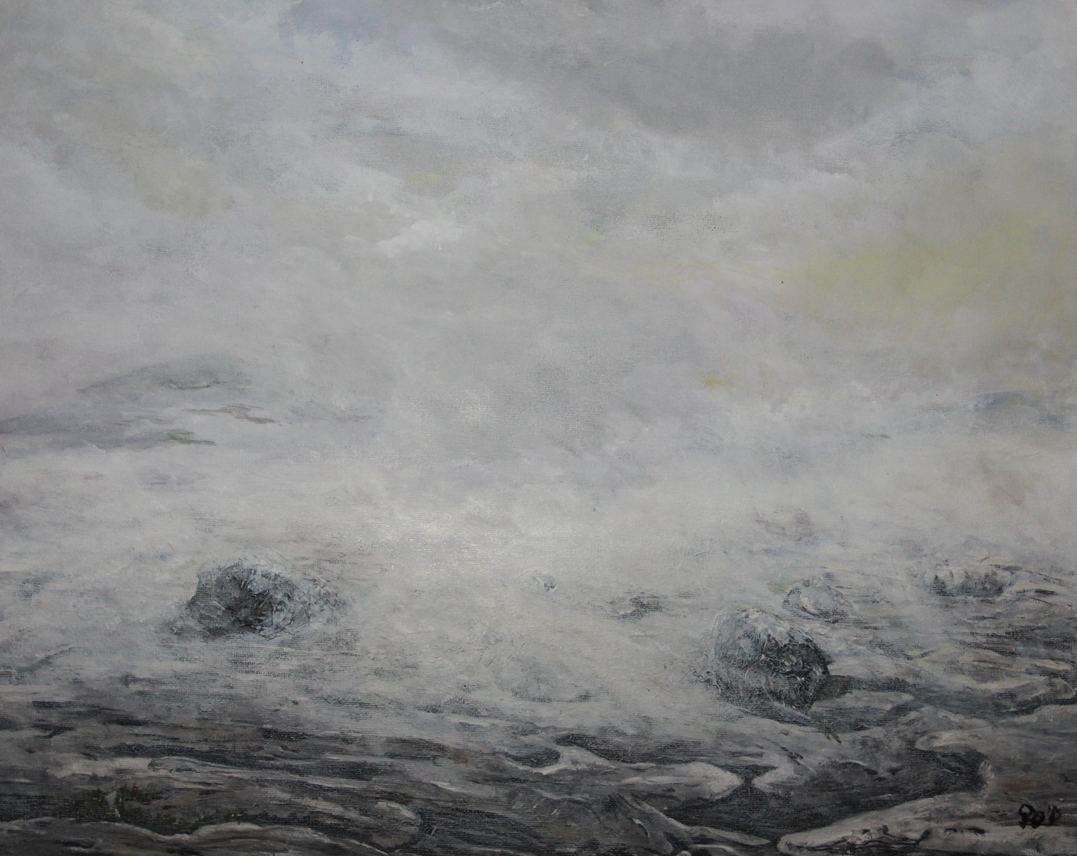
EO’D
https://widgetworld3.wordpress.com/podcasts/
SEEING THE WORLD
Travel Notes [XX-by the Hon. P.McM.Glynn, K.C. Minister for Home and Territories]
The Register 18 June 1917 p6
Driving round by the flaggy shore to Ballyvaughan and then across a gap in the Burren Mountains towards Kinvara, from which a fine view of the inner part of Galway Bay, the promontory of Aughinish and the swift current of the sea between it and the mainland, is open; along dusty limestone roads; the crumbling walls of deserted houses are seen in many places by the way. Most people of the past seem to have gone to heaven or the United States.
Politics, as they go, are still matters of conversational interest here. The Sinn Fein movement is mentioned by some with sympathy for motive and contempt for methods and organization. The rising came as a surprise, if not a shock to some persons, but there were, or are, scattered sympathisers or objectors to the more drastic of the methods of repression among the middle as well as the working classes. For among those who paid the inevitable penalty of revolt in time of war were some leaders of ripe scholarship and, in other respects, stainless lives; “Poets of the Insurrection” as they were called, whose mistakes of judgment, policy and method are lightly regarded by those of emotional temperament to whom disinterestedness primarily appeals. Discontent now turns on the recent check to Home Rule as expressed in the Government of Ireland Act 1914. There is a feeling that the political system – Union Government – is still the source of any economic maladjustments and that the country will at once flower under the working of autonomy.
To sin he was prone….

Photo:John Stephen Dwyer
CC=BY=SA=3.0
https://widgetworld3.wordpress.com/podcasts/
Truthful Tombstone in Kinvara Church
The most remarkable object within the town is the old church and burial place. It is particularly worthy of the antiquary’s especial notice, that the gable-end of the ruinous ecclesiastical edifice, just mentioned, which fronts the neighbouring castle, presents in that direction a round aperture, apparently designed for a clock. In the burial ground, surrounding the ancient house of worship, there are some comical monumental inscriptions to be met with. Amongst them are the following. On one tomb-stone is the pious couplet,
“James O’ Farrell lies under this stone; Pray for him, Christians – to sin he was prone.”
On another stone we find,
” Pray for the soul of Father Patrick Neilan, who
Dyed in ye year 1753,
Who lies under this stone,
He that feared but God alone.”
Of those departed persons, whose names are thus attempted to be perpetuated in doggrel verse at Kinvarra, it may be said with Grey,
” Their names, their years
spelt by th’ unletter’d muse
The place of fame and elegy supply.”
Within a long recess there lies a Bay…Kinvarra
https://widgetworld3.wordpress.com/podcasts/
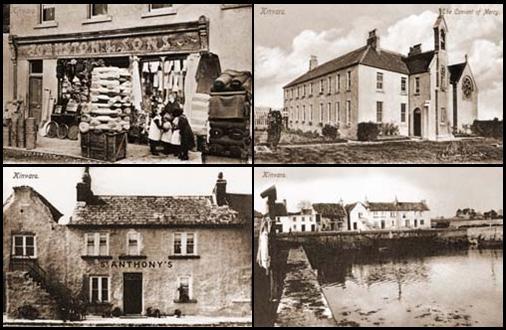
KINVARRA
“Within a long recess there lies a Bay,
An island shades it from the rolling sea,
And forms a port secure for boats to ride.”
Dryd. Virg.
Such is the geographical position of the harbour of Kinvarra, situate on the south east extremity of the bay of Galway. The entrance to Kinvarra bay is a moderately narrow one, lying between Durus head land on the west, and a point of Drumacoe parish on the east. Opposite to the mouth of this narrow channel is Eddy Island, which forms a natural breakwater protecting the little Delta of a bay within, from the rough seas that are occasionally reverberated from off the southern face of Kilcolgan point.
The village of Kinvarra is built on a gentle acclivity at the bottom of the bay, bearing the same name.
– The appellation seems to be derived from the Irish Ceann, the end or limit, and Mara, of the sea. –
This village is about five miles distant from New Quay, and is situate in the barony of Kiltarton, and county of Galway. Fairs are held here the 18th of May, and 17th of October annually. Kinvarra also is the name of the parish in which the village is situate, being a Vicarage in the Diocese of Kilmaduach.
This little town is the property of Mr. Gregory, of Coole, and has been much improved of late years. Many good houses have been erected – an excellent quay, wall and pier, have been built, and some good shops have been opened. Amongst the latter is an Apothecary’s establishment, kept by Dr. Hines where the infirm are supplied, on moderate terms, with medicine, and all meet with that attention and humanity, which is ever grateful to the invalid. There are several streets here, and the population is much employed in traffic. The market, is principally, remarkable for the sale of corn, bought up to be exported from hence. Adjoining the quay are temporary stocks, on which a superior class of sea boats are built.”
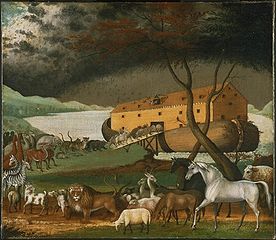
Edward Hicks (1780 –1849
Philadelphia Museum of Art
Kinvara – 1897 – a fine place to stay
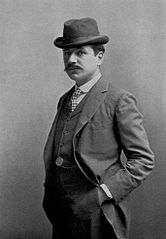
(1852-1935)
Crowell, NY, 1899
https://widgetworld3.wordpress.com/podcasts/
CONNAUGHT.
Getaway. — Paul Bourget, the French writer, will soon have published a novel, the scene of which is laid in Ireland. Bourgot went to that country to search out his ideal scene. He found a quaint old castellated building known as Neptune Yale, in the heart of a singularly romantic region on the southern shore of Galway Bay, and within a few miles of Kinvara.
It was built by a Frenchman, once the Mayor of Bordeaux, who was obliged to fly from France at the time of the French Revolution. He inherited a large property in the neighbourhood of Kinvara by his marriage with a Miss Ffrench, heiress and representative of one of the Galway tribes, After his death the property passed through several hands, but apparently remained always in the family. The traditions of the house and region- are interwoven artistically into the tale. A correspondent of the Freeman’s Journal of Dublin, writing about Bourgot and his book, said; — ‘M. Bourgot, the famous writer, and his highly accomplished wife, Madame Bourgot., spent their holidays last summer in the immediate neighbourhood of ‘Neptune Vale,’ the guests of Count de Basterot, the descendant of ‘ The Mayor of Bordeaux,’ founder of ‘ Neptune Vale’ Castle. Similarity of tastes has made Count de Bastorot and M, Bourgot intimate friends for yoars, as Count do Bastorot is himself a man of singularly cultured mind and the author of some well-known works on travel. During thoir stay at ‘Neptune Vale Castle’ Madame and Paul Bourgot expressed themselves no less delighted with the wild and romantic scenery of the district than they were pleased with the demeanour and characteristics of the people. It may not be out of place to add that the distinguished visitors greatly edified the people of the place by their unassuming manner and practical Catholicity.’
 The Burren and Beyond