Posted in Posts and podcasts

Travel Notes – 1917

The Register, Adelaide, South Australia
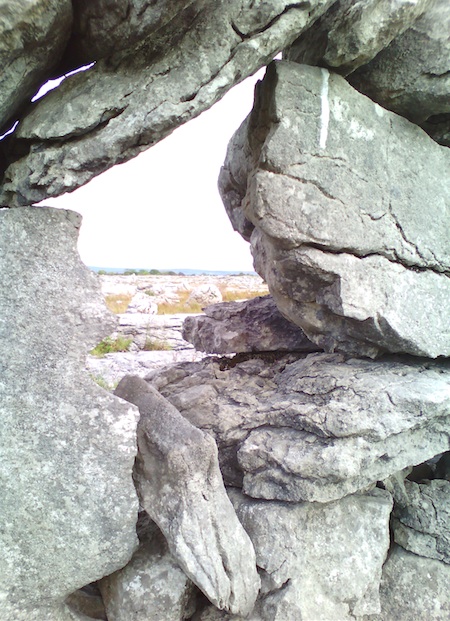
Photo: EO'D
Photo: EO’D

18th June, 1917 p 6

XX By the Hon P McM. Glynn K.C. Minister for Home and Territories (abridged)

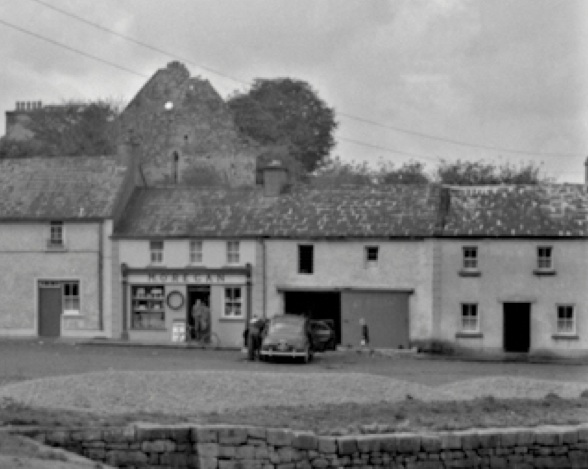
Gort, August 12, 1916. I arrived here on August 10. Names, not much else, have changed. Some old people, some middle-aged, knew me; their faces are not those of the past. Newquay, twelve Irish miles from here, is changed. The four or five white cottages facing the beach of shingle and sand, looking across the opening of ihe Straits towards Aughinish, are in ruine. It was difficult to identify the location of the seaside cottage in which, during some summer months, we lived.

Driving round by the flaggy shore to Ballyvaughan and then across a gap in the Burren Mountains towards Kinvara, from which is a fine view of the inner-part of Galway Bay.  The promontory of Aughinish and the swift current of the sea between it and the mainland is open; along dusty, limestone roads; the crumbling walls of deserted houses are seen in many places by the way. Most people of. the past seem to have gone to heaven or the United States.

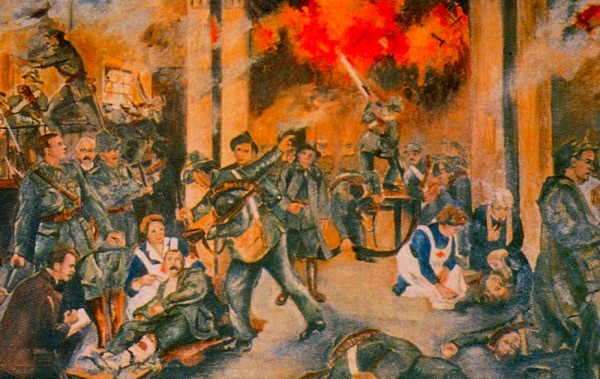
Politics, as they go, are still matters of conversational interest here. The Sinn Fein movement is mentioned by some with sympathy for motive and contempt for methods and organization. The rising came as a surprise, if not a shock, to some persons, but there were, or are, scattered sympathisers or objectors to the more, drastic of the methods of repression among the middle as well as the working classes. For among those who paid the inevitable penalty of revolt in time of war were some leaders of ripe scholarship and. in other respects, stainless lives; ‘Poets of the Insurrection’ as they were called, whose mistakes of judgment, policy, and method are lightly regarded by those of emotional temperament to whom disinterestedness primarily appeals.

Discontent now turns on the recent check to Home Rule as expressed an the Government of Ireland Act, 1914. There is a feeling that the political system – Union Government – is still the source of any economic maladjustments, and that the country will at once flower under the working of autonomy.

At Loughrea, behind the house of my brother James, are the ruins of an old abbey, one of the finest of the monastic days, and the Abbey walk. Across the road is the Carmelite church and monastery, and beyond sloping country, with a good growth of meadow grass and trees. Loughrea is situated on a lake, on the far bank of which the historic or traditional Fian ma Cumhill had some of his escapades. It has an excellent cathedral church, built by the lake; finished in every point of architectural design.
Posted in Posts and podcasts

Kinvara, Killina, Durus – 1847

From the United Parishes of Kinvara, Killina, and Durus, Co Galway, per the Rev. Francis Arthur.

Wikimedia Commons
Wikimedia Commons

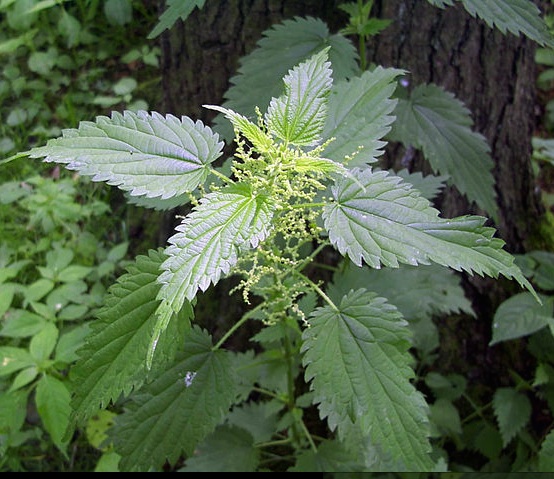
“Deaths by starvation from October 1846 to April 1847. – 148
Number of deaths occasioned by eating bad food- such as nettles, seaweed – 98.

Posted in Posts and podcasts

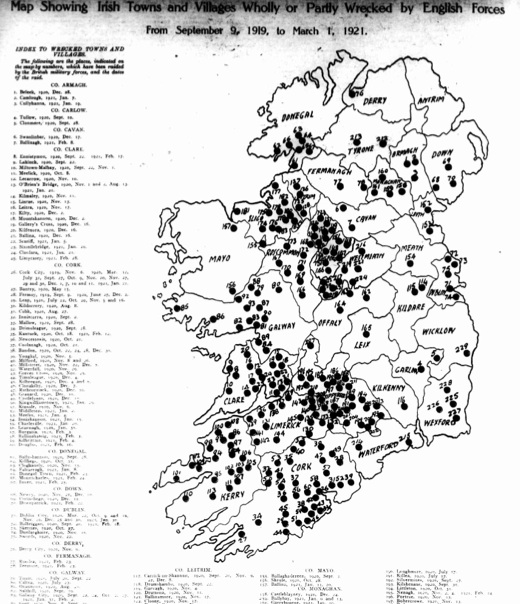
Kinvara and more – 1920

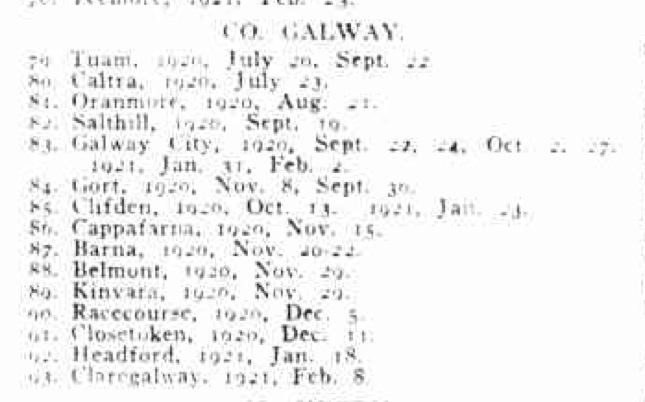
Map Showing Irish Towns and Villages Wholly or Partly Wrecked by English Forces From September 9, 1919, to March 1, 1921. INDEX TO WRECKED TOWNS AND VILLAGES.

The Catholic Press (Sydney, NSW : 1895 - 1942)   8 September 1921
The Catholic Press (Sydney, NSW : 1895 – 1942)
8 September 1921

cod

Posted in Posts and podcasts

N.U.I.G – 1845

N.U.I. Galway Wikipedia.org
N.U.I. Galway
Wikipedia.org

The Spectator 24th May, 1845 P9

The Roman Catholic Bishops met in Dublin on Wednesday, and took into consideration the Government bill for academical education.

It is understood that they object to the bill, because it does not place the religion and conduct of the pupils under the control of their religions instructors.  The final decision, as well as the meeting, was adjourned till Friday.

A public meeting for the town and county of Galway was held last week, to petition the Queen in favour of placing in that town (rather than in Cork) the intended Western College for the province of Connaught. The measure was generally approved by those present, both lay and clerical; but some guarantee for the moral and religious charge of the teachers was desiderated. The petition, however, was adopted by a large majority. Belfast and Derry are also con- tending, for the Northern College.

Posted in Posts and podcasts

The escape of J.B. Dillon – via Kinvara – 1848

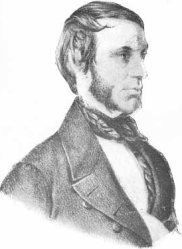
John Blake Dillon
John Blake Dillon

The Armagh Guardian 11th December, 1848  CMSIED 9311447 (abridged)

A correspondent sends the following particulars relative to the escape of Mr. J. B. Dillon from the western shores of Clare. –

“It will be in the recollection of your readers, that when six of the most prominent leaders in the late insurrection held a ‘council of war’ in the house of a farmer on the borders of Kilkenny one of the most distinguished of the party differed from the rest as to the means to be had recourse to for the achievement of Ireland’s independence. The Council, I am told, broke up without any settled plan for the guidance of the leaders and each of the party went in a different direction, distracted and almost broken-hearted.
By accident, it is stated, four of them met again at Ballingarry on the late memorable occasion, and among the number was Mr. J. B. Dillon. This young gentleman was much attached to Smith O’Brien, and was resolved to follow his fortunes, come weal or woe. He kept with him as long as he saw the least chance of success, but after the affair at Farrinrory he despaired, and resolved on an escape to some other land. He parted in sadness from his companions. The words uttered were few, but looks told the struggle in each man’s bosom.

Mr. Dillon arrayed himself in the usual costume of the clerical order, and with cloak and breviary set out for the shores of Clare.  He travelled through the Country, never evading police stations, but, on the contrary, lodging near the police barracks.  He pushed on his way through all obstacles – detectives and police – until he arrived at the mineral waters of Lisdoonvarna, where he remained for some days, mixing with the visitors, joining in their recreations,and drinking the waters occasionally ‘for the good of his health’. He passed the policemen daily – conversed with them, and preached to some in an edifying manner.  He lived in this manner for some days, until he was scented out by a keen detective, when he got a hint from some friend, took it, and broke fresh ground.

He next put up at Ballyvaughan whence he shifted himself on to Kinvara. Here he spent some days, and thence proceeded to the island of Aran, where a friendly vessel awaited, and bore him safely away from his enemies to the
shores of America.”


Posted in Posts and podcasts

Fahy – 1893

The history and antiquities of the diocese of Kilmacduagh

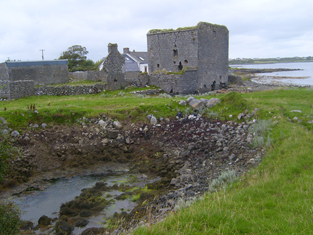
Rineen Mill, Doorus National Inventory of Architectural Heritage, www.buildingsofireland.ie via Landed Estates Image NUIG
Rineen Mill, Doorus
National Inventory of Architectural Heritage, http://www.buildingsofireland.ie
via Landed Estates Image
NUIG

J. Fahy 1893

McGill and Son Dublin

The Parish and Church of Kinvara-

In the existing parish of Kinvara we have the union of the three ancient parishes of Kiloveragh, Kilena, and Durus. We cannot say when they were united, but we have no doubt that the union exists for some three centuries at least. As regards the existing ruined church in the town of Kinvara, it may be interesting to know that, in the opinion of Mr. O’Donovan, it is not more than five hundred years old, and that it stands on the site of the old church of St. Coman.

The ancient church of Durus does not appear to have attracted the attention of antiquarians. We would wish to think it may have been the church of St. Colman Hy Fiachrach, but feel obliged to confess that we have no historical data to support the supposition. It is situated on a gentle eminence overlooking the bay. There was an oratory to St. Kyran on the adjoining strand, where the patron’s day was. Hardly a trace of the oratory remains. The ancient church of Kilena is still extant.

Posted in Posts and podcasts

News in brief – 1912

Wikipedia.org
Wikipedia.org

Northern Star = 11th May 1912 p9
Boycotting and Police (abridged)
There has been no cattle driving in the county since July 1911 but in other reports generally the county in the direction of Athenry, Craughwell, Oranmore, Gort and Kinvara, and bordering on the County Clare, was in a deplorable state. In the great majority of cases no one was to be made amenable notwithstanding all the efforts of the police, and it would seem as if the Executive was completely paralysed in these districts.
In one of the attempted murder cases a labourer working for the Estates Commissioners was fired at and wounded at Woodberry; in another case three shots were fired from behind a wall and a man was hit; in a third a shot was fired through the window of a cottage and the greater part of the charge entered the jaw of an unfortunate man who was sitting inside; in a further a sergeant and a constable were fired at from a wood and the sergeant was wounded; and in a fifth, which occurred near Oranmore, four shots were fired at six men who were passing along the road in a car, and all but one of them were wounded.

Posted in Posts and podcasts

Kinvara – 1920

Birth of the Irish Republic Walter Paget
Birth of the Irish Republic
Walter Paget

The Richmond River Herald and Northern Districts Advertiser 13th July 1920 p4

(abridged)
On Sunday morning at 2 o’clock, the house of John Killeen, a labourer, living near Kinvara, was fired into. One bullet lodged in Killeen’s chest and the other fell beside him on the bed. Dr Connolly immediately was on the scene and had him removed to the County Infirmary where the bullet was extracted.
Killeen is a laborer employed by Mr Fergus O’Dea Kinvara who holds some land at Seamount from Mrs Nally, Kinvara. The division of the property has resulted in a strong agitation among the surrounding tenants. Mr O’Dea surrendered part of his land and Killeen and others took up an acre or so each. On Monday Mr Killeen walled in his portion.

Posted in Posts and podcasts

Kinvara – 1873

Kinvara c 1960 Creswell Archives
Kinvara c 1960
Creswell Archives

The Irish Canadian

23 July 1873

The local Government Board for Ireland have prohibited burials in the Cemetery at Kinvarra, in the parish of Kinvarradoorus, County Galway.

Posted in Posts and podcasts

Sounds familiar – 1822

photo credit: <a href="http://www.flickr.com/photos/new_and_used_tires/6842127
The letter below is among the registered papers of the Chief Secretary’s Office; National Archives 1822

NAI REFERENCE:
CSO/RP/1822/1779

TITLE:
Arthur French St George, Oranmore, County Galway: on public works projects in region for alleviation of poor

SCOPE & CONTENT:
Letter from Arthur French St George, Tyrone, Oranmore, County Galway, to Henry Goulburn, Chief Secretary, Dublin Castle, indicating strong disappointment at failure to carry out repairs to road from Galway to Kinvarra, considered a worthwhile public works project.