The Old Mills Kiltartan N.S. The Schools’ Collection, Volume 0047, Page 0111 National Folklore Collection, UCD. c.1938 The Gort river which goes underground at “Poll Tuaithbheall” in Castletown worked four mills in and around Gort, one at Cannahown (1/2 mile to the South of the town, now derelict, one in Gort (Hynes’s, still working) one at Kinineha 1/2 mile to the N.East of the town (now derelict) and a fourth at Ballinamanton 1/4 mile farther on (derelict) Of rootcrops the principal kinds sown are turnips, mangolds, parsnips and beet. Turnips and mangolds are given as food to cattle and sheep. During the hard dry weather in spring and early summer sheep, and especially ewes, are fed on mangolds. Parsnips are grown only in small quantities for table use. Beet is sent away by Rail to the Beet Factory in Tuam. A Beet Train for Tuam leaves the Gort Station every night about 10.30pm, for about eight weeks before Christmas. The land is suitable for potatoes also. Any surplus potatoes are disposed of in the Gort marked every Saturday.
The Catholic Press 6th January, 1921 p9
IRELAND’S SADDEST TRAGEDY.
Young Mother Shot by uniformed assassins. (abridged)
Mrs. Ellen Quinn, who was shot on November 1 while sitting on the lawn in front of her farmhouse at Kiltartan, Gort, bled to death the same night. She leaves three children, the eldest of whom is not yet four years old. Rev. Father Considine, C.C., Gort, wired Mr. Arthur Griffith, T.C., on November 2:
‘Woman within two months of childbirth,and holding a child in her arms was shot by Galway police here Monday evening. Died few hours afterwards. Have wired Greenwood.”
At the time of the shooting Mr. Quinn, who is a farmer, was away. A messenger, who went for the priest and doctor, broke the painful news to him. Another messenger going to Ardrahan for Dr. Foloy was, it is reported, wounded by a stray bullet. Uniformed men passed into Gort subsequently, firing shots. When the lorry passed the house where the dying woman lay the terror-stricken occupants fled by the back way.
Rev. Father Considine gave a Dublin ‘Freeman’s Journal’ correspondent who called on him a graphic description of Mrs. Quinn ‘s last moments.
“It is too awful, too inhuman, to contemplate.”
These were Father Considine’s opening remarks concerning the tragedy. Pressed to explain what occurred, Father Considine said:
“I have read of Turkish atrocities; I have read of the death of Jean of Arc; I have read of the sufferings of Nurse Cavell, and as I read those things I often felt my blood boil, and I often prayed that the good God might change the minds and the hearts of those cruel monsters. Little did I then dream that I should witness a tragedy, an atrocity more hideous, more revolting, more frightful, more brutal, more cruel than any of those things, and here in our own little peaceful parish of Gort. My God, it is awful!
“About 3 o’clock on Monday, November 1, Malachy Quinn, weeping bitterly, called for me. ‘Father said he, ‘I have just heard that my wife has been shot. Will you run down immediately.’
I procured a motor car, and hurried to the scene. At the gateway there we beheld a large pool of blood. In the yard another pool, and the porch leading to the kitchen was covered with blood.
I entered the room. Oh God! What a sight! There lay the poor woman, the blood oozing out through her clothes. She turned her eyes towards me and said:
‘Oh, Father John, I have been shot.’
‘Shot!’ I exclaimed.
‘Yes,’ she replied.
‘By whom?’ I asked.
‘Police,’ she answered.
‘By police?’ ‘Yes,’ she replied, emphatically.
‘Did you see them?’
‘Yes.’
‘Where?’
‘On a lorry.’
‘How many lorries?’
‘Two.’
‘From which lorry did the shot come?’
‘From the first.’
Photo: Juni Wikimedia Commons
She then became weaker, Father Considine explained, and on rallying exclaimed:
‘Father John, will you do something for me?’
‘I tried to console her,’ he explained, ‘ and administered the Last Sacrament. When I had finished she whispered to me’:
‘Bring me Malachy, bring him to me, I hear him crying. I have something to tell him.”
I did so. What a scene. Then she became weak and fainted off. Gradually she became worse.
I sent word immediately to the Head Constable at Gort. He arrived with police and military. All seemed shocked at the tragedy. I asked him to go in and see the woman. He and his men felt the trial too much, as he answered, ‘I cannot.’
No trace of the bullet could be found.’
Continuing, Father Considine said Mrs. Quiiin was sitting on the lawn with her child when the lorry passed from which the fatal shot was fired. The bullet pierced the stomach, and the child she was holding fell from her arms. She crawled over the wall into the yard, and then crawled to the porch to tell her servant that she was shot.
‘Take in the little children!’ she exclaimed. ‘I’m Done! I’m Done!’
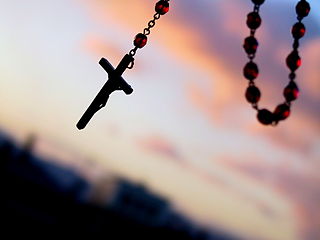
From 3 o’clock to 10.30 she lingered on in pain. Occasionally she would clasp my hand, pull me towards her, and say, ‘I’m done! I’m done!’ At 10.30 her condition became worse, and we knelt by her bedside to recite the Rosary and Prayers for the Dying, She tried to join, but was too weak. At 10.45 the little children began to cry, and with them the crowded house burst into tears. As I read the last prayer of the Ritual she looked around, then closed her eyes and died.
My God! what Turkish atrocity ever equalled this?
‘That morning,’ said Father Considine, ‘I had a note from her asking me to offer Mass for her deceased friends. Little did she dream tnat prayers for the repose of her soul would be asked for today from the altar?”
Coole Mist EO’Dhttps://widgetworld3.wordpress.com/podcasts/ Freeman’s Journal Saturday 21st may, 1904
AN IRISH MINSTREL
THE BLIND BARD OF CONNAUGHT – RAFTERY THE ROVING POET (edited)
Anthony Raftery was born in Killedan, County Mayo in 1779. He was smitten with smallpox when he was a little lad and the disease left him blind.
Someone taught him to play the fiddle and when he was still a young man he left his native place to go tramping the Galway roads, fiddling and singing songs for his meat and lodging. He was a poet of a type then fairly common – there were over two hundred wandering Irish poets when Raftery was on the roads, and each one of them, wherever they went, was welcome at the fireside and the fair. Raftery was the most famous, a man one was proud to entertain. He would play dance music at Kiltartan Cross “of a Sunday evening'” and it is said he could “turn a marriage into a wedding” with his music. Out the back, Ballybuck EO’D
His chief poems are “Eanach Dhiun”, “Mairin Stanton,” and a long solemn poem of great beauty, called “The Vision of Death,” which he made from a vision that came to him some seven years before he died. Of his life, there were many anecdotes, telling how he was once worsted in a dispute with a farmer poet, called Callinan, how he liked whisky, and was ever too fond of money, and how, at his death, the poor house where he lay “was all lighted up as bright as the day, and a flame in the heavens above it.” Blind though he was, it was said he could walk the roads with neither dog or stick, taking the turns rightly and leaping the bog-holes without a guide.
Raftery died in Killeeneen in 1835 and was buried in the graveyard there, with all the villagers to play him home. Lovers of his poetry placed a simple white stone above his grave.



 The Burren and Beyond