Posted in Posts and podcasts

Kinvara 1910

Connacht Tribune 24th December 1910 p5
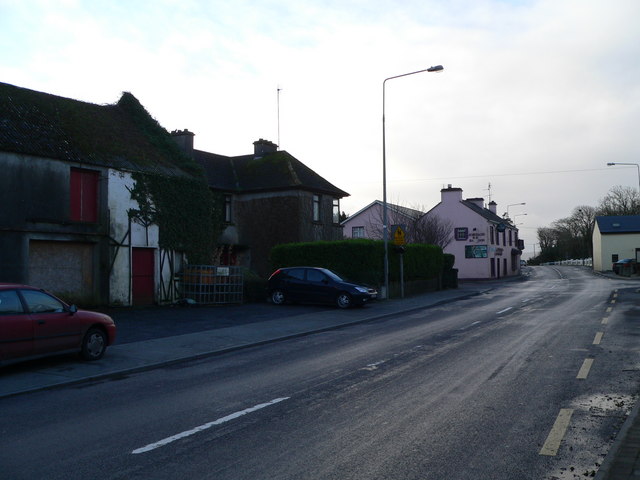
On Monday morning the Kinvara cattle drivers, Ml. Donohue, Gortnaclogh, T. Gorman, John Hynes, P. Healy, Bartly Quinn, Moy, and John Smith, Kinvara were released from Galway Jail after undergoing a term of six months’ imprisonment. They were tried at the Summer Assizes and sentenced by Judge Kenny for driving the cattle of Patrick J. Flatley off the lands of Funshinbeg. The severity of the sentence and the respectability of the prisoners evoked the greatest sympathy at the time, and the Nationalists of the district vied with one another in doing the farm work and harvesting for their families ever since.
They were met at the door of the prison as they emerged, by Mr Ml O’Donohue J.P., Co. C. and seven cars, laden with members of the Kinvara hurling club. They were sumptuously entertained by Mr. O’Donohoe, and started from Eyre square after “doing” Salthill, about 3 p.m. for Kinvara.
They were loudly cheered passing through Oranmore and Clarenbridge, and on reaching Kilcolgan they were greeted with illuminations. They were met outside Kilcolgan by a big contingent with cars and horses, from the Kinvara and Duras branches U.I.L., consisting of Messrs. T.P.Corless, D.D., president; Ml Curtin, B. Quinn, M. Melia, Pat Hanlon, Bryan Kilkelly, T. Keane, Joe Forde, Pat Halvey, P. Callanan, P. Whelan, Ml Carty (Secretary), Michael Huban, A. Conners, C. O’Loughlin, P. Noone, J. Moylan, John Glynn etc., who cheered them loudly. As Ballindereen was approached it was seen that every house was illuminated, bonfires were ablaze on every hill, and lighted torches lit up the horizon.
A noticeable feature in Ballindereen was a big force of police under arms on the outskirts of the crowd. A hurriedly convened meeting was held under the chairmanship of Mr. Michael O’Donohoe, Co. C. J.P., who thanked the sterling Gaels and fearless Nationalists of Ballinderreen for the great reception they had given the prisoners(cheers). He would never forget it to them (sic.) He reminded them of the early days of the Land League Movement and of the proclaimed meeting in 1879, and said he was glad to see the same spirit animating them today.
Mr. T.P.Corless, D.C., also addressed the meeting.
Amidst a scene of great enthusiasm the procession, which had now assumed enormous dimensions, started for Kinvara. The houses along the route were illuminated and bonfires and torches blazed at Pollough and Toreen. At Ballyclera the whole village turned out and the procession passed with great difficulty through a virtual sea of fire. Dungora Castle presented a grand appearand with its many and various coloured lights. Overlooking the town and harbour, the lights could be seen for miles. The turrets on the top were beautifully lighted and arranged in such a way as to resemble a huge harp. A bonfire was ablaze in frong of the Castle as the prisoners were passing.
Kinvara was brilliantly illuminated and an immense bonfire was lighted in a field opposite the Convent of Mercy.
In Moy and Gortnaclogh, the homes of the prisoners, bonfires and illuminations were kept up until morning.
Mr. Cruise, D.I., and a number of extra police were drafted into Kinvara, but notwithstanding the greatest excitement, everything passed off quietly.
Posted in Posts and podcasts

I’m thinking tonight of Kilcolgan

The Schools’ Collection, Volume 0033B, Page 10_051
National Folklore Collection, UCD.
Greta St. George, Ballinderreen NS

No 1
I’m thinking tonight of Kilcolgan
That village far over the sea
To the cottage wherein I was born
My memory it brings back to me
Im thinking tonight of Kilcolgan

No 2
The stile that I often climbed over
The garden where many flowers grew
And mother so patiently waiting
How void was the picture to view

No 3
Kilcolgan I’m often times thinking
If you look as I saw you of yoe’r
For its twenty long years since I left it
And came to Americas shore

No 4
I wonder If there’s any changes
How many the friends I should know
That I used to ramble about with
In the dear happy days long ago.

No 5
Is Kilcolgan castle still standing
Where I looked on with wonders so great
And the house of Tyrone not far distant
Where dwelt the St. Georges in state

No 6
The demaine with acres so many
Got round by a very high wall
The avenue where oft I did wander
With trees so stately and tall

No 7
Does the tide still come upon the river
How often I’ve watched it of yore
Does the boatmen from Old Connemara
Bring over the turf to our shore

No 8
Connemara I ne’er will forget you
Where gaedhlach is spoken go leór
Where fish and potatoes are plenty
And a welcome is always in store.

No 9.
A me will I e’re see you again
Shall I visit the land of my birth
Far dear to my heart is old Ireland
The dear little Isle of the blest

No 10
Shall I e’er see the Kilcolgan I know not
And still cherish hopes that may
And yet cross the stormy Atlantic
And sail into dear Galway bay.

No 11
To visit the home of my childhood
Once more to lay foot on that shore
And hear that glad welcome god save
As I often times heard it before.

No 12
I’ll still keep on hoping and longing
I’ll never give up in despair
But patiently watch and keep waiting
For the ship that will carry me there

This song was written by a man named John Wates

Posted in Posts and podcasts

Kilcolgan Farm – 1910

Connacht Tribune 9th July, 1910 p3

Photo: EO’D

Kilcolgan Farm
Vice-President Roveagh Branch answers Mr. St. George.
Mr Thomas.Kilkelly of Rhynn, Kilcolgan writes in reply to a letter which appeared in our correspondence columns under the above heading, signed by R. St. George, in which reference has been made to a “Mr. Kilkelly.”

I have, (he says), taken it for granted that I must be the individual referred to, I being Vice-President of the Roveagh branch U.I.L.  I have no desire to enter into a controversy especially with a dying remnant of landlordism, whose reputation and records are unique. Now he asks me would I allow a sub tenant of mine to owe £380, without eviction, as Mrs Greally owed his father.  This, with other statements, is untrue. We admit there was £50 due of Mrs Greally when her persecution began.  An offer of £40 was made as a settlement but rejected, hence the lamentable eviction took place.

Cast out on the roadside with her delicate husband and a family of five, they gathered their belongings a distance away and erected a temporary structure with some sticks and boards against the battlements of Kilcolgan bridge, close by, to secure shelter. The newly erected shed was soiled(sic.) and cast into the river and the rapid current did its part. They subsequently entered the arch of a bridge at the same place and the river being a tidal one, at each swelling of the tide, they had to depart and re-enter it as it abated, Under these circumstances her young family, being unable to endure such trying hardship; contracted consumption until four of her unhappy lot went down into their graves – martyrs in their cause.
Sometime after, her now deceased husband planted a rood of potatoes on the holding. When about to blossom the St Georges clan ploughed them up and, to secure their decay,  harrowed them. Some short time after this poor Mr Greally died, and I will leave my readers to think what should be his dying words.

Subsequently at the Petty Sessions Court in Ardrahan 13 decrees had been granted against her for which she paid this penalty of seven days in jail. She had been again brought to Oranmore and Kinvara Petty Sessions, and in all was imprisoned on six occasions. After the death of the predecessor of the present Richard, Mrs Greally again took possession of her old homestead,when she was again brought into the Four Courts where she was unable to defend her claim, and again dispossessed. Some arrangements were arrived at where she was allowed to retain, and live in the house under very stringent restrictions. The present R. St.George was admitted tenant through the intervention of his grand mother. Mrs. Greally had occasion to be away from home and on her return she found her cot burned to the ground and all her belongings.
Should St.George have any doubt as to accuracy of the foregoing observations, I’d appeal to him to interview Mrs Greally, who now resides in Oranmore, and I have no doubt she will convince him of the facts and probably more than what I have detailed.

Now, as regards the resolution which he referred to,  passed at a meeting of the Roveagh branch.U.I. League expressing condemnation of certain methods adopted  by certain people. This, it appears, aroused the indignation of the ex-policeman, and consequently he approached a National Press to expose his grievance by the omission of facts and figures, and the deduction of 300 acres down to sixty.  l would be grateful if he would produce his receipt for the sum of £90, which he asserts he was at a loss through the action of the U.I.League, which forced him to leave the force. If he had counselled with me prior to his departure, I may have advised him, but now I emphatically decline to do so. He left out his nice station in Macroom, and came to Kilcolgan to declare war against the people and their organisation. Well, as regards his offer in reply to Mr. Corbett’s letter, this is a deliberate lie. He offered us the bone but retained the flesh; if however, he is under the impression that he made the offer of those farms by paying him the rent, I hope there is nothing to prevent his goodness to do so again, when he will have the views of those who appear, in his estimation as land sharks. He should have substituted the word landlord sharks, but it seems his taste for the word was gone. I can assure Mr. St. George that our organisation is not little but formidable and impregnable and Nationalist to the core, having neither selfish motives nor vindictive aspirations. but honesty and justice. which we will uphold and maintain within constitutional methods, until Mrs Greally is secure from her persecutors, and the 300 acres are parcelled out to the deserving and needy in the locality. Then, and not till then, shall a flag of truce be raised.

THOMAS KILKELLY.

Posted in Posts and podcasts

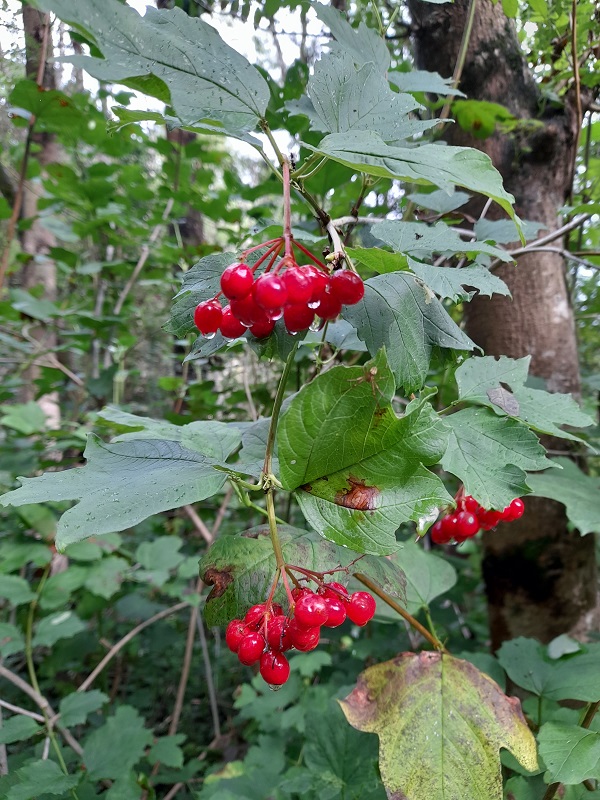
Local herbs

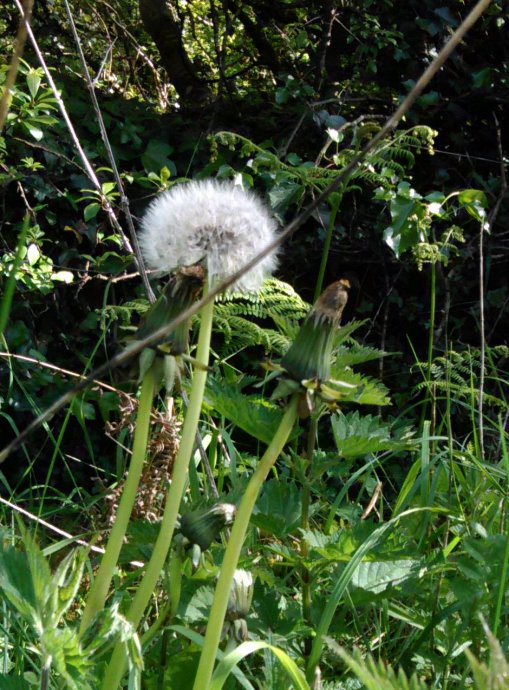
dandelion
Patsy Noone, Kilcolgan from Tommy McDonald, Kilcolgan
Around my home and on our farm there are lots of herbs growing.
The thistle is a tall pricky weed and when it is over ripe the seeds blow around and destroy the land and hay. There is a white flower growing on our land named vinvan. It kills goslings. Garlic is another weed and when eaten by cows it puts a bad taste in milk. There is a tall purple flower growing on our land named foxglove which kills sheep. From the dandelion people make wine, also from sloes and blackberries. They make jam from blackberries as well. Stains are taken out of clothes by boiling them with ivy leaves. Budgire is a long plant like the centre of a lily, it is poisonous. Nettles are given to young turkeys when boiled as food.
Makenagumpna is a green weed. It is boiled and the juice is rubbed on a burn to cure it. The chicken weed is a long green one, found in kitchen gardens. The juice of it takes off warts. The weed is also given to caged birds and is very good for them.

This selection of lore comes from the duchas.ie website. It comprises part of the  National Folklore Collection, property of University College Dublin held in trust for the people of Ireland.  Content  was collected by local children in 1937 and 1938, carefully transcribed under the supervision of their teachers and forwarded with great pride to form part of the Collection.

Posted in Posts and podcasts

Welcome home – Kinvara – 1910

Connacht Tribune 24th Dec 1910 p5 (abridged)

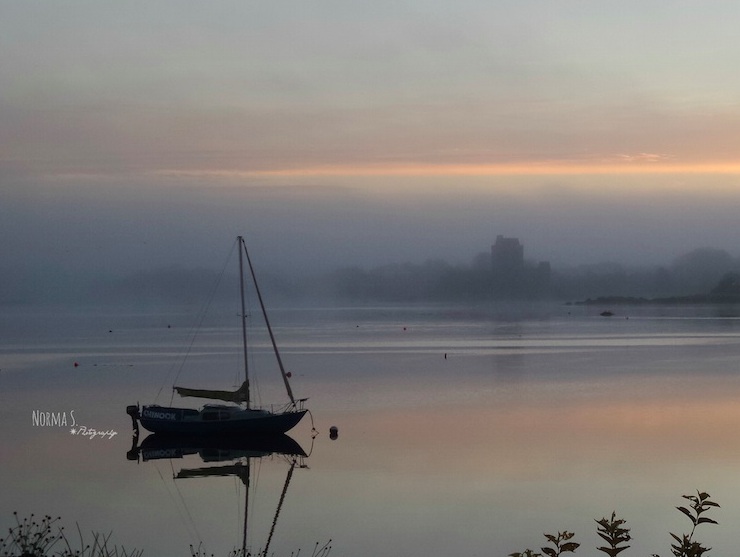
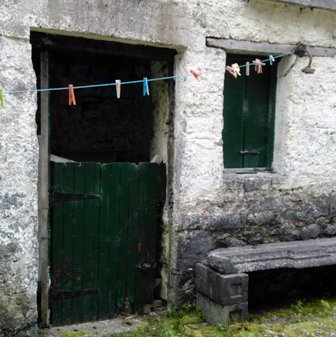
Kinvara Photo: Norma Scheibe
Kinvara
Photo: Norma Scheibe

On Monday morning the Kinvara cattle drivers, M.H. Donohoe, Gortnaclogh; T. Gorman, John Hynes, P. Healy, Bartly Quinn, Moy, and John Smith, Kinvara, were released from Galway Jail after undergoing a term of six months’ imprisonment. They were tried at the Summer Assizes and sentenced by Judge Kenny for driving cattle off the lands of Funshinbeg. The severity of the sentence and the respectability of the prisoners evoked the greatest sympathy at the time, and the Nationalists of the district vied with one another in doing the farm work and harvesting for their families ever since.

They were met at the door of the prison as they emerged, by Mr. Ml. O’Donohoe, J.P., Co.C, and seven cars, laden with members of the Kinvara hurling ciub. They were sumptuously entertained by Mr. O’Donohoe, and started from Eyresquare after “doing” Salthill, about 3 p.m. for Kinvara. They were loudly cheered passing through Oranmore and Clarenbridge, and on reaching Kilcolgan they were greeted with illuminations. They were met outside Kilcolgan by a big contingent with cars and horses, from the Kinvara and Duras branches U.I.L., consisting of Messrs. T. P. Corless, D.C., president; M. Curtin, B, Quinn, M. Melia, Pat Hanlon, Bryan Kilkelly, T. Keane, Joe Forde, Pat Halvey, P. Callanan, P. Whelan, Ml Carty (Secretary), Michael Huban, A. Connors, C. O’Loughlin, P. Noone, J. Moylan, John Glynn, etc., who cheered them loudiy. As Ballinderreen was approached it was seen that every house was illuminated, bonfires were ablaze on every hill, and lighted torches lit up the horizon. A noticeable feature in Ballinderreen was a big force of police, under arms on the outskirts of the crowd.

A hurriedly convened meeting was held under the chairmanship of Mr. Michael O’Donohoe, Co.C, J.P., who thanked the sterling Gaels and fearless Nationalists of Ballinderreen for the great reception they had given the prisoners (cheers). He would never forget it. He reminded them of the early days of the Land League Movement and of the proclaimed meeting in 1879, and said he was glad to see the same spirit animating them today. Mr. T. P. Corless, D.C., also addressed the meeting.

Amidst a scene of great enthusiasm the procession, which had now assumed enormous dimensions, started for Kinvara. The houses along the route were illuminated and bonfires and torches blazed at Pollough and Toreen.

At Ballyclera the whole village turned out and the procession passed with great difficulty through a virtual sea of fire. Dungora Castle presented a grand appearance with its many and various coloured lights. Overlooking the town and harbour, the lights could he seen for miles. The turrets on the top were beautifully lighted and arranged in such a way as to resemble a huge harp. A bonfire was ablaze in front of the Castle as the prisoners were passing.

Kinvara town was brilliantly illuminated and an immense bonfire was lighted in a field opposite the Convent of Mercy.
In Moy and Gortnaclogh, the homes of the prisoners, bonfires and illuminations were kept up until morning.
Mr. Cruise, D.I., and a number of extra police were drafted into Kinvara, but notwithstanding the greatest excitement, everything passed off quietly.
Posted in Posts and podcasts

Highway robbery – 1911

The Newsletter (Sydney) 16th September, 1911 p11

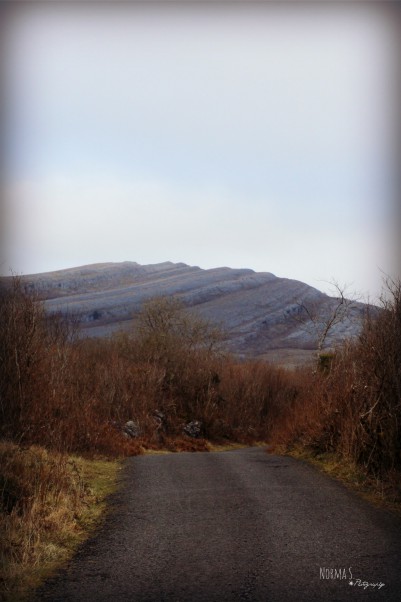
Mullaghmore, Co. Clare Photo: Norma Scheibe
Mullaghmore, Co. Clare
Photo: Norma Scheibe

Masked men recently perpetrated a daring robbery of the car caring the mails from Kilcolgan, Co Galway to Ballyvaughan. The car was held up by a party of masked men, all of whom were armed. A revolver was pointed at the driver who dismounted and fled for safety.

The car was driven for seven miles in another direction and when it was discovered by the roadside it was seen that several mailbags had been torn open and open letters were strewn in every direction.

The police rare scouring the country in search of the highwaymen.

Posted in Posts and podcasts

Scandalous – 1909

THE TUAM HERALD, TUAM, CO GALWAY

Wikipedia.org
Wikipedia.org

14th August, 1909

It is scandalous to find that when returning from the Galway Races, Patrick Conlon, of Kilcolgan, when approaching Clarenbridge was actually fired at. Conlon was wounded in both legs, and the horse was struck in the neck. The animal became restive and proceeded along the road at a rapid pace. A police patrol in the vicinity soon afterwards came across the injured man and had him surgically treated. The local Constabulary authorities are investigating the occurrences with the usual results. The injured man is at present under treatment in Galway County Hospital.
============

Posted in Posts and podcasts

N67 – archives – 1910/22

Ballinderreen Wikimedia Commons
Ballinderreen
Wikimedia Commons
Galway County Council Archives ‘…to acquire, preserve and make accessible the documentary memory of county Galway’ U:\Archives – Collection Management\Descriptive Lists\Rural District Councils, G00 & G01\G01-10 Gort RDC.doc
17 December 1910 – 17 June 1922 p9

‘Resolved – That we disapprove of the action of the County Council in endeavouring to change the route proposed by the Road Board from Kinvara to Kilcolgan (through Ballinderreen) and having it changed in another direction from Kinvara to Kilcolgan (through Ardrahan) as we believe the former road is through a congested area, and by the sea, would be more frequented by tourists, and would be the better road to have steam rolled as it is the mail road between Galway and Clare through Ballyvaughan’ (p122).