Posted in Posts and podcasts

Senchan, Guaire and the mice of Gort -1853

J. H. Todd and Eugene Curry
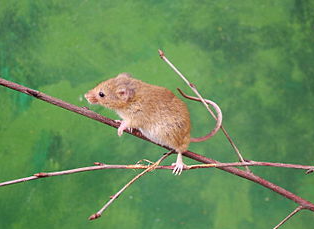
Field Mouse
Photo: Reg McKenna
Wikimedia Common

Proceedings of the Royal Irish Academy (1836 – 1869), Vol.5 (1850-1853), pp. 355-366;
(abridged excerpt from On Rhyming Rats to Death )

On the death of Dallan Forgaill, the chief ollave, or poet of Erinn, about A.D. 600, Senchan Torpest, a distinguished poet of Connacht, was selected to pronounce the defunct bard’s funeral oration, and was subsequently elected to his place. Senchan formed his establishment of bardic officers and pupils on a larger scale than had been known since the revision of the bardic institution at the great meeting of Dromceat, some twenty years previously. As chief poet, he was entitled to make visitation with his retinue, of any of the provinces and to be entertained at the court of the provincial kings. The honour of being so visited was sought for with pride and satisfaction by the kings of Ireland.
Senchan, having consulted with his people, decided on giving the distinguished preference of their first visitation to his own provincial king, Guaire the Hospitable, king of Connacht. They were received hospitably and joyfully at the king’s palace, at the place now called Gort, in the county of Galway. During the sojourn of Senchan at Gort, his wife, Bridget, on one occasion, sent him a portion of a certain favourite dish. Senchan was not in his apartment when the servant arrived there; but the dish was left there, and the servant returned to her mistress. On Senchan’s return, he found the dish and, eagerly examining it, was sadly disappointed at seeing it contained nothing but a few fragments of gnawed bones.

Shortly after, the same servant returned for the dish, and Senchan asked what its contents had been. The maid explained it to him, and the angry poet threw an unmistakeable glance of suspicion on her. She, under his gaze, at once asserted her own innocence, stating that as no person could have entered the apartment from the time she left until he returned to it, the dish must have been emptied by mice.
Senchan believed the girl’s account and vowed that he would make the mice pay for their depredations, and he composted a metrical satire on them;

Mice, though sharp their snouts,
Are not powerful in battles;
I will bring death on the party
For having eaten Bridget’s present.

Small was the present she made us,
Its loss to her was not great,
Let her have payment from us in a poem,
Let her not refuse the poet’s gratitude!

You mice, which are in the roof of the house,
Arise all of you and fall down.

And thereupon ten mice fell dead on the floor from the roof of the house, in Senchan’s presence. And Senchan said to them: “It was not you that should have been satirized, but the race of cats, and I will satirize them.” And Senchan then pronounced a satire, but not a deadly one, on the chief of the cats of Erinn, who kept his princely residence in the cave of Knowth, near Slane, n the County of Meath.
Posted in Posts and podcasts

Three wishes – 1928

Nenagh Guardian 15th September, 1928 p.5

Dun Guaire Photo; Norma Scheibe
Dun Guaire
Photo; Norma Scheibe

The Three Wishes

In Iniscaltra’s holy fane,
Once in the long ago,
In pious converse sat, their hearts
With love of God aglow,

Kevin, the abbot of the Isle,
From penance worn outright,
And he whom still Confert reveres,
Cumain the erudite;

And, with them, Guaire, Connaught’s King,
To Eire’s utmost bound.
For his beneficence to all
Who sought his aid, renowned.

“And now, O Guaire,” Kevin said,
“Did Heaven grant you your will,
With what, as most desired, would you
This house of prayer fill?”

With gold I’d fill it to the roof,
Nor then be satisfied,
Wishing it held as much again,”
The King to him replied.

“With gold,” said Kevin in surprise
“Guaire, can this be true?”
“With gold,” he answered, “for the good
That I, with it, would do.”

“Part to the churches; part I’d give
The saints, for me to plead;
And alms to all who’d ask me grant,
And no one leave in need.”

“Guaire,” said Kevin, “as to all
You’re helpful in their need,
God, in return, yourself will help,
And Heaven shall be your need.”

“Well be thankful,” Guaire said; “and now
Cumain, had you your will,
With what instead of gold, would you
This house of prayer fill?”

“I’d fill it all with books,” he said,
“For studious men to read,
And with the doctrine in them stored
Christ’s hungry flock to feed.”

“And now, O’Kevin”, said they both,
“With what, had you your will,
“Instead of books or gold, would you
This house of prayer fill?”

“I’d fill it,” Kevin to them said,
“With all the ills that be;
All human sorrows, ailments, pains,
And wish them all on me.”

Each had his wish.  To Guaire gold
was in abundance given;
With books unnumbered Cumain gained
Unnumbered souls for Heaven.

And Kevin suffered. With disease
His flesh dissolved; with pain
His frame was racked till scarce a bone
Did in its place remain.

By Charity and doctrine true,
And, for our sins, by pain
Should God ordain it so – may we,
Like them, to Heaven attain.

P.S. Iniscaltra, now called Holy Island, is situated in Lough Derg, a few miles above Killaloe.  The
“Great Church” there, destroyed by the English, was erected by St. Kevin
the Abbot of the island.

Posted in Posts and podcasts

Guaire – 1866

Nation 27th October, 1866 p.10

Dunguaire, Kinvara Photo: Norma Scheibe
Dunguaire, Kinvara
Photo: Norma Scheibe

‘Twas when the troops of Guaire
Had Suffered sore defeat,
And he a lowly prisoner,
Was brought to Dhiarmuid’s feet.
Unto him came a Druid,
All at the King’s behest,
To sound the sea of charity
That dwelt in Guaire’s breast.

The Druid knelt beside him,
And thus to Guaire cried,
“A gift, a gift, great Chieftain,
Thy fame spreads far and wide;
For that thy hand is open,
And thou art wont to give
A gift, a gift, great Chieftain,
And long, long may’st thou live.”

“I have no gift,” said Guaire,
“And had I one to give,
Methinks for thee it should not be,
For I can now perceive
That thou are well supported
All at the King’s expense
Then, quick, I pray that thou away;
Good Druid, take thee hence.”

Now, when the Druid left him,
a wretched leper came
Unto the Chief; in tones of grief,
Assistance did he claim.
“For God and His dear Mother’s sake,
Give something unto me,
It is a wretched leper
That claims thy charity.”

When Guaire saw the leper,
And heard his tale of woe,
His soul was moved within him,
His heart felt many a throe.
“Alas, afflicted leper,
That I am poor like thee,
But take this silver bodkin,
For blessed charity.”

PENTAX Image
PENTAX Image

He plucked the silver bodkin,
While thus to him he spake,
That pinned the vest upon his breast,
And bade the leper take.
His fallaing now all loosely
Around the Chief did flow,
As from his sight, with bosom light,
The leprous man did go.

With doleful look of anguish,
Came back that leper swift
“Good Chief, good Chief, I’m wretched,
They’ve ta’en from me my gift.”
The golden girdle from his waist
The generous Guaire took,
And gave it to the mendicant
With kindly, pitying look.

Then gratefully the leper
Unto the Lord did pray
For Guaire’s weal – nor harm, nor ill,
Might ever near him stay.
He went away rejoicing,
But soon returned again
“Good Chief, good chief, I’m wretched,
Thy gift from me they’ve ta’en.

Now, when that Guaire heard him,
He was afflicted sore,
The tears adown his visage brown
In streams began to pour.
King Dhiarmuid there beheld him
Afflicted thus at heart,
“And weepest thou O’Guaire now,
That thou a pris’ner art?”

“I mourn me not my own hard lot,
King Dhiarmuid,” Guaire said,
‘Tis hard, I wot, but tears may not
For such as me be shed;
But I do weep in anguish deep,
That I have nothing more
To give unto that man of woe,
That leper sad and poor.”

“Oh, Guaire,” then replied the King,
“I clearly now can see,
All free from stain of motive vain
Is thy great charity.
And, for that I esteem thee
No longer as a foe,
I humble pray that from this day
All strife we do forego.”

“‘Twas I that sent the Druid
To ask a gift of thee,
“‘Twas I that bade implore thine aid,
This man of misery,
I know thy wondrous valour,
I seek thy friendship dear,
And in my stead, when I am dead,
Thou shalt be Monarch here.”
T.C.

Posted in Posts and podcasts

Kinvara Twilight – 2014

Kinvara Twilight

Dunguaire Photo: Norma Scheibe
Dunguaire
Photo: Norma Scheibe

At twilight in Kinvara town
The Síog rise to play,
They perch upon the castle wall
And whistle out the bay.

It stirs the air like a blackbird’s sigh
Over the pier and on
Skirts the boats to Smuggler’s Cove
Beside the Canon’s Lawn

Where drowsy swans raise dreamy heads
To the lilt of that impish call
And stir for shore on gilded wings
Past the pier head wall.

The soft sweet hum of fairy breath
Calls cormorant, teal and coot,
And Lapwing, curlew, barnacle goose
Land on Dunguaire’s roof.

And then…

The Síogs gather their golden reins
And rising from their roost
They leap aboard their feathered friends
Into the sky they shoot.

And off across Dungory East 
Round by Loughcurra South
Over the top of Cloonasee
Far from the harbour mouth.

To Carrownamadra next they fly 
Down by the fields of Roo
Past Mountscribe, Townagh, Doorus Park
They part the dusk in two.

On they rush thro’ Rineen and Cloosh
Cregboy and Aughinish Bay
And turn again at Ceathrú an Droim
Behind the old causeway.

Where just beyond there lies a tower,
At Ceathrú an Bruim Fhéar,
A mighty place to catch a view
On a night fair-filled with stars.

’Tis here at last they drop to rest
The Síog and their band,
Twixt stars and moon and shining tides
Of Guaire’s ancient land.

So, if you hear wild sounds tonight
Take no account at all,
’Tis only the Burren birds at play
With the Síog of Guaire’s hall.

© Emer O’Donnell