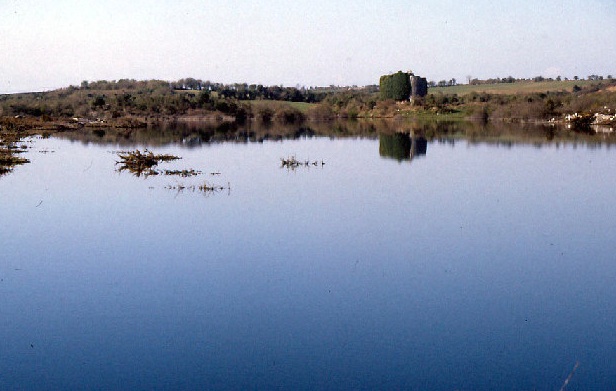
Newtown Castle, west of Gort Photo: Dr Charles Nelson Wikimedia Commons
At the Petty Sessions at Gort, County Galway, a priest names O’Higgins was committed for trial upon a charge of inciting to murder. He was escorted to jail by a detachment of cavalry.
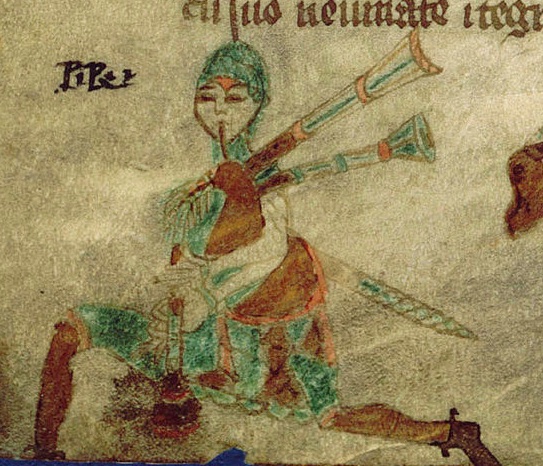
Thomas Higgins, Patrick Hughes, John Daly, Fergus Kilcooley, and Tim Reilly from Kilbeacanty served one month’s imprisonment for playing a band in the private grounds of Mr Baggott’s tenants while Mr Baggott was having a shooting party. On their release from Galway Gaol they returned to Gort where they were met by a large crowd of about 300 people who marched in procession playing the same band. The tenants on the Baggott. estate are demanding a sale through the Congested Districts Board, but Mr. Baggott has so far refused to deal with the matter.
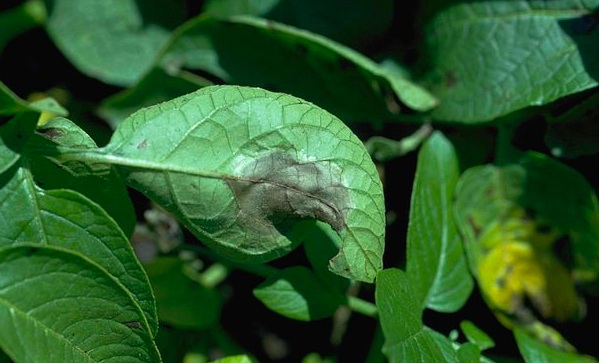
“Late blight on potato leaf 2” by Howard F. Schwartz, Colorado State University, United States – Wikimedia Commons –
THE Argus 26th December 1848 p4
From Gort, in Galway, about July 29, the reports were favourable, but recent returns show that on the 6th August a general failure of the crop was anticipated, the fields were black, but at that time it had not generally destroyed the Potato; on the 10th, however, matters were much worse, and opinions were entertained that it would be desirable to consume what Potatoes were sound, while they remained so, “for the blight was extending.”
The death is announced form Gort Convent, county Galway, of Mother Mary Aloysius Doyle, the last of the 16 nuns of the Order of Mercy, who left Ireland in Decemlier, 1854, to assist Florence Nightingale in nursing the Soldiers in the Crimea. She was 94 years of age. She was summoned to Windsor several years ago by the late Queen Victoria to be decorated, but was too old to undertake the journey. Her sister, aged 90, a nun in the same convent, still survives.
“Cracked and splintered hurley” Jeff Meade Philadelphia, US Wikimedia Commons
The Advertiser (Adelaide, South Australia)
13th March, 1912 p9. (abridged)
Yesterday a band of men hiding on both sides of the road at Gort in County Galway, fired at six men on their way home from a hurling match. All the men were injured, two of them seriously. No arrests have been made.
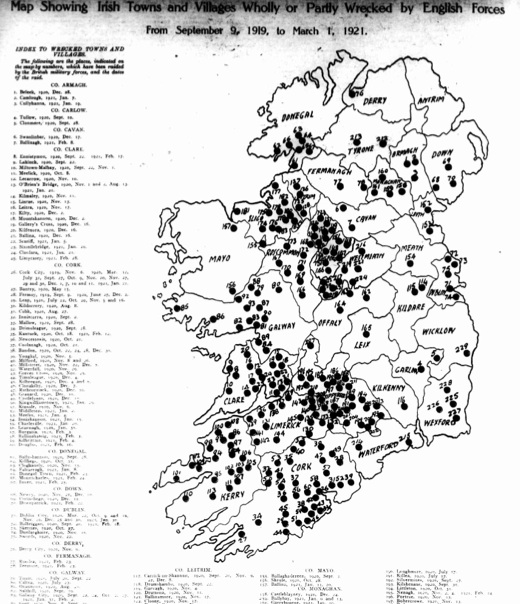
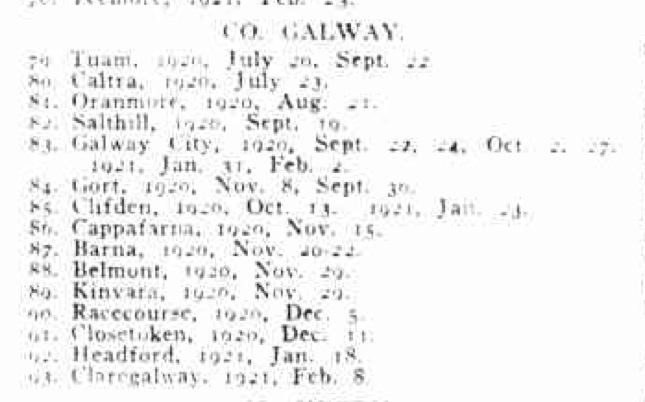
Map Showing Irish Towns and Villages Wholly or Partly Wrecked by English Forces From September 9, 1919, to March 1, 1921. INDEX TO WRECKED TOWNS AND VILLAGES.
The Catholic Press (Sydney, NSW : 1895 – 1942) 8 September 1921
Freemans Journal 8th September, 1906 p14 (abridged)
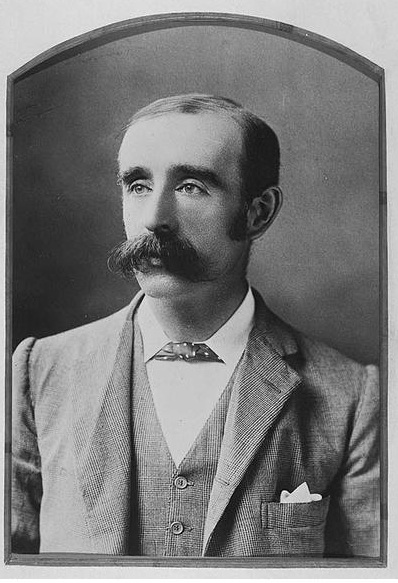
Mr P M Glynn M.H.R, who has just turned 51, was born at Gort, Co. Galway, Ireland and graduated at Trinity College. He was first elected to the South Australian Assembly for Light in 1887 (Parliament). His recreations are given as ‘hunting, tennis’, but for tennis, handball may be substituted
The Roman Catholic Bishops met in Dublin on Wednesday, and took into consideration the Government bill for academical education.
It is understood that they object to the bill, because it does not place the religion and conduct of the pupils under the control of their religions instructors. The final decision, as well as the meeting, was adjourned till Friday.
A public meeting for the town and county of Galway was held last week, to petition the Queen in favour of placing in that town (rather than in Cork) the intended Western College for the province of Connaught. The measure was generally approved by those present, both lay and clerical; but some guarantee for the moral and religious charge of the teachers was desiderated. The petition, however, was adopted by a large majority. Belfast and Derry are also con- tending, for the Northern College.
Northern Star = 11th May 1912 p9 Boycotting and Police (abridged)
There has been no cattle driving in the county since July 1911 but in other reports generally the county in the direction of Athenry, Craughwell, Oranmore, Gort and Kinvara, and bordering on the County Clare, was in a deplorable state. In the great majority of cases no one was to be made amenable notwithstanding all the efforts of the police, and it would seem as if the Executive was completely paralysed in these districts.
In one of the attempted murder cases a labourer working for the Estates Commissioners was fired at and wounded at Woodberry; in another case three shots were fired from behind a wall and a man was hit; in a third a shot was fired through the window of a cottage and the greater part of the charge entered the jaw of an unfortunate man who was sitting inside; in a further a sergeant and a constable were fired at from a wood and the sergeant was wounded; and in a fifth, which occurred near Oranmore, four shots were fired at six men who were passing along the road in a car, and all but one of them were wounded.
Coole Park, Gort Photo: AMcCarron Wikimedia CommonsHansard Commons Deb 28 June 1909 vol 7 c195W
Mr. DUFFY asked the Chief Secretary whether he is aware of the fact that the sergeant of the Royal Irish Constabulary stationed at Kinvara, county Galway, sends a telegram to the police authorities at Gort on each occasion that Mr. Michael O’Donohoe, J.P., county councillor, Kinvara, visits Gort in discharge of his public duties; will he state the cause or justification for such action, having regard to the fact that Mr. O’Donohoe discharges his duties conscientiously to all concerned?
§Mr. BIRRELL
I do not know whether the facts are as alleged, and I see no reason to inquire as to the manner in which the Constabulary authorities exercise their discretion in a case of the kind.




 The Burren and Beyond