Posted in Posts and podcasts

Kinvara 1902

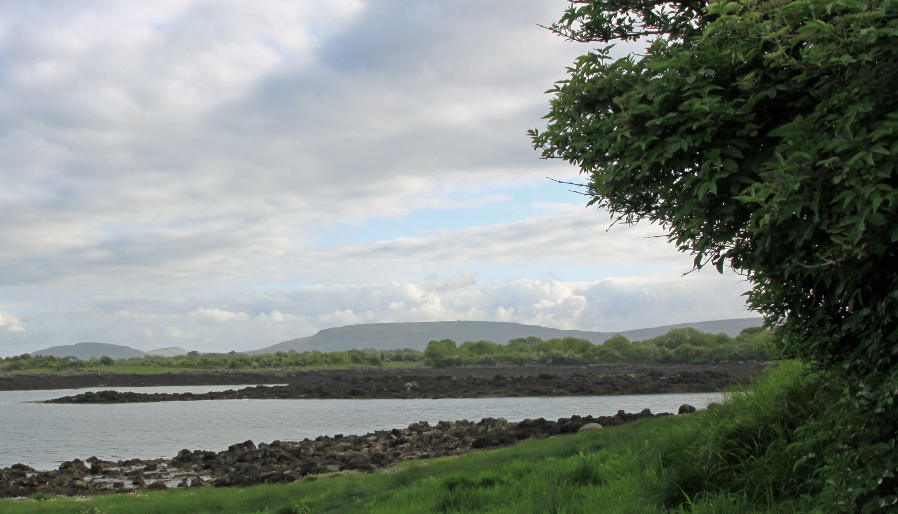
Ballybranigan, Kinvara Photo: Norma Scheibe
Ballybranigan, Kinvara
Photo: Norma Scheibe

EVENING STAR 3RD MAY 1902 

KINVARA

From E.P. STANTON  Donahoe’s Magazine (abridged)

Kinvara was, and probably is yet, an Irish-speaking district, for, although the national school has been an institution there ever since the planting of that intellectual exotic in Irish soil, the old ways and the old ideals have, nevertheless, held their own.  The Celtic spirit breathes in “ould Kinvara” still, and why should it not?  Within sight of what have been aptly called “The Last Fortress of the Celt”  – the Islands of Arran – and almost within sound of the league long breakers that encircle them with a belt of foam, it is not to be wondered at that the principles that made those islands saintly and storied should linger in the vicinity of Kinvara.  Therefore, it is safe to assume that it is as Celtic and Catholic today as it ever was.

There are two fairs held there yearly, and there is the weekly market.  At these the business used to be conducted principally in the old tongue.  This is possibly the case to this day.  The religion of the community being what it is, “God save you, kindly sir” of the ballad is the well-known and universal salutation, turned into English for the purpose of the rhythm.

The braedheen cloak and the plaid shawl, former for matrons and the latter for young women, are yet characteristic articles of female attire, and a picturesque garb they make in that quaint town and neighbourhood.

Note; The ballad is “The Auld Plaid Shawl” by Francis A. Fahy (1854-1935)

Posted in Posts and podcasts

More praise for Francis A Fahy, Kinvara 1896/1907

https://widgetworld3.wordpress.com/podcasts/

The Catholic Press Saturday 4th April, 1896
THE FUTURE OF IRISH MUSIC
The following is taken from a lecture recently delivered at Belfast by M George McSweeney:-
“Mr Arthur Percival Graves, the author of ‘Father O’Flynn’ has done a great deal for Irish music. He has written scores of songs to Irish airs, and his ‘Irish Song Book’ ought to be in every Irish home. But I think I will be doing no injustice to Mr Graves when I say that Mr Francis A Fahy is, in my humble opinion, the best Irish song-writer alive. As they say in the Irish language, he has more of the true blas on his lips than any singer who has appeared in our generation. I trust that Mr Fahy may continue to use his talents in the same direction.

Freeman’s Journal Thursday 14th November, 1907
Personal
Of interest to all lovers of Irish song is any information of the persons who compose the words and music. Reference to two of Ireland’s most gifted children in this respect was madce by Dr Annie Patterson in a recent lecture at Cork. She said;- “Happily, active, and in his prime is Francis A. Fahy. Cheery, bright and full of wit and sympathy are the lyrics he writes, many of which have been delightfully set to music by a gifted countrywoman of ours, Mrs Adelaide A. Needham. We want more poets like Mr Fahy, who is as modest as he is accomplished, and whose work is not only good literature, but is wholly racy of the son.(sic.)

Posted in Posts and podcasts

Francis A. Fahy – New York Tribune 1902

https://widgetworld3.wordpress.com/podcasts/

Rjensen at en.wikipedia

NEW YORK TRIBUNE, FEBRUARY 11 1902 PAGE 9
HIGH PRAISE FOR FRANCIS FAHY

Joseph Devlin or Ireland, who is at the Hoffman House with William K. Redmond, M.P., one of the leaders of the United Irish League, said last night:“Although I have just reached America for the first time, I rather suspect that the present literary product of Ireland is but slightly known in America. You all know Tom Moore, of course, but do you know our three leading poets of this generation. W.B.Yeats, Lymal Johnson and Katherine Tynan? W. B. Yeats, whose verse has a mystic strain running through it, is probably the widest read in England, and perhaps here. Another of our writers who deserves attention is Francis Fahy, who write the jolliest sort of songs, bright and witty. Many of them have been set to music by Mrs A. Needham. They are well worth while to read or sing.