
The Catholic Press (Sydney NSW) Thu. 8th November, 1928 p. 14
Excerpt from – The Irish Literary Society of London: A Brilliant Circle – written by P. J. Dillon (abridged)
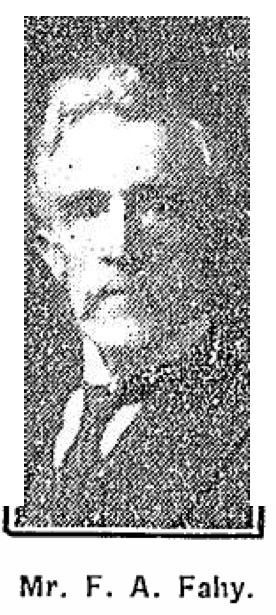
For the past 30 years two societies have flourished in London, with one or other of which, if not with both, the individual of Irish literary proclivities resident in the English capital was reasonably sure to come in contact. One of these was the Gaelic League, and the other the Irish Literary Society. Frank Fahy was largely responsible for the foundation of each of these organisations. As a matter of fact, he was, as already indicated, the inspiration of what may be taken as the precursor of both of them, the old Southwark Literary Club, on the Surrey side of the Thames.
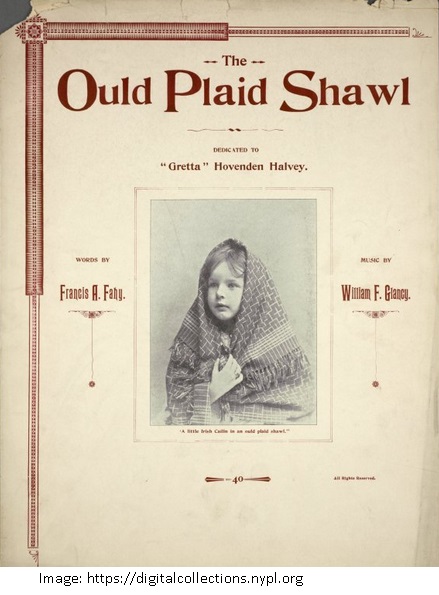
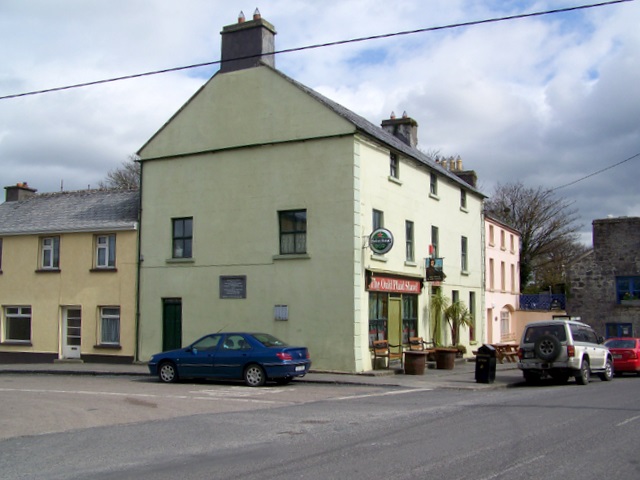
A Popular Songwriter. Fahy is not an uncommon name in the County Galway, and, like unto the sept of the O’Mahony’s of Cork, and that of the MacGuires of Fermanagh, Francis is a family patronymic in connection with it. One of the members for Galway in Dáil Éireann is named Frank Fahy, and he also has Gaelic literary leanings, being General Official Secretary to the Gaelic League of Ireland. The Frank Fahy with whom we are at present concerned, however, is more widely, known outside Ireland than any of his namesakes, owing to a number of popular lyrics written by him, which include such favourites with Irish audiences as ‘The Donovans,’ ‘An Ould Irish Hill in the Mornin’,’ ‘Little Mary Cassidy,.’ and ‘The Ould Plaid Shawl.’ He has been fortunate in his composers, and a good singer can procure an ‘encore’ with almost any of these songs of his; it is safe to say, however, that more real enjoyment has been obtained by those who have been privileged to listen to the author merely reading his compositions, than would be derivable from the rendition of them by the most capable vocalist of the day. The speaking voice, and the speaking face, the pathos, and the humour, and the unerring modulation, projected a picture visible to the eye of the mind, and vivid and animated as if the scene portrayed was actually being enacted by the originals of the types represented in the metrical compositions.
Official Discouragement.
For many years the author of these songs was an official of the Imperial Local Government Board. Whether or not poetry in the abstract, appealed to his superiors certain it is that the particular type of it that he was engaged in manufacturing was not to their taste. It was quite an easy thing to offend departmental susceptibilities in the days that he actively indulged in versifying, and although the authorities could bring themselves to swallow with a grimace, perhaps — the radicalism of Robert Burns, and the republicanism of Swinburne, anything with an Irish flavour was too nauseating.
It was a time when Parnell’s obstruction policy had produced more bitterness in official circles in London than had existed since the time of Daniel O’Connoll, and the circumstance that nothing more pronounced than jocular comparisons between the English and the Irish scheme of life could be charged against the writer, did not save Fahy from censure. It was definitely intimated to him that he would be well-advised to leave verse-writing alone, and to give undivided attention to the soul-stirring episodes associated with the work of Local Government.
Ah, me, the ‘old Irish hills’ are still there, but those whom Frank Fahy knew in the environs of the hills in the long ago are dead or vanished. And so, now retired from official labours, he has settled down for good in London. For some time past, beyond giving an occasional lecture, his activities have been confined to assisting, in an executive capacity, in keeping the Irish Literary Society alive and flourishing.
The Celtic strain and the literary instinct were too strong to permit of these repressive measures being entirely effective. He continued to strain at the bonds that held him tethered in London, separated from the hills and glens and streamlets of his darling island, and to give expression, in moving measures, to his craving for reunion with the mystic presences that float in the ether of Eirinn:
I’m weary and sick of the sight of the town,
Though haughty its mansions, and high its renown;
Oh, if some good fairy would but set me down
On an old Irish hill in the morning,
My very soul sighs for a sight of the sea,
By dear old Kinvarra, or down by Kilkee,
Or where Mohor cliffs in their majesty free,
Fling back ocean’s billows in scorning.
An old Irish hill, where the crag is so steep,
The air is so sweet, and the heather so deep,
Oh, lightly I’d labour, and soundly I’d sleep
On an old Irish hill in the morning.
These Saxons are hard, and their senses are cold,
And all that they care for or think of is gold,
What will cover their backs, or their coffers will hold?
Or what their shrunk shanks is adorning.
I miss the glad look and the grip of the hand,
The heart on the lips, and the welcome so bland,
The cead mile failthe’ and best in the land,
On an old Irish hill in the morning.
On an old Irish hill, where the torrents that leap,
Are types of the hearts that a vigil there keep;
Oh, sweet be their labour, and sound be their sleep
On an old Irish hill in the morning.
Some day when the summer cloud swims in the sky,
I’ll bid the stiff Saxon a merry good-bye,
And blithe over ocean and land I shall fly
To the green, pleasant land I was born in;
I’ll give the good-bye to all sorrow and strife,
I’ll find in the valley a rosy-cheeked wife,
And whistle ‘Moll Roe’ for the rest of my life,
On an old Irish hill in the morning.
On an old Irish’ hill, where the dreamy mists sweep,
A cabin of love ‘midst the heather to peep,
Oh, lightly I’d labour, and soundly I’d sleep
On an old Irish hill in the morning.
Sprightly Measures.
There is one striking peculiarity that attaches to Fahy’s songs, and that is the lilt in the lines that goes with the merry ones and the cadence of pathos that accompanies the infrequent ones of a sombre character. He appears to possess an instinct for supplying the precise metre, as well as the combination of words, which most aptly serve as a medium of expression of the particular theme that he is dealing with. The quaint conception, ‘Little Mary Cassidy,’ affords a good exemplification of his command of sprightly humour:
Oh, ’tis little Mary Cassidy’s the cause of all my misery,
The reason’ that I am not now the boy I used to be;
Oh, she beats the beauties all that we read about in history,
Sure half the country side is as lost for her as me.
Travel Ireland up and down; hill, valley, vale and town,
Fairer than the colleen dhown you’ll be looking for in vain;
Oh, I’d rather live in poverty with little Mary Cassidy,
Than Emperor without her be o’er Germany or Spain.
‘Twas at the dance at Dramody’s that first I caught a sight of her,
And heard her sing the ‘Dhrynawn dhown, till the tears came in my eyes,
And ever since that blessed hour I’m dreaming day and night of her;
The devil a wink of sleep at all I get from bed to rise.
Cheeks like the rose in June, song like the lark in tune,
Working, resting, night or noon, she never leaves my mind;
Oh, till singing by my cabin fire sits little Mary Cassidy,
‘Tis little ease or happiness I’m sure I’ll ever find.
What is wealth, what is fame, what is all that people fight about,
To a kind word from her lips, or a love-glance from her eye!
Oh, though troubles throng my breast, sure they’d soon go to the right-about
If I thought the curly head of her would be restin’ there by-and-bye.
Take all I own to-day — kith, kin, and care away,
Ship them across the sea, or to the frozen zone;
Leave me an orphan bare — but leave me Mary Cassidy,
I never would feel lonely with the two of us alone.
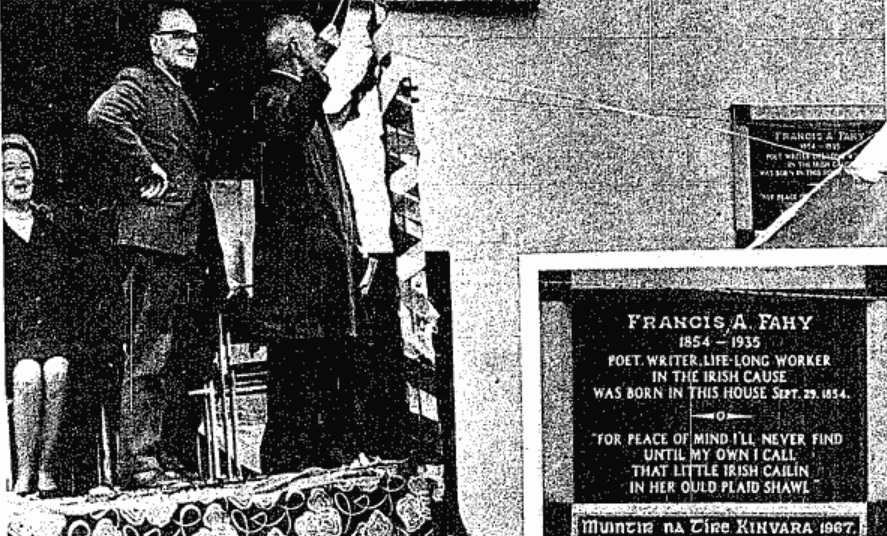
Frank Fahy comes from Kinvarra, that little spot on the shores of Galway Bay, that he has made known to so many through the medium of his song, ‘The Ould Plaid Shawl’:
Not far from ould Kinvarra, in the merry month of May,
When birds were einging cheerily, there came across my way,
As if from out the clouds above an angel chanced to fall,
A little Irish colleen, in an ould plaid shawl.
I courteously saluted her, ‘God save you, Miss,’ says I;
‘God save you kindly, sir,’ says she, and quickly passed me by.
Off went my heart along with her, a captive in her thrall,
Imprisoned in the corner. of her ould plaid shawl.
Ould Kinvarra.
I have heard him describe, in felicitous and humorous language, both physical peculiarities of the country surrounding Kinvarra, and the personal ones of many of the people who dwelt there. He had a rich store of recollections to draw on, being endowed with both an observing eye and a retentive memory. Indeed, it would have been a difficult task for him to weary his audience on a topic of the kind referred to, his discourse being shot through, as it invariably was, with amusing little episodes which he had a special gift of recounting in the most happy manner. Seats in the lecture hall were always at a premium on a night that he was billed to appear.
He left Kinvarra before the seed sown in Ireland by the Gaelic League came to be harvested, with the result that his ability to speak Irish was circumscribed. It was currently spoken by his elders in his native district, and his father and mother were both Irish speakers, but it had not yet been relieved from the contempt which ignorance of its value had caused to be associated with it. It was at the time looked upon as vulgar, and barbarous, and low, and in every way to be condemned, and strangled, and buried forever and ever, even though the apology for broken English which superseded it was a thing for any educated self respecting Irishman to shudder at. For of a surety there is no more atrocious English spoken than in the west of Connaught. Anyhow, Frank Fahy had read a good deal of Irish history, and cherished the little Gaelic that he brought to London with him, and he could follow an Irish speaker intelligently, as long as the person did not articulate
too quickly.
London Popularity.
In London in those days he was nearer to Dublin, in more senses than one, than he was to Kinvarra, and, lighting a taper from the lamp which had been enkindled by Dr. Douglas Hyde and his confreres in the Irish capital, he busied himself in the establishment of a branch of the Gaelic League in London, of which he was the first president. It was through the medium of the concerts of this organisation that his songs first got a vogue, and even up to the present time the programme of the St. Patrick’s Night concert in London is rare without one or more of them appearing on it. His ballad of ‘Galway Bay’ used to be a great favourite in Irish circles, its sentiments finding an echo in many an exile’s heart yearning for the land of his love. He told me that it was originally written to gratify his father, who followed
his gifted son to London:
Oh, grey and bloak by shore and creek, the rugged rocks abound,
But sweeter green the grass between that grows on Irish ground;
So friendship fond, all wealth beyond, and love that lives alway,
Bless each poor home beside your foam, my dear old Galway Bay.
Had I youth’s blood and hopeful mood, and heart of fire once more,
For all the gold the earth might hold, I’d never quit your shore;
I’d live content, whate’er God sent, with neighbours old and grey,
And lay my bones ‘neath churchyard stones besides you, Galway Bay.
The blessings of a poor old man be with you night and day,
The blessings of a lonely man whose heart will soon be clay;
‘Tis all the Heaven I’d ask of God upon my dying day —
My soul to soar for evermore above you, Galway Bay.
I never knew anyone who had an unkind word to say of Frank Fahy. There is not, the slightest suspicion of pedantry or bumptiousness about him; he is always cheery and pleasant, jovial and humorous. At a complimentary dinner given to him a few years ago by the Irish Literary Society, eloquent tribute was rendered to him by quite a number of distinguished people, for the splendid work that he performed during his long association with Irish literary activities in the English metropolis. He is deservedly regarded by all those Irishmen who have the privilege of his acquaintance as a kindly, talented, essentially Celtic personality.

 The Burren and Beyond