Posted in Posts and podcasts

The Dismal of the Burren – 1934


Limerick Leader 20th October, 1934 p.10 (abridged)
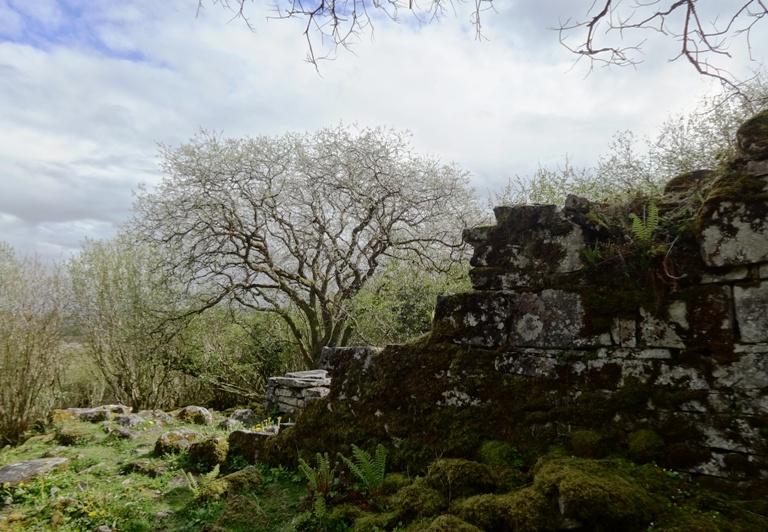
St. Colman’s
Photo: EO’D

The clans are embattled at dark Corcomroe,
And proudly their trumpets and warhorns blow;
The blood, bone and strength of all Thomond are there,
With lances in rest and broad-swords bare.
The chivalrous powers of Clan Cullein march on,
With the proud MacNamaras, like towers, in the van;
The plumes of their legions are nodding on high,
Like tall forest-tops waving dark in the sky.
(The Bard of Thomond)
The clans encamped for the night, securing their cattle within the boundary walls of the monastery. Many slept on the floor of the church, some in cubicles, but others passed the night in mirth around their blazing bivouac fires. They were the MacInerneys, Lorcains, O’Claras, Mannions, O’Molonys, O’Hallorans, O’Currys, O’Slatterys, O’Hassetts, O’Malleys, O’Hartigans, O’Haleys, O’Condergans, O’Conways, O’Meehans, O’Mahons, MacMahons, O’Lynchs and O’Kellys of Galway. O’Regans, O’Griffys, O’Howards, Mahownas, MacEncros of Inagh, O’Galvins, O’Liddys, O’Doyles, O’Kellihers, O’Cunneens, O’Gerans and the clan Giolla Maoel.
Donough Brian Rua’s followers were assembled on the Burren hills to the westward of the abbey. At early morning he marshalled his forces, and marched to meet his foes. Reaching the shores of Lough Raska he and his men met with a strange apparition, described by MacGrath as “the monstrous and distorted form of a lone, ancient, hideous hag, that stooped over the bright lock’s shore. The creature’s semblance was this; she was thatched with elf locks, foxy-grey and rough as heather; long as sea-wrack, inextricable tangled; that had a bossy, wrinkled, foully ulcerated forehead, every hair of her eyebrows was like a strong fishhook, and from under them, bleary dripping eyes peered with malignant fire between lids all rawly crimson-edged. The crone had a cairn of heads, a pile of arms and legs, and a load of spoil, all of which she rinsed and diligently washed, so that by her labour the water of the lake was covered with hair and gory brains. The army, hushed, intently and long gazed at her, but the chief spoke to the beldame;
“What is thy name, what people are thing, or whome are, these the so maltreated dead on this moist shore?”
She nothing loth replied; “The Dismal of Burren I am named always, ’tis of the tuatha de Danann I declare myself, and royal chief; this pile stands for your heads, in their midst thine own here; which now thou carriest it, yet no longer is thine. Proudly as thou goest to battle, the time is not far from thou when all to a very few ye must be slain.”
Posted in Posts and podcasts

A Fortnight in Lisdoonvarna – 1887

Supplement to the Cork Examiner 8th October, 1887

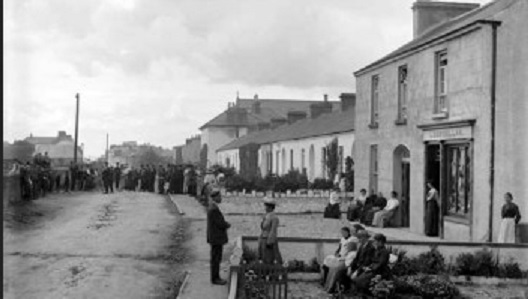
Lisdoonvarna - c 1903 Robert French
Lisdoonvarna – c 1903
Robert French

This beautiful and favourite health resort, which deserves to be better known than it really is, has, since the opening of the West Clare Railway, become much more easy of access, as the station at Ennistymon is only seven miles from the Spa. In the old days the long car journey from Ennis, a distance of twenty miles, was very fatiguing and was enough to deter persons of weakly or delicate constitutions from undertaking it at all.

I arrived in the height of the season and only that I took the precaution of telegraphing from Ennis, I could scarcely have got quarters at the comfortable hostelry where I had sojourned on a former occasion. I had the good fortune to fall in with pleasant and companionable society, including a large sprinkling of the softer sex and, If I had not long ago received my baptism of fire from a pair of Southern blue eyes, and so was armour proof against the shafts of the winged god, I certainly should have not returned heart whole.

I found Biddy at the celebrated sulphur well as youthful looking and full of ready repartee as ever, while her faith in the healing virtues of the spring seems to grow stronger as the years roll by. Our time was mainly spent in drinking the waters, climbing the neighbouring hills, or following the courses of the tortuous ravings, which the mountain torrents have worn, here there and everywhere through the beds of shale. The monotony of this style of existence was occasionally broken by excursions through the various places of interest round the Spa, and two of these outings deserve at least more than passing reference.

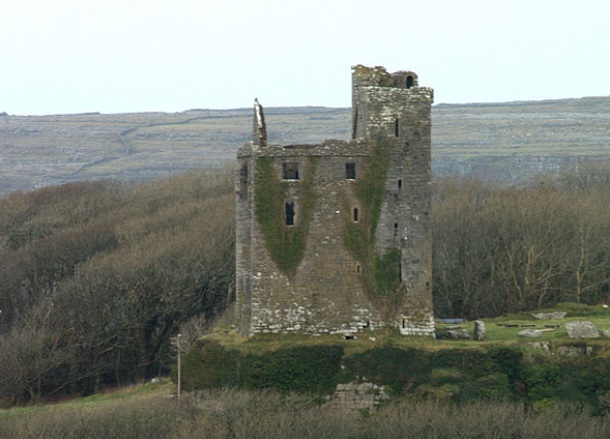
Ballinalackin Castle Bogman Wikimedia Commons
Ballinalackin Castle
Bogman
Wikimedia Commons

We arranged on one day to go by Ballinalacken and Black head to Ballyvaughan, and returned by the famous Crokscrew road, a piece of engineering that would do credit to the genius of the first Napoleon. The road from Ballinalacken to Ballyvaughan runs along the Southern shore of Galway Bay. The country to the right forms portion of the Barony of Burren and presents a chain of rocky and barren looking hills. Yet we were assured by our driver that succulent grasses grew in the interstices of the rocks and that splendid sheep were raised on these hills.

The day was beautifully fine, the blue sky being perfectly cloudless, while Galway bay was a calm as an inland lake. Here and there a hare-legged, sunburned child peered out from some fisherman’s cabin; anon a startled hare fled away from a wayside clump of rare ferns. Ivy clad ruins of ancient abbeys and churches formed a prominent feature in the landscape and bore eloquent testimony to the piety and faith of our Celtic ancestors.Of the old castles, Ballinalacken, once a stronghold of a sept of the O’Briens, claimed most attention and reminded me forcibly of Blarney. Altogether it was a day worth living for and although I have spent many pleasant days in various nooks and corners of our Island, the memory of this golden one shall abide with me forever.

A few days before my departure, I visited Galway.  Galway – quaint, old and decaying! Galway still redolent of the days when dark-eyed Spaniards promenaded its streets and quays, intent on selling their precious cargoes of rare wines! I was very much struck with a curious mixture of the ancient and the modern. In one of the principal streets stands a battlemented castle of the date 1473, with curiously carved escutcheons and leering griffins; the basement being devoted to the utilitarian purposes of a tallow-chandler’s shop!

The other places of interest to the visitor or tourist within easy reach of Lisdoonvarna are the Cliffs of Moher, which rise perpendicularly from the ocean to a height of 800 feet; St. Bridget’s well, near Liscannor, the subject of Petrie’s famous picture of “The Blind Girl at the Holy Well”; Corcomroe Abbey and Inchiquin Lake.

When the holiday season comes round again and tired citizens are asking themselves the question, “Where shall we go to?”, I would strongly advise a visit to Lisdoonvarna and West Clare, where pure mountain air, natural scenery, and, to those who may require them, healing springs, cannot fail to please and charm the most fastidious.

Posted in Posts and podcasts

W.S.O’Brien – Corcomroe – 1857

Connaught Telegraph 14th October, 1857 p.3 (abridged)

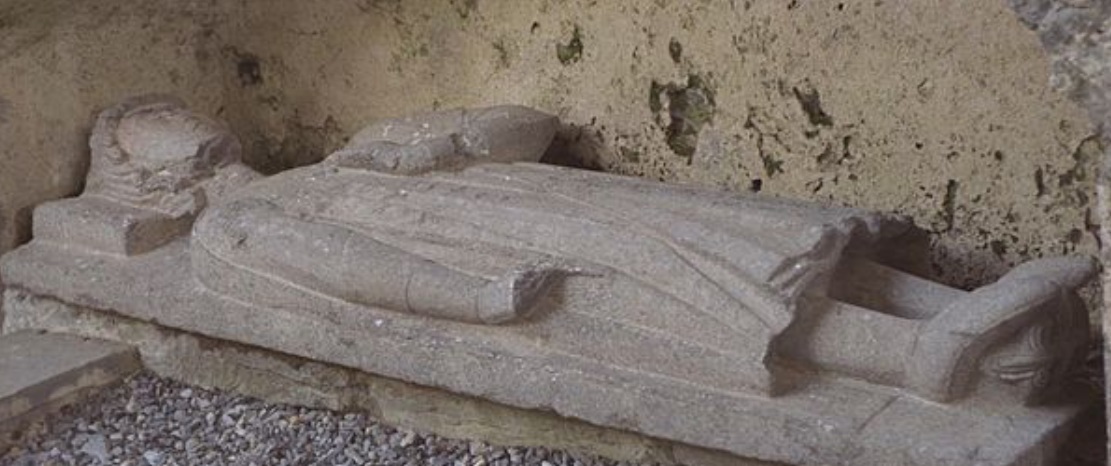
Effigy King Conor O Brien, Corcomroe Abbey Photo: Andreas F. Borchert Wikimedia Commons
Effigy King Conor O Brien, Corcomroe Abbey
Photo: Andreas F. Borchert
Wikimedia Commons

On Monday, W.S.O’Brien Esq., arrived in Ballyvaughan from St. Catherine’s and drove on to see the ruins of the Abbey of Corcomroe in which lies a stone figure of one Connor O’Brien,  a monk in the monastery about 600 years ago.  After Mr. O’Brien returned in the evening, he proceeded to Lisonaid. A number of people lighted tar barrels and the unusual accompaniment was presented of a canoe or currough on fire to welcome him to his native county. Mr. O’Brien came out, and having briefly thanked the people for their reception of him the crowd dispersed and returned homewards, cheering so lustily that the distant sounds might be heard through the valley of Gleneraga, and even to the old Castle of Glenenagh.
Munster news.