Posted in Posts and podcasts

Christmas Eve Legends – 1927

World News Sydney 24th December, 1927 p 27

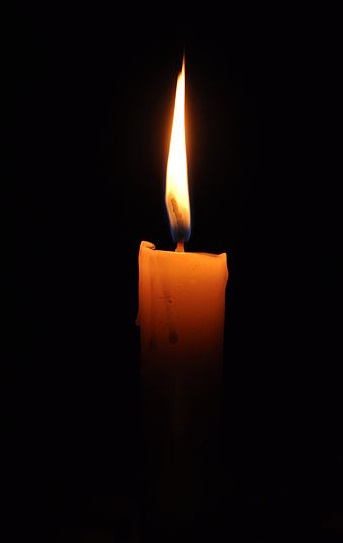
There is is a beautiful belief in Ireland that every Christmas Eve the Christ-Child walks once more through the land, so lighted candles are placed in the window of every homestead and cabin throughout Ireland to guide the Holy Child, lest He lose His way in the dark and cold outside.

In Austria-Hungary this idea is carried still further, for there the doors are opened wide in case the Infant Saviour might wish to come within and rest while on His journey.


The curious legend of the man-in-the moon comes from Germany, where Christmas has always been so essentially the children’s festival. One moonlit Christmas Eve, it is said, a poor peasant was suddenly seized with an overwhelming desire to have some cabbages for his Christmas dinner, and, as he did not have any in his own garden, he decided to steal some from a neighbour’s under cover of night. He betook himself to a quiet garden, and had just gathered his spoil and was preparing to go when, as he reached the gate, the Christ-Child stood before him, and, with sad, pitying eyes, inquired why the man had committed the theft. The ashamed and angry peasant replied roughly, “I did not steal them; Otto told me I might have them.”. And he would have passed by, but the Christ-Child barred the way. At last the culprit was stung to frenzy by those grief-filled eyes, and cried, ‘If I did steal them, may I be put in the moon.” Immediately he was caught up into the white moon, with the bundle of cabbages at his back, and there one may see him still any moonlit night.

In many parts of England, especially in Devon and Cornwall, the belief lingered for many a day that if one looked into a stable any Christmas Eve one would find all the oxen upon their knees at midnight, in memory of the kings who were said to have knelt in adoration round the manger of Bethlehem on that first Christmas night.


In Brittany the peasants believe that this night the cattle receive the gift of speech, and join in praise with all mankind, while in Cornwall the good wives cherish the idea that at this magic hour the water in all wells and fountains is turned into wine, “so holy and gracious is the time.”

Posted in Posts and podcasts

Christmastime in Ireland – 1910

The Intermountain Catholic 1st January 1910 p.6

At Christmas time how the holly branches twine
In stately hall and cabin old and grey!
And red among the leaves the holly berries brightly shine
At Christmas time in Ireland, far away
And brighter than the berries are the kindly Irish eyes.
And cheery are the greetings of the day,
The greetings and the blessings from the Irish heart that rise
At Christmas time in Ireland, far away!

At Christmas time in Ireland you can hear the chapel bell
A-calling ere the dawning of the day;
You can see the people thronging over field and over fell
To the ‘early Mass’ in Ireland, far away;
And saintly are the ‘sagarts’ that before the altars stand.
And faithful are the flocks that kneel and pray
Ah, surely God must show’r His choicest blessings on the land,
At Christmas time in Ireland, far away!

At Christmas time in Ireland there is feasting, there is song.
And merrily the fife and fiddle play
And lightly dance the cailín and boys the evening long.
At Christmas time in Ireland, far away!
There is light and there is laughter, there is music there is mirth.
And lovers speak as only lovers may.
Ah, there is nothing half so sweet to any land on earth,
As Christmas time in Ireland, far away!

At Christmas time in Ireland there is sorrow too for those
Who scattered far in exile sadly stray
And many a tear in silence for a friend beloved falls
At Christmas time in Ireland far away.
But still amid the grieving is a hope to banish fears.
That God will safely send them back some day.
To know again the happiness that long ago was theirs.
At Christmas time in Ireland far away.


Denis A. McCarthy

Posted in Posts and podcasts

Lighting the candle

During Christmas, placing a light in the window of one’s home is
a tradition in parts of the west candleof Ireland, including Kinvara.  In the old days the cottage door was also left unlocked throughout the night and a member of the family watched in prayer.   The tradition arose from the story of the flight of the Holy Family into Egypt, following which,  Joseph, Mary and Jesus wandered without shelter for fourteen days and nights.

Candles are placed in the windows to mark the event and offer  safe refuge.

W.A. Record 20th December 1919 p20 abridged

Posted in Posts and podcasts

A Merry Christmas and a Happy New Year – 1870

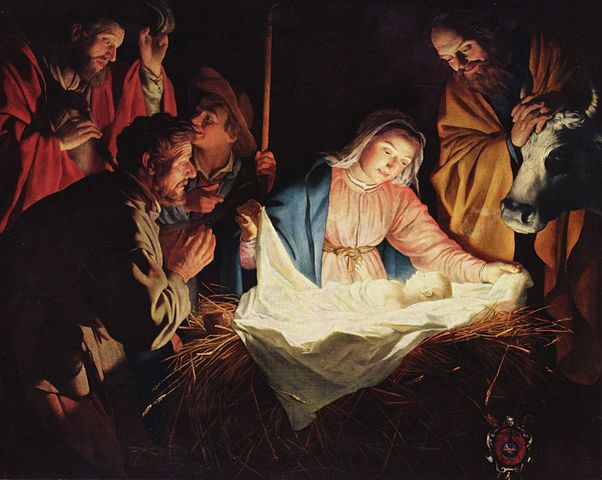
The Adoration of the Shepherds - 1622 Gerard van Honthorst (1590-1656) Wallraf-Richartz Museum Wikipedia.org
The Adoration of the Shepherds – 1622
Gerard van Honthorst (1590-1656)
Wallraf-Richartz Museum
Wikipedia.org
https://widgetworld3.wordpress.com/podcasts/
Australian Town and Country Journal 24th December 1870 p16/17
“A Merry Christmas and a happy New Year.”
Could there be a heartier sentiment? Is not all that is genial, and kind, and friendly embodied in the sentence?
So should it be; for Christmas time is surely a period when the most generous promptings of the year should be indulged; a time when charity consists not in the cold deliberation of other times, but in the giving without doubt, without inquiry.
A time when none but a churl will cherish malice or hatred, but all good fellows will pocket ill-will for the nonce at any rate, and thrust forth their hands in friendship.
A time when the spirit frees itself from the thraldom of everyday petty cares and strifes, and comes forth in its earnestness and truth.
A time, in short, brief but healthy, when men and women may give way to the kindliness and charity of their nature, without being sneered at by their fellows, without feeling the shame of having done an absurd thing.