Posted in Posts and podcasts

Tír na nÓg, the Burren

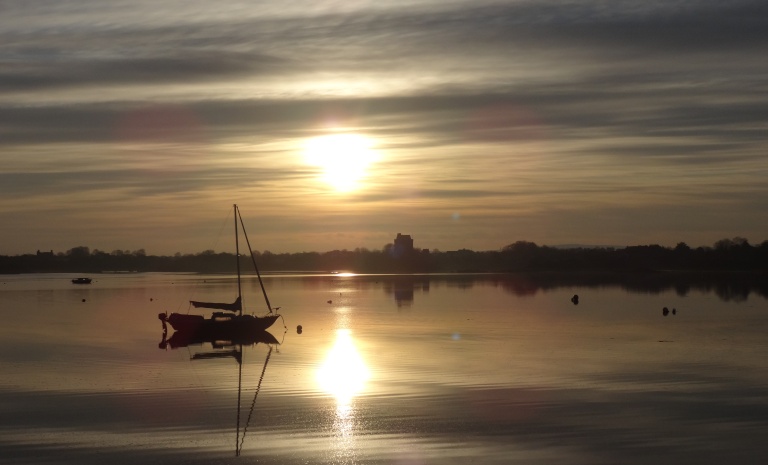
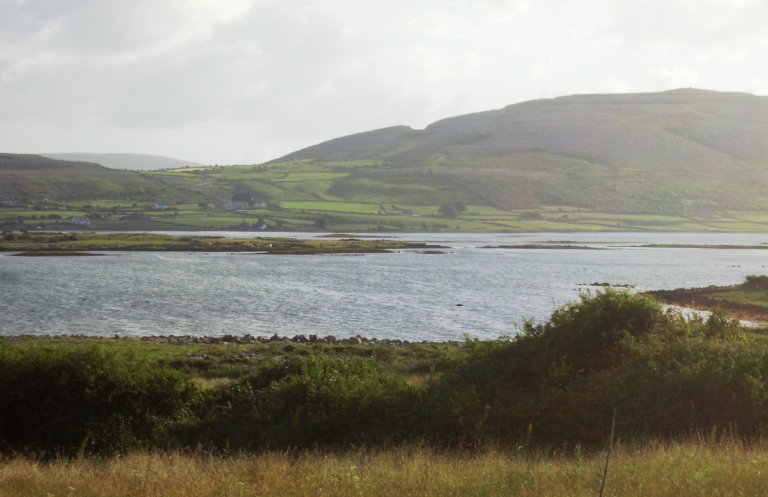
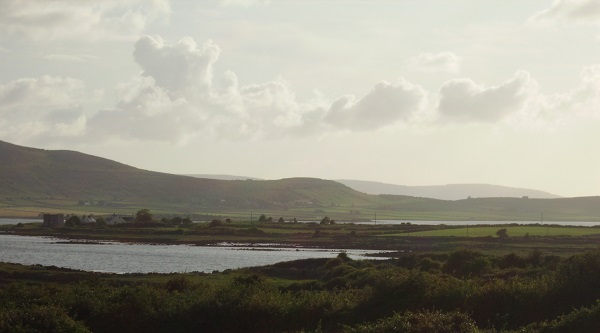
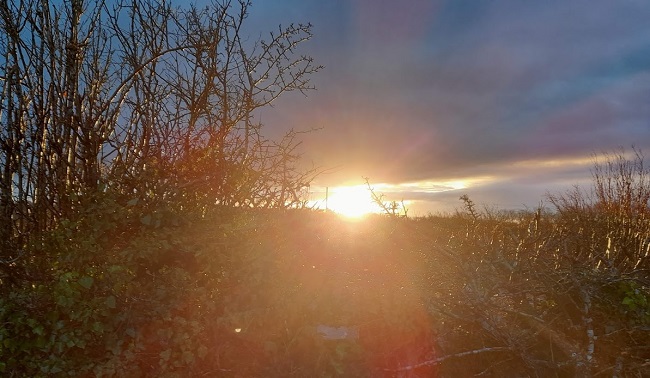
Burren sunrise Photo: EO’D

The Schools’ Collection, Volume 0047, Page 0159
National Folklore Collection, UCD.
Gort N.S.
In the mountains of Burren in the county Clare, about ten miles from here, there is a place called the Caves of Cill Corney. There are large caves and undermines (sic) there. Something over a hundred years ago, horses and foals used come out of them caves and graze the peoples land and cornfields. The neighbours made up their minds to catch the horses. The horses passed them by like the wind and they caught one mare’s foal at the mouth of the cave. They took the foal home and kept him in a dark stable for one year, until he was fit for training. He trained very quiet and did every sort of work. Every Saturday at twelve he would get out of work and no man could put him to work after that. His breed is still to be found and how you would know his breed is that every one has a whisker on the upper lip.

Sometimes when floods rise very high the water floods up on this cave and spreads round like a bowl. Some old people called it Tír na nÓg.

One time an old woman wanted to make a cake. The water was very low at the time. She took some of the water and made the cake. She put the cake baking on a griddle. Before the cake was baked, the flour dried on the griddle as it was on the bog. She went back to the pond and found it was gone down.
Within the present generation with the past ten years. One man experimented on the water as it was going down. He took home some of the water and made a cake also and baked it on a griddle. Before the cake was baked the flour dried on the griddle as it was on the bog. About forty or fifty years ago.
Posted in Posts and podcasts

Burren oysters – 1903

Evening Star 26th February, 1903 p.15 (abridged)

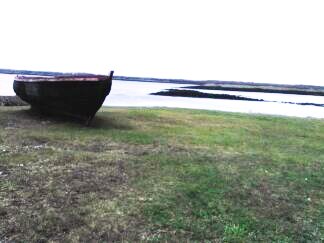
boat
Photo: EO’D Crushoa

Mr. Horace Plunkett, an enterprising Irishman, is actively engaged in fostering the production of an oyster warranted to pass the most vigilant analyst in search for bacilli. From a gentleman conversant with the oyster in a scientific as well as a gastronomic sense, I have just had direct information as to the experiments which the Irish agricultural department are carrying out.

These experiments begin when the tiny specks of protoplasm settle on the sea bed and continue until the oyster finds its way to the restaurant bar. The temperature, the effect of currents, the suitability of various kinds of beds for feeding purposes, methods of packing and marketing, and other things appertaining to the oyster too abstruse for the lay mind, are being found and “made a note of”.

In due time a gray book will appear containing information which will be at the disposal of everybody. Meantime the red bank of Burrenco, Clare, the scene of the experiments, is sending its oysters to the Dublin and to some extent to the English markets. The part of the Irish coast involved in the oyster industry is said to be absolutely free from the possibility of sewage and contamination. For example, the only habitations within any reasonable distance of the Burren beds are in the village of Burren,(sic.) and consist of a telegraph office, a grocer’s store and public house – not quite as dangerous as London for the oyster.

Posted in Posts and podcasts

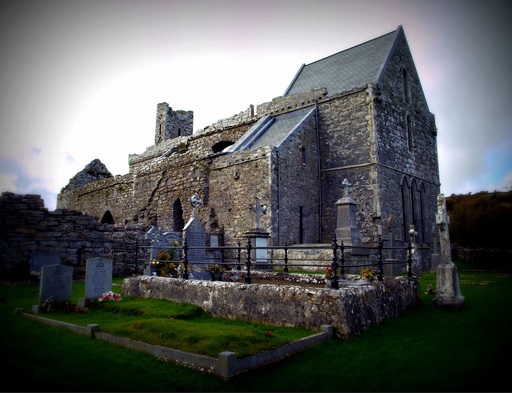
Corcomroe Abbey – 1929

Connacht sentinel 20th August, 1929 p.2 (abridged)

 Corcomroe Abbey Photo: Shaun Dunphy Wikimedia Commons

Corcomroe Abbey
Photo: Shaun Dunphy
Wikimedia Commons

Corcomroe Abbey is in Co. Clare.  It is about four miles from Kinvara and five miles from Ballyvaughan. “Corcomroe” (in Irish, Corcomoruadh) means the descendants of Moruadh who is said to have been a son of Queen Maeve. Corcomroe Abbey is a Cistercian abbey. Like other Cistercian abbeys, it was dedicated to the Blessed Virgin and had a special name – “de petra fertile” (of the fertile rock) or “de petra saxo” (of the green rock). In his Ordnance Survey letters, O’Donovan states that according to local tradition it was founded by the son of Conor na Siudaine O’Brien on the spot where Conor was killed c. 1267 by Guaire O’Shaughnessy of Dun Guaire, near Kinvara.  In his “Manuscript Materials of Ancient Irish History,” O’Curry states that it was founded by Conor na Siudaine O’Brien. Ware and Archdall are in doubt as to whether it was founded in 1200 by Conor’s father, Donogh Cairbrech O’Brien, or in 1194 by Conor’s grandfather, Donal Mor O’Brien. Other writers state that it was founded by Donal Mór O’Brien in 1182. It is, therefore, certain that the abbey was provided by the O’Briens, and it is probable that it was founded by Donogh Cairbrech O’Brien about 1200.

The following are the most important historical events connected with the abbey;

Soon after its foundation it established a branch at Kilshanry in County Clare. In 1249 it became subject to the abbey of Furness in Lancashire. Not far from it, at Sindaine, which, according to the Ordnance Survey maps, is near Newtown Castle, a battle was fought in 1267 between Conor na Sindaine O’Brien and his uncle, Donal Connachtrach O’Brien who was aided by the O’Connors and the O’Loughlins of Burren. Conor was killed; he was buried in the chancel of the abbey church, and his grave was covered by a stone effigy which is still in existence. In 1317 another battle was fought near the abbey between Murtagh O’Brien, the Chieftain of Thomond, and his cousin, Donogh O’Brien, who endeavoured to depose him and who was assisted by the English. Donogh and the English were defeated, and the bodies of Donogh and his followers were interred in the abbey church. In 1418 the abbot, who seems to have been a very distinguished man, became Bishop of Kilmacduagh. In 1544 the abbey was dissolved, its monks were banished, and its possessions were granted to Murrough, Earl of Thomond.

Posted in Posts and podcasts

The Clare mountains – 1781

Freemans Journal 30th January, 1781 p.3

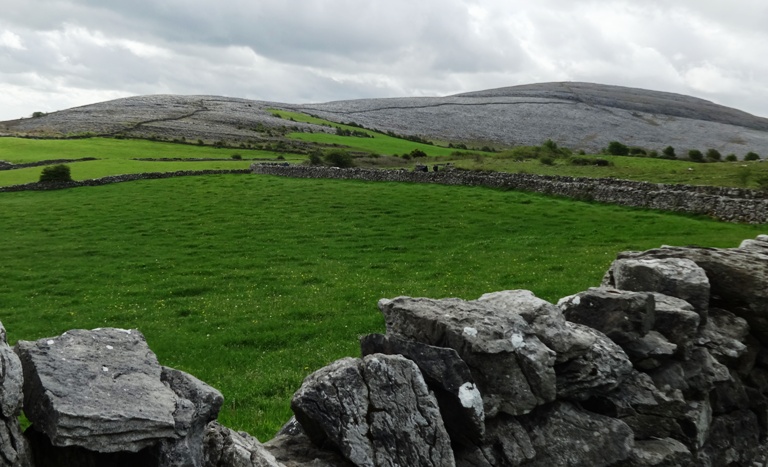
The Burren Photo: EO'D
The Burren
Photo: EO’D

On Monday night, in consequence of intelligence received by Col. Bourke, the Castle Connel Rangers, notwithstanding the severity of the weather, made an incursion into the county of Clare mountains, which were covered with snow, took two of the houghers against whom there are informations, and lodged them safely in our gaol on Tuesday last.

Posted in Posts and podcasts

The Flight of the Dishes

A tale from Kinvara, County Galway.
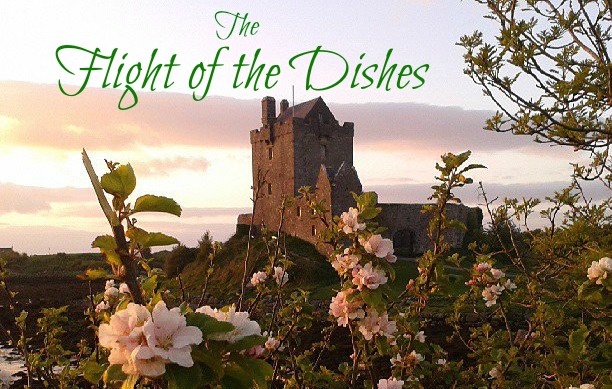
Dunguaire Castle, Kinvara, County Galway. Photo: Norma Scheibe.


(An adaptation©EO’D)

Dunguaire Castle, ‘the Fort of Guaire’ stands on a hill just outside Kinvara, County Galway. Surrounded by water on three sides it commands a fine view of the village, the Burren Mountains and the sparkling waters of Galway Bay. From minute to hour, sun and sky brings change to its walls and to the angles of its battlements. Dunguaire itself rests as constant as the mountains beyond.
It’s a fitting seat for a King, and no less than five Kings of Connaught made their seat here. The castle got its name in memory of the most famous one of all – Guaire. His reign was a time of plenty for the region. He served and protected all in his kingdom and he did right by them. He took from his tenants only what they could spare and ensured no person was left in need. He sheltered those who suffered loss or hardship, he made fair judgment in times of crisis, and he treated nobleman and tenant with the same dignity and respect due all humanity. For that, he was much-loved. It was said he gave so generously that the ‘dint’ of giving caused his right arm to grow longer than his left.

It was a fitting seat for a king. Photo: Norma Scheibe
It was a fitting seat for a king.
Photo: Norma Scheibe

Each time he sat down to eat he said grace. It was a simple entreaty and in keeping with his reputation as a benevolent ruler.
“May the great God look down on us as we break bread together.” he would say.
“And if any in my kingdom are more in need than I, then I pray they have this bounteous food to sustain them; and welcome.”

Those prayers were answered when, one fine day, his dishes took flight…

(more on theburrenandbeyond.com)

Posted in Posts and podcasts

New Quay – 1907

Nenagh News 17th August, 1907p3 (abridged)

Across the way. Photo: BO'D
Across the way.
Photo: BO’D

New Quay is encircled on the south side by the rugged range of the Burren Mountains showing the ancient ruins of Corcumroe Abbey, Aughmama Abbey, Mucknish castle, and other castellated ruins along Bellharbour Bay, with the villages of Curranroe, Kinvara, Bellharbour, Ballyvaughan and Finavara, in the immediate vicinity. The air at this district and its surrounds, filled with the ozone and saline of the salt sea of the Atlantic Ocean infuses new life and vigour into one accustomed to living in inland places where the air is entirely devoid of those health giving properties and less embracing.

There are two bathing centres in New Quay supplied with bathing boxes, and a splendid range of sanded strand, one at New Quay and the other at Old Quay, a short distance away towards the Flaggy Shore. The circle of sea surrounding New Quay extends from Curranroe, at the boundary of Clare and Galway, by Munna and Carton, along one of the northern peaks of the Burrin Mountains and continuing on by Old Quay, the Flaggy Shore, Finavarra, Martello Tower and Scanlan’s Island. At this point the entrance is to Bellharbour Bay by a narrow strait dividing Finavarra from Mucknish castle and Ballyvaughan and continuing inland by the southern slopes of Finavarra demesne, and Corcumroe Abbey to Bellharbour Quay and circling outward in the opposite direction by Muckinish Castle, Oughmama Abbey and Ballyvaughan, under the shade of the Burren Mountains.

In fine weather the open sea from the mountain heights and verdant plains of this district, presents one crystal sheet of sparkling surface, with ships, steamers, trawlers, and every style of sailing boat strewn here and there along the surface of the water, from the coast to the circle of the horizon, touching the Atlantic Ocean in the West where the top rigging of the largest barque afloat is seen as a speck above the curvature of the sea, until the full sails and hull of the vessel are exposed to view as it approaches nearer along the surface of the sea.

In stormy weather this open expanse of sea presents an entirely different appearance form what it is in fine weather. To residents of the district the disturbed and placid surfaces of the sea are as familiar as the rising and setting of the sun, but to the visitor or tourist unaccustomed to the fury of the tempest, a short sojourn at New Quay brings the extreme changes caused by the elements into view.

There are intermediate phases in the elements and surface of the sea which only add to the enjoyment of a sail in open boats, but woe betide the boats or even larger vessels, tossed about like shells on the surface of the mountain waves, rolling in silvery breakers from the Atlantic ocean against the cliffs and rock-bound coast.

Posted in Posts and podcasts

Burren – 1847

Nation 27th November, 1847 p.13

The Burren, and beyond Photo: BO'D
The Burren, and beyond
Photo: BO’D

Seventy labourers, with their families, employed on works of reclamation by Mr P. Creagh in Burren, County Clare, have employed a clerk or storekeeper to distribute or re-sell provisions to them without any profit, under the surveillance of a committee of management from among themselves, thus making a saving of about 30 per cent.

Posted in Posts and podcasts

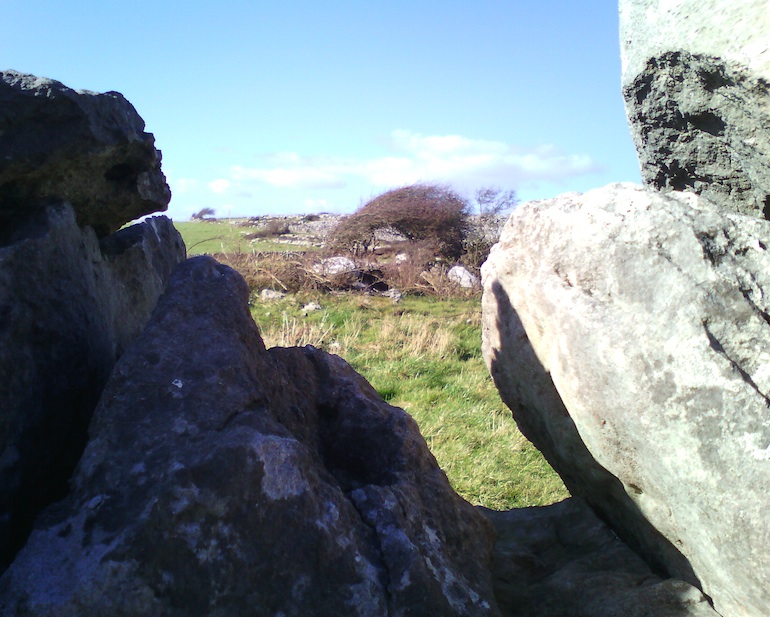
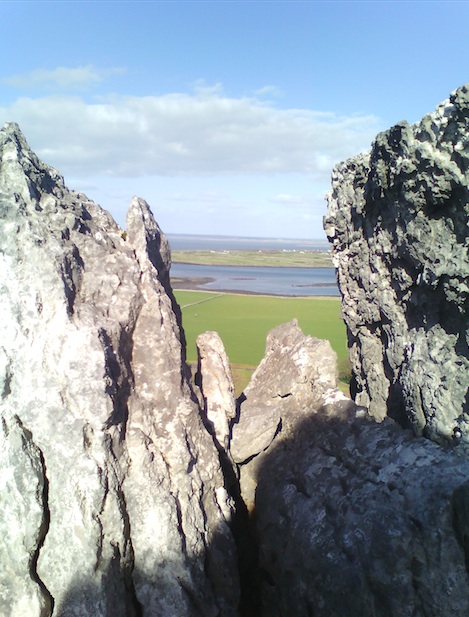
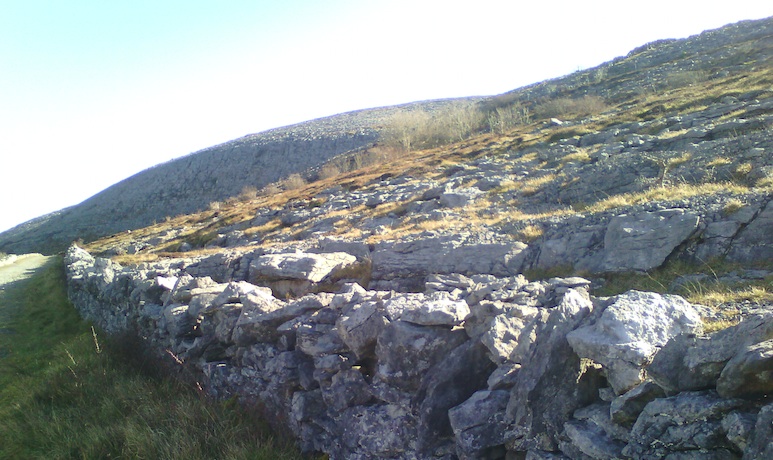
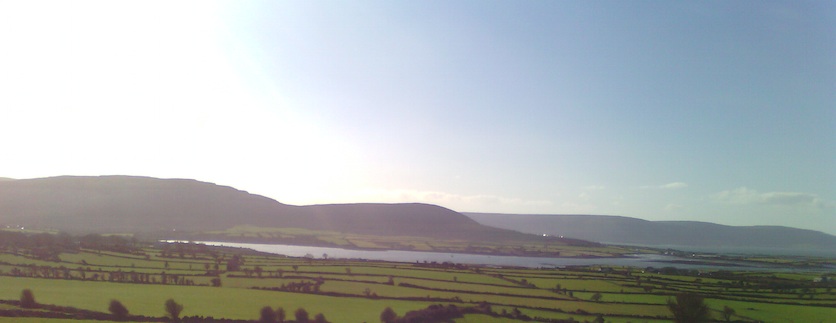
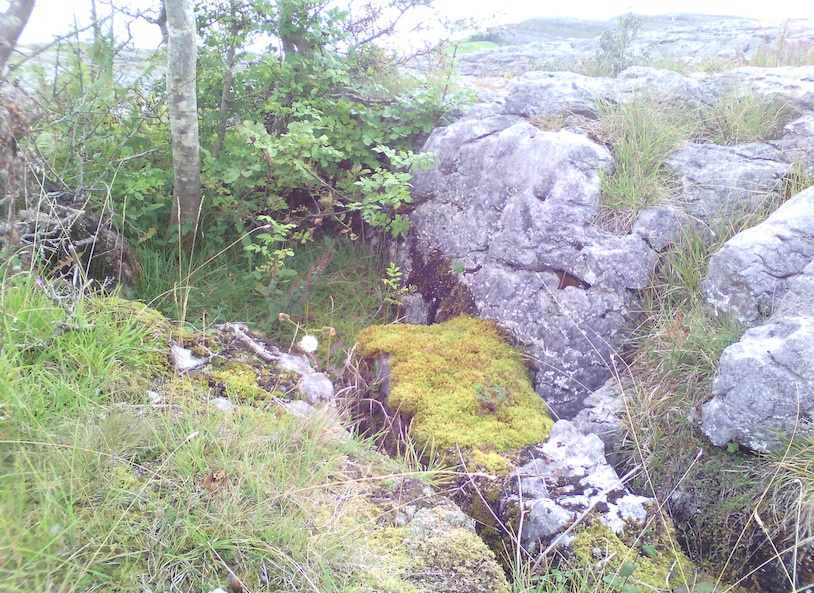
A walk in the Burren – 2015

A walk in the burren1
A walk in the Burren Photo: EO’D

A walk in the burren3
Photo: EO’D

A walk in the burren2
Photo: EO’D

a walk in the burren6
Photo: EO’D


Posted in Posts and podcasts

The Burren Spa – 1824

THE CONNAUGHT JOURNALmoss and burren
Galway, 13th September, 1824
RURAL SPORTS – The crowds now at the Burren Spa are beyond any calculation in that country. – The numbers assembled to see the best Irish jig dancers was immense and the contest so equal between two of the fair competitors, that the judges could not decide between them, and therefore directed the silver watch to be given to those very interesting girls, to be disposed of as they pleased. Immediately after the dancing, four horses were started, and there was a most excellent race. – On yesterday a fox was to have been shook at the well, and it was so arranged, that the ladies should witness “his funeral tears;” and on Sunday next there will be another race, and afterwards a hurling match, consisting of twenty-one men at each side – one party dressed in blue jackets and caps, and the other in red.–Limerick Paper.