Posted in Posts and podcasts

Fr. Forde’s Mission – 1865

Kyneton Guardian and Woodend and Malmsbury Chronicle 15th April, 1865 p. 2

The following letter appears in last Thursday’s Daylesford Express. At the earnest request of the Rev. Father Forde we give it space in our columns. This clergyman, it will be remembered, has been travelling in this colony for the purpose, of collecting funds for the erection of two chapels in the curacy of Ballyvaughan, a poor district in County Clare, Ireland.
During the twenty months or so he has been here he has met with considerable success, having collected about £1,600 chiefly in small sums. Bishop Goold objects to receiving the visits of priests travelling in this manner in his diocese, considering that the people of his charge have enough to do to provide places of worship in a new country where everything has to be begun. Consequently Father Forde was
forbidden by the Bishop to collect, and the members of the Roman Catholic persuasion to subscribe, to the funds he proposed to raise by his “mission.” Notwithstanding this prohibition Father Forde has continued his collection, and under the circumstances, his success either proves the exuberance of the resources of his country people and co-religionists, who cannot find outlet in this colony sufficient for their charity, or, that under the unassuming exterior of a quiet country priest, he possesses powers of persuasion of which we would be happy to own the merest “wrinkle.”
We may state that before Father Forde went to Daylesford, he desired the insertion of a letter which we positively refused to have anything to do with, as we thought it written in a style un-worthy of his profession, for the purpose of traducing a clergyman whom, nobody in the Kyneton district but respects. Without identifying
ourselves in any way with the dispute or its cause, we append the accompanying letter, premising that since appearing in. a journal in a
a neighbouring town it has become public
property:—


To the Editor of the Express.
SIR,—Having heard from an authentic, source that the Kev Father Geogehan, of Kyneton, on Sunday last spoke from the altar of the Roman Catholic Church there in terms depreciatory of my character; that he censured those who had subscribed to the charitable purpose I am successfully carrying out through the liberality of the Victorian colonists, and prohibited, the members of his congregation from giving any assistance in the matter, I am constrained to suppose that you will afford me a little space to reply to the observations of that gentleman. I have already satisfied all disinterested persons that I am duly accredited in my mission but may add in further confirmation on that point, that not only from my own bishop only have I received, credentials but also from the Right Rev. Prelates of Clonfert and Galway, and that I suffered to submit these and other similar documents, and also acknowledgements of remittances to the proper parties in Ireland, to the inspection of the Rev. Father Geogehan; but that he declined to look at them, stating: “That it was his bishop’s wish that he should do so.”
Upon the same occasion, a person who had been in my parish in Ireland, but who was then a member of Mr Geogehan’s flock accompanied me to him; but he refused to hear her speak in attestation of my character, and in explanation of the position I held at home, or of the one I now occupy here. Upon my arrival in Kyneton, I was informed that Father Geogehan desired to have an interview with “the stranger” collecting funds for a charitable purpose in Ireland, and a friend of mine thereupon wrote to him intimating my willingness to meet him; but he declined the interview he himself had proposed. Is such conduct as this, I would ask you Sir, either fair or gentlemanly, or becoming the sacred character of a priest? Would any person with the slightest sense of justice refuse to hear the vindication of a man whose character he had publicly and most flagrantly outraged; and what is to be thought of a clergyman who would not readily and gladly permit a fellow-worker in the vineyard of the Lord to relieve himself from the ill effects of calumny and scandal that had originated in covetousness and to all uncharitableness. I have already shown my testimonials to hundreds of persons in all parts of the colony, but am nevertheless quite willing to submit them to the examination of as many men as may wish to peruse them. But I can mention one circumstance that occurred since my arrival in the colony, that will satisfactorily show that those at least who are ungenerously fomenting opposition to my purpose are well assured that I am what I represent myself to be—i.e., Roman Catholic curate of Ballyvaughan, County Clare, Ireland,
The Very Rev. Dr. Bleasdale, acting as I am to presume upon the instructions of his Bishop, proposed to me in Melbourne that I should take a mission under the Right Rev. Dr. Goold, and discontinue collecting for the purpose for which I arrived in the colony. That offer was made by him and declined by me in the presence of a third party. My reply at length was that I would if my Bishop would allow me, and they would also give me £2000 for the object for which I came out. Dr. Bleasdale then whistled, but said nothing, and so the interview ended.
Allow me to avail myself of this opportunity of thanking the inhabitants of Woodend and Malmsbury for the munificent sum I collected among them
and the people of Daylesford and surrounding districts, for their liberality in the same cause—I
am, sir, your much obliged and humble servant.
FRANCIS FORDE, R.C.C.
Ballyvaughan, Co. Clare, Ireland.
Daylesford, April 12,1865.

Posted in Posts and podcasts

Seaweed – 1854

The Courier (Hobart,Tas) 28th July 1854 p2
Enormous Demand for Seaweed (abridged)
The great demand for seaweed manure, the high prices it brought, and the great breadth of mind devoted to potato planting this season, may be inferred from the fact that it is computed by those who have had the best opportunities of forming an accurate estimate, that the very large sum of £10,000 has been paid for seaweed this season at the Galway docks alone. If we take into account the quantities which
have been disposed of at Oranmore, Kinvarra, Ballyvaughan, and the other creeks and landing places within the bay, the cutting of seaweed this season must have realised upwards of £13,000. It has been conveyed to a considerable distance, by boats along the lakes, by carts on the road, and even by railway. Perhaps in no former year has the use of it been more general, or the price paid for It so high, as in the present season.

Galway Packet.

Posted in Posts and podcasts

Great Meeting in Gort – 1869

Tuam Herald 13th November, 1869 p.1
The Land Question (abridged)


Gort, Sunday Night
This patriotic little town may well take credit to itself for the support which it has this day given to the cause of tenant right in this country. It afforded not only to the people on this side of the extensive county of Galway, but to thousands in the northern districts of the county Clare, an opportunity of expressing their opinions on the present unsatisfactory state of the land laws in Ireland, and of pointing out the mode in which the tenant farmers of the country desire that they should be altered. Some influential gentlemen residing in the town and neighbourhood were anxious that the people should, in the form of resolutions, express their grievances with a view to their redress by a Ministry and by a Parliament which have already manifested an anxious wish to remove those evils which have been a source of misery and discontent to the country.

The notice by which the meeting was called was given only a few days back, and yet the meeting of today was a great success, keeping in view the fact that it was not a county meeting, but was composed mostly of people within a circuit of ten miles of the town. The Athenry and Ennis Junction Railway, however, ran special trains, and brought large numbers of people from longer distances. The train which left Ennis at eleven o’clock arrived in Gort at twelve o’clock bringing people from Ennis, Crusheen and Tubber, and the train from Athenry, which arrived shortly after, carried large number of tenant farmers from that station, from Oranmore, Crughwell (sic.) and Ardrahan. The traffic arrangements were under the direction of Mr. Thomas O’Malley, the manager, and were admirably carried out by Mr William Lawlor, the efficient station master of Gort.

Many of the farmers came in on horseback heading bodies of 400 or 500 people. Ardrahan furnished a contingent of about 400, and the united parishes of Ballymena and Crughwell sent by rail about 300 persons, who were accompanied by the Rev. Francis Arthur, P.P. and the Rev. M O’Flanagan, C.C. This body on entering the unfurled their banner, which had inscribed on it the mottoes, “Fixity of Tenure” and “Tenant Right,” and the Rev. M. Nagle, P.P., Kilbeaconty, accompanied a body of his parishioners, numbering, perhaps, five hundred. The Rev. John Barry, P.P., Behagh, and the Rev. Michael Killeen, C.C., accompanied about 800 from their parish, with banners bearing the words, “Fixity of Tenure” and “Tenant Right.” Numbers also came from Corofin, Ballyvaughan, Kilkeely, New Quay, Feakle, Derrybrian, Loughrea, and Kinvara.


A very large body of tenantry came on horseback from Kinvara, accompanied by their landlord, Isaac B. Daly, and Mrs Daly, who drove in their carriage, and who were loudly cheered. By one o’clock there could not have been less than from 10,000 to 12,000 people in the town, all evidently interested in the cause which brought them together. Previous to the commencement of the proceedings a procession was formed, headed by a number of young girls, some of whom were entirely dressed in green, and these were followed by well-dressed young men carrying green banners, having inscribed on them the words, “God save Ireland,” “fixity of tenure,” “tenant right,” and “Cead mille failthe,” (sic.) and the harp in gold was on several of them. There was scarcely a person in the whole procession, which walked round the market-square, accompanied by music, who was not in some way ornamented with green.

They cheered on passing the houses which by some patriotic device attracted attention. An excellent cast of the face of O’Connell was placed in one of the windows of Forrest’s Hotel, and beneath was a saying of the Liberator’s, “He who commits a crime gives strength to the enemy.” At Glynn’s Hotel, there was a sign on a green ground, and the words “Prosperity to Ireland.” These received respectful attention on the part of the people who, as the hour approached for the commencement of the meeting, assembled in front and around the platform which was erected in the middle of the square, and was so spacious as to accommodate about one hundred and fifty persons. On the motion of Mr. L. S. Mangan, Gort, seconded by Mr. Thomas Boland, the chair was taken amidst loud applause by the Very Rev. T. Shannon, P.P., V.G.

Posted in Posts and podcasts

THE FLAGGY SHORE

THE FLAGGY SHORE

Sometimes she represents an owl, a cat and very often a bat

There is a special spot in New Quay. It has derived its name from the vast number of enormous rocks which are still to be seen near the shore. The following story is told about this special spot :-
Once upon a time the devil came into Clare. He had nearly all the people of Clare under his control, but the people of New Quay resolved he would never enter. The devil came along one morning holding his little son by the hand. The people of New Quay were well prepaired (sic) for him, so the fight started. They flung stones at one another, but luckily enough the devils little son wasn’t able to fire the stones far enough, and the stones and flags were all in the same spot. This special spot has the honour of being called Flaggy Shore.

Tradition tells us that once upon a time St Bridget was going to church. As she was near Bellharbour, the thunder rolled and the lightning flashed, and the rain poured. St Bridget prayed to God for some shelter and that very moment a huge tree sprang up by the power of God. Bridget prayed that any poor person who would go that way would have shelter. This bush is now called Sceach Brighid.

It is said the banshee is one of the fallen angels who died without being baptised, and is therefore sent to this world to get penance and forgiveness. It is said there is a special room in Skeretts house and the door was never opened, the banshee is supposed to live in this room. It is said the banshee makes it her headquarters and always lived there when she was not occupied screeching around other dwellings as her calling requires. She always sleeps in the room and no one ever dared to disturb her. The floor is supposed to be covered all over a foot high with the dried leaves which blow in from the tress (sic) through the little round openings which represent windows. Sometimes she represents an owl a cat and very often a bat flying through the window in the twilight. She always cries most dismally before the death of a Kerins, Skerrett, Traynor, Mac or O.
Collected by Caitlín Ní Fhathaigh, age 14, Ballyvaughan N.S. from Michael Wall, age 86

The Schools’ Collection, Volume 0615, Page 245//
National Folklore Collection, UCD

Posted in Posts and podcasts

Ballyvaughan – 1853

Sangamo Journal/Illinois State Journal 22nd April, 1853

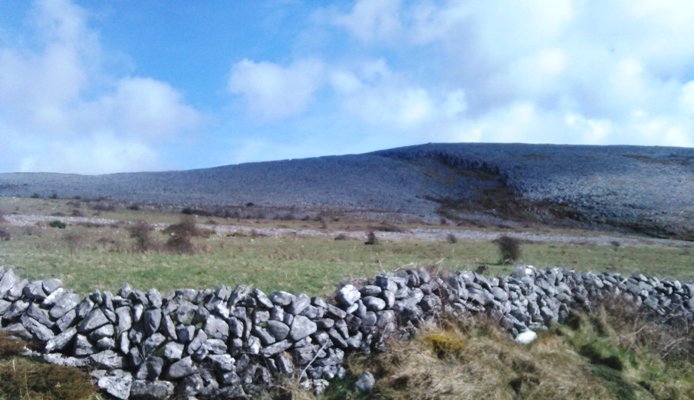
Burren Hills Photo: EO'D
Burren Hills
Photo: EO’D

EMIGRATION FROM IRELAND

The last American mail brought the sum of £500 pounds to the little village of Ballyvaughan, which is situated in the County Clare on the opposite side of the bay of Galway.   We have heard that this large sum has been sent home for the purposes of emigration, so that the neighborhood of Ballyvaughan is likely to contribute its full contingent to the host of emigrants which are daily rushing towards the English ports.  A few mornings past, the terminus at Eyre square was crowded with the relatives of the emigrants, bidding them farewell on their departure for America. In the language of a person present, when describing the numbers – it was like a fair . The strength and hope of Ireland are so rapidly passing away that sufficient hands will not remain to till the soil .

Galway Paper.

Posted in Posts and podcasts

Burren walls – 1921

Albury Banner and Wodonga Express 16th September, 1921 p.35 (abridged)

BurrenWall
Photo: EO’D

Crown forces, finding the road to Ballyvaughan obstructed by walls built across the road, commandeered shopkeepers, artisans and labourers at Kinvara to remove the stones. At the Ballyvaughan side men were forced to remove similar obstacles at Muckinish and Bellharbour.

Posted in Posts and podcasts

Kinvara – 1926

Irish Independent 21 September,1926 p8

Kinvara Cottage
Photo: Cresswell Archives


Gardai carrying out searches following the robbery of the Galway – Ballyvaughan mail car found in a house at Cahermore, Gort, two Mills Bombs, a large quantity of gelignite, a shotgune, sword, pike, and 40 rounds of rifle ammunition.

In raids in Kinvara district revolvers, gelignite and revolver ammunition were discovered. Two men were arrested in connection with the find.

Posted in Posts and podcasts

Ballyvaughan – 1920

Irish Independent 22nd September, 1920 p5.

Ballyvaughan, Co. Clare Photo: Velela Wikimedia Commons
Ballyvaughan, Co. Clare
Photo: Velela
Wikimedia Commons

A report reached Ennis that the police barracks at Ballyvaughan was attacked.  Military went from Ennis to the assistance of the garrison.  All wires in the district were cut.  A Republican flag floating from the roof of the Town Hall was removed by military and another which was replaced there was also removed.


Posted in Posts and podcasts

W.S.O’Brien – Corcomroe – 1857

Connaught Telegraph 14th October, 1857 p.3 (abridged)

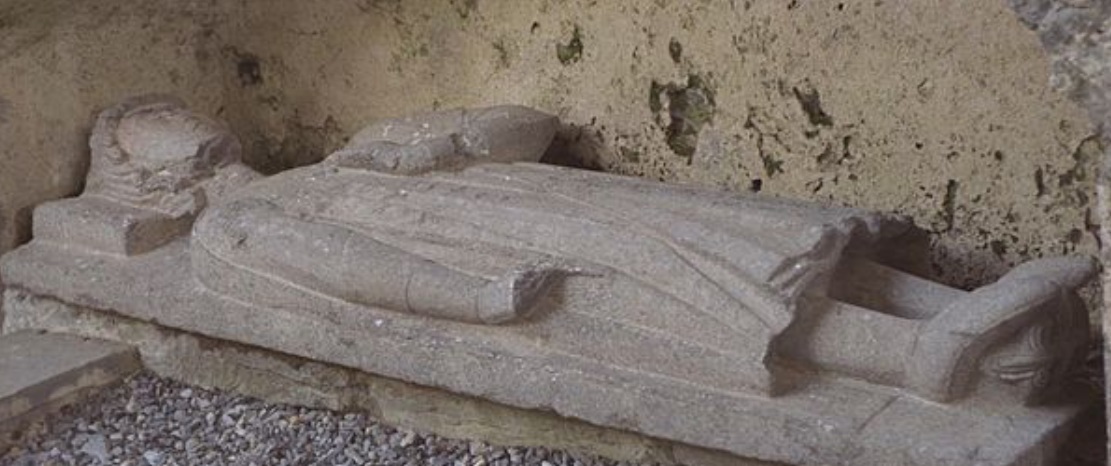
Effigy King Conor O Brien, Corcomroe Abbey Photo: Andreas F. Borchert Wikimedia Commons
Effigy King Conor O Brien, Corcomroe Abbey
Photo: Andreas F. Borchert
Wikimedia Commons

On Monday, W.S.O’Brien Esq., arrived in Ballyvaughan from St. Catherine’s and drove on to see the ruins of the Abbey of Corcomroe in which lies a stone figure of one Connor O’Brien,  a monk in the monastery about 600 years ago.  After Mr. O’Brien returned in the evening, he proceeded to Lisonaid. A number of people lighted tar barrels and the unusual accompaniment was presented of a canoe or currough on fire to welcome him to his native county. Mr. O’Brien came out, and having briefly thanked the people for their reception of him the crowd dispersed and returned homewards, cheering so lustily that the distant sounds might be heard through the valley of Gleneraga, and even to the old Castle of Glenenagh.
Munster news.

Posted in Posts and podcasts

Ballyvaughan Regatta – 1874

Tuam Herald 26th September, 1874 p.2

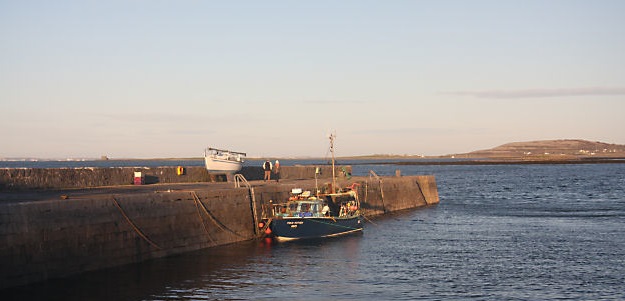
Ballyvaughan Harbour Photo: Bob Jones Wikimedia Commons
Ballyvaughan Harbour
Photo: Bob Jones
Wikimedia Commons

The Ballyvaughan Regatta came off on Wednesday, at the village of Ballyvaughan, situate in the county Clare, and about eight miles from Galway across the bay. It was conducted under the patronage of the members of Parliament for Clare and the local gentry. The weather was most propitious, the day being exceedingly fine, and, by the way, was complained of by the ladies as being oppressive.
The number of spectators was very large, and not alone were the lovers of aquatics in Clare afforded an opportunity of enjoying themselves, but so also were the people of Galway, as the splendid little vessel, the Citie of the Tribes, gave an excursion trip from Galway at eleven O’clock, by permission of the directors, thus affording as enjoyable a day’s amusement as could be wished for, and one of the best your correspondent has enjoyed for some time. The sports consisted of seven races and were exceedingly contested and most creditably conducted.