Posted in Posts and podcasts

Kinvara, Gort and south Galway – 1922

Freeman’s Journal 27th July, 1922 p.5 (abridged)
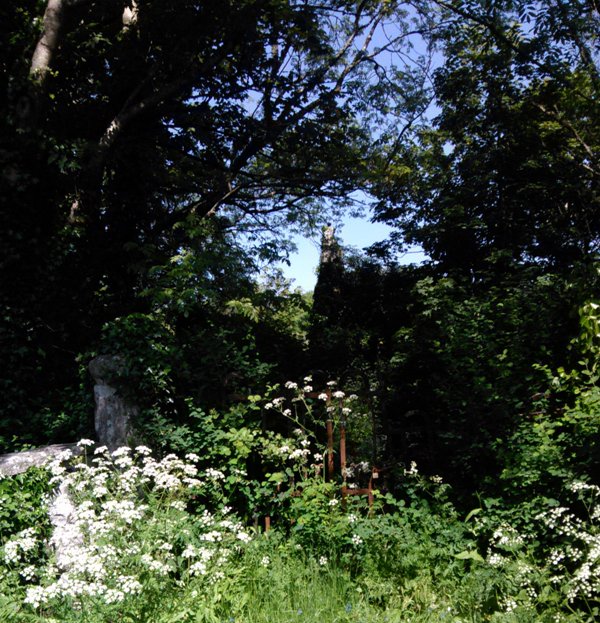
By Ardrahan Road, Kinvara Photo: EO'D
By Ardrahan Road,
Kinvara
Photo: EO’D

The National Forces operating from Galway under Commandant-General Austin Brennan have now begun to clear the country of Irregulars in real earnest, writes our Galway correspondent. As a result of an operation just under the valley of Tullira Castle, on the Kinvara road at Coolfin, sixteen prisoners were captured on Monday afternoon and on Tuesday a total of 22 prisoners was brought to Galway and lodged in the local gaol.
Early on Monday afternoon eight motor vehicles containing over thirty riflemen and their officers left Galway for Gort. They were equipped with cross-cut saws and engineering tools, and quickly cleared the roads on their way. They passed through Ardrahan village without incident, and along the road to the west of Tullira Castle, under the shadow of the Skehanagh heights, which have been made famous by the dramas of Lady Gregory and other Irish play-wrights.

To the west of this road lies the Great Southern Railway line to Gort and Ennis, and at the inlet of the sea further west the village of Kinvara. As the lorries passed along they noticed men on the march through the fields about a mile distant. They were evidently coming from Kinvara and making for Tullira Castle. The lorries passed along the road towards a bend in the hope of getting a better view, but here they found that their range of vision was altogether obstructed by trees and undergrowth. The vehicles were thereupon put in charge of a small party, whilst the little company of riflemen was distributed amongst the three officers and a few efficient sergeants, who had seen considerable service in the recent war. A few of the cars moved slowly back along the road that they had come, whenceupon the men dismounted, and one officer proceeded along a boreen towards the north-west, accompanied by half a score of men in extended formation. The first shot was fired when a scout was seen rushing across the fields apparently to warn his comrades in the rearguard. He was called upon to halt, and shots were then discharged at him at a range of over 400 yards. Thereafter shooting became general at long distance range.

The Irregulars replied, firing about 100 shots in all. Lieut. McCarthy, who was in charge of the centre, crossed a wall with a sergeant whilst bullets whizzed past. As the sergeant fell on his knees to take aim in the fields a bullet grazed his knuckles.

The National troops operated in a “V”, seeking what cover they could find, and sniping at the Irregulars as the occasion offered. The latter had splendid positions and excellent cover and they retreated as they fired. The main body was at least 1,000 yards from their adversaries and it was at this range that most of the shooting took place. When the scout had got clear, there was considerable commotion in the rearguard of the Irregulars, whistles were blown loudly and shrilly and a general retreat took place.
 

Posted in Posts and podcasts

Galway Ghost causes chaos – 1891

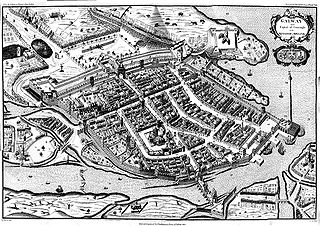
Galway, 1651. Wikimedia commons
Galway, 1651.
Wikimedia commons
BRISBANE COURIER, 5TH FEBRUARY 1891 P2
A GHOST AT THE WINDOW

https://widgetworld3.wordpress.com/podcasts/
It would seem (says England and the Union) that Galway is not going to be behindhand in the matter of belief in the supernatural, judging from the state of excitement created a few nights ago by the rumour that a ghost had made its appearance at one of the windows of a house in Abbeygate Street, directly opposite the sacristy of the Pro Cathedral of St Nicholas.

This house, it must be mentioned, was lately occupied by a woman who died after a very short illness. Since her death it became tenanted by another person, but from some cause or another, the last mentioned left, and the place remained unoccupied till last week. On the night it was occupied some children were passing to attend devotion at the chapel, when they say they observed a sort of unusual light in the house, and a woman standing near the open window, who, in a sepulchral voice, said, “offer one prayer for me.” Some of the children fainted on the spot, and this caused others going to their devotions to inquire into the cause.

The tale of the spectre at the window spread like wildfire and in a quarter of an hour no less than 2000 persons had congregated outside the haunted house. The streets on each side became blocked. The crushing and jostling to get a glimpse at the “visitor from the other world” was such as has never been equalled in Galway. Several persons were thrown down and trampled upon, and it was with the greatest difficulty a strong force of police, after about three hours’ incessant labour, succeeded in clearing the streets sufficiently to allow pedestrians and cars to pass. The tramcars were even compelled to stand still in the streets.

The following nights the same state of things have prevailed, but up to the present the real cause of the rumour has not been satisfactorily explained. Several versions of what the object really was that created such a sensation are given, but the adult portion of the community say that fifty years ago there was also “something seen” in the house, it having been the scene of a most brutal murder – namely the assassination of a woman named Maxwell by her husband. From the description now given of the late apparition by the children, who say they saw it, the older people say it is one and the same ghost, which has to put up alternate half-centuries in this world and the other. The police are stationed near the place, where four streets meet, and it is as much as they can do to keep the curious from congregating. It is most surprising that amongst this class are to be found some of the most respectable, and, it might be expected, enlightened people in the town, both male and female. The strangest thing of all is that, notwithstanding the thousands who congregate nightly, not one – even the police – have the courage to try to unravel the mystery.