
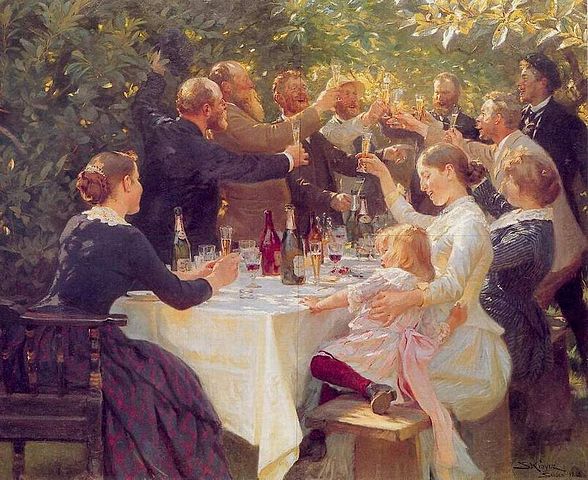
Peder Severin Krøyer (1851–1909)
Gothenburg Museum of Art
In Galway, a Gaelic toast used to go round embodying all the ingredients of human felicity –
“May you have health and a long life with the good wife of your own choice;
your land without rent and death in Ireland.”
Tag: 1935
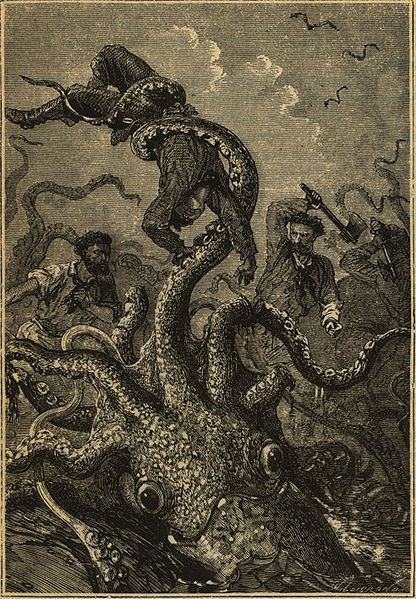
Sea monster in Galway Bay – 1935
Wikipedia.org
SUNDAY TIMES (PERTH) 23RD JUNE, 1935
SEA MONSTER SHOT – MYSTERY CREATURE WITH TWO TAILS
A strange marine creature, twin brother of the Loch Ness monster – 48 feet long, 26 feet in circumference and weighing about four tons, has been shot by a lighthouse keeper in Galway Bay, Ireland.
The sea monster had got caught in the nets of one of the fishing boats off Mutton Island lighthouse. It carried boat and cargo, human and aquatic, for some distance until the nets gave way in shreds. A description of the monster seen once above the surface roused the entire city. Seamen and harbor officials immediatey proceeded to the beach armed with guns and gaffs.
FIVE SHOTS, THEN –
I went out in a hooker piloted by John Walsh, an old seaman of vast experience (writes the correspondent of “The People”).
As we approached Mutton Island in miserably cold rain five shots rang out from the direction of the lighthouse. We were just in time to see an aquatic King Kong leap bodily into the air, lashing the water into a miniature tidal wave as it rolled and twisted in its death agony. We anchored to one of the monster’s giant fins and John Crowley the lighthouse keeper, who had fired the shot explained that he spotted it while about to tend the lamps in the lighthouse. Rushing down armed with a rifle he took careful aim and shot the creature in the head several times.
TWO KNIFE-EDGED TAILS
Opinions were divided as to the nature of the strange creature. Crowley and my companion agreed it was neither shark nor whale. Walsh stated that in 50 odd years’ marine experience he had never come across a similar specimen.
It has a head of enormous dimensions, a long scaly body ending in two knife edged tails It is suspected that more than one of these strange creatures are in Galway Bay.
The Magic Harp – 1935
Photo: Biekje
https://widgetworld3.wordpress.com/podcasts/
EXAMINER SATURDAY 20TH JULY 1935 P2
“THE MAGIC HARP” (abridged)
As far back as the first historical records the harp has been accorded the place of honour, Irish folk lore places great stress on the harp as the national musical instrument. In all important events where music was admitted, at feasts and banquets, the harp was foremost as the instrument of romance, heroic qualities, and even love. Later it was also used by the clergy in their proselytising travels through the country. (Strangely enough the flute was relegated to the least important place!)
The Irish harp was called the cruit, and as far as can be ascertained the cruit dates back to the twelfth century B.C. records mention the fact of the cruit being endowed with some remarkable attributes. It could evoke real, physical responses in those who heard its sound, including, mirth to the point of hopeless and helpless laughter; joy to a level impossible to describe – and sorrow to the point of death. It was therefore not surprising to find that the players of this instrument commanded considerable attention and respect.
There is an old Irish legend taken from the notes of Oscar Rothschild that tells of the harper Uaithne, who possessed a cruit which formerly belonged to the god Dagda. Uaithne was married to Boinn, the goddess of the river Boyne. She in turn was queen of the fairies.
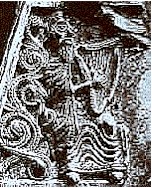
The couple had three sons called after the three strings of their father’s harp – Gentraiges, Goltraiges and Suantraiges. All three were gifted and remarkable harpists.
A Chieftain’s son named Freoch was related to Uaithne by marriage. His mother, Befind, also came of fairy train. The bond of marriage and, perhaps the bond of the supernatural led Freoch and Boinn to form and alliance that included her three sons. It was all for love.
At that time the reigning King of Connacht (Ailill) and his wife (Medb) had a beautiful daughter. The fame of her lovliness had gone far afield. Her name was Findabair. Freoch wanted to marry Findabar. To further his chances he enlisted the aid of his aunt, Boinn, and she did her utmost to ensure his success. She bestowed on him all the jewellery and equipment of a fashionable man of the highest rank – and – most valuable of all, she lent the aid of her three sons, trained in the use of their fathers cruit (harp).
Photo: Barbara y Eugenio
Freoch and his retinue visited the court of the King of Connacht and his daugher Findabar. They spent some time in feasting and other happy pastimes. One day at a game of chess the King wished to enliven his guests with music. This gave Freoch his great opportunity. He requested his three harpers to play the chants of Uaithne (Motherhood). They did. It was a mournful lament and while the harpers played, tragedy overtook twelve of the King’s people, who sorrowed unto death. The King was startled and upset and it was not long before he began to devise means of getting rid of Freoch. He set him trials to test his mettle.
But these trials were of no avail aginst the fairy protected hero. Freoch was triumphant in all and when he completed them his three harpers again played a plaintive tune, again with fatal effect. Thirty of the King’s most dearly loved retainers were smitten to death by the potent magic of the sorrow laden melody.
The King of Connaught had to grant Freoch’s wish. He was betrothed to Findabar and the harps, all three, heralded the joy of their union – their music spilling out and across the countryside, lifting the hearts of all who heard.
Note: Boinn’s husband has also been named as Nuada, Elcmar or Nechtan
 The Burren and Beyond