Posted in Posts and podcasts

St Patrick – 1917

The Catholic Press, 7th June, 1917 p46

The Feast of St. Patrick, the Apostle Saint of Ireland, is kept on March 17. Some people contend he was born in Scotland, others in France; but most historians favour the former country. When he was 16 years old he was carried into Ireland as a captive, where he was sold as a slave to a chieftain named Michu; this was about the year 400. For six years he was a shepherd on the Slemish mountain in Antrim. All those years he had a zeal for God’s glory, and God must have been inspiring his soul for his future and apostolic work.
Soon, however, he escaped, and went to Rome, and here he became a priest. After a few years he went back to Ireland, not as a slave this time, but as the conqueror of Ireland — not the conqueror by fire and sword, but by the word of God.
He landed in the south, but he was driven off. He sailed northward, and again landed at Magh Innis, in County Down. Michu, hearing that Patrick had landed with several men, thought that Patrick had come to capture him and take him back to Rome, as his slave. Michu therefore threw himself into a fire. St. Patrick knew that the Parliament of Ireland would be meeting at about this time in Tara, the residence of the ancient kings of Ireland. St. Patrick went, and that day he converted several hundred people. But the main one was the king, and he died as ignorant as ever of the religion of Our Divine Lord.
St. Patrick ordained over 300 Bishops, and it is said he visited them constantly until his death. He comforted the sorrowful, and he strengthened them in their faith. St. Patrick passed to his reward on March 17, 493, and the last Sacraments were administered by St. Tassach. A portion of his remains was taken to Rome and deposited in St. Mark’s Basilica.
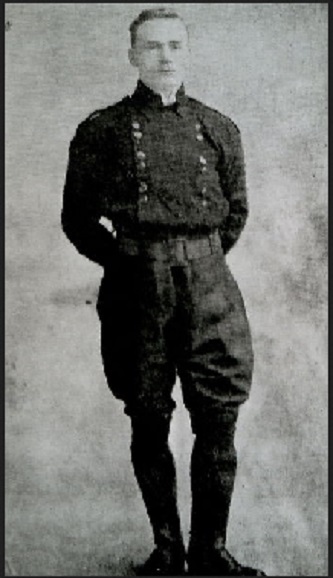
Leo Poidevin. (Aged 12 years 1 month.) Victoria-street, Bowral.
Posted in Posts and podcasts

Galway

The Macleay Chronicle 25th July, 1917 p.6 (Kempsey NSW)
Galway.
Talk of making Galway, with its magnificent harbour in which the whole British navy could ride at anchor, a port for direct trade with America is again to the fore; but probably nothing will come of it.
Little over four hundred years ago, the seaport of Galway, on the west
coast of Ireland, was one of the great trade centres of Western Europe. It did special business with Spain. Galway merchants went to Spain, and Spanish merchants came to Galway, to talk trade, exchange views, and plan new enterprises. Galway men of affairs were wealthy and prosperous, and it came to be a saying, in those days “as proud as a Galway merchant.” So well off, indeed, was the city, and so many its extravagances, that, towards the end of the Sixteenth Century, an inquiry was held by direction of the Lord Deputy, Sir John Perrot, with the result that rigid sumptuary laws were passed. No young man, “prentice or other wise, ” was to wear ‘ gorgeous apparell ne silks, either within or without their garments, non yet fyne knitt stockings either of silk or other costlie wise. ‘ And there was much else to the same purpose.
Galway, in fact, had always been a specially favored town. There is little known as to its history, it is true, before the coming of the English, but, once William Fitzandelm de Burgo, the Norman, under a grant from Henry II, had finally dispossessed Rory O’Connor, and converted the town into his own principal stronghold, it grew rapidly in importance. After the building of the walls and fortifications, about the year 1270, its trade, indeed, increased by leaps and bounds.
It was at about this time too, that there came to the city those famous settlers from England, known, in subsequent history, as the ‘tribes of Galway,’ the Blakes, the Bodkins;, the Joyces, the Lynches, the Martins, and so on. There were fourteen of them altogether. This strong growth of an urban community, as one writer justly points out, self-controlled and distinct was typical of the time. While the country was torn with perpetual strife between English, Irish, and Anglo Irish rulers, the towns of Waterford, Limerick, and Galway virtually developed into self-governing republics. “They elected their own magistrates, excluded the King’s judges, contributed nothing to the King’s revenue, declared war and concluded peace, without the smallest regard for the Deputy and the Dublin Parliament. ” Thus, in 1524, Limerick and Galway went to war with each other, and the hostilities were ultimately concluded in the most formal manner by a formal treaty. It was the civil war in England which finally put an end to this prosperity and independence. It dealt hardly with Galway. The city stood for the King, but ultimately was obliged to surrender to the
Parliamentary forces under Sir Charles Coote. The surrender, it is true, was made on honorable terms, but the treaty was shamelessly broken. The town was plundered, and the ancient inhabitants were, for the most part, driven out, many hundreds of them being sold as slaves to the West Indies.

Posted in Posts and podcasts

Kinvara politics – 1917

The Register 18th June, 1917

Kinvara Photo: EO'D
Kinvara
Photo: EO’D

Kinvara – Politics, as they go, are still matters of conversational interest here. The Sinn Fein movement is mentioned by some with sympathy for motive and contempt for methods and organisation. The rising came as a surprise, if not a shock, to some persons, but there were, or are, scattered sympathisers or objectors to the more drastic of the methods of repression among the middle as well as the working classes. For among those who paid the inevitable penalty of revolt in time or war were some leaders of ripe scholarship and, in other respects, stainless lives; “Poets of the Insurrection” as they were called, whose mistakes of judgment, policy and method are lightly regarded by those of emotional temperament to whom disinterestedness primarily appeals. Discontent now turns on the recent check to Home Rule as expressed in the Government of Ireland Act 1914. There is a feeling that the political system – Union Government – is still the source of any economic maladjustment and that the country will at once flower under the working of autonomy.
the Hon. P.McM.Glynn K.C. Minister for Home and Territories.

Posted in Posts and podcasts

Rising – 1917

Watchman 1st November, 1917 p.7

Liam Mellows Wikimedia Commons
Liam Mellows
Wikimedia Commons

A cable from New York, dated Sunday last, states that the Secret Service has frustrated a second Sinn Fein rebellion which was planned to occur next Easter, on the anniversary of last year’s bloody Dublin riots. German gold was scheduled to play a part. The preliminaries were mapped out, and ready to be put in operation, when the Secret Service men stepped in and arrested “General” Liam Merlewes (sic.) one of the leaders of the 1916 outbreak. Baron von Reculinghausen (sic.) was apparently Count von Bernstorff’s designee to watch Germany’s interests in Ireland after Bernstorff was ousted from the United States.

The Canadian authorities, acting upon the information received from the Secret Service, arrested Dr. Patrick McCarton, upon his arrival at Halifax. He was travelling on a fraudulent seaman’s passport. McCarton enjoyed the title “Ambassador of the Irish Republic to the United States.” It is commonly reported that German agents are busy in Ireland, attempting to stir up a second outbreak. A German cargo, which submarines carried, comprising machine guns and ammunition, was landed in lonely inlets in the Irish Sea.

It is understood that the United States possesses the official Sinn Fein report of the 1916 riots and other valuable data in connection therewith. Merlewes (Mellows), prior to the Easter Monday rebellion, spent three months in an English prison. Later he proceeded to Galway, and organised 700 volunteers for the United States, following the failure of the revolt.

McCarton arrived in the United States early in 1917, a fugitive from justice. Both decided to return to Ireland. McCarton sailed on October 17.

Posted in Posts and podcasts

Where angels listen – 1917

Meath Chronicle 14th April, 1917 p.4

Mu
Mullaghmore Photo: EO’D

He will not come, and still I wait.
He whistles at another gate
Where angels listen. Ah I know
He will not come, yet if I go
How shall I know he did not pass
barefooted in the flowery grass?

The moon leans on one silver horn
Above the silhouettes of morn,
And from their nest-sills finches whistle
Or stooping pluck the downy thistle.
How is the morn so gay and fair
Without his whistling in its air?
The world is calling, I must go.
How shall I know he did not pass
Barefooted in the shining grass?
A Little Boy In The Morning – Francis Ledwidge

Posted in Posts and podcasts

Travel Notes – 1917

The Register, Adelaide, South Australia

Photo: EO'D
Photo: EO’D

18th June, 1917 p 6

XX By the Hon P McM. Glynn K.C. Minister for Home and Territories (abridged)

Gort, August 12, 1916. I arrived here on August 10. Names, not much else, have changed. Some old people, some middle-aged, knew me; their faces are not those of the past. Newquay, twelve Irish miles from here, is changed. The four or five white cottages facing the beach of shingle and sand, looking across the opening of ihe Straits towards Aughinish, are in ruine. It was difficult to identify the location of the seaside cottage in which, during some summer months, we lived.

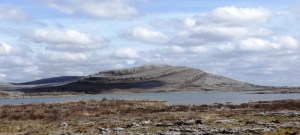
Driving round by the flaggy shore to Ballyvaughan and then across a gap in the Burren Mountains towards Kinvara, from which is a fine view of the inner-part of Galway Bay.  The promontory of Aughinish and the swift current of the sea between it and the mainland is open; along dusty, limestone roads; the crumbling walls of deserted houses are seen in many places by the way. Most people of. the past seem to have gone to heaven or the United States.

Politics, as they go, are still matters of conversational interest here. The Sinn Fein movement is mentioned by some with sympathy for motive and contempt for methods and organization. The rising came as a surprise, if not a shock, to some persons, but there were, or are, scattered sympathisers or objectors to the more, drastic of the methods of repression among the middle as well as the working classes. For among those who paid the inevitable penalty of revolt in time of war were some leaders of ripe scholarship and. in other respects, stainless lives; ‘Poets of the Insurrection’ as they were called, whose mistakes of judgment, policy, and method are lightly regarded by those of emotional temperament to whom disinterestedness primarily appeals.

Discontent now turns on the recent check to Home Rule as expressed an the Government of Ireland Act, 1914. There is a feeling that the political system – Union Government – is still the source of any economic maladjustments, and that the country will at once flower under the working of autonomy.

At Loughrea, behind the house of my brother James, are the ruins of an old abbey, one of the finest of the monastic days, and the Abbey walk. Across the road is the Carmelite church and monastery, and beyond sloping country, with a good growth of meadow grass and trees. Loughrea is situated on a lake, on the far bank of which the historic or traditional Fian ma Cumhill had some of his escapades. It has an excellent cathedral church, built by the lake; finished in every point of architectural design.

Posted in Posts and podcasts

The many uses of Peat – 1917

The Minneapolis journal, 6th April 1901 p 7

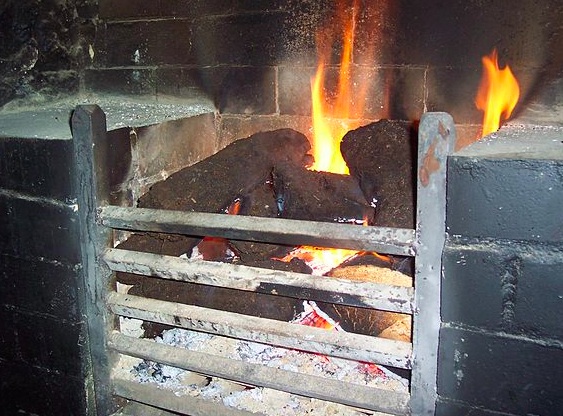
Feu de tourbe Photo: Cqui (talk) Wikimedia Commons
Feu de tourbe
Photo: Cqui (talk)
Wikimedia Commons

Many uses of Irish Peat
A large Dublin manufacturer has a room entirely furnished with irish peat. The carpets on the floors, the curtains at the windows and paper on the wall are made from this substance. For years he has experimented with the material, which is now very largely exported as fuel, and he has discovered that from it, it is possible to produce almost any kind of fabric.

Posted in Posts and podcasts

Kinvara – Timbarra – North Queensland – 1917

Townsville, North Queensland c 1870 Richard Daintree (1832-1878) John Oxley Library, State Library of Queensland. Wikimedia Commons
Townsville, North Queensland c 1870
Richard Daintree (1832-1878)
John Oxley Library, State Library of Queensland.
Wikimedia Commons
The World’s News 21st April, 1917 p21

Will you tell me? (abridged)

Adjenda says:

“I see a correspondent (‘Kinvara’, Brisbane) asks, I presume for the meaning f the word Kinvara.

When I was a young man I was among the blacks of North Queensland and New South Wales; also for many years had them working for me. I can speak the language of both, but I never heard the word Kinvara, nor do I know the meaning of it. I think he refers to ‘Timbarra,’ which means ‘track him’. There is very little difference in the pronunciation of the words if uttered quickly.

Posted in Posts and podcasts

Egg shell superstition – 1917

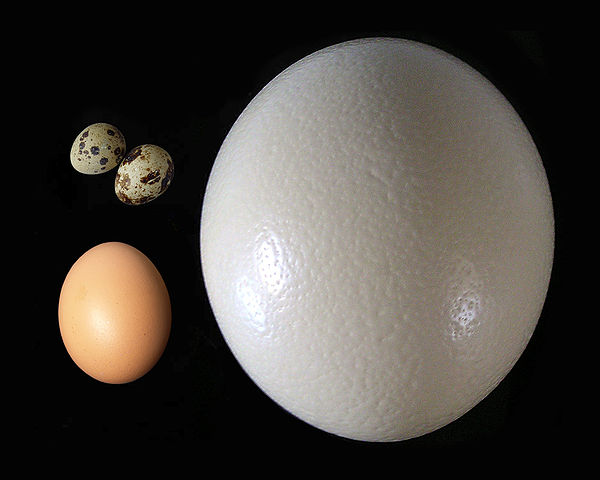
Ostrich egg, chicken egg and quail egg Photo: Rainer Zenz Wikimedia Commons
Ostrich egg, chicken egg and quail egg
Photo: Rainer Zenz
Wikimedia Commons
The Central Record, 30th August, 1917 p10
(abridged)
Some in the west of Ireland, it is said, will never leave an egg shell open at one end only. They will always thrust a spoon through the lower end. Otherwise some wicked spirit will seize upon the shell and make a boat of it, in which to sail the soul of the careless person to destruction.