On Friday evening, at a place called Duras Demesne, near Kinvara, the patrol of police from Kinvara had a severe encounter with some civilians. They succeeded in arresting two men who were brought before Mr. Persse, J.P. and remanded without bail for three days, when there will be an inquiry into the matter.
Irish Independent 23rd July 1908 P.9
The Board of Guardians of Gort Union will, at their meeting on Saturday, the 1st day of August, appoint a Midwife for the Kinvara Dispensary District, at a salary of £40 per annum.
The person appointed most possess qualifications in Medicine and Surgery, as well as in Midwifery, and must reside in the Town of Kinvara.
Applications, accompanied by copies (only) of testimonials to be lodged with me by 12 o’clock noon on the above date.
Myles J. Burke
Clerk of Union
Clerk’s Office, 18th July, 1908
Wairarapa Daily Times, Volume LIX, Issue 9225 19th November 1908 p5Coole Park, Gort EO’D
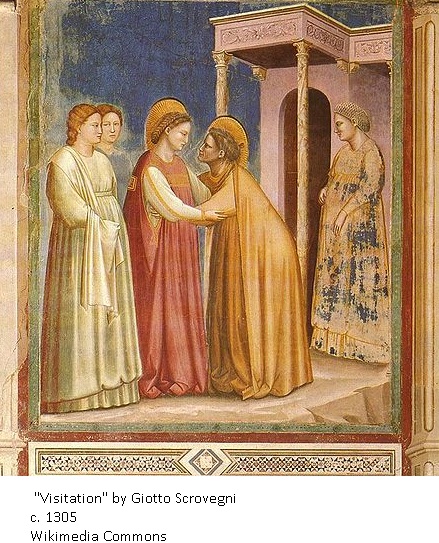
One of the most interesting survivors among the few who still remain of the noble band of women who nursed with Miss Florence Nightingale in the Crimea has passed away (writes a London correspondent), in the person of Mother Mary Aloysius Doyle, at the Convent of Mercy, Gort, Co. Galway.
The venerable lady had attained the great age of ninety-four years, but her faculties were unimpaired, and only last July she wrote a beautiful letter of sympathy and good wishes on hearing of the fate of the veterans, destined to help the declining days of the survivors of the Crimea and the Mutiny. The great value of the services rendered by the first party of nurses who went out with Miss Nightingale led Mr Sidney Herbert to request Miss Stanley, sister of the former Dean of Westminster, to select further reinforcements for her and letters were written to all the convents in Ireland for trained volunteers. Two other Roman Catholic Sisters who accompanied Miss Nightingale are happily still with us as Sister Mary Stanislaus RRC and Sister Mary Anastasia RRC who are in the Hospital of St John and St Elizabeth, the former of whom, it is pleasant to record is in good health and has may interesting memories to tell of those stirring days.
The intermountain Catholic, 29th February, 1908 p6
Photo: EO’D
A Ballad of Galway
The market place is all astir,
The sombre streets are grey.
And lo! a stately galleon
Lies anchored in the bay
The colleens shy, and sturdy lads,
Are swiftly trooping down,
To greet the Spanish sailors,
On the quay of Galway town.
But Nora, golden Nora
What matters it to you?
There’s joy, long time a stranger,
In those gentle eyes of blue;
And wherefore deck your ringlets,
And don your silken gown.
For a crew of Spanish sailors,
That stride through Galway town.
Said Nora, golden Nora,
And her laughter held a tear.
I don my gown and laces
Because my love is near,
Among the Spanish crew is one
Should wear a kingly crown,
Although he walks a landless man,
Today through Galway town.
“Look forth! see yon his dusky head
Tower high above the throng.
Oh, brave is he, and true is he,
And so my lips have song.
For he’s no Spanish sailor.
Though he wears the jerkin brown,
But Murrough Og O’Flaherty.
Come back to Galway town.
He fought in Spain’s red sieges,
And he held a captain’s place,
Ah! would his arm were raised to strike
In battles of his race!
But his boyhood saw with bitter grief
Iar-Connacht lose renown.
When the Saxon crushed his valiant clan
In the streets of Galway town.
Tonight will be our wedding
With a holy priest to bless,
Shall we remember Cromwell’s law
Amid such happiness?
While my true love’s arm is round me.
Should they come with fighting frown,
His sword shall cleave a pathway
For his bride through Galway town.”
Then up the street stepped Murrough
And down stepped Nora Ban.
Had ever sailor fairer love,
Sweet, sweet as summer dawn?
Their glad lips clung together,
Such bliss old grief dost drown;
God guard the faithful lovers,”
Prayed we in Galway town.
Oh, far across the water
The gold ship’s speeding now,
And Murrough Og O’Flaherty
Stands tall beside the prow;
And Nora, golden Nora,
A bride in silken gown,
Hath sailed away forever
From her kin in Galway town.
Ethna Carberry in the Catholic press, Sydney, Australia.
Photo: Wikimedia Commonshttps://widgetworld3.wordpress.com/podcasts/ THE SUN 1ST NOVEMBER, 1908 P10
*abridged Halloween, or Samhain night according to the old Druidical division of the year, comes on the last day of summer. It is the gloomiest night of the whole twelve months to the fairy folk. The Fe-fiada, or spell of enchantment, is removed from all the fairy hills and raths as the last bit of daylight fades and all the fairies come trooping forth to moorlands and mountains to join in a mad revel with the ghosts and witches and banshees and, that most demonic spirit of all, the dreaded Pooka.
If you think you hear the wind wailing over the housetops on that night, you are mistaken. It is not the wind but the great lament or Caoin that the fairies make for the dead summer.
As the fairies are allowed to leave their hills, so mortals are allowed to enter them, and many a venturesome lad has gone into the depths of the raths and brought back wonderful tales of fairy palaces and gardens and the like.
Exciting scenes followed an attempt to serve processes for rent due by the tenants on the Rodney estate, near Cregg, County Galway. A crowd of women and girls, armed with balls of mud, attacked the process server and his police guard and caused them to beat a hasty retreat.



 The Burren and Beyond