The W. A. Record (Perth W.A) 5th August, 1905 p. 12 Accompanying a recent contribution to the “Irish World’s” Gaelic Language Fund from a subscriber to that paper was the following terse poetic sentiment of the donor : I’m just a plain hard-working man. I was born in the village of Ardrahan, And I like to do the best I can To help dear Mother Erin. For I spent many a happy day In Galway, Tuam and Monivea, Kinvarra, Gort and sweet Loughrea, Athenry and old Kilclairin. My hands are just as tough as leather, My face is bronzed with wind and weather, My heart is just as light as a feather, As I mingle with the throng. When times are bad I never holler, Thank the Lord I can spare, a dollar To help the cause along.
The Irish Times 6th April, 1905 p10 Malicious Injury claims at Galway The following is the list of claims for criminal injury to be tried before His Honor Judge Anderson at Gort on Thursday next, 23th April, amounting to nearly £250. James St. George, of Newtown, Kilcolgan; A boat maliciously and wantonly taken away from her moorings at the pier of Tarrea, and which was used on the oyster bank of Pollough for the purpose of dredging oysters, and containing the necessary gear, on the morning of 22nd January, 1905, between the hours of 2 o’clock a.m and 8 a.m. Compensation claimed £20. Michael Keane of Killuneen, Craughwell; A double stone wall about 220 yards in length unlawfully, wantonly and maliciously damaged and knocked down between 7th and 10th February, on the lands of Lavalley. Compensation claimed, £10. Michael Finnegan, of Shanganaugh, Kinvarra; One cock of hay containing six tons maliciously set on fire and totally destroyed on the 24th of January on the lands of Gortnasteal. Compensation claimed, £12. Thomas J. Tully, of Crallagh; one cock of hay containing 13 tons destroyed on 29th January on the lands of Grallagh, Loughrea. Compensation claimed, £33. Robert R. O’Hara, of Derryfoyle, Craughwell; The tails of three cows and one bullock maliciously cut on the night of 23rd February on the lands of Derryhoyle, Loughrea. Compansation claimed, £8. Patrick Sheehan, of Dennacoo; 600 yards of a single stone wall on the lands of Killeenamunterland South, 50 yards wall at Newtown, 28 yards wall at Caroncreggaun knocked down. Compensation claimed, £80. Florimond L. Quinn; 162 perches of a wall thrown down on the lands of Caherglissane, Compensation claimed, £12. John Bermingham, of Killenavara; A seat or pew maliciously, wilfully, and wantonly thrown out of the Chapel on the night of the 18th March or early in the morning following, whereby same was broken and destroyed at Ballinderreen. Compensation claimed, £6. George C. Stapleton; 465 yards of double stone wall knocked down on the night of 23rd February on the lands of Moyvilla, otherwise Ballinellaun. Compensation claimed, £40.
THE IRISH TIMES Friday, January 20, 1905 p.3 QUESTION OF SALE TO TENANTS – BLAKE-FORSTER ESTATE. DECISION OF ESTATES COMMISSIONERS. Yesterday Estates Commissioners Wrench and Bailey sat at the offices of the Estates Commissioners, 26 Merrion Street, for the purpose of giving judgment in the cases of the sale of the two estates of the Scottish Union and National Insurance Company to the tenants in the County of Clare, at Dooras, and islands off the coast, and in the County of Galway, at Kinvarra. The property was formerly owned by Francis O’Donnellan Blake-Forster and Fanny and Henrietta Blake-Forster, and was taken from them by the Insurance Company who, as mortgagees, bought in the Landed Estates Court on the 30th July, 1902. Mr. A. Samuels, K.C., appeared for the Insurance Company, the owners. Mr. Valentine Kilbride, solicitor, represented the tenants both on the Clare and Galway properties. The case arose on an application to the Estates Commissioners, to declare as an estate for the purposes of the Land Purchase Act, the lands in the County Galway, and in the County Clare, known in the Land Judge’s Court as the Blake-Forster estate, upon which there are a large number of tenants. Mr. Samuels, K.C., said with regard to the Galway portion of the estate there were 78 holdings altogether, and of these there were only 15 on which agreements had been signed. All the others were held under judicial rents, that is to say, there were 63 judicial tenants on the estate. Suggestions had been thrown out that these were bogus agreements, and the matter had been made a political text by certain people. It was most unfortunate, he thought, that politicians should have interfered whilst the matter was pending. Mr. Commissioner Bailey – We have nothing to do with that. Mr. Samuels said that, as a matter of fact, the agreements had been fixed at a lower rate then even the corresponding judicial rents.
Mr. Wrench, in delivering his judgment, said:
Mr. Samuels has argued that where all the agreements come within the 1st section of the Act, as in this case, the Estates Commissioners have no discretion, but must declare the lands comprised in the application and estate for the purpose of the Act. This appears to me to be a purely legal question which should be determined by the judicial commissioner, and, if the parties so apply, it must be referred to him in accordance with Sub-section 1 of the 23rd section; and even if they do not so apply it should, in my opinion, be so referred to us. Pending the result of the judicial commissioner’s decision as to whether the Estate Commissioners have discretion in the matter or not it appears to me that it would be decidedly indiscreet of us to discuss beforehand the course we might properly adopt. Mr. Commissioner Bailey, in delivering judgment for Commissioner Finucane and himself, said:
The vendor in this case lodged an originating application to have declared as a separate estate for the purpose of the Irish Land Act, 1903, certain lands which are set out in the first schedule to the application, and are situate in the Barony of Kiltartan, in County Galway, and in the Baronies of Burren and Corcomroe, in County Clare. The lands to which this application relate have not now come before the Land Commission for the first time. They formed Lots 2, 3 and 4 of a property which was for sale in the Land Judge’s Court in the matter of the estate of Francis O’Donnellan Blake-Forster, owner; Hester Blake-Forster and others, petitioners, and in respect of which the Land Judges issued a request under the 40th Section of the Land Law (Ireland) Act, 1896, on the 21st November, 1897. The Land Commission (Commissioners, Lynch and Wrench) made a report dated 30th June, 1899, respecting the Galway portion of the lands no for sale – known as the Kinvarra property – which was comprised in Lot 2 of the Land Judge’s rental, and the circumstances thereof, portion of which report is as follows: – “There are 77 holdings on this lot, and only six exceed £10 in rental value. They are, with a few exceptions, most inconveniently arranged, consisting of detached plots which, in some cases, are a mile or more distant from each other. Many of the holdings comprise from 20 to 30 different patches, and many of the parcels are held in common. The lands have been divided without any regard to their future profitable working, and any clearing or fencing done has added little to the letting value of the land.” They particularly noticed one holding on the lands of Crosshooha, No. 12 to 13v on the map, occupied by Kate Moylan, in which there were 23 lots, besides undivided shares of the foreshore, and went on to say; – “Having regard to the character of this estate, and the manner in which the holding have become sub-divided, and the undivided shares in which many of the plots are held, we are of opinion that, with the exception of four holding on the townland of Ballybranagan, none of the holdings on this lot could be sold to the occupying tenants under existing conditions, and that the case is one in which, as a condition precedent to sales under th 40th Section of the Purchase of Land Act, 1885, should be put in force with a view to the proper rearrangement of the holdings comprised in the lot. It further appears to us that advances under the Land Purchase Acts upon an estate so circumstanced would not be adequately secured, and that there would be no possibility of recovering instalment, or reselling holdings in the event of default.”
The Land Judge caused that report to be returned, stating that the Congested Districts Board had refused to buy the property, and requesting the Land Commission to estimate the prices at which the holdings could properly be sold on the occupying tenants. The Land Commission, in their further report, dated 5th November, 1900, stated with respect to this property that, with the exception of the townland of Ballybranagan, none of the holding should be sold to the occupying tenants, under existing conditions, that the holdings should be rearranged under the provisions of Section II of the Action of 1885, and that no advance could be made under the Land Purchase Acts on an estate so circumstances, and they said that as no rearrangement had been made, they assumed that the Land Judges contemplated offering the holdings to the respective occupiers without the suggested rearrangement upon the terms of cash payments. With a view, therefore, to assisting the Land Judge in forming an estimate of the selling value of the lot, they inserted in their original report, opposite each holding, the price at which, in their opinion, the holding might be sold for cash, but even a sale for cash they thought could not be made unless the question raised in their former report as to the rental and maps had been disposed of. The price of the holdings, if so sold for cash, in respect of which agreements for purchase have now been lodged under the Act of 1903, was then (in 1899) estimated by the Land Commission at £7,243, or 15.5 years’ purchase of the then existing rents. Subsequent to the date of the report the Scottish Union acquired the property which was conveyed to them by the Land Judge on the 30th July, 1902, and they now ask that it, together with certain other lands in County Clare, already referred to, be declared a separate estate for the purposes of the Act.
There appear to be now on the Kinvarra property 78 tenants, of whom 63 had judicial rents fixed by order of the Court form 1888 to 1898, and 15 by agreements and declarations to fix judicial rents lodged on 11th April, 1904, which were not filed till 11th July, 1904, so that it is questionable whether these tenancies, at the date of signing the purchase agreements i.e. 4th May, 1904 were holdings subject to judicial rents fixed or agreed to…
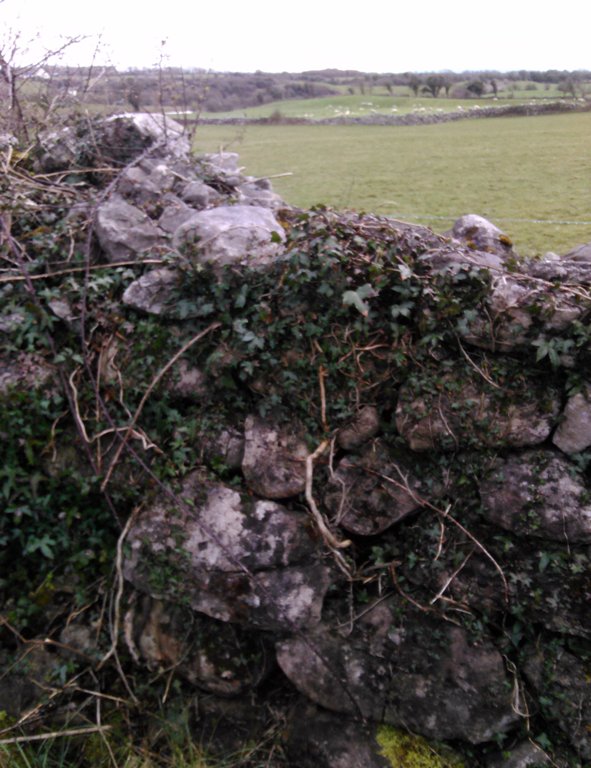
Great excitement prevailed at Ballinderreen on Wednesday (says the “Freeman” April 1), connected with service of processes for non-payment of rent upon tenants of the St. George estate. A fortnight ago the process-server, under the protection of a number of police, attempted to serve the processes, but the attempt failed, owing to the resistance offered by the people. Today a force of sixty police left Galway to assist the process-server, with a contingent of police drawn from other places. The people, however, were apprised in advance of their coming. The dry stone walls on each side of the road had been torn down to the ground and thrown upon the roadway, so that no vehicular or foot traffic could take place upon the road.
The whole force was set at work to clear the debris, but the pace was slow as some of the boulders required two or three police to remove. During the work the chapel bells at Ballinderreen were tolled. A large crowd of people gathered on a hill over-looking the village and shouted and jeered at the police and the process-server, while the latter did his work by nailing the processes to the doors of the houses of the different tenants who were being processed for rent. Relays of police were stationed all along the public road, and were kept continually employed in making a roadway for the cars. As the walls were levelled on to the road the whole way. It took three hours to serve all the processes.
The land on that part of the estate is of very poor quality, being cut into small patches by great boulders and other impediments. The price paid by the tenants is between 15s and 20 per acre, and from appearances is far in excess of the value of the land.
At the last meeting of the Gort Board of Guardians, Mr. Michael O’Donohoe (chariman) presiding, the following resolution was unanimously adopted, on the motion of Mr. Thomas. P. Corless, J.P., Co. C., seconded by Mr James Keane; That we, the Board of Guardians of the Gort Union, in view of the great distress in the Kinvara District and the great delay in commencing the repair of Kinvara Harbour, regret that the officials of the Galway County Council did not lay before the Council at their last meeting the plans of the Board of Works re Kinvara Pier and Harbour, and have them submitted to the Council for approval with a view to hasten the commencement of the work and give much needed employment.
Road to Doolin Photo: Christine Matthews Wikimedia Commons
In declaring the County Clare Feis open at Ennis recently, his Lordship Most Rev Dr. Fogarty, Bishop of Killaloe, having referred at length to the language and industrial movement, said money was not everything. We should try not only to bring money to the Irish home, and neatness and comfort and industry, but the brightness also and the enlightenment that come from the revival of our Irish customs and music and language.
He drove the previous night, coming to the feis, through sixteen miles of the most charming country, studded with those numerous white painted cottages which were such a feature of the County Clare.
It was evening, and the hour for the day’s labor being over the people would naturally turn to relaxation and enjoyment, but that lovely country was as silent as the grave— not a note of music or a volce was heard— and he felt for our people and said, “God bless every man or woman, young or old, Catholic or Protestant, who is doing his best, however little, to bring back to this lovely country and to its dear people the sound of music and contentment and prosperity.”
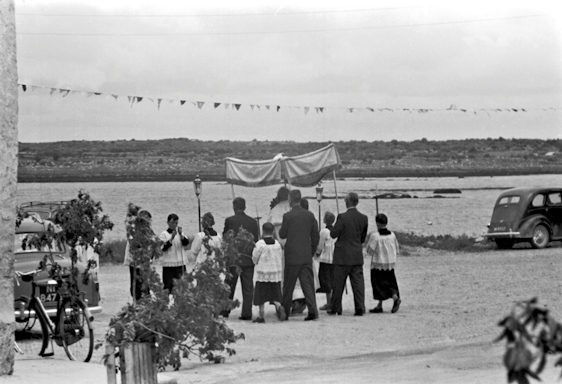
Corpus Christi Procession Kinvara Quay c 1950 Cresswell Archives
Enhanced British Parliamentary Papers on Ireland
Seventy-fourth Annual Report of the Commissioners of Public Works in Ieland, with appendices for 1905-1906
MARINE WORKS ACT, 1902
2nd Ed. VII., c 24 p8
Since our last Report the only additional work taken in hands under the Marine Works Act, was that at Kinvarra, County Galway. The marine work at this place, comprising the restoration of the pier and wharf walls, together with a new storm wall and other minor improvements, was certified by Their Excellencies the Lords Justices under the Act in July 1905. It was put in hands at once under the direction of the Board’s own officers, and it has been satisfactorily completed since the close of the financial year.
The Minneapolis Journal 14th March, 1905 p10 Aster amellus Wikimedia Commons
Kerosene emulsion, frequently and liberally applied will prevent black lice from injuring your asters. I have got rid of them many times by showering the plants and dusting tobacco dust over them.
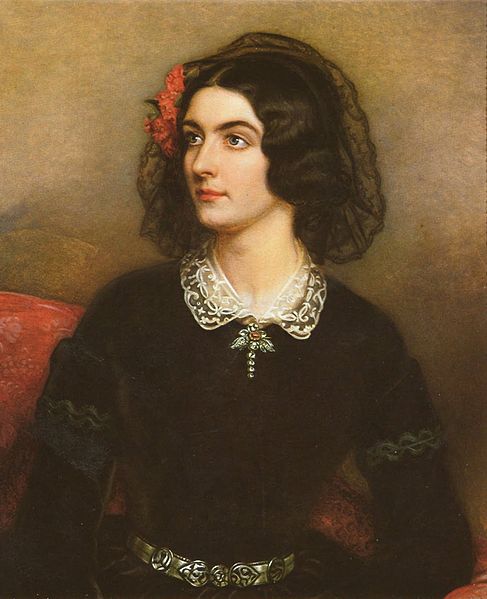
Lola Montez by Joseph Karl Stieler Wikipedia.orghttps://widgetworld3.wordpress.com/podcasts/
The Star, (PA) 9th August 1905 p 1
LOLA MONTEZ
At one time there was much commercial and social intercourse between Ireland and Spain. Galway and Waterford were the chief Irish ports engaged in this trade. To this day the Spanish type of beauty is discernible among the Galway girls. Probably the most famous result of the blending of Spanish and Irish blood was the actress and dancer Lola Montez. Her true name was Marie Dolores Eliza Rosanna Gilbert. She captivated European monarchs as well as popular audiences and was for a year or so practically the ruler of Bavaria until a revolution compelled her to flee.





 The Burren and Beyond