
Freemans Journal 4th June 1900
Lord O’Brien of Kilfenora was, as everybody knows, more than once a candidate for Parliamentary honours in his native county of Clare. It was, we believe, on the occasion of the death of Lord Francis Conyngham, one of the earliest and staunchest supporters of Isaac Butt in the early agitation for Home Rule, that Mr. O’Brien made a tour of the county and introduced himself personally to the electors. His manner was suave and his speech conciliatory in the extreme. Some of the electors were doubtful as to whether the “man of law” from Ballinalacken was with Isaac Butt or against him. In their perplexity they went to consult Biddy Early, a woman skilled in the suture, who delivered oracles in a sequestered glen between Lough Greany and O’Callaghan’s Mills. Biddy arranged her philtres, put on her sagest look, and deliberately pronounced that the cattle of any man who voted for a recreant descendant of Boru would die of black quarter. Further than this she could not be induced to go. The people were by no means satisfied, for they thought the O’Gorman man bore a much greater family likeness to Brian Boru than the man from Lisdoonvarna.
Tag: 1902
Kinvara Pier – 1902
Freemans Journal March 22nd, 1902
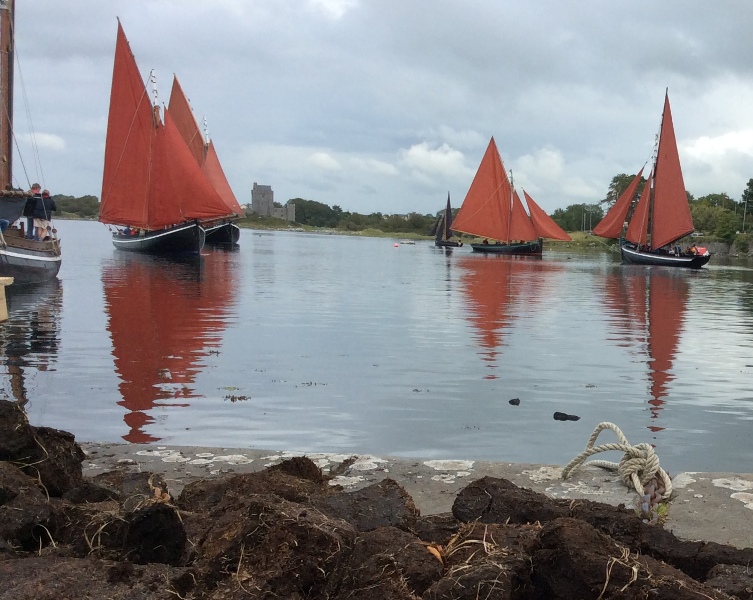
Photo: EO’D
Mr Perry, County Surveyor, has inspected and made a report on the harbour. He considers it derelict and dangerous, and estimates that it would cost £3,350 to restore the pier, remove the silt, and extend the existing pier 50 feet into deep water. A special meeting of the Harbour Committee has been convened for Monday, to be held in Kinvara, to consider the matter
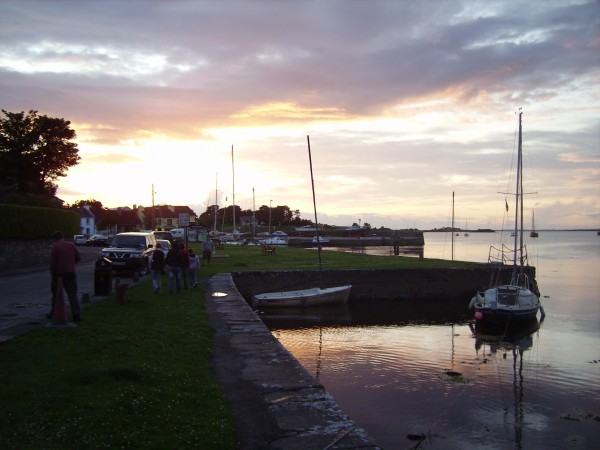
Kinvara – the best barley – 1902
Freemans Journal October 2nd, 1902 p13 (abridged)
It may not be generally known that the largest barley markets in Ireland are carried on at Kinvarra. Throughout yesterday and today business in the barley market has been in progress. From four to five hundred carts of barley arrived yesterday and were disposed of, and about the same number today. Yesterday some hundred tons of the corn were taken by an agent at Ardrahan Railway Station for the Dublin distillers.
Mr W. H. Persse, of the Galway Distillery, who attended the market, accompanied by a large staff of men, loaded a ship with two hundred tons of barley at sixteen shillings a barrel. The loading of another vessel for the same gentleman is going on today and the carts of grain are coming in hundreds.
The barley markets were established in Kinvarra thirty years ago by the late Mr H.S. Persse, founder of the Galway Distillery, because the place is so centrally situated and the climate and soil of the district were found to be most favourable to the growth of barley. After various experiments, it was proved that Webb’s Kinver Chevalier barley gave the finest results and the grain grown in the district about Kinvarra is held to be the best in Ireland.
Corcomrue Abbey – 1267
Feilding Star 24th March 1902 p4 (abridged)
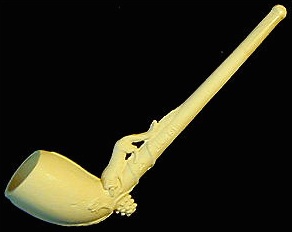
Photo: Frankwm1
Wikimedia Commons
It is pleasant for people of the present day, who do not like tobacco, to know that Sir Walter Raleigh was not the person who introduced the habit of smoking into Ireland anyway, whatever he may have done for England.
The learned Dr. Petrie, the acknowledged chief of Irish antiquarians, says “Smoking-pipes of bronze are frequently found in our Irish tumuli or sepulchral mounds of the most remote antiquity. On the monument of Donogh O’Brien, King of Thomond, who was killed in 1267, and interred in the Abbey of Corcumrue, in the County of Clare, he is represented in the usual recumbent posture, with the short pipe or dhudeen in his mouth.”
Tobacco, after all, was only a substitute. Long before it was introduced into England smoking was commonly practised. The favorite smoke was dried leaves of coltesfoot. In the Historic of Plantes by Dodoens, published in 1578, is the following passage ‘The parfume of the dryed leaves (of coltesfoot) layde upon quick coles, taken into the mouth of a funnell or tunnell helpeth such as are troubled with the shortness of winde and fetch their breathe thick and often.”
In ‘The Travels of Evliya Effendi’ it is stated that an old Greek building in Constantinople was converted into a mausoleum in the early part of the sixteenth century. At the time of the alteration it was computed that the building was a thousand years old. In cutting through the walls to form windows, a tobacco pipe which even then smelt of smoke, was found among the stones.
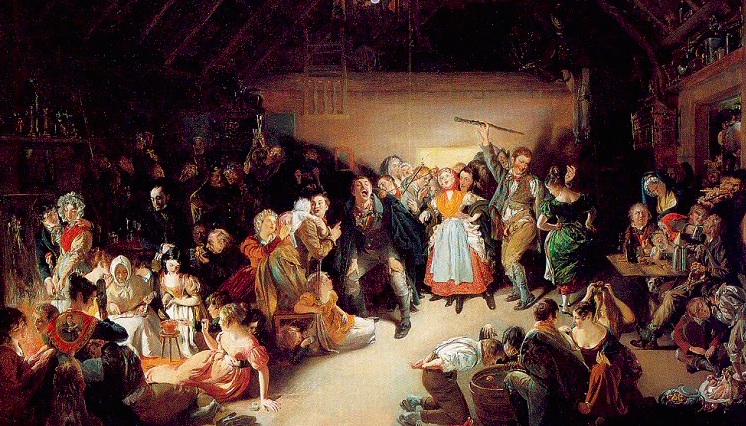
Halloween – 1902
The Houston Daily Post 26th October, 1902 p34
Wikimedia Commons
Cupid’s Cake
Halloween when goblins walk,
And Cupid laughs and spookies stalk
All pretty maids their sports forsake,
To bake themselves a nice big cake.
Within this cake a circlet lies,
A ring that’s hidden from all eyes.
Secure, deeply implanted there,
It lies concealed with every care.
At midnight hour, when elf bells toll,
The cake is cut and from its whole,
One piece is found to hold the ring;
The glistening, mystic happy thing!
A maiden sees it with bright eyes,
As from the piece she lifts the prize,
And on her dainty little hand
She draws the shining golden band.
Then Cupid, naughty little elf,
Comes forth and joins the play himself;
He topsy turvy turns the scene,
‘Till all make love on Halloween.
Kinvarra Harbour – 1905

Cresswell Archives.
EPPI
Enhanced British Parliamentary Papers on Ireland
Seventy-fourth Annual Report of the Commissioners of Public Works in Ieland, with appendices for 1905-1906
MARINE WORKS ACT, 1902
2nd Ed. VII., c 24 p8
Since our last Report the only additional work taken in hands under the Marine Works Act, was that at Kinvarra, County Galway. The marine work at this place, comprising the restoration of the pier and wharf walls, together with a new storm wall and other minor improvements, was certified by Their Excellencies the Lords Justices under the Act in July 1905. It was put in hands at once under the direction of the Board’s own officers, and it has been satisfactorily completed since the close of the financial year.
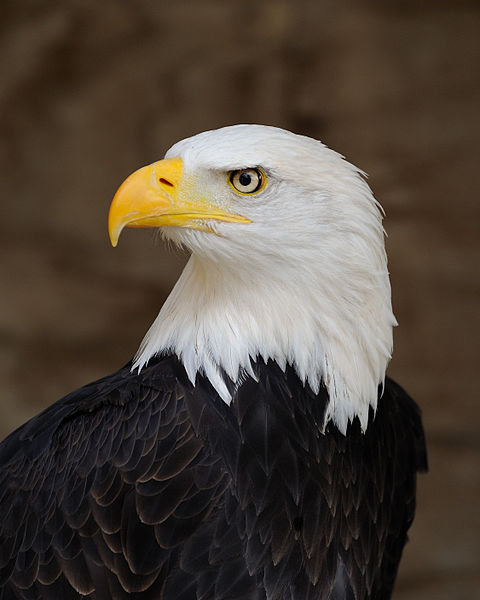
Ireland in America – 1902
W. Lloyd MacKenzie via Flickr @ http://www.flickr.com/photos/saffron_blaze/
Wikimedia Commons
Ireland in America. (abridged)
In view of the triumphal progress of the Irish delegates in America, it may be interesting to give some figures showing what Irish-America really means:-
The city of New York contains more Irish than Dublin, Cork and Belfast combined.
The city of Brooklyn contains more Irish than Galway and Waterford put together.
There are more Irish in Boston than in Dublin, and more in Philadelphia than there are in Belfast – but it is in the Irish names in America that the greatest proof is evinced of the devotion of the Irish exile to the old land.
There is an Ireland in Alabama, another in West Virginia, another in Indiana and another in Minnesota.
The are three Hibernias situated in Florida, New Jersey, and New York.
There are five Erins scattered throughout the States of Georgia, New York, Tennessee, Texas, and Wisconsin.
There is an Irishburg in Virginia, an ‘Irish Ridge’ in Ohio, an ‘Irish Ripple in Pennsylvania, an ‘Erina’ in Nebraska, ‘Erin Shades’ in “Virginia, and ‘Erin Spring’s’ in Indian Territory.
The names of Irish provinces are illustrated by Munster in Illinois, and Munster and Ulster in Pennsylvania.
In New York there is an Ulster Park, an Ulsterville, and an Ulster County.
There are 17 Dublins in the States, 18 Waterfords, 9 Tyrones, 7 Limericks, 5 Clares, 4 Mayos, 4 Sligos, 3 Corks, 3 Wexfords, 6 Antrims, 9 Derrys (four of which are called Londonderry), a Roscommon. a King’s County, a Queen’s County, a Galway, a Wicklow, a Longford, Kilkenny, Kildare, Donegal, Carlow, Monaghan and Armagh.
There are 12 places called Avoca, and 6 places called Avondale in honor of Parnell. There are also several places called after Parnell himself. There is a Garryowen in lowa, a Tullamore in Illinois, a Rathdrum in Idaho, an Achill in Roscommon County, Michigan; a Ballina in California, a Doneraile in Kentucky, a Strabane in Dakota, an Ardee in New York and in Tennessee, a Kinsale in Virginia, a Kincora in New Jersey, a Tara in lowa, a Navan in lowa, and another in Michigan, a Queenstown in Maryland and Pennsylvania while there are twelve towns called Westport, four called Newry, thirty called Newport. There’s a Valencia in Kansas and Pennsylvania, four places called Ennis, a Kilmichael, a Kilmanagh, Lismore, Lisburn, and eleven Bangors.
There are ten places called Belfast, a Boyne in Michigan, a Bandon in Minnesota and in Oregon, a Clontarf in Minnesota, a Dungannon in Ohio and twenty-five, Milfords.
Almost every State in the Union has counties called after the famous Irish-Americans of revolutionary fame. There are two counties eight towns, and seven places called after Jack Barry, ‘the father of the American Navy’ who was a County Wexford man. It would be almost impossible to enumerate the towns and places named after ‘Old Ironsides,’ Parnell’s grandfather. The ‘Starktowns are also very numerous, some in honor of General Stark and some in honor of his wife, ‘Irish Molly Stark,’ as she was always lovingly described, who took her husband’s place when he was killed at his gun, and remained in command of the gun till the end of the war. She was created captain for bravery in action, but never lost the title to ‘Irish Molly.’
In honor of O’Brien, of Machias Bay fame, there ia an O’Brien County in lowa, and an O’Brien in Glynn County, Ga. In honor of Patrick Henry we have 10 counties and 18 towns. There are towns and counties ad libitum called M’Donough, Sullivan, M’Cracken, Calhoan, O’Brien, Emmet, Meagher, Dougherty, Murphy, etc. Phil Sheridan has no fewer than 3 counties and 17 towns named in his honor while there are several Colorans, Burkes Shields, Kearney, Clebarn, Mulligan, Moran, Lynch, Kelly Mai one, etc.
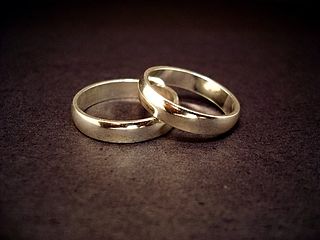
Love and the Gaelic League -1902
Wikimedia Commons
The World News – 25 October, 1902
MARRIAGE IN IRISH.
THE FIRST WEDDING IN LONDON IN THE GAELIC TONGUE.
The first marriage solemnised in London ln the Irish language took place recently at Dockhead Catholic Church.
The bridegroom was Mr. John O’Keane, for the past three years the secretary of the Gaelic League of London, the bride Miss Kathleen Dineen, of Forest-gate, a charming young lady whose singing of Irish songs has often stirred Gaelic League gatherings in London.
The ceremony was performed by the Rev. M Moloney. Wherever the Catholic Church allows the use of the vernacular Irish only was employed. From this to the solemn and sonorous Latin of the nuptial mass seemed a natural transition.
After the ceremony, Mr. and Mrs. O’Keane received the congratulations of a large gathering of friends in Irish. Professional men, civil servants, and general workers were largely to the fore. The young pair drove away for Paddington (for Ireland) amid a chorus of hearty and genial benedictions in their native language.
 The Burren and Beyond