THE IRISH TIMES Saturday, July 19, 1890 p.9 A CLERGYMAN CHARGED WITH LIBEL Yesterday, before the Judge of the Court of Probate, who sat to hear common law motions, the case of Bell v. Molony was brought forward. The action was to recover £5,000 damages for alleged libel. The venue had been laid in the County of Antrim, and the action was set down for hearing at the present Belfast Assizes. The Right Hon. Samuel Walker, Q.C. (instructed by Mr. Valentine Kilbride), applied on the part of the defendant to change the venue either to the County of Galway or to the City of Dublin. Counsel said the plaintiff, Mrs. Agnes Bell, resided at Maryville House, Kinvarra, Co. Galway, and in the year 1886 she exerted herself to get subscriptions for the poor and the evicted tenants of the district in which she resided. She sought the assistance of Mr. Ford, of the Irish World, which was published in America, and in that journal an appeal was made on the 29th May, 1886. In that appeal Mrs. Bell said that the distress existing in Kinvara was appalling, and that the women and children there were being turned out wholesale into the streets. The defendant, the Rev. John Molony, who was the Catholic clergyman of the district, wrote two letters to the Tuam News with reference to the conduct of the plaintiff, and these letters formed the ground of the present action, it being alleged that they conveyed that the plaintiff had been guilty of misconduct and misapplication of moneys received for the benefit of the poor, and was unworthy of confidence. The defendant denied the statements made by the plaintiff in the Irish World, and said that her description as to the condition of the people, &c., was a tissue of lies and misrepresentations. There was no appearance for the plaintiff, and the venue was changed to Dublin.
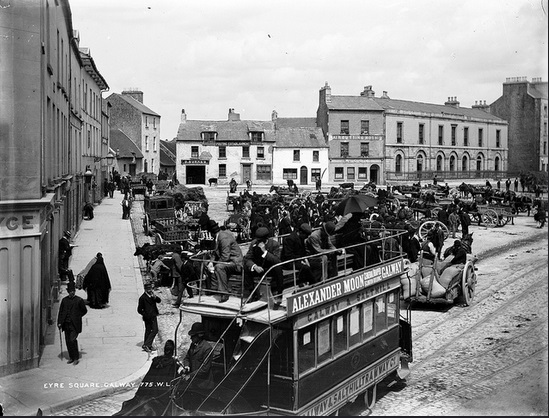
Eyre Square, Galway c.1885 National Library of Ireland
On Saturday night some soldiers of the Connaught Rangers, a detachment of which was under orders to proceed to Malta, on the 14th, attacked the police in Eyre Square with stones. Were it not for the timely arrival of assistance, Sergeant Redington would have been badly injured. Tuesday night the disturbance was renewed, and all the available police were brought out. Sergeant Boylan had his skull fractured from a stroke of a belt by one of the soldiers whose conduct was very violent. The police used their batons, and ultimately the soldiers were got to the barracks.
The Sisters of Mercy’s concert and bazaar at Kinvara came off on Thursday the 2nd inst. Both were a great success, and a proof of the popularity of the nuns. The Misses and Master Corless, the Burlington, Dublin; the Misses Regan, Miss Burke, Lisdoonvarna; Miss McCuley, Miss Delia Corless, Kinvara; the Misses Kennedy and the Misses Sheahan, Gort, contributed their share to the day’s pleasure. Any notice of the concert would be incomplete if one were to omit reference to the successful part taken by the gentlemen, clerical and lay, who kindly gave their services in the cause of charity. Father O’Donohue, Balyvaughan, and Father Nestor, Clarenbridge, sang, and so did Fathers Sweeny and Tully. The lay element was well represented by Dr. Glynn, Gort, and Mr Hewson, Tyrone, who both sustained the role of first class vocalists.
The Capricornian 17th May, 1890Domestic Goose Photo: Noodle snacks Wikimedia Commons
Folk-tales for Little Folk by Uncle Will (abridged)
Long ago, out of a hill in Leinster there used to emerge, as far as his middle, a plump, sleek, terrible steed, a Pooka, who spoke in human voice to each person about November day, and he was accustomed to give intelligent and proper answers to such as consulted him concerning all that would befall them, until the November of next year. And the people used to leave gifts and presents at the hill until the coming of Patrick and the holy clergy.’
In some places the Pooka came out in the form of the Neck of Scandinavia, or Water-Kelpie of Scotland. About the Martinmas time the Pooka used to appear near the sea or a fresh water lough in the form of a horse. He went tearing about at a great rate. If any one were bold enough to go between him and the water, be could be caught and bridled, and then made a splendid steed. If at any time, however, he came in sight of water, he made for it. Were any one on his back, then it was all the worse for the rider, for the Pooka would plunge in, and tear him to pieces at the bottom.
As a man riding on a Pooka horse could not go far in Ireland without seeing deep water, not many would use them. A boundary rider out west might: have one for some considerable time without seeing as much water as would drown him.
Here is a story about the Pooka, translated literally from the Irish of the Leabhar Sgeulaiyheachta, by Douglas Hyde.
THE PIPER AND THE PUCA.
In the old times there was a half fool living in Dunmore, in the county Galway, and although he was excessively fond of music, he was unable to learn more than one tune, and that was the ‘Black Rogue.’ He used to get a good deal of money from the gentlemen, for they used to get sport out of him.
One night the piper was coming home from a house where there had been a dance, and he half drunk, when he came to a little bridge that was up by his mother’s house he squeezed the pipes on, and began playing the ‘* Black Rogue’ (an rogaire dubh). The Pooka came behind him, and flung him up on his own back. There were long horns on the Pooka, and the piper got a good grip of them, and then he said
‘Destruction on you, you nasty beast, let me home. I have a ten-penny piece in my pocket for my mother, and she wants snuff.’
‘Never mind your mother,’ said the Pooka,
‘But keep your hold. If you fall, you will break your neck and your pipes.’
Then the Pooka said to him,
‘Play up for me the Shan Van Vocht’ (an tsean bhean bhocht).’
‘I don’t know it,’ said the piper.
‘Never mind whether you do or you don’t, said the Pooka.’
‘Play up, and i’ll make you know.’
The piper put wind in his bag, and he played such music as made himself wonder.
‘Upon my word, you’re a fine music master,’ says the piper/
‘But tell me where you’re bringing me.’
‘There’s a great feast in the house of the Banshee, on the top of Croagh Patrick to-night,’ says the Pooka,
‘I’m bringing you there to play music, and, take my word, you’ll get the price of your trouble.’
‘By my word, you’ll save me a journey then,’ says the piper.
‘Father William put a journey to Croagh Patrick on me, because I stole tbe white gander from him last Martinmass.’
The Pooka rushed him across hills and bogs and rough places, till he brought him to the top of Croagh Patrick. Then the Pooka struck three blows with his foot, and a great door opened, and they passed in together, into a fine room. The piper saw a golden table in the middle of the room, and hundreds of old women (cailleacha) sitting round about it. The old women rose up, and. said,
‘A hundred thousand welcomes to you, you Pooka of November (na Samhna). Who is this you have with you ?’’
‘The best piper in Ireland,’ says the Pooka.
One of the old women struck a blow on the ground, and a door opened in the side of the wall, and what should the piper see coming out but the white gander which he had stolen from Father William.
‘Myself and my mother ate every taste of that gander, only one wing, and I gave that to Moy-rua. It was she told the priest I stole his gander.’ The gander cleaned the table, and carried it away, and the Pooka said,
‘Play up music for these ladies.’ The piper flayed up, and the old women began dancing, and they were dancing till they wore tired. Then the Pooka said to pay the piper, and every old woman drew out a gold piece, and gave it to him.
‘By the tooth of Patrick,’ said he,
‘I’m as rich as the son of a lord.
‘Come with me,’ says the Pooka,
‘And I’ll bring you home.’
They went out. then, and just as he was going to ride on the Pooka, the gander came up to him, and gave him a new set of pipes. The Pooka was not long until he brought him to Dunmore, and he threw the piper off at the little bridge, and then be told him to go home, and says to him,
‘You have two things now that you have never had before, you have sense and music (ciall agus ceol).’
The piper went home and knocked at his mother’s door, saying,
‘Let me in, I’m as rich as a lord, and I’m the best piper in Ireland.’
‘You’re drunk,’ said the mother.
‘No, indeed,’ said the piper,
‘I haven’t drunk a drop.’
The mother let him in and he gave her the the gold pieces.
‘Wait now,’ says he,
’Til you hear the music i’ll play.’
He buckled on the new pipes, but instead of music, there came a sound as if all the geese and ganders in Ireland were screeching together. He wakened the neighbours, and they were all mocking him until he put on the old pipes, and then he played melodious music for them. After that he told them all he had gone through that night.
The next morning when his mother went to look at the gold pieces, there was nothing there but the leaves of a plant. The piper went to the priest, and told him his story, but the priest would not believe a word from him, until he put the new pipes on him, and then the screeching of the geese and ganders began.
‘Leave my sight, you thief’ says the priest. But nothing would do the piper till he would put the pipes on him to show the priest that his story was true. He buckled on the old pipes, and he played melodious music, and from that day till the day of his death, there was never a piper in the county Galway as good as he.
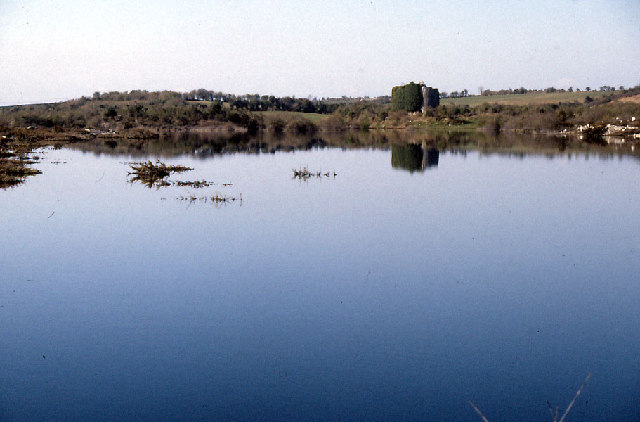
Newtown Castle near Gort Photo: Dr Charles Nelson Creative Commons
NEW ZEALAND TABLET VOLUME XVII 7TH MARCH 1890 P 21
IRISH NEWS
Amongst the applicants for outdoor relief at the Gort Union was Mrs Alice Treacy, wife of Michael Treacy, who was evicted from his holding in Cahercon. Treacy is at present in prison for taking forcible possession of his old homestead. This is his second term. He spent twelve months in gaol for the same alleged offence before. Now his wife and four children are destitute.
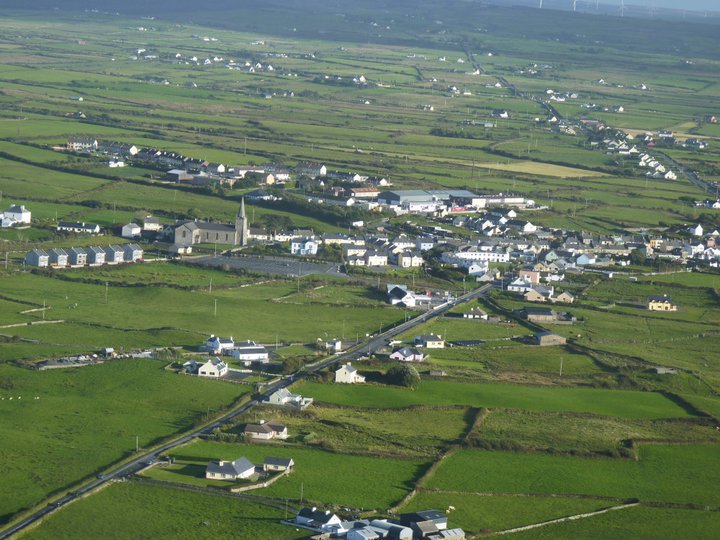
Miltown Malbay Photo: John Treacy Wikimedia CommonsIRISH NEWS FROM THE NEW ZEALAND TABLET VOLUME XVIII ISSUE 6, 6TH JUNE, 1890 P 9
MR MARKHAM OF Miltown-Malbay died and was interred recently. Soon after the body, with coffin, was mysteriously abstracted from the grave and afterwards found standing upright between two posts in the vicinity.
Photo: Matthew O’Brien Wikipedia.orghttps://widgetworld3.wordpress.com/podcasts/ THE ADELAIDE ADVERTISER 18TH MARCH, 1890
ST. PATRICK’S DAY – CELTIC DEMONSTRATION
Excerpt from Mr Patrick MacMahon Glynn M.P (President Irish National Federation) address;
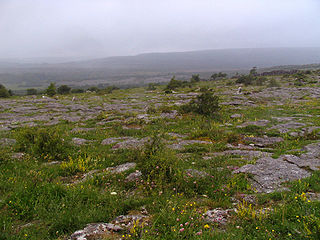
…”Some of you may have, like myself, been born in the West. There by a road which winds along the side of the Burren Mountains is a spring of clear cold water such as the water which fills our day dreams but not our throats, when the mercury is dancing a South Australian hornpipe between 100 degrees and 110 degrees in the shade. It is called Patrick’s Well. Why, I am not sure. I may have been baptised there and don’t remember. Some say that my great namesake once or twice opened his flask by that spring. If he did it is proof that he had a taste for more than spring water, for the sight commands a splendid view of Galway Bay. It was there that I first felt the romance of the sea, as I watched with the wondering eyes of childhood the turf boats glide down between Aughinish and the mainland on the swift ebb of the tide. This is one of the characteristic reaches of a western bay. Outside on the shimmer of the horizon are the wild islands of Arran against whose bold cliffs beat for ever the breaking swell of the Atlantic. It is there that you can feel the glory of Shakespeare’s rebuke of the surges that “Wash both heaven and hell.”



 The Burren and Beyond