Posted in Posts and podcasts

Eviction Scenes in County Galway – 1886

The Capricorn, (Rockhampton, QLD) 30th October, 1886 p 10

Most determined resistance is being given to an evicting party which has been at work for some days on the Marquis of Clanricard’s estate, near Woodford, County Galway.
About 1000 police had been drafted into Portumna, whence they go each morning to the scene of the intended evictions. Mr. Brady, R.M., County Inspectors Wilson and O’Brien, and eight district inspectors are in charge of the police.

The first eviction took place on Thursday, when the police went to a place called Kilnawally. They found about 500 people assembled, the crowd having been brought together by the ringing of the chapel bells. Conroy, whose rent is £24, owed with costs, above £100. The farm had been sold to the agent for the landlord at a public sheriff’s sale in Galway some time ago. An enormous crowd had assembled, amongst them being three Roman Catholic clergymen, Rev. Mr. Coen, Rev. Mr. Egan, of Woodford and Rev. Mr. Roach, of Ballinakill.
The Emergency men took three hours to effect an entrance, during which time the party inside and on the roof poured boiling water and lime on them, and threw slates down on them. Even the crowbars, with which the
wall was being broken in, were taken from them and dragged inside the house. The Emergency men drew their revolvers repeatedly, but were dissuaded by the police from using them.

The evicting force subsequently proceeded to Drumin, three miles off, to carry out another eviction, but so stubborn was the resistance that the attempt was abandoned, and the party returned to Portumna. On the following day they found that Monatreeva Bridge, five miles from Portumna, had been broken down during the night, and the remainder of the journey, seven miles, had to be performed on foot.
The house of a man named Patrick Fahy was reached, and a scene ensued similar to that on the previous day at Conroy’s. When County Inspector Willson went up close to the house to inform those inside that unless they desisted he would be obliged to order the police to fire on them, the answer he got was the pouring of a quantity of boiling lime on himself, which destroyed his uniform.
The Riot Act was threatened to be read, but the counsels of the clergy and police prevailed, and the people became less excited. Ultimately, after four hours, possession was taken. Parties of police remained out all night on Friday to prevent further destruction of bridges or obstruction of the road by trees etc. At the house gone to on Saturday the emergency men failed to effect an entrance, and the police entered with fixed bayonets. Those inside resisted, and in the struggle one civilian was stabbed, and one policeman wounded. The police made no arrests.
Home paper Sept 4
Posted in Posts and podcasts

A respectable young man – 1886

Fort Worth Daily Gazette, 2nd February, 1886, p.4

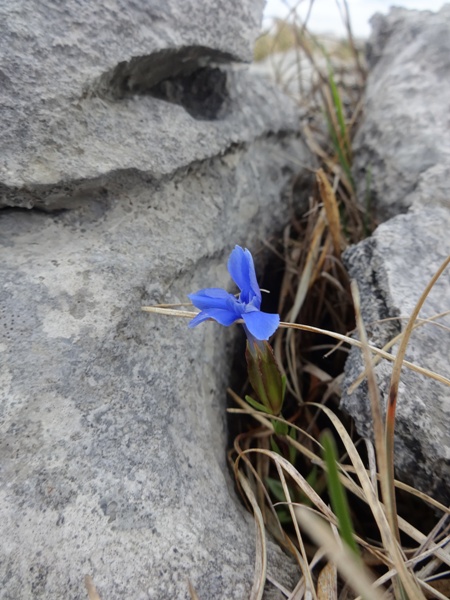
Blue Gentian Photo: EO'D
Blue Gentian
Photo: EO’D

The other day there left Dublin for Galway by the Midland railroad, a respectable young man who could not speak or understand one word of English. He has never spoken any other language than Irish.
He had been a fortnight in Dublin and during that time required, in the capital of his native country, to be accompanied everywhere by an interpreter.

Posted in Posts and podcasts

As Gaeilge – 1886

Fort Worth Daily Gazette 2nd February, 1886 p4 (abridged)

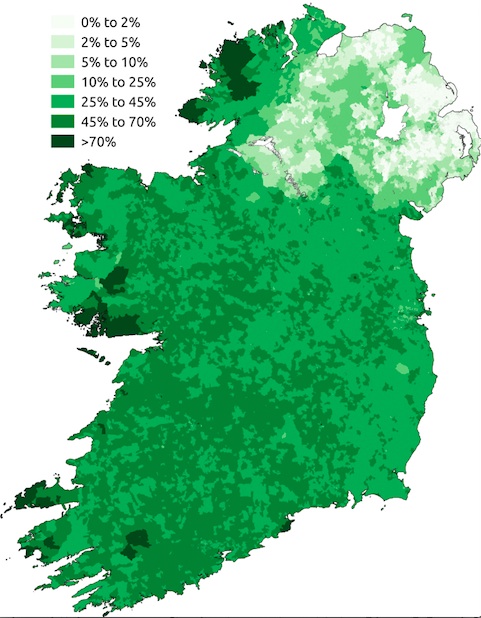
Irish speakers in 2011 SkateTier  Wikimedia Commons -
Irish speakers in 2011 SkateTier
Wikimedia Commons –

The other day there left from Galway by the Midland railroad an able young man who could not understand one word of English. He had never spoken any other language but Irish. He had been a fortnight in Dublin and during that time required, in the capital of his native country, to be accompanied everywhere by a interpreter.
The young man is a native of the Island of Buffin, off the Connemara coast where out of 600 or 700 inhabitants only nine speak English.


Posted in Posts and podcasts

Dublin via Loughrea – 1886

St. Paul daily Globe, 18 December 1886 p4

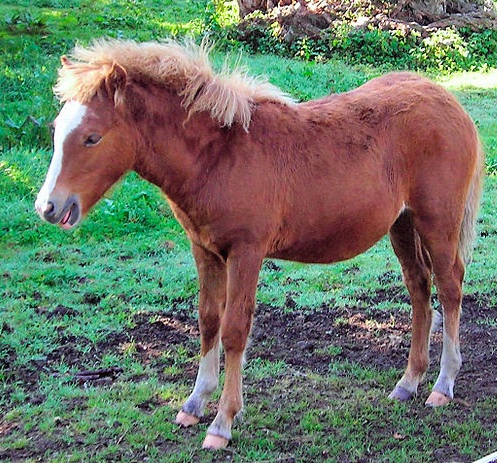
Kerry Bog Pony Photo: Jim Linwood  Wikimedia Commons
Kerry Bog Pony
Photo: Jim Linwood
Wikimedia Commons

Dublin Dec 17
Mr Dillon and Mr O’Brien arrived here today. Both are much disturbed and hurt physically. In addition to the troubles which the gentlemen had yesterday at Loughrea when they were arrested for acting as tenants’ trustees, they met with an accident on the road home. The horse drawing the car on which they were riding from Loughrea to Athenry bolted on the way and both were thrown violently to the ground. The gentlemen were badly shaken up and considerably bruised by their fall.

During the progress of the meeting at Loughrea yesterday, at which Messers Dillon, O’Brien, Harris and Sheehy were arrested, Mr Sheehy received a summons to appear and show cause to keep the peace because of a speech he made recently at Kylebeg and which, it was claimed, was calculated to arouse disorder.

Posted in Posts and podcasts

Kinvarra Petty Sessions – 1886

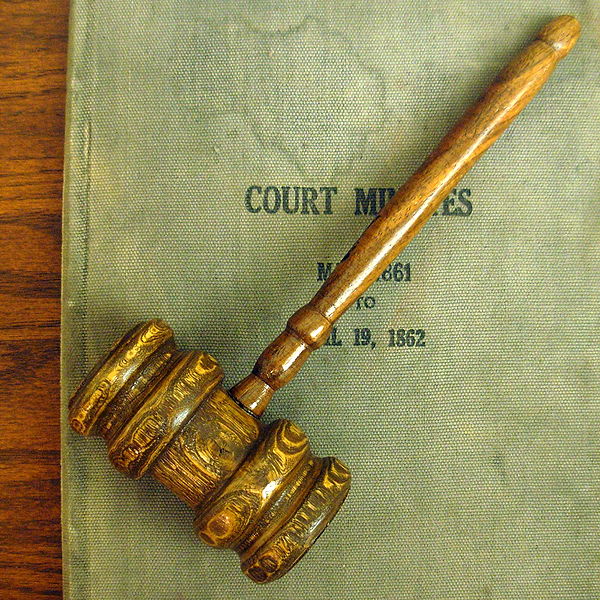
Wikimedia Commons
Wikimedia Commons
NEW ZEALAND TABLET VOLUME XIV ISSUE 34 17TH DECEMBER, 1886 P 19

At the Kinvarra Petty Sessions on September 22 before Colonel Mallon, R.M. and major Blake, 37 men were charged with unlawful assembling and breaking the fences on the lands of Cahergilssane, the property of Arthur Persse. The first Crown witness, a man named Clayton, refused to give evidence, and was committed for eight days. Three other witnesses were examined, who gave evidence as to the assembly of a crowd, but could only identify one of the defendants as forming a part of it.
On cross-examination by Mr McDonagh, it was elicited that there was a hurling match on a neighbouring field, not the property of Mr Persse, and that the cattle were frightened by the noise and runaway, breaking through the fence. Mr McDonagh asked for a dismiss on the merits, to which the bench agreed, and also to the liberation of Clayton, who refused to give evidence, seeing the failure of the Crown cae.