Posted in Posts and podcasts

Irish homes and Irish hearts p4 – 1868

Freemans Journal 28th March, 1868 p11 (abridged)

The Burren Photo: EO'D
The Burren
Photo: EO’D

It is a long dreary drive of nineteen miles to Ennis, through an open limestone country, with low craggy hills. In all this part of Ireland the eye wearies for the pretty villages and comfortable farm-houses which give life and variety to the flat counties of England. The station at Ennis is a wretched one, the platform being of earth, and it was not improved by recent rain and trampling of a crowd of emigrants. Although this is the terminus of the Ennis and Limerick line, the train was in no hurry to start. Everybody took their time, and just half an hour after the one named in the time bills the train set out.

It progressed very slowly on its way, and I was not sorry, for it gave us the opportunity of an excellent view of Clare Abbey — close by which the line passes — one of the loveliest ruins I had ever seen, a graceful church in the form of a cross, with east window almost perfect, and a lofty tower, and the ivy twining round about the broken arches, and covering the walls with a rich green mantle.

On reaching Limerick, I implored a porter to get my luggage quickly, as I wanted to catch the next train for Charleville. “But sure she’s been gone this ten minutes. She was an hour after her time. Your train was so late she could wait no longer.” As I expressed my vexation he said in a tone of deep sympathy, “There’ll be a train tomorrow.” On making further inquiries at the station it turned out that the trains do not profess to fit in with each other. As one of the officials expressed it, “The great lines try to eat up the little ones.”

Posted in Posts and podcasts

Irish homes and Irish hearts p3 – 1868

Freeman’s Journal 28th March, 1868 p11 (abridged)

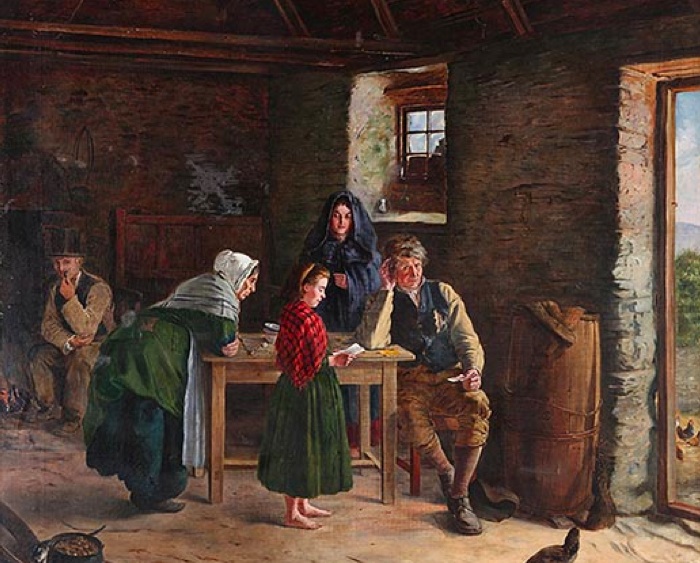
News from America 1875 James Brenan (1837-1907) Crawford Art Gallery, Cork
News from America
1875
James Brenan (1837-1907)
Crawford Art Gallery, Cork

Lough Cooter is the largest lake in the south of county Galway, with many wooded islands lying in its bosom, and lovely views between them. The ‘Castle,’ belonging to the Gough family is a modern erection, in the castellated style, standing on the west bank of the lake, and commanding a most exquisite view, while the lawn slopes down to the water’s edge. Beautiful grounds, richly supplied with trees, surround the house, part of them planted and laid out, part left for the deer to wander about. A gateway and lodge stand at each end of the grounds ; and after passing through the whole length, we returned by another route to Gort in time for the quiet benediction in the little convent chapel.

Travellers from Galway and its neighbourhood proceed by coach via Gort to Ennis, and as there are many emigrants, the coach is often full. This was the case on the morning on which I left Gort, and accordingly two ‘long cars’ were furnished from the coach office, which were rapidly filled with emigrants from Gort. The whole cortege, started from the office in the main street and it was a strange and sorrowful sight to see the partings. A crowd of people collected round the passengers: mothers and brothers and sisters were saying good-bye, weeping, wailing and sometimes howling; kisses were given, last greetings exchanged; promises to write soon, to send money over, and ‘bring the others out’ were uttered and, at last, away they went.

I noticed that the best were going — the young, strong, and vigorous — the old, the feeble, and children were left behind.

By my side sat two young girls, strong, healthy, and active. They were going into the world, and had discarded the blue cloak and stuck on their heads showy bonnets much too small for them, profusely decorated with tulle and artificial flowers and with broad strings of white ribbon. When we were fairly out of town, passing through the solitary monotonous country and admiring friends were left behind, out came the large shawls, in which head, bonnet, and all were fully enveloped.

They became confidential and told me they were going to America to get places. On my suggesting that they could find such at home, they shook their heads and said not with such wages as in America. When they were tired of talking they took out their books and began to read, and, peeping over the shoulder of the one next me, perceived the volume carried with her was a prayer-book.

Posted in Posts and podcasts

Irish homes and Irish hearts p2 – 1868

Freeman’s Journal 28th March, 1868 p11

Kilmacduagh Abbey Photo: Borvan53  Wikimedia Commons
Kilmacduagh Abbey
Photo: Borvan53
Wikimedia Commons

(abridged)
The See of Kilmacduagh was founded by St Colman in the seventh century. Here the cathedral was built, close behind a round tower and surrounded by six other churches. We explored the ruins well and I was fortunate in having a cicerone who had often visited them before, and took a vivid interest in them. It was irritating to see cattle and sheep grazing in the area, more especially as the place is held sacred by the people who bring their dead for burial in its precincts. The former owner of the place was proud of the ruins and took pains to preserve them. It has now unfortunately, passed into younger and more careless hands. It is supposed that one of these seven churches was a college chapel, another a monastery and a third a convent – the other three being probably smaller churches or oratories dedicated to some favourite saints. The convent chapel is the most perfect and the east window and several arches with their corbels show it to have been one of great beauty.

The round tower is especially remarkable from its leaning seventeen feet out of the perpendicular and it is certainly a most singular object. Tradition says it was built by Gobhan Saor, the architect of Glendalough and Antrim.

On leaving this interesting spot I drove through some pretty country, with distant views of “the lonely hills of Clare,” all radiant with the sunshine, to Lough Couter. It was pleasant to see all along the way how the people greeted the priest; they came out from their cabin doors and children ran from their play to get a word from him.

Posted in Posts and podcasts

Irish Homes and Irish Hearts p1 – 1868

Freeman’s Journal 28th March, 1868 p11peat

IRISH. HOMES AND IRISH HEARTS.

As the sun disappeared it became extremely cold, and I was very thankful when the car drew up at a large house in the main street at Gort, which, proved to be the Convent of the Sisters of Mercy, There I had such a welcome as one only meets with in Irelaiad, and cold and fatigue were soon forgotten under the genial influence of affectionate hospitality.

Gort is a neat, clean, but wonderfully quiet little town, and the visitor is involuntarily reminded of the author of the ‘Irish Sketch Book,’ who describes Gort as a town which ‘seemed to bore itself considerably, and had nothing to do.’ There is a little stir of life, however, twice a day, on tlie arrival of the mail coach from Galway and Ennis, for at present this old-fashioned mode of conveyance is the only available one between the two towns. A railroad is in course of construction, which is to join the Midland Great Western line at Athenry and which will be a graat boon to the traveller.

Through the town of Gort runs a broad clear river, oh the banks of which stands the convent. It is a large country house, which haa been transformed into a convent, while schools have been built adjoining it. Behind the house are good sized grounds, planted with some of the finest oak trees I ever saw through which the river wends its way. On a rising ground at the end of the grounds is the little quiet cemetery of the nuns.

The schools here struck me as particularly good, the buildings well adapted for the purpose, and the children thouroughly trained and well taught.There are infant schoools for boys and girls, another for elder girls, and a small model school. This latter is an absolute necessity in Gort, and the children of this class could not otherwise obtain any education, there being no other convent of any kind within miles. The chapel is only a large room, fitted up for the purpose, but it is very pretty, and has an air of devotion about it. It was pleasing to see the Sisters, when the labors of the day, were over, assembling in their stalls to say their latin office forestalling thus by prayer and praise the cares and troubles of the coming day.

There is an old fashioned, but clean and comfortable hotel at Gort, almost facing a large plain building which forms the Catholic chapel. A large stone cross stands in the churchyard, and several people were kneeling round it in prayer, when, on the Sunday after my arrival in Gort, I went to the Chapel for nine o’clock Mass. It was like a little bit out of a foreign county suddenly set down before my eyes but on entering within the chapel the scene as contemplated from the gallery was stranger still. The whole floor of the church was given up to the poor, and there are no benches or chairs of any kind. There they stood or knelt, grouped in various attitudes, and in a variety of costumes.

The women in their red petticoats and blue cloaks, when standing together in groups, formed a subject for an artist; here and there were those not rich enough to possess the valued cloak, some of whom had tied bright coloured handkerchiefs over their heads, and others had arranged their poor clothing as best they could. The occasional intrusion of a straw bonnet, or worse, still, a hat, was a painful eyesore to the spectator. There were quite as many men as women, and of all ages, some grey headed fathers with their little ones clinging to them, smart looking youths, and numerous boys.

When the consecration bell sounded the whole mass bent low, many almost prostrate on the ground; it was like an Italian picture, save and except that instead of sculptured marbles or Gothic arches surrounding the multitudes, there rose the plain whitewashed walls of a poor Irish chapel. These whitewashed chapels of Ireland, they jar upon the sight of those accustomed to see all that is noble and beautiful adorning the sanctuary! Yet what shrines they have been of faith and devotion – what witnesses they are to the persevering, unconquerable faith of the Irish!

There were a great many communicants at this Mass, and when it was ended the priest took off his chasuble and advanced to the front of the altar. There was a sudden rush. Up got every body from the floor, and the multitude packed themselves in a compact mass round the altar. The sermon was in Irish; every eye was bent on the preacher, every ear strained to listen, and it was evident, from the gestures of the people, that their whole attention was given to the discourse, and that every point went home.

The eloquent preachers in crowded city churches would often rejoice to have an audience so hanging on their words. I declared afterwards that I understood the sermon very well ; for it was the festival of the Seven Dolours which formed the subject of the discourse; and the gestures of the priest, and the answering emotion of the people plainly told that they were bidden to endure patiently, and to suffer bravely after the example of her whose sorrows no mortal can ever equal.

That Sunday was a cloudless summer’s day, and after the last Mass was over, the kind old parish priest took me to see the great lion of the neighbourhood, Kilmacduagh, some three miles distant. The diocese in which Gort stands rejoices in the poetical names of Kilmacduagh and Kilfenora.

Posted in Posts and podcasts

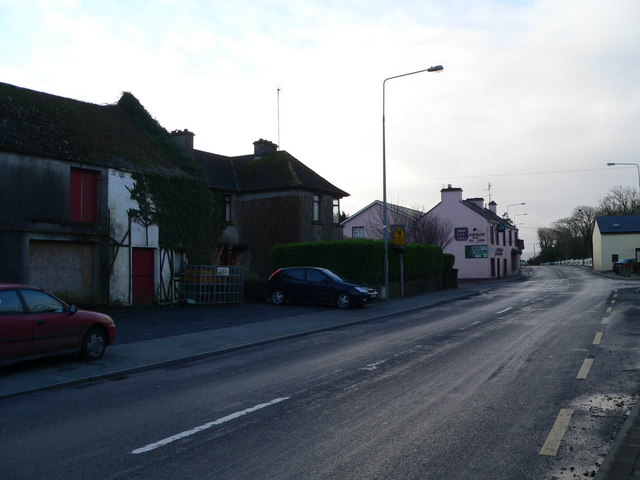
John Lennon – Ballinderreen – 1868

Photo; Aiden Clarke Creative Commons
Photo; Aiden Clarke
Creative Commons
THE MORNING STAR AND CATHOLIC REGISTER 21ST JUNE, 1868 P3

With feelings of deep regret, says the Galway Vindicator, we record the demise of the Rev. John Lennon P.P., which sad event occurred on the 11th ult. at his residence, Ballinderreen. Father Lennon had been for a long period paster of the parish of Ballinderreen, and to his strenuous exertions are due the splendid repairs of the parish chapel, and the erection of a national school in the parish The school and chapel, also the residence of Father Lennon, are on the estate of Charles St. George, Esq., of Tyrone House, and to his unbounded liberality Father Lennon owed the restoration of the chapel, the erection of the national school and numerous other laudable works which have been completed through his instrumentality. We would draw the attention of the public to the friendly relations which existed between Mr St. George and the Rev. Mr Lennon and advise others of our landed proprietors to follow the example so noble set them by this highly popular gentleman. That he is one of the best – if not the best – of our western landlords, the absence of “notices to quit,” evictions, and their concomitant result – emigration – and the flourishing state of his tenantry, amply testify. We understand that the Rev. Mr Geoghegan, R.C.A., Kinvara, succeeds Father Lennon in the parish.

Posted in Posts and podcasts

Marching in tune – 1868

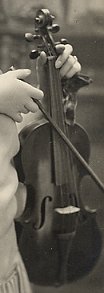
Violin Wikimedia Commons
Violin
Wikimedia Commons
THE MORNING STAR AND CATHOLIC MESSENGER 21ST JUNE 1868 P3
Two men, named Thomas Green and Michael Flynn, house painters, were recently arrested on a charge of illegal drilling, near Ennis. At petty sessions evidence was given by the police that on Sunday night May 10th, they met a party of men marching two deep, with a fiddler in front playing a tune.
Such words as ‘forward’, ‘keep the step’, and ‘mind your wheeling at the cross’, were used. One by the name of Hogan appeared to be the captain.
A witness was procured for the defense to prove that the men were merely returning from a dance and had brought a fiddler with them.