Posted in Posts and podcasts

St. Coman’s, Kinvara – 1866

The Irish Times 8th December, 1866 (abridged)
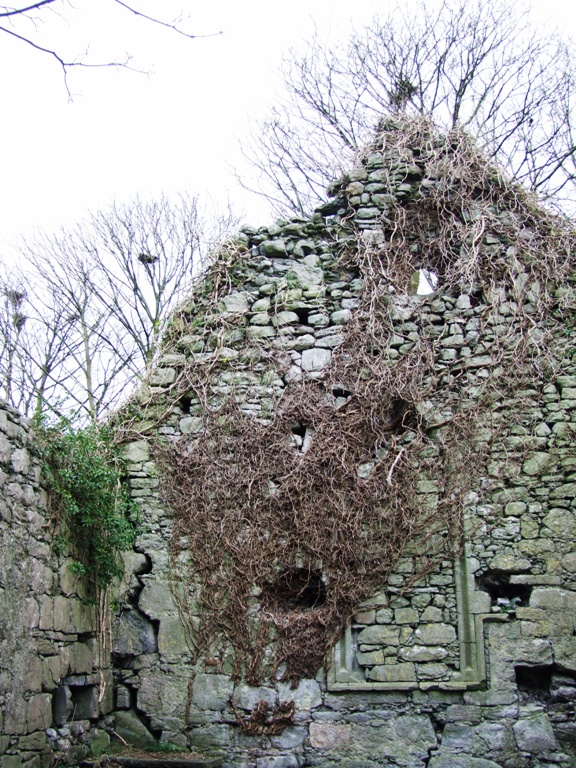
St. Coman’s
Photo: Norma Scheibe

The Privy Council met yesterday in the Council Chamber at 3.30.
Present:
Excellency the Lord Lieutenant,  the Lord Chancellor,  the Recorder,  Right Hon. J.Napier,  Mr. Justice O’Hagan, the Chief Secretary, Mr. Justice George, and the Lord Bishop of Meath. The Attorney-General and Solicitor-General attended.

In re the Churchyard of Kinvara, County Galway;
This matter came before the council on an application by the Poor Law Guardians of the Gort Union, for an order to close the ancient churchyard of Kinvara, on the ground of its being in a state dangerous to the public health of the district.

Mr. Blackburne and Mr.Mullins appeared on behalf of the parishioners of Kinvara, who memorialled (sic.) the Privy Council against the closing of the churchyard. The memorial against the closing was signed by Dr. McEvilly, the Roman Catholic Bishop of the diocese; by the Parish Priest; Mr. Lynch, a magistrate and upwards of 200 families living in the district, all testifying that it was not necessary to close the churchyard, that it was not overcrowded and that up to the present some portions of it had not been used for the purpose of interment. There was no danger of its becoming overcrowded, as the population of the district had very much diminished. The people of the district, counsel stated, were most anxious that the right of interment in this ancient burial ground should be preserved to them, for there were few families in the district who had not relative interred in it. If it were closed they would be under the necessity of having a new burial ground opened, for which it would be difficult to get a suitable site. It was admitted that some ten or twelve of the graves were scantily covered with earth, but that was a matter which a few workmen could remedy in a short time.

The Parish Priest of Kinvara was then examined by Mr. Blackburne, and his evidence was with a view of showing that the graveyard was not injurious to public health. He admitted portion of the earth in the eastern end had given way, but the bones exposed were the bones of persons interred at a remote period, from which no injurious miasma could possible arise. There was but little mortality in the district and it was not likely the graveyard would become overcrowded. The claim of the parishioners to the churchyard was on the ground of their ancestors being interred there.

The Recorder said it was very natural the parishioners should entertain a strong feeling on the subject. He inquired if upwards of 700 persons did not still claim the right of sepulture there. The Parish Priest, in reply, stated it was not likely more than 200 would claim the right. The Recorder said that there was no doubt as long as the churchyard was left open all would have the liberty.

After some discussion the Council determined not to grant the request of the Gort guardians, so the cemetery will remain open as usual.

Posted in Posts and podcasts

The Ballad Singers – 1866

Freeman’s Journal 14th April, 1866 p.229 (abridged)

N
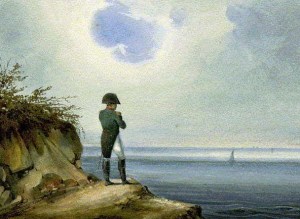
Napoleon at Saint-Helene, by Francois-Joseph Sandmann. Wikimedia Commons

In Ireland in ’48 a good many editors of newspapers were arrested, but not one ballad singer. In ’65 only one disloyal editor, Mr. Clark Luby, has been arrested; but the arrests of ballad singers in Cork, Dublin, Tralee, Limerick, and the country towns of the south has now given constant employment to the police. Not a fair is held in Ireland now at which the authorities do not take precautions for seizing upon the ballad singers, and confiscating their seditious wares – street literature reprinted by the Fenians and purchased extensively by the people. The Young Irelanders never would have re-published such lines as these;

The forward stepped young Boney,
And took me by the hand,
Saying, “How is old Ireland,
And how does she stand?”
“It’s as poor distressed a nation
As ever you have seen,
They are hanging men and women
For the wearing of the Green!”

One ballad has attained extensive popularity. As a ballad slip it appears anonymously, but Mr. McGlashan’s publication gives authorship to a Fenian, Mr. Charles Kickham of Mullinahone – the same Mr. Charles J. Kickham, we presume, who was arrested with the famous head centre and prison breaker, Stephens. It is “Patrick Sheehan” (The Glen of Aherlow).

Posted in Posts and podcasts

Guaire – 1866

Nation 27th October, 1866 p.10

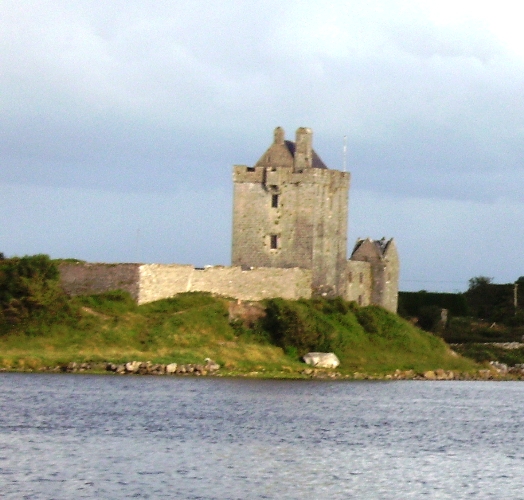
Dunguaire, Kinvara Photo: Norma Scheibe
Dunguaire, Kinvara
Photo: Norma Scheibe

‘Twas when the troops of Guaire
Had Suffered sore defeat,
And he a lowly prisoner,
Was brought to Dhiarmuid’s feet.
Unto him came a Druid,
All at the King’s behest,
To sound the sea of charity
That dwelt in Guaire’s breast.

The Druid knelt beside him,
And thus to Guaire cried,
“A gift, a gift, great Chieftain,
Thy fame spreads far and wide;
For that thy hand is open,
And thou art wont to give
A gift, a gift, great Chieftain,
And long, long may’st thou live.”

“I have no gift,” said Guaire,
“And had I one to give,
Methinks for thee it should not be,
For I can now perceive
That thou are well supported
All at the King’s expense
Then, quick, I pray that thou away;
Good Druid, take thee hence.”

Now, when the Druid left him,
a wretched leper came
Unto the Chief; in tones of grief,
Assistance did he claim.
“For God and His dear Mother’s sake,
Give something unto me,
It is a wretched leper
That claims thy charity.”

When Guaire saw the leper,
And heard his tale of woe,
His soul was moved within him,
His heart felt many a throe.
“Alas, afflicted leper,
That I am poor like thee,
But take this silver bodkin,
For blessed charity.”

PENTAX Image
PENTAX Image

He plucked the silver bodkin,
While thus to him he spake,
That pinned the vest upon his breast,
And bade the leper take.
His fallaing now all loosely
Around the Chief did flow,
As from his sight, with bosom light,
The leprous man did go.

With doleful look of anguish,
Came back that leper swift
“Good Chief, good Chief, I’m wretched,
They’ve ta’en from me my gift.”
The golden girdle from his waist
The generous Guaire took,
And gave it to the mendicant
With kindly, pitying look.

Then gratefully the leper
Unto the Lord did pray
For Guaire’s weal – nor harm, nor ill,
Might ever near him stay.
He went away rejoicing,
But soon returned again
“Good Chief, good chief, I’m wretched,
Thy gift from me they’ve ta’en.

Now, when that Guaire heard him,
He was afflicted sore,
The tears adown his visage brown
In streams began to pour.
King Dhiarmuid there beheld him
Afflicted thus at heart,
“And weepest thou O’Guaire now,
That thou a pris’ner art?”

“I mourn me not my own hard lot,
King Dhiarmuid,” Guaire said,
‘Tis hard, I wot, but tears may not
For such as me be shed;
But I do weep in anguish deep,
That I have nothing more
To give unto that man of woe,
That leper sad and poor.”

“Oh, Guaire,” then replied the King,
“I clearly now can see,
All free from stain of motive vain
Is thy great charity.
And, for that I esteem thee
No longer as a foe,
I humble pray that from this day
All strife we do forego.”

“‘Twas I that sent the Druid
To ask a gift of thee,
“‘Twas I that bade implore thine aid,
This man of misery,
I know thy wondrous valour,
I seek thy friendship dear,
And in my stead, when I am dead,
Thou shalt be Monarch here.”
T.C.

Posted in Posts and podcasts

St. Coman’s, Kinvara – 1866

Freeman’s Journal 8th December, 1866 p.4

Engraving, St. Coman's Photo: Norma Scheibe
Engraving, St. Coman’s
Photo: Norma Scheibe

The Council during its sitting considered a requisition sent to it by the guardians of the Gort Union to close Kinvara burial ground, alleging that it was overcrowded and intramural. The inhabitants petitioned the Council not to close the burial ground, stating that there was ample accommodation, and that the sanitary condition of the town would not be injured by the burial ground being left open. The Rev Francis Arthur P.P. attended the council to support the petition. The council having considered that there was not sufficient reason for closing the burial ground refused to make an order for enclosing. The petitioners were represented by Messrs Blackburne, Mullens and Mr R B Forster.