Posted in Posts and podcasts

Senchan, Guaire and the mice of Gort -1853

J. H. Todd and Eugene Curry

Field Mouse
Photo: Reg McKenna
Wikimedia Common

Proceedings of the Royal Irish Academy (1836 – 1869), Vol.5 (1850-1853), pp. 355-366;
(abridged excerpt from On Rhyming Rats to Death )

On the death of Dallan Forgaill, the chief ollave, or poet of Erinn, about A.D. 600, Senchan Torpest, a distinguished poet of Connacht, was selected to pronounce the defunct bard’s funeral oration, and was subsequently elected to his place. Senchan formed his establishment of bardic officers and pupils on a larger scale than had been known since the revision of the bardic institution at the great meeting of Dromceat, some twenty years previously. As chief poet, he was entitled to make visitation with his retinue, of any of the provinces and to be entertained at the court of the provincial kings. The honour of being so visited was sought for with pride and satisfaction by the kings of Ireland.
Senchan, having consulted with his people, decided on giving the distinguished preference of their first visitation to his own provincial king, Guaire the Hospitable, king of Connacht. They were received hospitably and joyfully at the king’s palace, at the place now called Gort, in the county of Galway. During the sojourn of Senchan at Gort, his wife, Bridget, on one occasion, sent him a portion of a certain favourite dish. Senchan was not in his apartment when the servant arrived there; but the dish was left there, and the servant returned to her mistress. On Senchan’s return, he found the dish and, eagerly examining it, was sadly disappointed at seeing it contained nothing but a few fragments of gnawed bones.

Shortly after, the same servant returned for the dish, and Senchan asked what its contents had been. The maid explained it to him, and the angry poet threw an unmistakeable glance of suspicion on her. She, under his gaze, at once asserted her own innocence, stating that as no person could have entered the apartment from the time she left until he returned to it, the dish must have been emptied by mice.
Senchan believed the girl’s account and vowed that he would make the mice pay for their depredations, and he composted a metrical satire on them;

Mice, though sharp their snouts,
Are not powerful in battles;
I will bring death on the party
For having eaten Bridget’s present.

Small was the present she made us,
Its loss to her was not great,
Let her have payment from us in a poem,
Let her not refuse the poet’s gratitude!

You mice, which are in the roof of the house,
Arise all of you and fall down.

And thereupon ten mice fell dead on the floor from the roof of the house, in Senchan’s presence. And Senchan said to them: “It was not you that should have been satirized, but the race of cats, and I will satirize them.” And Senchan then pronounced a satire, but not a deadly one, on the chief of the cats of Erinn, who kept his princely residence in the cave of Knowth, near Slane, n the County of Meath.
Posted in Posts and podcasts

Ballyvaughan – 1853

Sangamo Journal/Illinois State Journal 22nd April, 1853

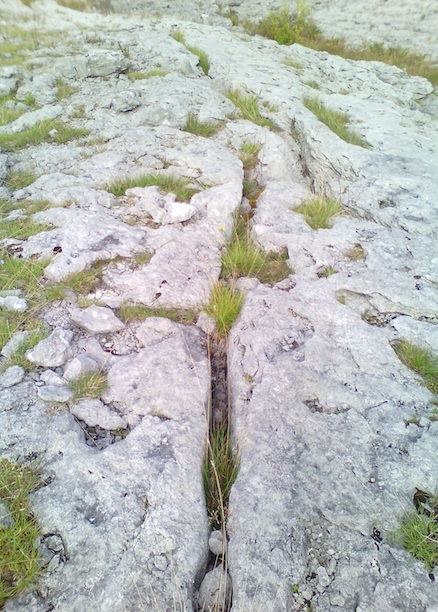
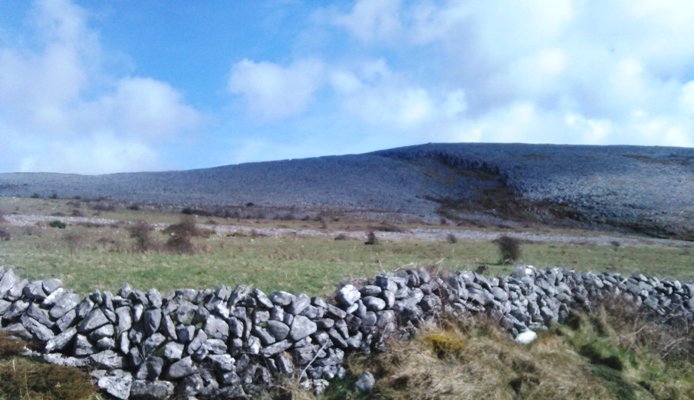
Burren Hills Photo: EO'D
Burren Hills
Photo: EO’D

EMIGRATION FROM IRELAND

The last American mail brought the sum of £500 pounds to the little village of Ballyvaughan, which is situated in the County Clare on the opposite side of the bay of Galway.   We have heard that this large sum has been sent home for the purposes of emigration, so that the neighborhood of Ballyvaughan is likely to contribute its full contingent to the host of emigrants which are daily rushing towards the English ports.  A few mornings past, the terminus at Eyre square was crowded with the relatives of the emigrants, bidding them farewell on their departure for America. In the language of a person present, when describing the numbers – it was like a fair . The strength and hope of Ireland are so rapidly passing away that sufficient hands will not remain to till the soil .

Galway Paper.

Posted in Posts and podcasts

Galway to Halifax – 1853

Nenagh Guardian 6th July, 1853 p4

ET
1854 stamps of the Electric Telegraph Company. Wikimedia Commons

Arrangements are far advanced towards completion for laying down a submarine telegraph between the United Kingdom and America. It is intended to connect the two countries, or rather, the Old and New Worlds by means of Galway and Halifax, those being the two nearest points of communication. The distance is about 1,600 miles. The perfect practicability of the thing has been guaranteed under the hand of nearly all the eminent engineers of the day, and various parties have sent in estimates for the execution of the work. These estimates vary from £800,000 down to £300,000 and it is a remarkable fact that some of the lowest estimates have been sent in by some of the most respectable firms in the country. When this extraordinary project has been carried out, we shall be able in half an hour to send messages from London to New York, and receive messages from the United States in about half an hour. And not, we ought to add, from New York alone, but from the interior of America, the electric telegraph being laid down for upwards of 2,000 miles up the country.

Posted in Posts and podcasts

Clare, Cork, Kerry – 1853

Adelaide Observer 5th March, 1853 p5

Photo: EO'D
Photo: EO’D

A summary of the census in the counties of Clare, Cork and Kerry exhibits some startling results. The progress of depopulation in these Irish counties during the last ten years is without a parallel in history.

Posted in Posts and podcasts

A Curious Fact – 1853

FREEMAN’S JOURNAL 3RD MARCH 1853 (abridged)

Photo; BO'D
Photo; BO’D

It is a curious historical fact that the Irish troops, who principally contributed to save the town of Louvain, in 1635, from the tremendous assault of the great French army under Marshals Chatillon and De Breze, were in that bloody contest marshalled and commanded in Irish. A Latin writer of the seventeenth century, who was conversant with most of the European tongues, tells us that the Irish language
“surpasseth in gravity the Spanish, in elegance the Italian, in colloquial charms the French;
it equals, if it does not surpass the German itself in inspiring terror.”

Posted in Posts and podcasts

The Great Leveller – 1853

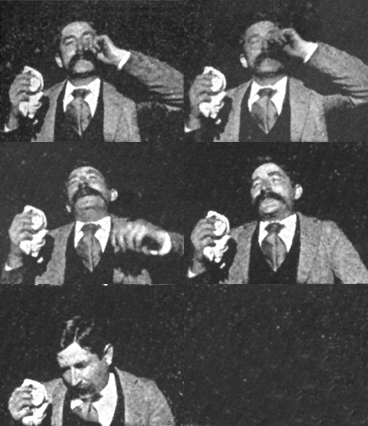
Fred Ott's Sneeze (film by William K.L. Dickson for the Edison laboratory) 1894 Wikimedia Commons
Fred Ott’s Sneeze (film by William K.L. Dickson for the Edison laboratory)
1894
Wikimedia Commons

The Brooklyn Daily 12th March 1853


(abridged)

It’s curious how one snuff-taker will pick out another.  Place two snuff takers in the most crowded room, and before ten minutes are over they will have found out each other and be in earnest conversation together.

A snuff-box is an opening for conversation between two persons, who, without it, would not probably have exchanged a single word.  The English, who are generally so punctilious about introductions, cheerfully dispense with the ceremony if a stranger only advance with a snuff-box in hand.

There is a Freemasonry in snuff taking not enjoyed by the worshippers of any other social vice.  Gamblers are necessarily discontented, scowling, suspicious people.  Smokers are generally dreamers, wandering in the clouds which they themselves have blown.  Drinkers are surly, quarrelsome creatures, who fling insults and bottles about.  But snuff takers are invariably open, communicative souls, who associate with one another all over the world.

Snuff is a great leveller.

Posted in Posts and podcasts

A grand conversion – 1853

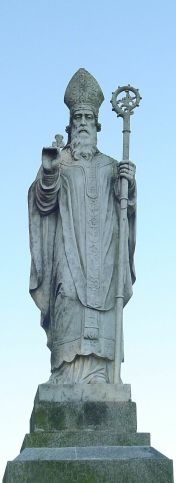
 St. Patrick  Hill of Tara, Ireland. Photo: Deadstar Wikimedia Commons
St. Patrick
Hill of Tara, Ireland.
Photo: Deadstar
Wikimedia Commons

https://widgetworld3.wordpress.com/podcasts/

THE BELMONT CHRONICLE, AND FARMERS, MECHANICS AND MANUFACTURERS ADVOCATE. 2ND SEPTEMBER, 1853 P1

IRELAND

There is a religious movement in progress in Ireland that promises important results. Through the influence of emigration and proselytism the relative numerical strength of the Protestants and Roman Catholics is undergoing a rapid change, and the former are gradually gaining the ascendency.  It has been predicted by the London Times that “in fifty years Ireland well be Protestant to a man.”  A concealment of the fact is no longer attempted by the Roman Catholic press.  The Dublin (R.C.) Nation says;

“There can be no longer any question that the systematized proselytism has met with immense success in Connaught and Kerry.  It is true that the altars of the Catholic Church have been deserted by thousands, born and baptized in the ancient faith of Ireland.  The West of Ireland is deserting the ancient fold.”

The Dublin Tablet says;

“We repeat, it is not Tuam, nor Cashel, nor Armagh, that are the chief seats of successful proselytism, but this very city in which we live.”

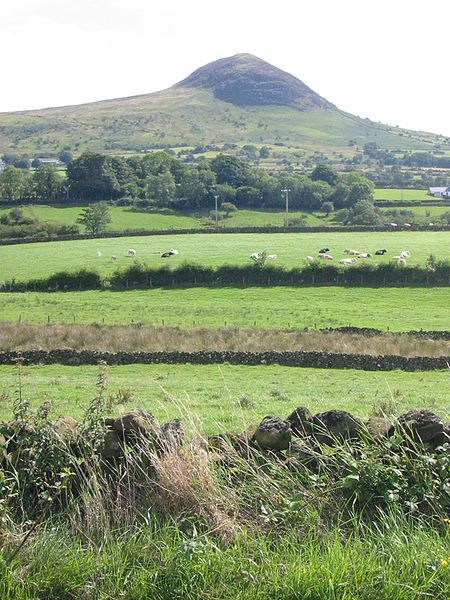
Slemish, mountain in County Antrim where St Patrick is reputed to have shepherded as a slave Photo: Man vyi Wikimedia commons
Slemish, mountain in County Antrim where St Patrick is reputed to have shepherded as a slave
Photo: Man vyi
Wikimedia commons

The Dubin Evening Post says:

“We learn from unquestionable authority that the success of the proselytisers in almost every part of the country, and, as we are told, in the metropolis, is beyond all the worst misgivings we could have dreamt of.”

This testimony is further corroborated by the report of the Irish Missionary Societies, which characterize the movement above spoken of as the “New Reformation.”  Ireland can scarcely be regarded as a Roman Catholic country inasmuch as, out of a population of six millions and a half, nearly one-third is Protestant.  To effect this result divers influences have contributed, prominent among which are the labors of “The Society for Irish Church Missions to the Roman Catholics,” organised in 1840, under the presidency of the Duke of Manchester.  This society has now 142 agents.  In the district of West Galway where in 1810 no 300 Protestants were to be found, there were, in May 1852 nearly 6,000 converts attending church services, while 3,500 children were taught in the bible schools.  In Dublin and various other places mentioned the missions and schools are prosperous. 

Journal of Commerce.