Posted in Posts and podcasts

Midnight Legislators – Galway – 1831

The Sydney Monitor 12th November, 1831
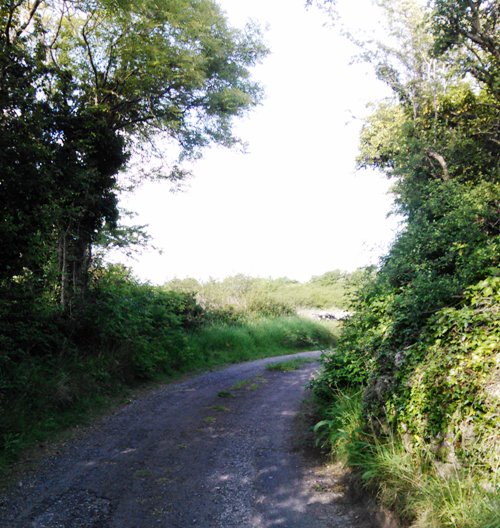
A bend in the road Tawnagh Co. Galway Photo: EO'D
A bend in the road
Tawnagh
Co. Galway
Photo: EO’D

A combined movement of various detachments from different parts of the county of Clare, and the county of Galway, was executed on the 22nd instant, for the purpose of surprising and surrounding the midnight legislators of county Galway.
The detachments from Clare consisted of those of the 74th Regiment. Those of Galway consisted of strong parties of the 28th, 56th and 59th Infantry and a squadron of 8th Hussars.
All these parties met at a given point at 6 o’clock on the morning of Monday and secured 261 Terry Alts. The combined parties of the 74th Regiment succeeded, after a long chase, in securing Michael Conolly, a chief leader of the Terry Alts, charged with having directed the late attack on Sir John Burke’s house at Marble Hill. All of the above prisoners were sent under strong escort to Loughrea. Of the above prisoners, several have been identified as being concerned in recent outrages. The investigation commenced on Wednesday and is still going on. Many most respectable witnesses have been summoned.

The Terry Alts were a secret society in County Clare who agitated for land rights, fair rent and against payment of tithes to the established church. The movement began in 1828.
Posted in Posts and podcasts

Curranrue – 1831

Kerry Evening Post 4th May, 1831 p.2 (abridged)

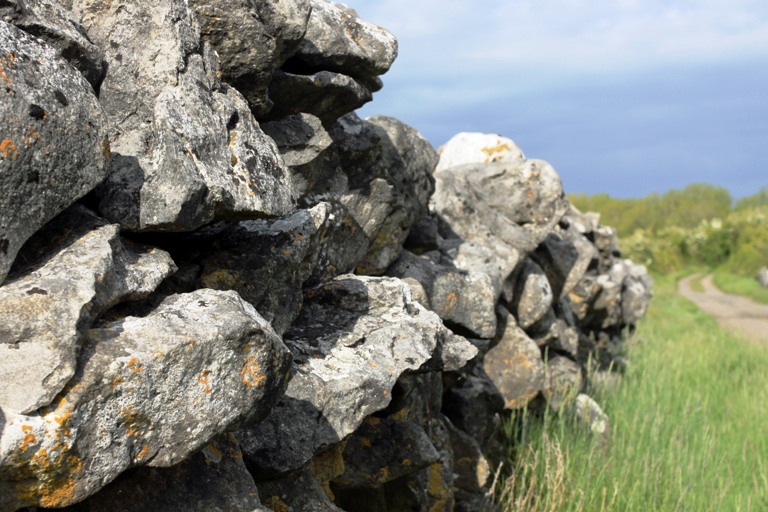
Photo: EO'D
Photo: EO’D

We have just received the account of one of the Terry Alt party being shot at Curranrue. The particulars, as have been related to us, are as follows;
A party of the 28th regiment were out on patrol on Saturday night, the Officer behind his party.  A country man, who was behind a wall, presented a musket at him and endeavoured to fire, but burned priming. Two of the party, who formed the rear guard, immediately fired, and this daring ruffian was shot on the spot. He had an elegant musket with him.

The Terry Alts were one of a number of secret societies operating during the 18th Century.  They were involved in agrarian agitation in pre-Famine Ireland. The heartland of the Terry Alts was County Clare. The “Whiteboys”, “Oakboys”, “Rockites”, and “Ribbonmen” were other such societies.

Posted in Posts and podcasts

Famine – 1831

The Sydney Monitor 8th October, 1831 p4 (abridged)

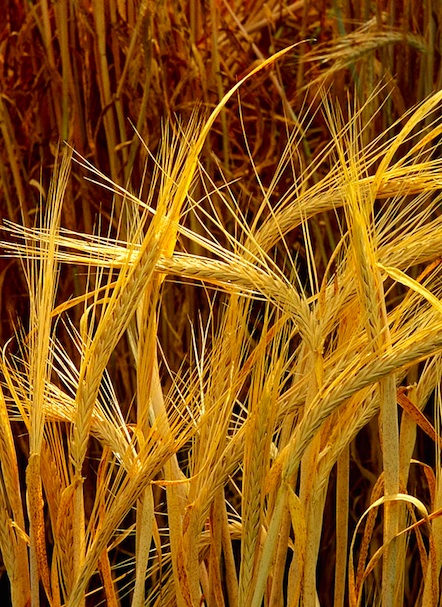
Hordeum-barley Wikimedia Commons
Hordeum-barley
Wikimedia Commons

I had just closed this article when a friend sent me, at my request, an account of the import of foods from Ireland up to the 1st day of June. It is imperfect because it only gives an account of the imports in London and Liverpool, leaving out Bristol, Glasgow and several other places. It is imperfect in that it does not include bacon and live animals, nor poultry nor eggs.

However, such as it is – here is the account of the imports of the first months of this year of famine in Ireland;

98, 555 Quarters of Wheat

311,848 Quarters of Oats

10,098 “ “ Barley

540 “ Rye

1,556 ” Beans

941 “ Peas

5,880 “ Malt

69,510 Loads of Meal

45,398 Sacks of Flour

12,605 Tierces of Beef

1,408 Barrels of Beef

20,088 Tierces of Pork

13,427 Barrels of Pork

149,639 Firkins of Butter

It is in Galway that the actual starvation is raging most, where the poor creatures cannot get a handful of meal to boil up with the nettles and seaweed! They cannot get a handful of the meal of oats to prevent their souls from leaving their bodies and it is certified that in one small parish eight persons died within a short period from starvation only.

Yesterday – six hundred and eight tons of oats – that is to say – one million, three hundred and thirty four thousands pounds weight of oats arrived in London only – from Galway.

The oats came in five vessels, the Union, the John Guisa, the Charlotte, the lively and the Victory.

W. Cobbett

Posted in Posts and podcasts

Diving bell brothers – 1831

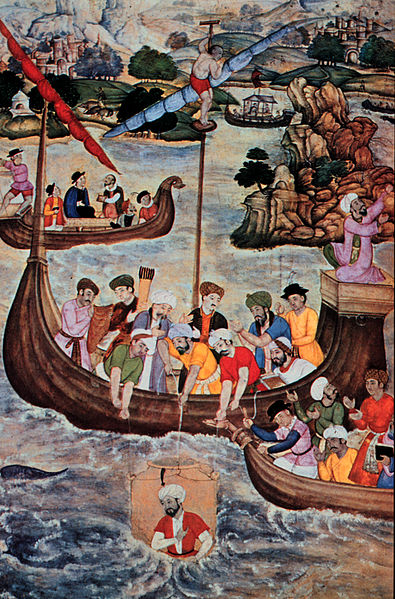
16th century painting of Alexander the Great, lowered in a glass diving bell OAR/National Undersea Research Program (NURP); "Seas, Maps and Men" Wikimedia commona
16th century painting of Alexander the Great, lowered in a glass diving bell
OAR/National Undersea Research Program (NURP); “Seas, Maps and Men”
Wikimedia commona

Colonial Times – 7 January 1831
Three brothers of the name of Owen, of Holyhead, lately invented a diving-bell, about the size and form of a churn, by which they can be dressed and remain for many hours in fifteen fathoms of water, moving from place to place with considerable facility. With this simple apparatus they lately proceeded to Donaghadee, on the coast of Ireland, to the spot where the brig Enterprize was lost in 1802, when homeward bound from South America with a large quantity of specie in gold and silver on board.

For the recovery of this valuable cargo they immediately commenced operations, and at the first descent the diver lit on the ship’s bell, having the name of the vessel, “The Enterprize,” engraved thereon, which he brought up with him. On this discovery the divers returned with reaping hooks, with which they employed themselves for three successive days in cutting the sea weeds about the vessel; and on the fourth day they succeeded in discovering a number of Spanish dollars of the coinage of Charles III. and IV. They continued their gallant exertions, from day to day, which were rewarded by a considerable quantity of the same valuable coin.

The three enterprising brothers were at Holyhead last week, displaying the fruit of their ingenuity, and are now on their way back to the silver shores which have already afforded so fair a return for their labour, and whence they hope still to reap a further and richer harvest.- North Wales Chronicle.

Posted in Posts and podcasts

Rooks – Cholera – 1831/2

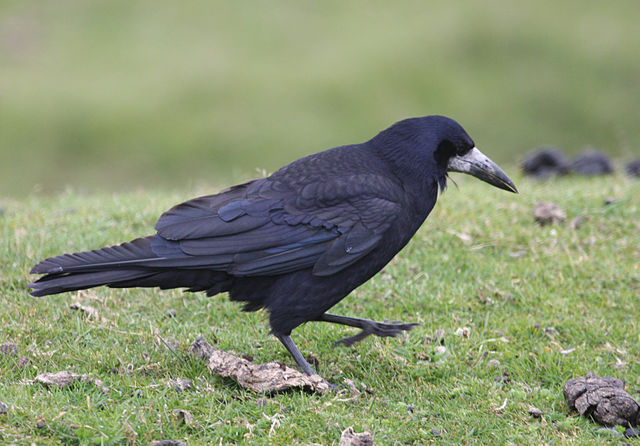
Corvus frugileus - Rook Photo: Brian Snelson Wikimedia Commons
Corvus frugileus – Rook
Photo: Brian Snelson
Wikimedia Commons
https://widgetworld3.wordpress.com/podcasts/
THE NEWPORT MINER 24TH NOVEMBER, 1910 P4
ROOKS AND CHOLERA

The present day security of this country against all danger of a cholera epidemic is matter for thankfulness not only in human circles, but in the rookeries too. When the cholera slew nearly 60,000 people in the insanitary United Kingdom of 1831-2 the rooks appear to have suffered with them. This was stated, at any rate, to have occurred on the estate of the Marquis of Sligo, which boasted one of the largest rookeries in the west of Ireland. On the first or second day of the epidemic’s appearance an observer noted that all the rooks had vanished.
During the three weeks through which it raged there was no sign of them about their home, but the revenue police found immense numbers of them dead on the shore, ten miles away. When the epidemic abated the rooks returned, but some were too weak to reach their nests, and five-sixths of them had gone. London Chronicle