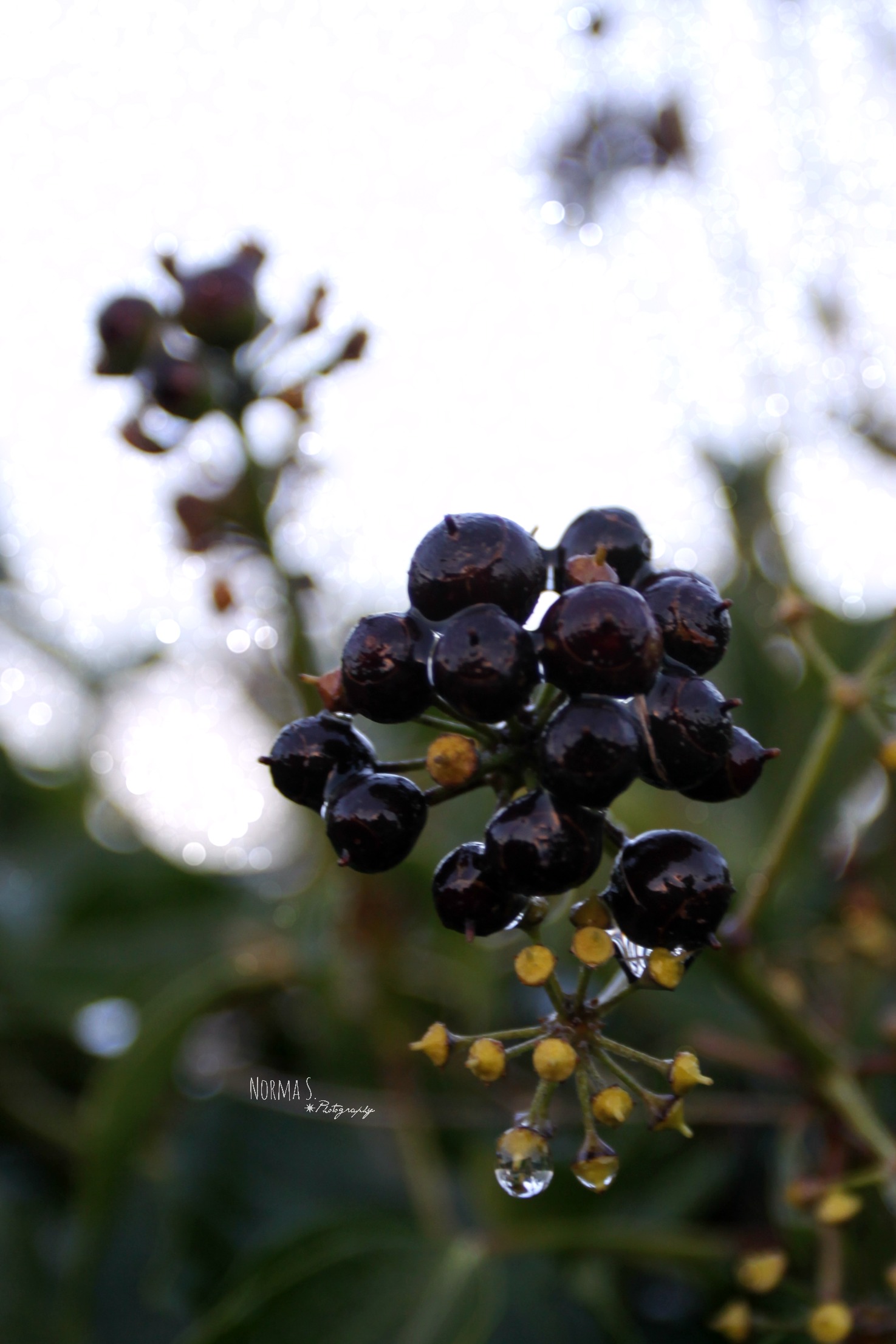
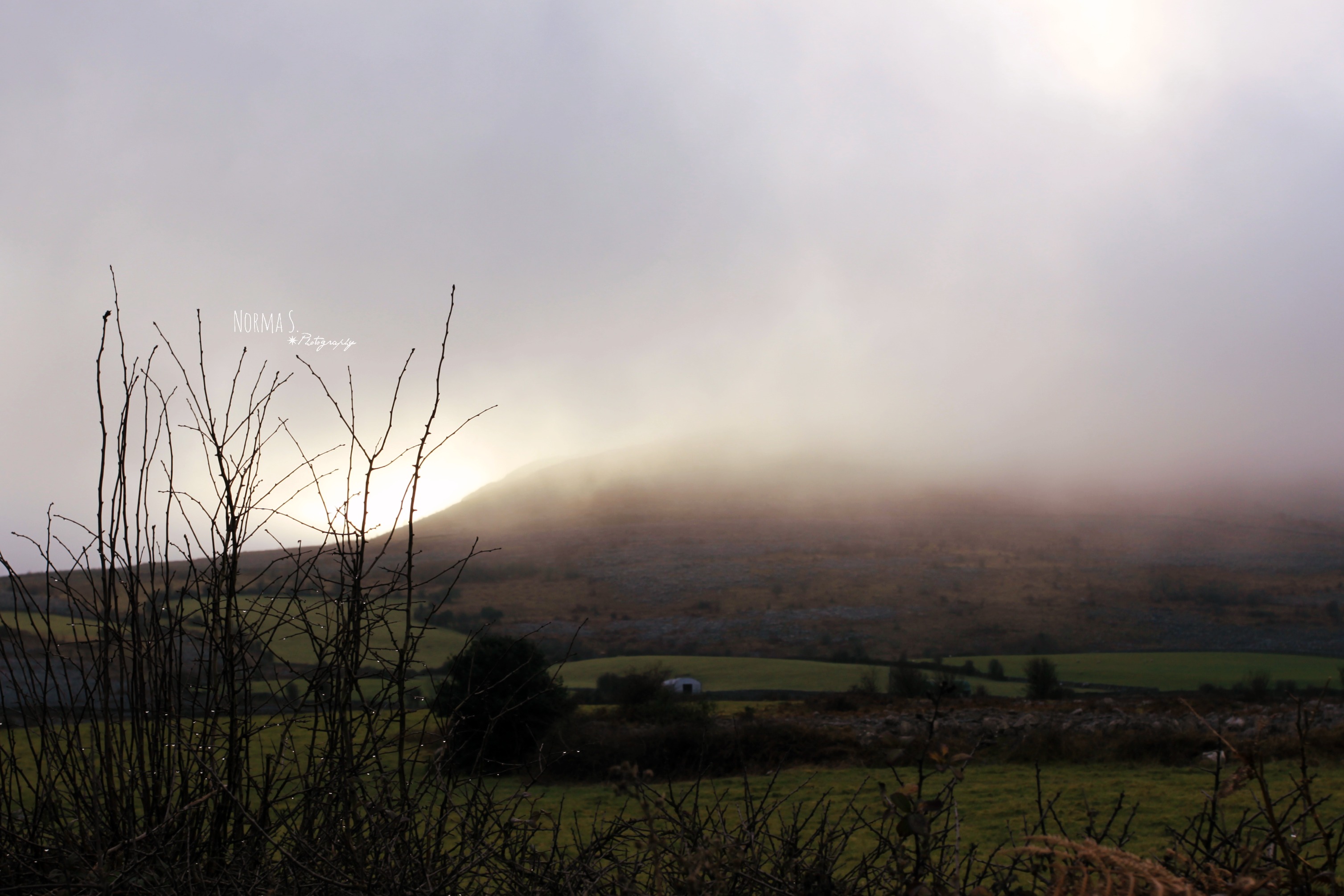
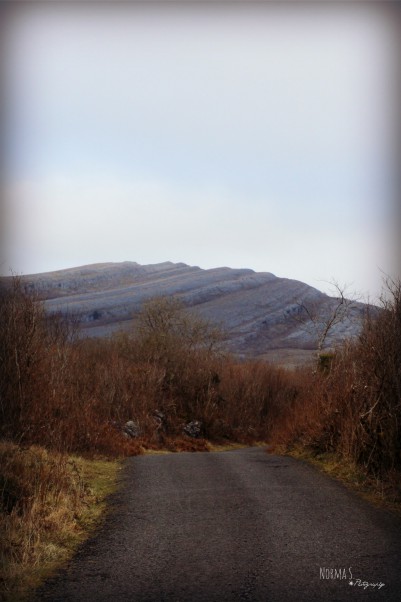
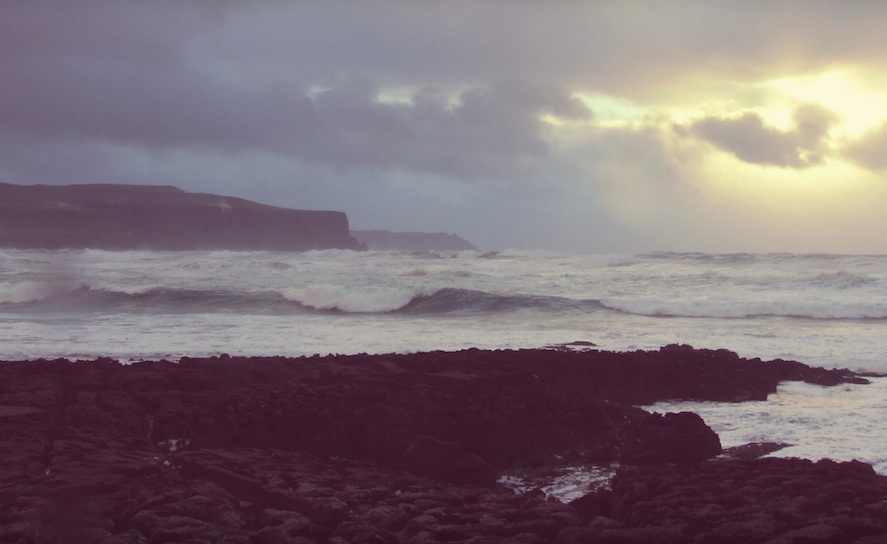
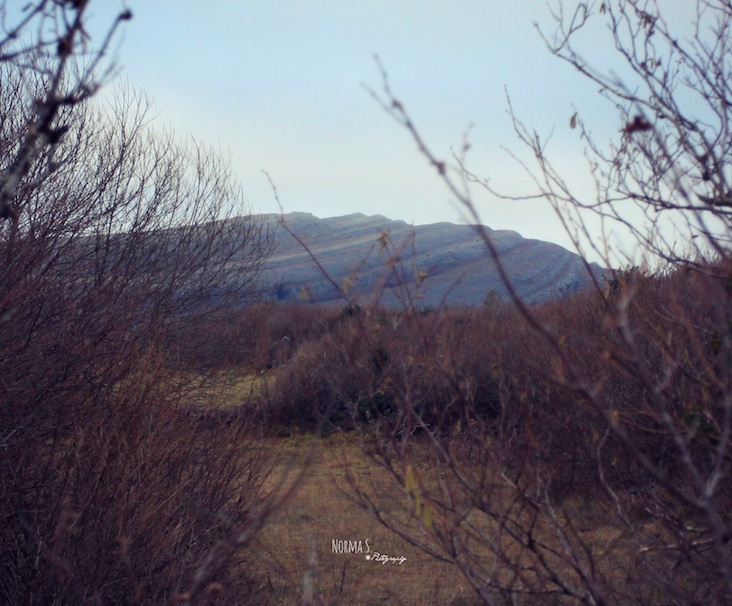
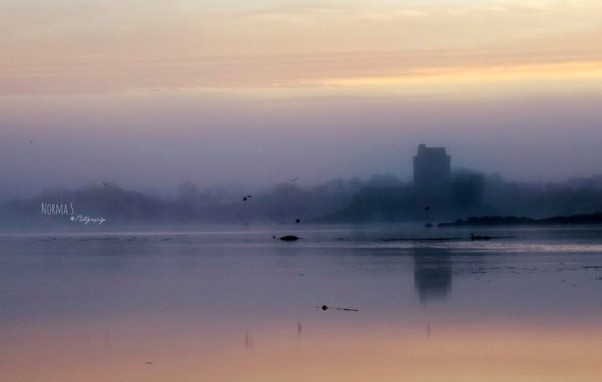
We gathered the turf in the dusky bog,
And hauling it home on sliding cars,
We left the moor with its murky fog
And the mountainside with its stars.
But it seems to me, as I sit and poke
The burning earth from that mountain fen.
That we brought the fog and the stars as smoke
And sparks going back again
To a misty bog that holds the heat
Of a mountain stacked with burning stars.
Faith, it seems to me that we hauled both peat
And dreams on the sliding cars
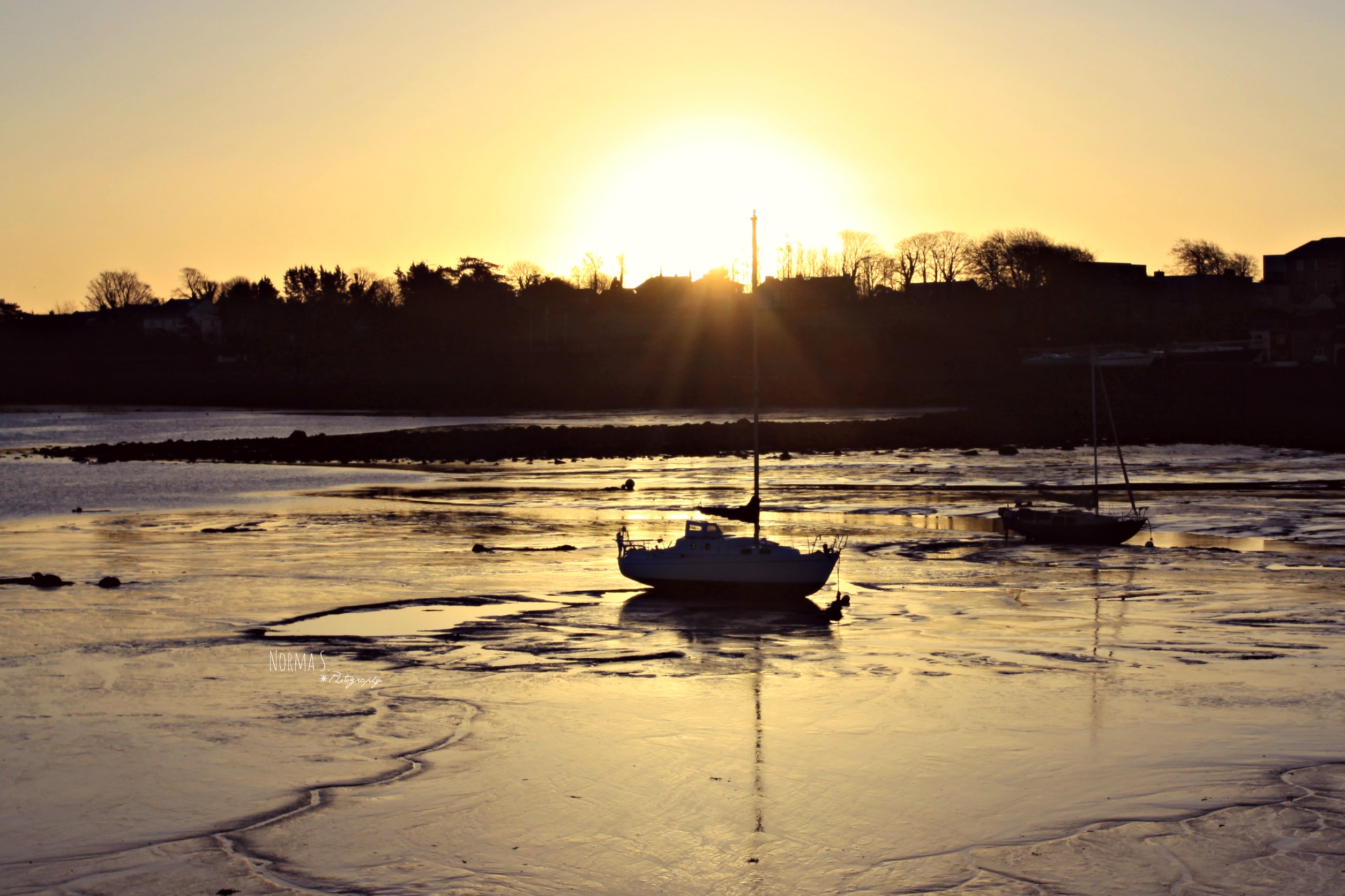
New Zealand Tabled 22nd April 1887 p19Photo: Norma Scheibe
On January 15 placards were posted in Loughrea and neighbourhood calling upon the tenants on the estates of Lord Clonbrock and other landlords to meet at four o’clock on the following day at the Cross roads, Holyhill. A strong force of police was consequently despatched to the place, but no meeting was held, and after remaining until a late hour the police discovered that the notices were intended to hoax them. The actual meeting was held at a place three miles distant and the tenants paid to the trustees considerable sums under the rules of the plan of campaign.
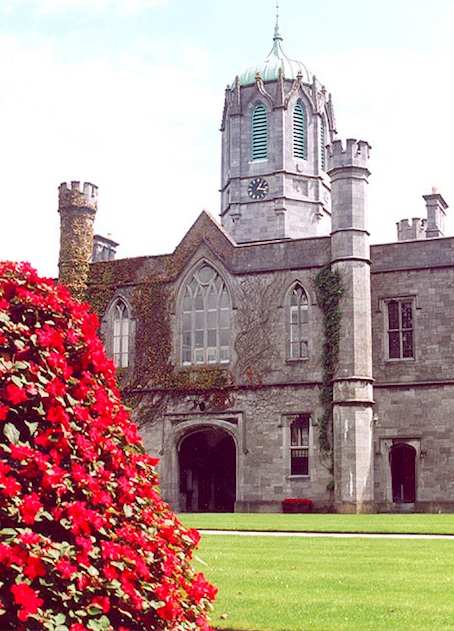
New Zealand Tablet 8th April, 1898 p9National University of Ireland, Galway Photo: Rob Smyth. Wikimedia Commons
A great meeting was held in Galway to consider the Catholic University question, and as might be expected, the Galway people spoke with no uncertain sound on the just claims of Catholics to educational equality. Professor Pye, MD., J. P., proposed the first resolution which ran as follows :—
“That we adopt the claim put forward by the Catholic laity of Ireland in their recent declaration, and reaffirmed by the national meeting held in Dublin, on the 11th inst., for perfect equality with our non-Catholic fellow-countrymen in all that regards endowment and privileges of University institutions, and express our determination to enforce that claim by every constitutional means in our power.”
The resolution was supported by Professor Steinberger, M.A., F.R.U.I., in a speech so fitting and to the point that we cannot refrain from quoting. He said he had travelled or lived in most of the countries of Europe, and when he first come to Ireland to learn the Irish language he met with many surprises. Nothing surprised him more than to find Ireland — which taught the greater part of the countries of Europe, and but for which he might now be a barbarian on the Alps or on the Danubem is without a University of its own.
He was astonished to find that the Catholic people of Ireland had no University. If they looked to India they could find the people provided for in this respect. If they looked to Austria, which was pretty much like the British Empire, in having under its dominion many different races and people speaking various languages, they would find the higher educational wants of these people well provided. Ireland is the only place in Europe where the majority of the people have no University.”
The following resolution was also carried;
“That we call on the members of Parliament for the town and county to press the Catholic claim for perfect educational equality on the House of Commons on every suitable occasion, and to expose the urgency of the grievance, and the injustice which a delay in dealing with it inflicts on the Catholic community.”
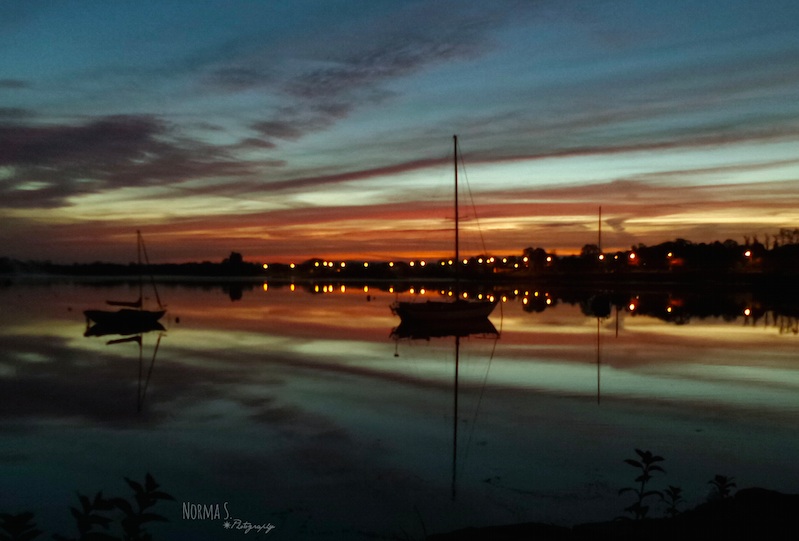
THE CHANT OF THE FAIRY TO CONNLA OF THE GOLDEN HAIR.Kinvara sunrise, Photo: Norma Scheibe
A land of youth, a land of rest,
A land from sorrow free;
It lies far off in the golden west,
On the verge of the azure sea.
A swift canoe of crystal bright, that never met mortal view
We shall reach the land ere fall of night,
In that strong and swift canoe:
We shall reach the strand of that sunny land From druids and demons free;
The land of rest, in the golden west, on the verge of the azure sea!
A pleasant land of winding vales, bright streams, and verdurous plains,
Where summer, all the live-long year, in changeless splendour reigns;
A peaceful land of calm delight, of everlasting bloom;
Old age and death we never know, no sickness, care, or gloom;
The land of youth, of love and truth,
From pain and sorrow free;
The land of rest, in the golden west, on the verge of the azure sea!
There are strange delights for mortal men in that island of the west;
The sun comes down each evening in its lovely vales to rest:
And though far and dim on the ocean’s rim it seems to mortal view,
We shall reach its halls ere the evening falls, in my strong and swift canoe;
And ever more that verdant shore our happy home shall be;
The land of rest,In the golden west,On the verge of the azure sea!
It will guard thee, gentle Connla of the flowing golden hair,
It will guard thee from the druids, from the demons of the air;
My crystal boat will guard thee, till we reach that western shore,
Where thou and I in joy and love shall live for evermore:
From the druid’s incantation, from his black and deadly snare,
From the withering imprecation of the demon of the air,
It will guard thee, gentle Connla of the flowing golden hair;
My crystal boat will guard thee, till we reach that silver strand,
Where thou shalt reign in endless joy, the king of the Fairy-land!
From “Old Celtic Romances,” by P. W. Joyce, LL.D.
Ossian
François Pascal Simon Gérard
A Reading Book in Irish History P.W.Joyce LLD
One of the Commissioners for the Publication of the Ancient Laws of Ireland
Longmans, Green and Co. London, New York and Bombay.
Dubln: M.H. Gill and Son 1900
On Wednesday last the property of the union in Gort Workhouse was exposed to auction under an execution for debt and the whole knocked down for £28 by one of the creditors. When about to be removed, however, the paupers rose in general insurrection to retain the property – their last means of existence in their last refuge from starvation. Finally the property was let out to the vice-guardians for a certain weekly percentage upon the price for which it had be sold. It is, consequently, safe from several other executions for large sums that, we understand are in the hands of Messrs M, C and L.
Masked men recently perpetrated a daring robbery of the car caring the mails from Kilcolgan, Co Galway to Ballyvaughan. The car was held up by a party of masked men, all of whom were armed. A revolver was pointed at the driver who dismounted and fled for safety.
The car was driven for seven miles in another direction and when it was discovered by the roadside it was seen that several mailbags had been torn open and open letters were strewn in every direction.
The police rare scouring the country in search of the highwaymen.
Colonist Vol XVII issue 2039 22nd February 1876 p4
County Clare Photo: Norma Scheibe
The Northern Whig states that a most extraordinary monster was seen a few days ago at Fodera, near Loophead Lighthouse, which is situated on the most western point of the County Clare. It is thus described:—
lts head and neck resemble a horse, and are of a reddish hue; it has short round ears and flowing mane, and from a poll extend two branching horns like that of a stag, underneath which were eyes glaring and protruding. It made directly for the narrator, who was on the side of the steep rock. He at once ran out of reach of the monster, whose approach looked anything but friendly.
It then rose high out of the water and plunged with such force as to cause the water to fly so far and in such quantities as to drench the observer to the skin, he standing 40 feet back from the water at the time. It remained near thirty or forty minutes before disappearing a moment from view, but rearing its huge body partly out of the water, and giving a chance for further observation. It was observed to have the tail of a porpoise and two large fins from the shoulders, and on the breast were two large fatty lumps, which shook with every motion of the extraordinary creature. It then shaped its course westward, still keeping its head and neck well elevated. Its bulk far exceeded that of the largest porpoise ever seen on the coast.
NOTE: Among the archives of theburrenandbeyond.com is a post titled – Sea monster in Galway Bay – from the Perth Sunday Times, 1935. It refers to the shooting of a ‘mysterious sea creature’ at Mutton Island, also in County Clare.
Lake Wakatip Mail Iss 2775, 13th July 1910 p4
A well-authenticated case of extreme old age has been brought to light in connection with the death of Paddy Blake, in the Corofin Union Hospital, Ennis, County Clare, Ireland. Paddy was a labourer, but did not work regularly, spending most of his time roving about from one house to another. He was born at Ballygireen, Parish of Kilnasoolagh, Co. Clare,
Mullaghmore, County Clare Photo: Norma Scheibe
ago, on St Patrick’s Day.
His grandfather was Peter Blake, who fought at the Siege of Limerick in 1691, and is said to have attained the great age of 120 years. Paddy lived, when a lad, with an uncle, another Peter Blake, at Ing, in the Parish of Kilmaleery. He married twice, and migrated to Corofin about the year 1861. Paddy had a clear recollection of events that happened a hundred years ago, and remembered most of the scholars who attended the old Latin School held by Bishop O’Shaughncssy at Newmarket-on-Fergus. He went to see Daniel O’Connell when passing through Bunratty Pike on his way to Ennis to the great election of ’28, and remembered the red flag hoisted on Bunratty Castle by Mr Tom Studdert, who refused to let the Liberator pass until he had paid the “pike money.” or toll. It was after this incident that the buyers refused to attend the old fair of Bunrattv, which consequently ceased to exist. Paddy used to admit he was thirty years old at that time, but, as he never liked to be considered old,” he was certainly some years older than he admitted. Paddy Blake entered the Corofin Hospital in September, 1908, and died there on March 12, 1910. He was an inveterate smoker.