
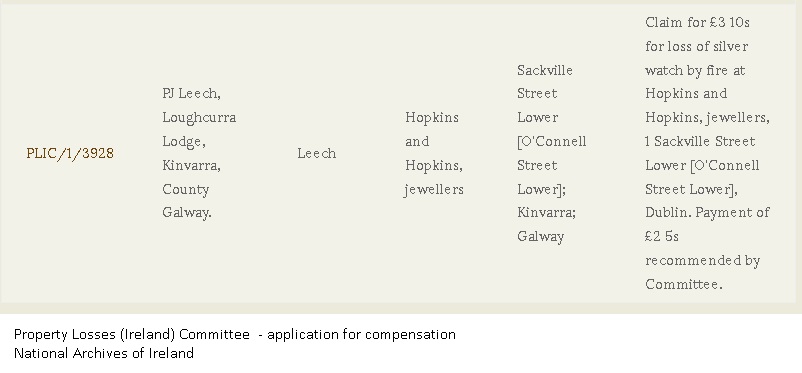
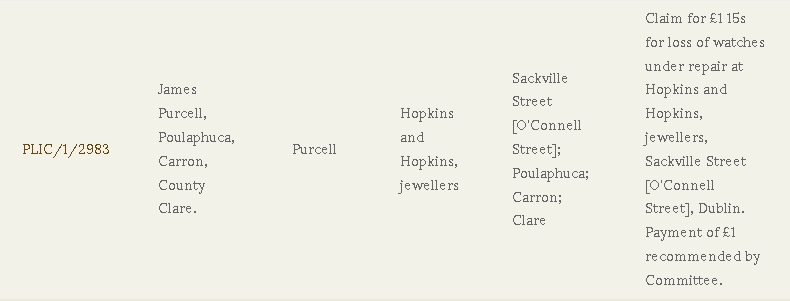
Application for compensation – 1916
Evening Star 26th February, 1903 p.15 (abridged)
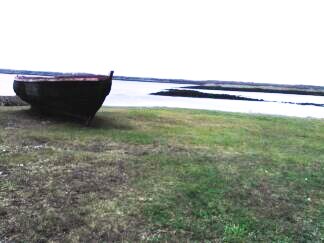
Mr. Horace Plunkett, an enterprising Irishman, is actively engaged in fostering the production of an oyster warranted to pass the most vigilant analyst in search for bacilli. From a gentleman conversant with the oyster in a scientific as well as a gastronomic sense, I have just had direct information as to the experiments which the Irish agricultural department are carrying out.
These experiments begin when the tiny specks of protoplasm settle on the sea bed and continue until the oyster finds its way to the restaurant bar. The temperature, the effect of currents, the suitability of various kinds of beds for feeding purposes, methods of packing and marketing, and other things appertaining to the oyster too abstruse for the lay mind, are being found and “made a note of”.
In due time a gray book will appear containing information which will be at the disposal of everybody. Meantime the red bank of Burrenco, Clare, the scene of the experiments, is sending its oysters to the Dublin and to some extent to the English markets. The part of the Irish coast involved in the oyster industry is said to be absolutely free from the possibility of sewage and contamination. For example, the only habitations within any reasonable distance of the Burren beds are in the village of Burren,(sic.) and consist of a telegraph office, a grocer’s store and public house – not quite as dangerous as London for the oyster.
Chicago Packer 12th November, 1927
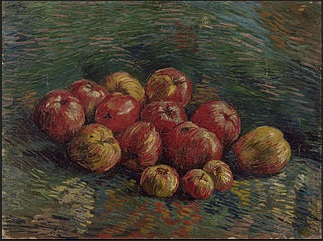
The record long distance for a box of gift apples was established last week when the Apple Growers Associated received an order to forward a box of Spitzenbergs to County Galway, Ireland, for Miss Kathleen Conoly, of Portland. The box went to F.X. Twohy, of Ballinahinch. The cost of the box was $6. It was forwarded by boat to Liverpool along with a cargo of association apples.
The W.A. Record 2nd September, 1916
A Priest’s Protest against stupidity
The following is clipped from a west of Ireland newspaper. It is the protest of an Irish priest against what, on the facts related, seems to be a mean, petty prying system practised upon the people of Kinvara for the purpose of extracting evidence for use against the rebels. Such irritating measures exercised for the production of incriminating information are bound to foment strife and discord, and are well described as stupid. Father J. W. O’Meehan writes;
As a priest I feel bound to warn our people against the danger of revealing anything whatsoever, either under blandishment or threat, to armed men concerning the most sacred subject of Confession. Unfortunately it has fallen to my lot to inform the people of the fact that in this catholic parish of Kinvara, questions of a most improper character were recently put to a parishioner – a decent but simple country boy – by one of two armed men concerning the boy’s Confession. Lest in present circumstances I should be regarded as a prejudiced person, I think it better to set down in writing, coolly and deliberately, the bold facts of this sad occurrence.
On Monday evening, May 29th, two armed “gentlemen” (?) approached this young man, and having put him several questions, which, as a Catholic priest, do not concern me now, one of these armed “gentlemen” then proceeded to ask him about the Confession which he made at the Convent Church on Easter Saturday evening. I shall allow yourselves, Catholics of Kinvara, to form your own judgment on the propriety of an Irish Catholic armed “gentleman” asking an Irish Catholic youth the four following questions;
First question: Who told you to go to Confessions on that particular evening?
Second question: Where did you meet Father ________ when he told you to go to Confession?
Third question: What reasons did the priest give you for asking you to make your Confession, or why did he ask you to go on that particular Saturday evening rather than any other evening?
Fourth question: How long was it since your last Confession?
I have ample evidence to show that these four questions have been asked on the evening of May 29th. The boy who was so questioned and two other persons who were present on the occasion and prepared to swear to the truth of the statement. May it be my privilege now to ask four questions?
First: Had this armed “gentleman” authority from his superiors to pry into this most intimate and sacred subject of a man’s Confession?
Second: Does the Defence of the Realm Act empower armed “gentlemen” in Ireland to invade the sealed realm of the Confession?
Third: Can this armed “gentleman” be too ignorant or too stupid not to realise that questions of this nature would outrage the most tender feelings of Irish Catholics?
Fourth: who really are the “gentlemen” who are now exasperating the people and helping in this most peaceful district to manufacture crime?
Catholics of Kinvara, even if there are vile tongues amongst you, which blab when they should not, let those of you at any rate who still remain faithful to birth and fatherland guard even with your lives, the sanctity of Confession against all the agents of stupidity in this land.
(Signed) J.W. O’Meehan
Daily Illinois 29th January 1933
DeValera has majority of 1 seat in new Dail
President Eamon De Valera will have a majority of one seat in the new Dail Eireann which meets two weeks from today. The counting of the final ballots in Tuesday’s general election, completed tonight with the last returns from Galway, assured the tall, gaunt Spanish-Irish president a total number of seats in the lower house of the legislature which will make unnecessary his reliance on labor members, usually steadfast but occasionally doubtful allies.
Sangamo Journal/Illinois State Journal 22nd April, 1853
EMIGRATION FROM IRELAND
The last American mail brought the sum of £500 pounds to the little village of Ballyvaughan, which is situated in the County Clare on the opposite side of the bay of Galway. We have heard that this large sum has been sent home for the purposes of emigration, so that the neighborhood of Ballyvaughan is likely to contribute its full contingent to the host of emigrants which are daily rushing towards the English ports. A few mornings past, the terminus at Eyre square was crowded with the relatives of the emigrants, bidding them farewell on their departure for America. In the language of a person present, when describing the numbers – it was like a fair . The strength and hope of Ireland are so rapidly passing away that sufficient hands will not remain to till the soil .
Galway Paper.
Albury Banner and Wodonga Express 16th September, 1921 p.35 (abridged)
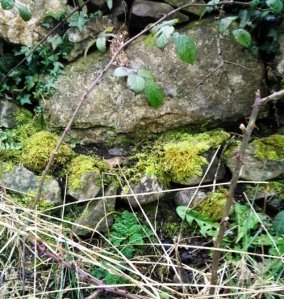
Crown forces, finding the road to Ballyvaughan obstructed by walls built across the road, commandeered shopkeepers, artisans and labourers at Kinvara to remove the stones. At the Ballyvaughan side men were forced to remove similar obstacles at Muckinish and Bellharbour.
Catholic Press 1st July, 1920 p.7 (abridged)
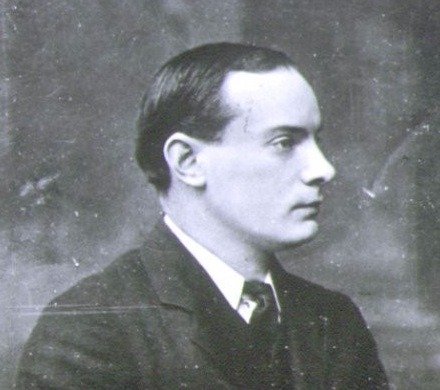
A teacher in St. Ita’s School, which was the female portion of Padraic Pearse’s foundation, wrote of him in the following terms in 1916;
In another country a school like Pearse’s would be endowed both by the State and by private philanthropy. In Ireland we can hardly be said to have a State, and the few people of large fortunes might endow a school for Anglicising the country, but never one with this patriotic programme. About the time Pearse took up his quarters in the Hermitage, his work was become well known everywhere. In England, General Baden-Powell, who had founded the Boy Scout Movement, was much impressed by what Pearse was accomplishing for Irish boys, and became eager to enroll in some way for his movement the help of this inspiring teacher of boys. Of course, no working scheme between Pearse and Baden-Powell was feasible, but it is worth mentioning as showing the attention St. Enda’s School was attracting.
The school lasted in all from September, 1908 until the first week of May, 1916, when its founder was placed before a firing squad of eight soldiers, four of whom aimed at his head and four at his heart; the heart that loved Ireland so much and the fine brain that had planned such great things were riddled with bullets.
He was a great man, though his greatness was rarely apparent at first acquaintance. He had a curious aloofness and reserve. He was rarely seen at social meetings; when he was, his tall, strongly-built figure with its stooping head and slightly squinting eager eyes was the figure of a man of destiny. In conversation he was gentle and shy, only in the presence of large masses of people did he really become himself. Then he became imperious and masterful, and his strength and passion were sometimes overwhelming. He was the finest orator I have ever heard.
Everything Pearse said was charged with meaning and took root in the heads and hearts of the people. He never worked up his audience into tears about the past woes of Ireland; he made them passionately eager to struggle for the future. Thus, he dominated that generation of men and women in Ireland, who have risked so much and accomplished so much. I can easily understand how, when the choice of President of the Republic had to be taken, all minds and eyes turned to him. He is still, in the minds of the people, their President, though the soldiers threw his shot-riddled body, coffinless, into a pit and covered it with corroding lime, so that we can never recover it, to pay it our homage.
Freeman’s Journal 17th June, 1865 p.2(abridged)
The Empire 2nd June, 1852 p.4 (abridged)
The Sydney Morning Herald 10th December, 1862 p.4 (abridged)
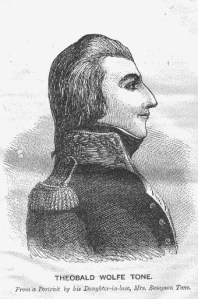
Theobald Wolfe Tone (20 June 1763 – 19 November 1798), regarded as “the father of Irish Republicanism” was the son of a coachmaker in Dublin. He was educated in Trinity College, where he distinguished himself and was called to the Irish bar in Trinity term, 1789. With little relish originally for the law, he soon, to use his own expression, ceased to “wear a foolish wig and gown,” and applied himself devotedly to politics. In 1791 he founded the Society of the United Irishmen with Thomas Russell, Napper Tandy and others.
During the whole of 1798 England was alarmed with reports of an intended French invasion. It was known that emissaries from Ireland were in France, on behalf of the “United Irishmen,” soliciting armed assistance for an intended insurrection in the country. An insurrection occurred, but too prematurely to be aided by the French. The rebellion of 1798 was suppressed during the summer. On the 22nd of August, three French frigates and a brig came into Killala Bay, on the coast of the county of Mayo, and landed in a creek of the bay a military force. It has been variously stated at eleven, fourteen and eighteen hundred men. Unless a considerable part of it subsequently escaped to sea, it could not have exceeded 1,400. It was commanded by General Humbert. It had a few pieces of field artillery and a troop of mounted riflemen. He was accompanied by three Irishmen – Matthew Tone (a brother of Theobald Wolfe Tone), Bartholemew Teeling, and one Sullivan.
Having advanced upon the town of Killala, a small detachment of militia were defeated. The Bishop’s palace was occupied as French headquarters. From thence a proclamation was issued by General Humbert, headed “Liberty! Equality! Fraternity! Union!” from which it appeared that other troops were expected, and that several unsuccessful attempts at invasion had been made. This proclamation also indicated the ultimate purpose of the invaders to be in London, although landing in Ireland. They advanced upon Ballina, a market town five miles inland; from thence they approached and took a position at Castlebar, after a march of fifteen hours. The space marched over was not more than twelve miles in a direct line but the absence of roads delayed their progress.
Lord Cornwallis, Lord-Lieutenant of Ireland, collected about 25,000 men and advanced westward of the Shannon in search of the French. The French had been led by Irishmen of the insurrection to the county of Letrim, with the purpose of reaching the north of Ireland. There they expected assistance from the Presbyterian Protestants, who had originated the “United Irishmen,” and hoped to receive reinforcements from France at Lough Swilley, or probably at Belfast itself. To cross the almost trackless morasses and mountains was deemed undesirable after an attempt. They therefore turned their faces to the south and would, probably, have made a bold dash upon Dublin, had they not been unexpectedly met in the county of Longford. Forty thousand Irish were to assemble at the Crooked Wood, in the county of Westmeath, to join them; but a strong body of the King’s troops intervened. At the village of Ballynamuck the French surrendered, they were conveyed to England. At Lichfield General Humbert wrote to the “citizen directors” of France, relating his surrender to an army of thirty thousand men, and stating that he was a prisoner of war upon parole. The French officers were allowed to return to France on condition of not again serving against Britain.
On the 24th of May, 1798 Earl Camden issued an order to all the general officers commanding his Majesty’s forces “to punish all persons aiding or in any way assisting in the said rebellion according to martial law, either by death or otherwise as should seem expedient.” It was under this authority that the sentence of death was passed upon Wolfe Tone, who was conspicous in the rebellion. At that time the Supreme Court of Ireland was sitting and a barrister appeared informing the court of his belief that Wolfe Tone was held in custody and under sentence of death. The Chief Justice immediately issued a writ of habeas corpus (a writ requiring a person under arrest to be brought before a judge or into court, to secure the person’s release unless lawful grounds are shown for their detention). This was not obeyed by the officer in command, when the judge sitting in Court dispatched his officer to arrest the General and bring him up for contempt. The remark of a spectator who records this event is that “the agitation of the chief Justice was magnificent.” Wolfe Tone, apprehensive of public execution had, in the spirit of those times, inflicted a mortal wound upon himself.
The Catholic Press 26th October, 1916, p 19 (abridged)
Here is Moira Regan’s story. It is more than the narrative of an eye-witness – it is the narrative of a friend of and fellow worker with Plunkett and Pearse and MacDonagh – of one who shared with them the hopes, ambitions, perils and pains of their brief but great adventure.
At 6 o’clock on the evening of Easter Monday I went down O’Connell Street to the Post Office. But that was not my real entrance into the affairs of the uprising. You see, I belonged to an organisation called Cumann na Mban – the Council of Women. We had been mobilised at noon on Monday near the Broad Stone Station, being told that we’d be needed for bandaging and other Red Cross work.
But late in the afternoon we got word from the commandant that we might disperse, since there would not be any street fighting that day, and so our services would not be needed. The place where we were mobilised is three or four blocks from the Post Office, and we could hear the shooting clearly. There were various rumours about – we were told that the Castle had been taken, and Stephen’s Green and other points of vantage. And at last, as I said, we were told that there would be no street fighting and that we were to go away from the Broad Stone Station and do what good we could.
When I got to the Post Office that evening I found that the windows were barricaded with bags of sand, and at each of them were two men with rifles. The front office had been made the headquarters of the staff, and there I saw James Connolly, who was in charge of the Dublin division; Padraic Pearse, Willie Pease, O’Rahilly, Plunkett, Shane MacDiarmid, Tom Clarke, and others sitting at tables writing out orders and receiving messages. On my way to the Post Office I met a friend of mine who was carrying a message. He asked me had I been inside, and when I told him I had not, he got James Connolly to let me in.
I didn’t stay at the Post Office then, but made arrangements to return later. From the Post Office I went to Stephen’s Green. The Republican army held the square. The men were busy making barricades and commandeering motor cars. They got a good many cars from British officers coming in from the Fairy House races. The Republican army had taken possession of a great many of the public houses. This fact was made much of by the English, who broadcast the report that the rebels had taken possession of all the drinking places in Dublin and were lying about the streets dead drunk. As a matter of fact, the rebels did no drinking at all. They took possession of the public houses because in Dublin these usually are large buildings in commanding positions at the corners of the streets. Therefore the public houses were places of strategic importance, especially desirable as forts.
That night there was not much sleeping done at our house or at any other house in Dublin, I suppose. All night long we could hear the rifles cracking – scattered shots for the most part, and now and then a regular fusilade.
On Tuesday I went again to the Post Office to find out where certain people, including my brother, should go in order to join up with the Republican forces. I found things quiet at headquarters, little going on except the regular executive work. Tuesday afternoon my brother took up his position in the Post Office, and my sister and I went there too, and were set at work in the kitchen. There we found about ten English soldiers at work – that is, they wore the English uniform, but they were Irishmen. They did not seem at all sorry that they had been captured, and peeled potatoes and washed dishes uncomplainingly. The officers were imprisoned in another room.
The rebels had captured many important buildings. They had possession of several big houses on O’Connell street, near the Post Office. They had taken the Imperial Hotel, which belongs to Murphy, Dublin’s great capitalised, and had turned it into a hospital. We found the kitchen well supplied with food. We made big sandwiches of beef and cheese, and portioned out milk and beef tea. There were enough provisions to last for three weeks. About fifteen girls were at work in the kitchen. Some of them were members of the Cumann na mBan, and others were relatives or friends of the Republican army which James Connolly commanded. Some of the girls were not more than 16 years old.
We worked nearly all Tuesday night, getting perhaps, an hour’s sleep on mattresses on the floor. The men were shooting from the windows of the Post Office and the soldiers were shooting at us, but not one of our men were injured. We expected that the Inniskillings would move on Dublin from the north, but no attack was made that night.
On Wednesday I was sent out on an errand to the north side of the city. O’Rahilly was in charge of the prisoners, and he was very eager that the letters of the prisoners should be taken to their families. He gave me the letter of one of the English officers to take to his wife, who lived out beyond Drumcondra. It was a good long walk and I can tell you that I blessed that English officer and his wife before I delivered that letter! As I went on my way I noticed a great crowd of English soldiers marching down on the Post Office from the north. The first of them were only two blocks away from the Post Office, and the soldiers extended as far north as we went – that is – as far as Drumcondra. But nobody interfered with us – all those days the people walked freely around the streets of Dublin without being interfered with.
As we walked back we saw that the British troops were setting up machine guns near the Post Office. We heard the cracking of rifles and other sounds, which indicated that a real seige was beginning. At Henry Street, near the Post Office, we were warned not to cross over, because a gunboat on the river was shelling Kelly’s house – a big place at the corner of the quay. So we turned back, and stayed the night with friends on the north side of the town. Our home was on the south side.
There was heavy firing all night. The firing was especially severe at the Four Courts and down near Ring’s End and Fairview. The streets were crowded with British soldiers; a whole division landed from Kingstown. That was on Wednesday night. On Thursday we thought we’d have another try at the Post Office. By devious ways we succeeded, after a long time, in reaching it and getting in. We found the men in splendid form and everything seemed to be going well. But the rebels were already hopelessly outnumbered. The Sherwood Foresters had begun to arrive Tuesday night, and on Wednesday and Thursday other regiments came to reinforce them. Now, a division in the British army consists of 25,000 men, so you can see that the British were taking the rising seriously enough.
The British soldiers brought with them all their equipment as if they were prepared for a long war. They had field guns and field kitchens, and everything else. Most of them came in by Boland’s Mills, where de Valera was in command. They suffered several reverses, and many of them were shot down. The chief aim of the British was, first of all, to cut off the Post Office. So on Thursday messengers came to Pearse and Connolly, reporting that the machine guns and other equipment were being trained on the Post Office. But the men were quite ready for this, and were exceedingly cheerful. Indeed, the Post Office was the one place in Dublin that week where no one could help feeling cheerful. I didn’t stay there long on Thursday morning, as I was sent out to take some messages to the south side. I had my own trouble getting through the ranks of soldiers surrounding the Post Office and when I eventually delivered my messages I could not get back. The Post Office was now completely cut off.
Thursday evening, Friday and Saturday I heard many wild rumours, one insistent report being that the Post Office was burned down. As a matter of fact, the Post Office was set on fire on Friday morning by means of an incendiary bomb which landed on top of the door. All the other houses held by the rebels had been burned to the ground, and the people who had been in them had gone to the Post Office, where there were now at least 400 men.
The Post Office burned all day Friday and late in the afternoon it was decided that it must be abandoned. First, Father Flanagan, who had been there all the time, and the girls and a British Officer, a surgeon lieutenant, who had been doing Red Cross work – were sent to Jervis Street Hospital through an underground passage. Then all the able-bodied men and James Connolly (who had broken his shin) tried to force their way out of the Post Office, to get to the Four Courts, where the rebels were still holding out. They made three charges. In the first charge O’Rahilly was killed. In the second, many of the men were wounded. In the third the rebels succeeded in reaching a house in Moor-lane, back of the Post Office. There they stayed all night. They had only a little food and their ammunition was almost exhausted. So on Saturday they saw that further resistance was useless, and that they ought to surrender, in order to prevent further slaughter.
There were three girls with the men. They had chosen to attend Commandant Connolly when the other girls were sent away. One was now sent out with a white flag to parley with the British officers. At first she received nothing but insults, but eventually she was taken to Tom Clarke’s shop, where the Brigadier-General was stationed. Tom Clarke was a great rebel leader, one of the headquarters staff, so it was one of the ironies of fate that the general conducted his negotiations for the surrender of the rebels in his shop.
Well the Brigadier General told this girl to bring Padraic Pearse to him. Pearse came to him in Clarke’s shop and surrendered. Pearse made the remark that he did not suppose it would be necessary for all his men to come and surrender. He called Miss Farrell, the girl who had been sent to the general, and asked her would she take his message to his men. She said she would and so she took the note that he gave her to the rebel soldiers that were left alive, and they laid down their arms. Notice was sent around that a truce had been arranged. Miss Farrell was sent around in a motor car with Pearse’s note.
 The Burren and Beyond