Posted in Posts and podcasts

The long arm of the law – 1817

The Sydney Gazette and New South Wales Advertiser 6th December, 1817 p.3 (abridged)Watch
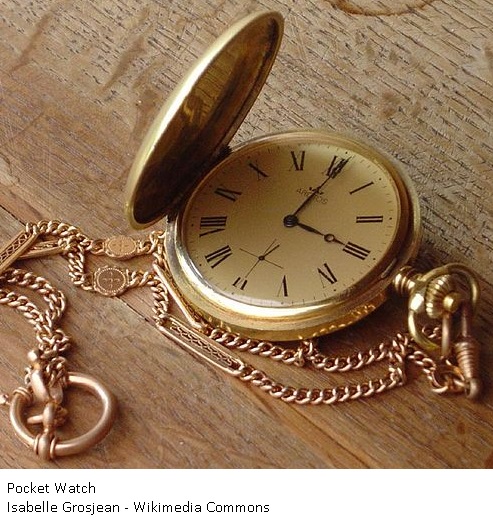
Last Tuesday, (April 22) Roger O’Conner, Esq., was apprehended at Palace Anne, near Badon, and is now in custody in this city on a charge of having been an accomplice in the robbery of the Galway mail coach in the year 1812, when it was attacked at Cappagh Hall, county Kildare, and robbed of a considerable sum in Bank Post Bills, and a gold repeating watch, the property of Mr. Pearse of Loughrea.

It appears that the Magistrates of the Head Police Office, Dublin, having received information of Mr. O’Connor having been concerned in the above robbery, dispatched Mr. R. Gilbert, a police officer in their employment, with warrants for the apprehension of Mr O’Connor and his son, and the warrants having been duly backed by the Mayor of Cork, Mr. Gilbert proceeded in the first instance to Fort Robert in this county (N.S.W), where he arrested the son, who was confined by severe illness to his bed. Being authorised by a search warrant, he made a search at Fort Robert and found a pawnbroker’s ticket for a gold repeating watch, which had been pawned in this city by the son, under a fictitious name. The watch is now in Mr G.’s possession. There is yet, however, no proof of its being the same as that which was taken at the robbery of the Galway mail coach.

Mr. G. then proceeded to Palace Anne, and arrested the father. On their arrival in this city, bail was tendered to the Mayor for Mr. O’Connor’s appearance to answer the charge, but was refused on the ground of its being not legally bailable. A magistrate of this county, having guaranteed the appearance of Mr. Arthur O’Connor when called on, and his state of health not permitting his removal with safety, was suffered to remain for the present at Fort Robert.
(Cork Advertiser).

Posted in Posts and podcasts

The Banshee – 1898

The Globe-republican 3rd November, 1898 p3(abridged)

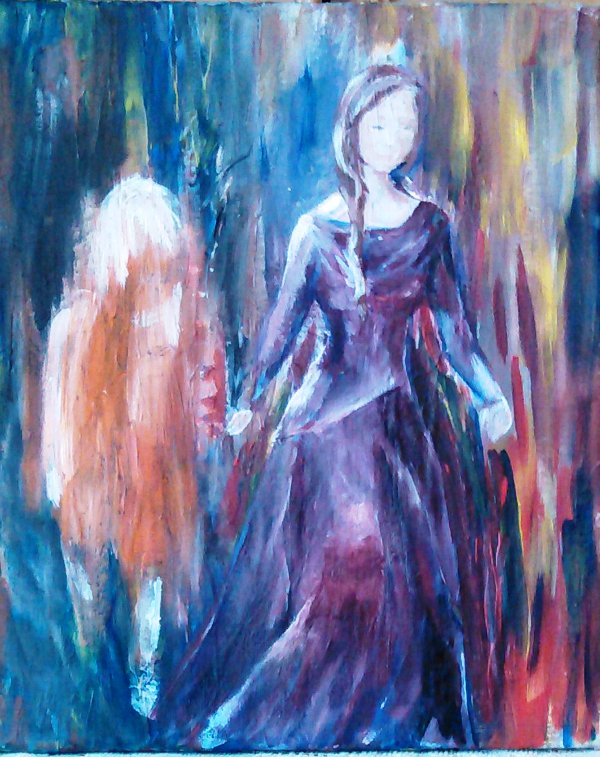
Spirit Child Acrylic on canvas EO;D
Spirit Child
Acrylic on canvas
EO;D

God between us and all harm
For I tonight have seen
A banshee in the shadow pass
Along the dark boreen.

And as she went she keened and cried
And combed her long white hair.
She stopped at Molly Reilly’s door,
And sobbed till midnight there.

And is it for himself she moans
Who is so far away?
Or is it Molly Reilly’s death she cries
Until the coming day?

Now Molly thinks her man is gone
A sailor lad to be.
She puts a candle to her door
Each night for him to see.

But he is off to Galway town.
And who dare tell her this?
Enchanted by a woman’s eyes,
Half maddened by her kiss.

So as we go by Molly’s door
We look toward the sea,
And say “May God bring home your lad
Wherever he may be.”

I pray it may be Molly’s self
The banshee keens and cries,
For who dares breathe the tale to her
Be it her man who dies?

For there is sorrow on the way,
For I tonight have seen
A banshee in the shadow pass
Along the dark boreen.

Posted in Posts and podcasts

A dangerous association – 1919

The Sun, 13th September, 1919

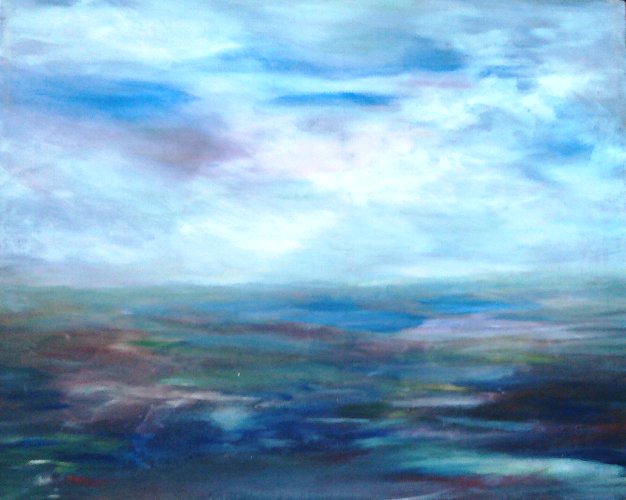
Rain on the wind EO'D
Rain on the wind
EO’D

Special cable despatch to The Sun from the London Times Services;
Whereas by our special proclamation dated July 3, 1918, in pursuance and by virtue of the criminal law and procedure of Ireland, Act of 1887, we declared from the date thereof certain associations in Ireland known by the names of Sinn Fein organization, Sinn Fein clubs, Irish Volunteers, Cumann na mBan and Gaelic League to be dangerous, and whereas the association known by the name of Dail Eireann appears to us to be a dangerous association and to have been after the date of said special proclamation employed for all purposes of the associations known by the names of Sinn Fein organization, Sinn Fein clubs, Irish Volunteers and Cumann na mBan, now we the Lord Lieutenant-General and General-Governor of Ireland, by and with the advice of the Privy Council in Ireland, by virtue of the criminal law and procedure of Ireland Act of 1887, and of every power and authority in this behalf, do hereby, by this our order prohibit and suppress within the several districts specified and named in the schedule, and association known by the name of Dail Eireann.

Posted in Posts and podcasts

The Galway chase – 1932

Galway Bay
View over Galway Bay Acrylic on canvas EO’D

The Advertiser 22nd November, 1932 p5
A woman in a motor boat chased and caught a 16,000 ton liner off the Irish coast recently. She had travelled more than 100 miles to do it. She had intended to board the east-bound Hamburg-America boat, Milwaukee, at Galway, but owing to two days of dirty weather, with the prospect of more to come, the captain had decided to cut out the Galway call and go on to Queenstown.

When the intending woman passenger, a Miss Ward, heard of this change, she left Galway by car for Queenstown. She arrived there, after a night ride, to find that the tender had already left to meet the Milwaukee. Miss Ward chartered a motor boat. The liner was now steaming off for Hamburg. Miss Ward made signals, which were seen by the Milwaukee’s captain from the bridge. Captain Molchin stopped his vessel and had a ladder lowered. Miss Ward climbed triumphantly up the liner’s side.

Posted in Posts and podcasts

Dáil Éireann – 1919

The Hays Free Press 30th January 1919 (abridged)

Logo of the Oireachtas of Ireland Image: Barryob Wikimedia Commons
Logo of the Oireachtas of Ireland
Image: Barryob
Wikimedia Commons

Twenty five members of the Sinn Féin society elected to the British house of commons assembled in Dublin this afternoon and formally constituted themselves the “Dail Eireann,” which is Irish Gaelic for “Irish Parliament.” They elected Chas. Burgess, whose Irish name is Cathal Brugha, speaker. They also adopted a declaration of independence and an address to the free nations of the world and appointed a committee consisting of Count Plunkett, Arthur Griffiths and Edward De Valera to present the claims of Ireland to self-determination to the peace conference at Paris. The two last named being in British prisons, only the venerable Count Plunkett can proceed to Paris and then only provided the British government consents to give him passports.
The walls of the hall were quaintly embellished with classic statues in plaster and coats of arms. Past lord mayors have witnessed many more exciting dramas, notably in recent years of conventions of the Nationalist party, when there were impassioned speeches and hot party contests.

Posted in Posts and podcasts

A Galway ghost – 1891

Queenslander 14th February, 1891 (abridged)

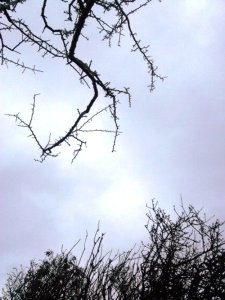
sky
Photo: EO’D

It would seem that Galway is not going to be behindhand in the matter of belief in the supernatural, judging from the state of excitement created a few nights ago by the rumour that a ghost had made its appearance at one of the windows of a house in Abbeygate Street, directly opposite the sacristy of the Pro-cathedral of St. Nicholas. This house, it must be mentioned, was lately occupied by a woman who died after a very short illness. Since her death it became tenanted by another person, but from some cause or other the last mentioned left, and the place remained unoccupied till last week. On the night it was occupied some children were passing to attend devotions at the chapel, when they say they observed a sort of unusual light in the house, and a woman standing near the open window who, in a sepulchral voice said, “offer one prayer for me.”

Some of the children fainted on the spot, and this caused others going to their devotions to inquire into the cause. The tale of the spectre at the window spread like wildfire, and in a quarter of an hour no less than 2000 persons had congregated outside the haunted house. The streets on each side became blocked. The crushing and jostling to get a glimpse at the “visitor from the other world” was such as has never been equalled in Galway. Several persons were thrown down and trampled upon, and it was with the greatest difficulty a strong force of police, after about three hours’ incessant labour, succeeded in clearing the streets sufficiently to allow pedestrians and cars to pass. The tramcars were even compelled to stand still in the streets.

The following night the same state of things have prevailed, but up to the present, the real cause of the rumour has not been satisfactorily explained. Several versions of what the object really was that created such a sensation are given, but the adult portion of the community say that fifty years ago there was also “something seen” in the house, it having been the scene of a most brutal murder – namely, the assassination of a woman named Maxwell by her husband. From the description now given of the late apparition by the children, who say they saw it, the older people say it is one and the same ghost, which has to put up alternate half-centuries in this world and the other. The police are stationed near the place, where four streets meet, and it is as much as they can do to keep the curious from congregating.

Posted in Posts and podcasts

Galway Gaol – 1923

The Maitland Daily Mercury  (abridged)

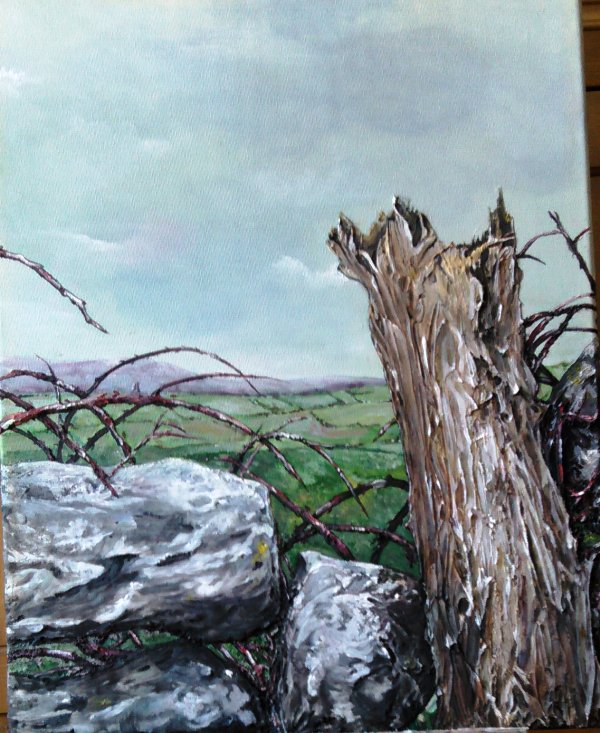
rock
Photo: EO’D

15th January, 1923 p.5
Prisoners in Galway Gaol attempted to escape by excavating a tunnel under a wall with two old bayonets and a broken spade. They reached a point outside the wall but a great rock stopped their progress. While they were burrowing up a sentry heard and discovered them.

Posted in Posts and podcasts

A curious thing – 1896

Chronicle 3rd October, 1896

Westward Acrylic on canvas EO'D
Westward
Acrylic on canvas
EO’D

During Lord Mulgrave’s, or a preceding Lord Lieutenant’s rule in Ireland, there was a curious thing never traced to its source and never explained. In the east of Kildare, at Kill, a strange woman gave a piece of kindled peat to a man, with the injunction to pass it along to the next person on the Naas road, that person to repass it westward still alight, and so on westward. If the turf were let go out before a new piece were substituted from a living hearth, misfortune would come. That was on an autumn evening. Within twelve hours the ‘burnt turf’ had been carried to Galway Bay, across Kildare, the Queen’s and King’s counties, and Galway. No one has ever published an explanation of the affair.

Posted in Posts and podcasts

A land of nameless government – 1919

The Catholic Press 15th May, 1919  p. 18 (abridged)

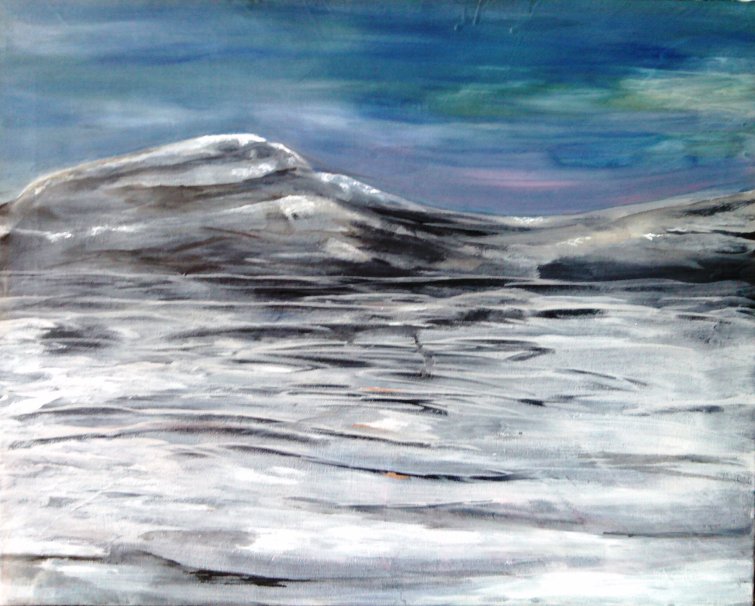
Mullaghmore Acrylic on canvas EO'D
Mullaghmore
Acrylic on canvas
EO’D

You ask me why, tho’ ill at ease,
Within this region I subsist,
Whose spirits falter in the mist,
And languish for the purple seas.

Within this land which bondmen till
Who cannot call their minds their own,
But into dungeons straight are thrown
If they but speak the things they will.

A land of nameless government,
That hath a wide and dark renown;
Where Freedom hourly shrinken’s down
From precedent to precedent.

Where faction always gathers head
Where by degrees to fullness wrought
The strength of some repressive thought
Hath time and space to work and spread.

Where banded bigots persecute
Opinion, and produce a time
When honest thought is civil crime,
And individual freedom mute.

Yet ’tis the land of mist and wrong,
Wild wind! that claims my homage high;
And I will hear before I die
The shout of her triumphant song.
S.