Posted in Posts and podcasts

To sin he was prone….

Detail of stained glass window by Louis Comfort Tiffany in Arlington Street Church, Boston.  It depicts John the Baptist. Photo:John Stephen Dwyer CC=BY=SA=3.0
Detail of stained glass window by Louis Comfort Tiffany in Arlington Street Church, Boston. It depicts John the Baptist.
Photo:John Stephen Dwyer
CC=BY=SA=3.0

https://widgetworld3.wordpress.com/podcasts/
Truthful Tombstone in Kinvara Church

The most remarkable object within the town is the old church and burial place. It is particularly worthy of the antiquary’s especial notice, that the gable-end of the ruinous ecclesiastical edifice, just mentioned, which fronts the neighbouring castle, presents in that direction a round aperture, apparently designed for a clock. In the burial ground, surrounding the ancient house of worship, there are some comical monumental inscriptions to be met with. Amongst them are the following. On one tomb-stone is the pious couplet,
“James O’ Farrell lies under this stone; Pray for him, Christians – to sin he was prone.”
On another stone we find,

” Pray for the soul of Father Patrick Neilan, who
Dyed in ye year 1753,
Who lies under this stone,
He that feared but God alone.”

Of those departed persons, whose names are thus attempted to be perpetuated in doggrel verse at Kinvarra, it may be said with Grey,
” Their names, their years 
spelt by th’ unletter’d muse 
The place of fame and elegy supply.”

Posted in Posts and podcasts

Kinvara, Belgium

https://widgetworld3.wordpress.com/2013/08/06/kinvara-belgium/

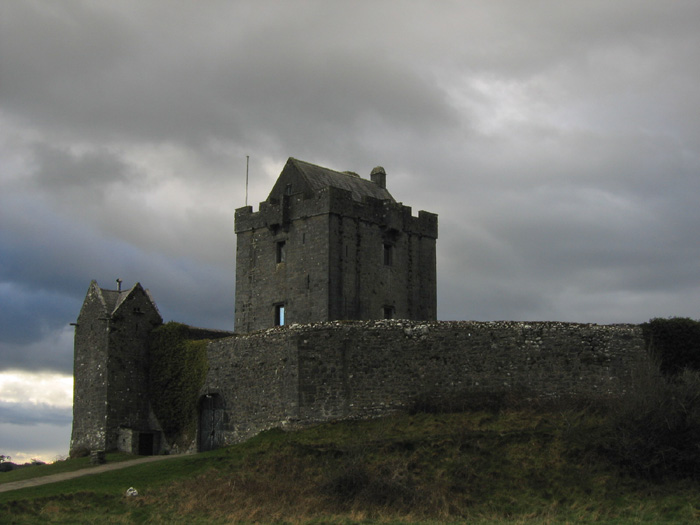
Kinvarra Castle (Dunguaire) Cooke: 1842/1843
Kinvarra Castle (Dunguaire)
Cooke: 1842/1843
According to Thomas L. Cooke’s 1842/1843 Autumnal Rambles in Kinvara and beyond…
Kinvarra was granted by the Crown the 16th of June, on the 21st year of Charles the Second’s (A.D.1681) reign, at a rent of £1 03 3d, by the name of Kinvara along with Durus, and many neighbouring lands, to Col. Cary Dillon. O’Flaherty, who in the Ogygia spells the name Kinnmbeara, says that it was the Belgians who gave it that name.

RODERIC O’FLAHERTY
Roderic O’Flaherty wrote the Ogygia in Latin in 1685. It was translated by the Rev James Hely AB in 1793). A brief exploration suggests that Kinnmbeara may have been misspelt by Cooke – Rinnmbeara could be the correct spelling – the typeface and/or printing quality may have led to some confusion.

Whatever the case – it appears Kinvara’s been in the EU for centuries….

OGYGIA – Roderic O’Flaherty, (1629-1718)
Part III. Vol: II

Befides we are told, that the Belgians gave names
to thofe places in the environs of Galway, Lougb-
Kime * , Rinntamuin, in Medrigia f ; Lough-
cutra, Rinnmbeara, Molinn ami Carnconuil, in Aidh-
ny J; alfo, in Weft-Meath, Loughhuair ;
Moynafuil ; alfo Moymoen ; and, in Thomond,
Mpyadhoir.

http://archive.org/details/ogygiaorchronolo02oflaiala
Credit also to O’Flaherty and Hely for the titles of their publications…

O G Y G I A, OR, A CHRONOLOGICAL ACCOUNT OF IRISH EVENTS: Collected from very ANCIENT DOCUMENTS, faithfully compared with each other, and supported by the GENEALOGICAL and CHRONOLOGICAL Aid of the SACRED AND PROPHANE WRITINGS OF THE FIRST NATIONS OF THE GLOBE.
WRITTEN ORIGINALLY IN LATIN BY
RODERIC O’FLAHERTY,
TRANSLATED BY THE REV”. JAMES HELY, A. B.

Posted in Posts and podcasts

Within a long recess there lies a Bay…Kinvarra

https://widgetworld3.wordpress.com/podcasts/

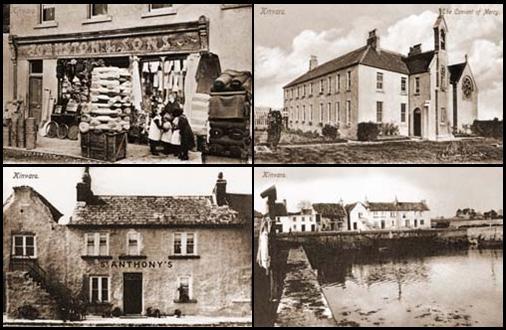
Johnstons, Saint Joseph's, Saint Anthony's Hotel and Kinvara Harbour.
Johnstons, Saint Joseph’s, Saint Anthony’s Hotel and Kinvara Harbour.
During 1842-43 Thomas L. Cooke wrote articles for the Galway Vindicator about Kinvara, Co. Galway…
KINVARRA
“Within a long recess there lies a Bay,

An island shades it from the rolling sea,
And forms a port secure for boats to ride.”
  
Dryd. Virg.
Such is the geographical position of the harbour of Kinvarra, situate on the south east extremity of the bay of Galway. The entrance to Kinvarra bay is a moderately narrow one, lying between Durus head land on the west, and a point of Drumacoe parish on the east. Opposite to the mouth of this narrow channel is Eddy Island, which forms a natural breakwater protecting the little Delta of a bay within, from the rough seas that are occasionally reverberated from off the southern face of Kilcolgan point.
The village of Kinvarra is built on a gentle acclivity at the bottom of the bay, bearing the same name.
– The appellation seems to be derived from the Irish Ceann, the end or limit, and Mara, of the sea. –
This village is about five miles distant from New Quay, and is situate in the barony of Kiltarton, and county of Galway. Fairs are held here the 18th of May, and 17th of October annually. Kinvarra also is the name of the parish in which the village is situate, being a Vicarage in the Diocese of Kilmaduach.
This little town is the property of Mr. Gregory, of Coole, and has been much improved of late years. Many good houses have been erected – an excellent quay, wall and pier, have been built, and some good shops have been opened. Amongst the latter is an Apothecary’s establishment, kept by Dr. Hines where the infirm are supplied, on moderate terms, with medicine, and all meet with that attention and humanity, which is ever grateful to the invalid. There are several streets here, and the population is much employed in traffic. The market, is principally, remarkable for the sale of corn, bought up to be exported from hence. Adjoining the quay are temporary stocks, on which a superior class of sea boats are built.”
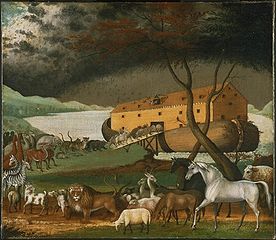
Noah's Ark, (1846),  Edward Hicks  (1780 –1849 Philadelphia Museum of Art
Noah’s Ark, (1846),
Edward Hicks (1780 –1849
Philadelphia Museum of Art
The boats will gather in Kinvara for Cruinniu na mBad very soon – and the Ark will open its doors.

Posted in Posts and podcasts

Kinvara – 1897 – a fine place to stay

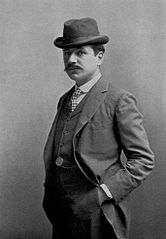
Paul Bourget  (1852-1935)  Crowell, NY, 1899
Paul Bourget
(1852-1935)
Crowell, NY, 1899
The Catholic Press (NSW 1895-1942) Saturday 2nd January 1897
https://widgetworld3.wordpress.com/podcasts/
CONNAUGHT.

Getaway. — Paul Bourget, the French writer, will soon have published a novel, the scene of which is laid in Ireland. Bourgot went to that country to search out his ideal scene. He found a quaint old castellated building known as Neptune Yale, in the heart of a singularly romantic region on the southern shore of Galway Bay, and within a few miles of Kinvara.

It was built by a Frenchman, once the Mayor of Bordeaux, who was obliged to fly from France at the time of the French Revolution. He inherited a large property in the neighbourhood of Kinvara by his marriage with a Miss Ffrench, heiress and representative of one of the Galway tribes, After his death the property passed through several hands, but apparently remained always in the family. The traditions of the house and region- are interwoven artistically into the tale. A correspondent of the Freeman’s Journal of Dublin, writing about Bourgot and his book, said; — ‘M. Bourgot, the famous writer, and his highly accomplished wife, Madame Bourgot., spent their holidays last summer in the immediate neighbourhood of ‘Neptune Vale,’ the guests of Count de Basterot, the descendant of ‘ The Mayor of Bordeaux,’ founder of ‘ Neptune Vale’ Castle. Similarity of tastes has made Count de Bastorot and M, Bourgot intimate friends for yoars, as Count do Bastorot is himself a man of singularly cultured mind and the author of some well-known works on travel. During thoir stay at ‘Neptune Vale Castle’ Madame and Paul Bourgot expressed themselves no less delighted with the wild and romantic scenery of the district than they were pleased with the demeanour and characteristics of the people. It may not be out of place to add that the distinguished visitors greatly edified the people of the place by their unassuming manner and practical Catholicity.’

Posted in Posts and podcasts

Near Kinvara at the fall of day… W.B. Yeats

https://widgetworld3.wordpress.com/books-and-more-books-2/

Stories of Red Hanrahan and the Secret Rose W.B.Yeats

London: MacMillan and Co. Ltd – 1927

THE TWISTING OF THE ROPE.

Hanrahan was walking the roads one time near Kinvara at the fall of day,and he heard the sound of a fiddle from a house a little way off the roadside. He turned up the path to it, for he never had the habit of passing by any place where there was music or dancing or good company, without going in.

Posted in Posts and podcasts

Time now please!

New Zealand Tablet, Volume VI, Issue 297, 10 January 1879, Page 17

Photo: Arent Wikipedia.org
Photo: Arent
Wikipedia.org

https://widgetworld3.wordpress.com/podcasts/

It is nearly eight years since the Most Rev. Dr. M’Evilly, Lord Bishop of Galway, impressed upon the people of the diocese and of the diocese of Kilmacduagh and Kilfenora, of which his Lordship is Apostolic Administrator, the propriety of closing public houses on Sundays and his Lordship was almost implicitly obeyed.

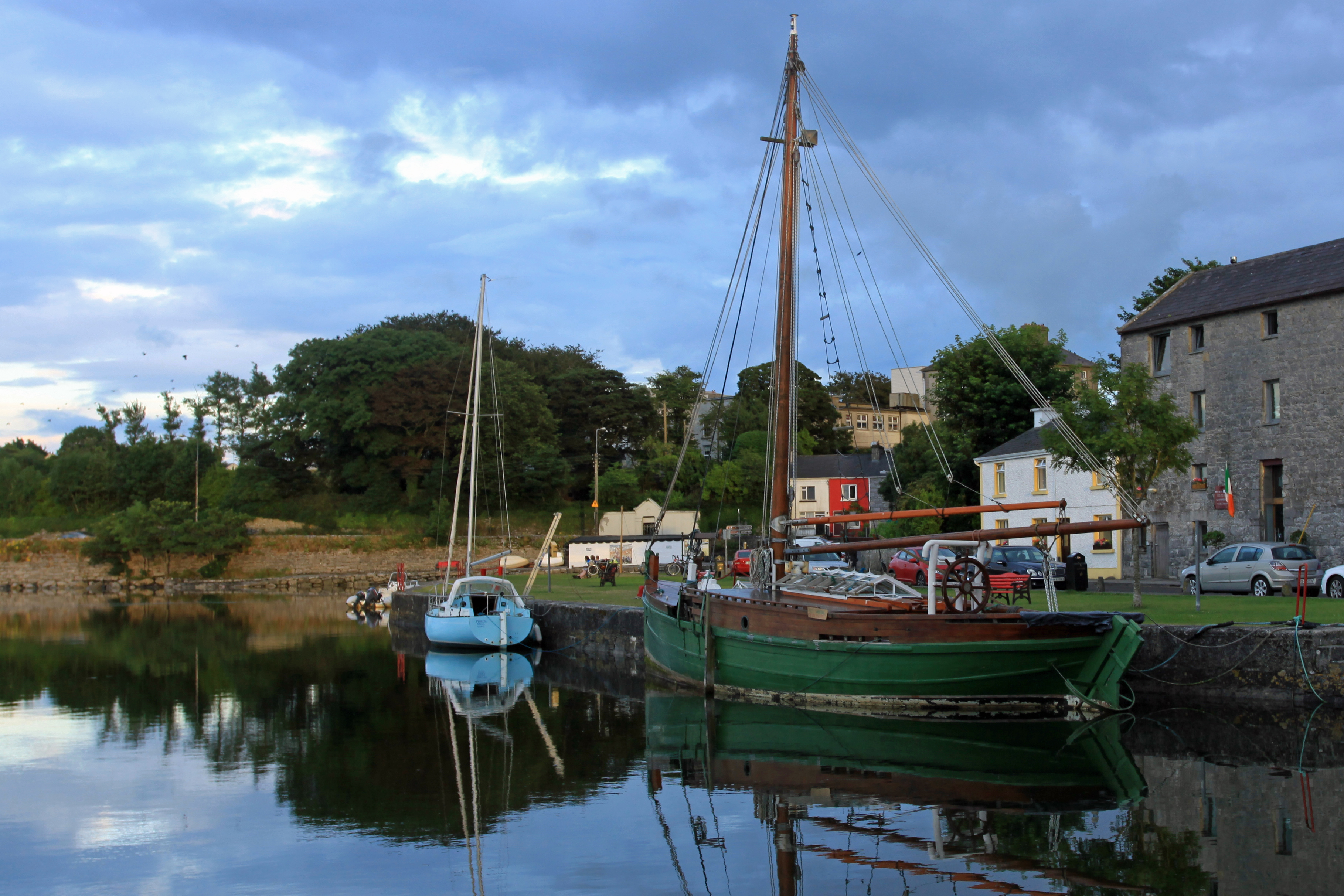
Kinvara Harbour Photo: Norma Scheibe
Kinvara Harbour
Photo: Norma Scheibe
Since that time nearly all the respectable traders in Galway, in Gort, in Oughterard, in Ennistymon, in Kinvarra, and all the large towns in the dioceses mentioned, have kept their establishment, closed on Sundays. Hence the law makes very little difference in this part of Ireland.

Two, or at most three, obscure public houses were kept open on Sunday in Galway, and these were frequented by a straggling lot of persons. It is a remarkable thing abont Galway that when the bill for Sunday closing was before Parliament a petition was sent forward from the vintners of Galway in favour of that measure. There are about 120 public-house-keeepers in the county of the town of Galway, and over 100 signed the petition some of the others were absent at the time. But, as I have said, nearly all obeyed the Lord Bishop, so that virtually the operation of the Sunday-doting Act will make very little change in the City of the Tribes.

Calm Photo: Norma Scheibe
Calm
Photo: Norma Scheibe
PUBS IN KINVARA
Connollys – drink@connollyskinvara.com The Quay, Kinvara.
Keoghs – keoghskinvara@gmail.com The Square, Kinvara.
Pier Head – thepierhead@eircom.net The Quay, Kinvara.
Conoles – The Square, Kinvara.
Flatleys – Main Street, Kinvara.
Greens – Main Street, Kinvara.
Merriman Hotel – Main Street, Kinvara.
Sextons – Main Street, Kinvara.
Travellers Inn – Nogra, Kinvara.
Tullys – Main Street, Kinvara.

Posted in Posts and podcasts

“They may as well have sent for Xerxes’ bridge of boats…”

IRELAND
(From Our Own Correspondent)
DUBLIN, Tuesday Morning.

THE TIMES – NOVEMBER 10TH, 1848 – RESISTANCE TO THE POOR-RATE.

The following statement from the Galway Vindicator is a foretaste of the movement which promises to afford ample employment during the winter to the military, police and all others engaged in the preservation of the peace:-
     “We are informed that on Wednesday last a force of military and police, greatly superior to those that had been previously called out upon that service, and attended by artillery to be used against barricades, &c., proceeded for the fourth time to distrain for poor-rate in the neighbourhood of Gort and Kinvarra. The people were as usual collected in large numbers to resist them, but this time, aware of the presence of artillery, they had recourse to a new rase de guerre. Accordingly, when the military came, directed, we are told, by a special stipendiary magistrate, to the place where they expected, as usual to find barricades, they found them not, nor aught else that their great guns could batter, but only a trench something like an Alpine ravine, about 20 feet broad and scarcely less deep. Here, then was of necessity a halt and a council of war, in consequence of which messengers were despatched in search of planks and other material to overlay the chasm. They might as well have sent for Xerxes’ bridge of boats, at least for any use that could be made of either for that day, as night began to close upon the impeded army before their scouts had returned. ‘Right about face’ was therefore the word and tramp they went back, but not with the trophies of war and victory.”

That such a force should have been foiled by such an obstacle says little for the military skill of those in command.

Posted in Posts and podcasts

Don’t upset a Kinvara Girl!

Evening Post, Volume XCV, Issue 142, 15 June 1918, Page 3

Ammunition Photo: Anton Lefterov
Ammunition
Photo: Anton Lefterov

DON’T UPSET A KINVARA GIRL!
https://widgetworld3.wordpress.com/podcasts/

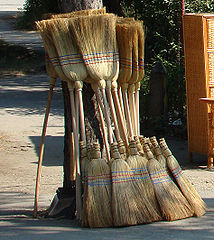
Armed and masked raiders who attempted to invade a farmhouse at Kinvara, County Galway, caught a Tartar in the person of the farmer’s daughter, who pluckily kept the raiders at bay with a broom until her father arrived with a loaded rifle and drove them off.
The men knocked at the door of the house, and sought admission in the name of a neighbour, and on the door being opened the party rushed in and demanded the farmer’s guns at revolver point. Miss Finucane, the farmer’s daughter, resisted them, and during the struggle the men fired at her, but fortunately the shot went wide. Seizing a broom, the. lady belaboured the raiders with it to such purpoee that she was able to hold them off until her father came home with his gun. Continue reading “Don’t upset a Kinvara Girl!”

Posted in Posts and podcasts

If this should meet the eye…

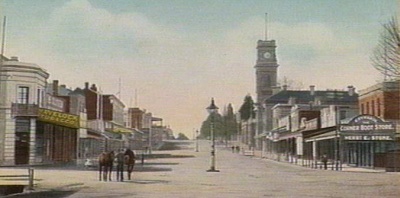
Barker Street, Castlemaine State Library of Victoria
Barker Street, Castlemaine
State Library of Victoria
The Sydney Morning Herald (NSW) Wednesday 21st October, 1857
PERSONS ADVERTISED FOR

If this should meet the eye of Mr Patrick Morriss, or Mr Denis Linane of Kinvarra, County Galway, Ireland, Thomas Fahey would be most happy to hear from either. Address Post Office, Caslemaine, Victoria; or, if in Sydney, call on Thomas Hayes, Grocer, Essex Street.
https://widgetworld3.wordpress.com/podcasts/

Posted in Posts and podcasts

Seamount searched!!

Mother Catherine McAuley, R.S.M. foundress of the Religious Sisters of Mercy
The Catholic Press Thursday 31st August, 1916 (NSW: 1895-1942)
Seamount searched

A gentleman’ in a high official position, who recently returned from a visit to tho old world, called on .the ‘Catholic Press’, to tell us that the condition of Ireland is beyond description. Soldiers are every where. It was the first time he saw a country under martial law, and he does not want another experience. The distress in Dublin, he says, is appalling;
The ‘Irish- Rosary’ for July bears out this statement, ‘and adds:
In several quarters victimisation ot wage-earners suspected of sympathising- with or of having had relatives in the recent upheaval is being brutally practised. Persons arrested on suspicion, in these days of wholesale arrest on the flimsiest pretext, are also subject to the same prosecution on release. It takes the form, I need hardly say, of exclusion from employment. Certain proprietors and firms are giving free rein to their insane and wicked partisanship, the aim being apparently to starve fellow-citizens.
The ‘Irish Weekly and Ulster Examiner’ for July 8 presents another aspect of the case in this resolution:
We, the priests of the Diocese of Kilmacduagb, have heard with amazement of an outrage perpetrated against the Convent of Mercy and community. Kinvara, on Sunday, June 4, by the police, who said they came to search the convent for rebels. We enter our solemn protest against their search of the convent, and we say that the search, and the manner in which that search was made, was a gross outrage on religion and an un called-for indignity and insult to the Sisters.
Catholics well know that religious Sisters never harbor strangers or externs in their convent, and that the sisters’ cells are privileged, no strangers being allowed to enter them. Thia immunity was violated by the police, and the manner in which the cells were searched was equally offensive to manliness ,and common decency.