Posted in Posts and podcasts

Love and the Gaelic League -1902


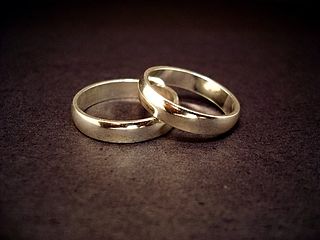
Photo: Jeff Belmonte Wikimedia Commons
Photo: Jeff Belmonte
Wikimedia Commons

The World News – 25 October, 1902
MARRIAGE IN IRISH.

THE FIRST WEDDING IN LONDON IN THE GAELIC TONGUE.

The first marriage solemnised in London ln the Irish language took place recently at Dockhead Catholic Church.

The bridegroom was Mr. John O’Keane, for the past three years the secretary of the Gaelic League of London, the bride Miss Kathleen Dineen, of Forest-gate, a charming young lady whose singing of Irish songs has often stirred Gaelic League gatherings in London.

The ceremony was performed by the Rev. M Moloney. Wherever the Catholic Church allows the use of the vernacular Irish only was employed. From this to the solemn and sonorous Latin of the nuptial mass seemed a natural transition.

After the ceremony, Mr. and Mrs. O’Keane received the congratulations of a large gathering of friends in Irish. Professional men, civil servants, and general workers were largely to the fore. The young pair drove away for Paddington (for Ireland) amid a chorus of hearty and genial benedictions in their native language.
 

Posted in Posts and podcasts

Evictions – New Quay – 1898

EO'D
EO’D

New Zealand Tablet Vol.XXVI Issue 17  – 2nd September, 1898 P9

HARSH EVICTIONS (abridged)

There is still a friend left here and there says United Ireland, to the evicted and harassed tenants of Ireland. While the majority of their brethren look on indifferently at eviction and consequent suffering, a few faithful friends, priests and payment, are doing what they can to stem the tide of landlord oppression. Among these must be reckoned Father Newell, the parish priest of New Quay, County Clare, on the southern shore of Galway Bay.  He recently drew attention to some harsh evictions carried out by Lynch, of Renmore galway in his parish, and he has consequently received some private assistance for the poor people.  Father Newell returns to the subject in a public letter published recently.  He says;

I regret to have to add that more ‘processes’ were served a day or two ago on the same island.  In the early days of the Land League, Major Lynch was one of the first to put down his name for $100 (pounds) for the funds of the;Property Defence Association’, got up by the late A McMurrogh Kavanagh.

I wish he would show a like generosity to the poor tenants in these trying times.’ The moral of this and similar pitiful stories is that the people require again a protective organisation, widespread and powerful, to prevent the landlord fro indulging in his pet pastime of harassing legal process and subsequent eviction.


Posted in Posts and podcasts

Kinvara – Dail Eireann – 1978

Kinvara Slipway Photo: Norma Scheibe
Kinvara Slipway
Photo: Norma Scheibe

Houses of the Oireachtas

Dail Eireann Debate Vol. 210 No. 9 – Written Answers – Untreated Sewage

Thursday, 14 December 1978

Mr. Donnellan and Mr. Mannion asked the Minister for the Environment if he is aware that untreated sewage is being discharged into Kinvara Bay, County Galway; and if he will make a statement on the matter.

Minister for the Environment (Mr. Barrett):

” I understand that disposal of sewage from Kinvara is by outfall pipe to the sea at Kinvara Bay. I have received no complaints about the discharge. It would be a matter for Galway County Council to investigate any such complaints and, if remedial works were found to be necessary, to arrange for the preparation of a suitable scheme.”

Posted in Posts and podcasts

The Commercial Hotel, Kinvara – 1923

commHouses of the Oireachtas

Ceisteanna – hire of motor cars

Wednesday 31st January 1923

TOMAS MAC EOIN (for Tomás O Conaill):   To ask the Minister for Defence what steps have been taken to settle the account due to Mr. Thomas Greene, of the Commercial Hotel, Kinvara, Co. Galway, for the hire of motor cars by the military authority during the period October, 1921, to March, 1922; whether he is aware that, in accordance with the instructions inserted in the local Press, Mr. Greene submitted his account to the Quartermaster, 1st Western Division, at Ennis, and received a reply from that officer, dated 18th March, 1922, to the effect that same was passed on to the Transport officer; whether Mr. Greene has since made several applications for payment without avail; and if he will take steps to see that this long-standing account is immediately settled.

General MULCAHY:   I have no information on the matter, but enquiries are being made.


Posted in Posts and podcasts

Cahercon – 1890

Newtown Castle near Gort Photo: Dr Charles Nelson Creative Commons
Newtown Castle near Gort
Photo: Dr Charles Nelson
Creative Commons

NEW ZEALAND TABLET VOLUME XVII 7TH MARCH 1890 P 21

IRISH NEWS
Amongst the applicants for outdoor relief at the Gort Union was Mrs Alice Treacy, wife of Michael Treacy, who was evicted from his holding in Cahercon.  Treacy is at present in prison for taking forcible possession of his old homestead.  This is his second term.  He spent twelve months in gaol for the same alleged offence before.  Now his wife and four children are destitute.
Posted in Posts and podcasts

Elysium via Kinvara – 1875

Photo: Norma Scheibe

Freeman’s Journal –  29 May 1875, page 4 

Celtic Voyages.

Ua Corra was a Connaught squire, not one of the jolly, fox hunting, rakish, ‘gentleman’ of more modern times, but a professor of the black art, who did not hesitate to hold direct communication with the devil, and to drag his wife into a partnership in  necromancy. Like the three witches in Macbeth, they had their vessels, and spells, and charms, and pit of Acheron.

And now about the caldron sing, 

Like elves and fairies in a ring, 

Enchanting all that you put in. 

These worthy parents had three sons in due time, who also surrendered themselves to the evil spirit. It was not confined to words. The three brothers at the head of a band of desperadoes, burned the churches and monasteries, and murdered their inmates. While their hands were still red with the blood of their victims, God, in a vision gave them a glimpse of the unspeakable torments of hell, which aroused them to a deep sense of their guilt, and to an earnest wish to repent. They entered the Magh Bile, where after expiating their crimes by a long course of penance, they resolved to make restitution, as far possible, for the ruin they had wrought.  Accordingly they set to work to restore the churches they had demolished.

While engaged on the church of St.Cainin at Ceaun Mara, now Kinvara— a little town pleasantly situated on the Bay of Galway – they witnessed a sunset of unusual magnificence. The bright orb, as it descended into the Atlantic, turned it into a stripe of gleaming gold. The gorgeous sight inspired the idea of an Elysium, and the enthusiastic brothers determined to go out under that distant horizon, float over those golden waters and be near the sun as it sank into the wave.

Having fitted up a bark they set sail from Kinvara and roamed over the mighty waters for many years. In their wanderings they came upon islands teeming with nature’s richest and rarest gifts.

Posted in Posts and podcasts

The Great Leveller – 1853

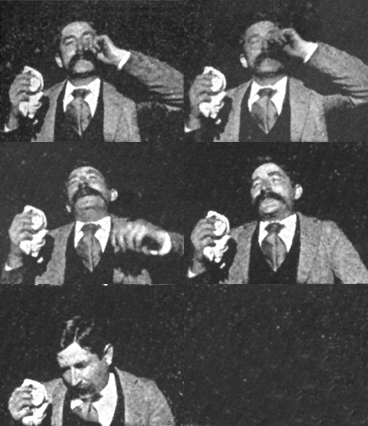
Fred Ott's Sneeze (film by William K.L. Dickson for the Edison laboratory) 1894 Wikimedia Commons
Fred Ott’s Sneeze (film by William K.L. Dickson for the Edison laboratory)
1894
Wikimedia Commons

The Brooklyn Daily 12th March 1853


(abridged)

It’s curious how one snuff-taker will pick out another.  Place two snuff takers in the most crowded room, and before ten minutes are over they will have found out each other and be in earnest conversation together.

A snuff-box is an opening for conversation between two persons, who, without it, would not probably have exchanged a single word.  The English, who are generally so punctilious about introductions, cheerfully dispense with the ceremony if a stranger only advance with a snuff-box in hand.

There is a Freemasonry in snuff taking not enjoyed by the worshippers of any other social vice.  Gamblers are necessarily discontented, scowling, suspicious people.  Smokers are generally dreamers, wandering in the clouds which they themselves have blown.  Drinkers are surly, quarrelsome creatures, who fling insults and bottles about.  But snuff takers are invariably open, communicative souls, who associate with one another all over the world.

Snuff is a great leveller.

Posted in Posts and podcasts

Westward of Arran – 1882

Photo; Norma Scheibe

POEMS BY DENIS FLORENCE MAC CARTHY

DUBLIN. M. H. GILL AND SON, 50 UPPER SACKVILLE STREET

1882

(excerpt Ara of the Saints)

Westward of Arran as I sailed away;
  I saw the fairest sight eye can behold--
Rocks which, illumined by the morning's ray,
  Seemed like a glorious city built of gold.
Men moved along each sunny shining street,
  Fires seemed to blaze, and curling smoke to rise,
When lo! the city vanished, and a fleet,
  With snowy sails, rose on my ravished eyes.

Thus having sought for knowledge and for strength,
  For the unheard-of voyage that I planned,
I left these myriad isles, and turned at length
  Southward my bark, and sought my native land.
There made I all things ready, day by day,
  The wicker-boat, with ox-skins covered o'er--
Chose the good monks companions of my way,
  And waited for the wind to leave the shore.


Posted in Posts and podcasts

Croagh Patrick – 1914

Croagh Patrick Photo: Bart Horeman Wikimedia Commons
Croagh Patrick
Photo: Bart Horeman
Wikimedia Commons

CROAGH PATRICK.

Freeman’s Journal – 10th September 1914

THE GREAT ANNUAL PILGRIMAGE. OVER 15,000 PEOPLE ATTEND. (abridged)

The Croagh Patrick pilgrimage was once again convincing proof of the abiding homage of the Irish people for their National Apostle. From near and far, from every county in Ireland, and from Australia, America, South Africa and Great Britain, pious pilgrims assembled at the Holy Mountain to pay tribute of faith and devotion at St. Patrick’s venerated shrine. It is estimated that over 15,000 people ascended ‘The Reek,’ where some thirty priests celebrated the Votive Masses of the saint from seven until noon. Nearly 7000 passengers from Cork, Limerick, and the Connaught and Midland districts poured into the town from the ten special excursion trains run yesterday morning.

On Saturday three special trains brought big contingents from Dublin and intermediate stations.  Hundreds of pilgrims kept vigil on the mountain all night, undeterred by cold, blustering showers, and the bleak, shelterless mountainside. By the first faint light of dawn the thronging thousands began to wend their way to the Holy Hill. Throughout the morning an unending stream of vehicles covered the road from Westport to Murrick, the starting point of the climb. Along the roads trudged thousands more. It was certainly an inspiring and a deeply affecting spectacle. The climb is a most arduous one of some three miles, with scarcely a level foothold the whole way, but no one seemed any the worse for the journey.


Posted in Posts and podcasts

Creating Irish Crime – 1911

Photo: Hopklaver (Medicago lupulina) Creative Commons
Photo: Hopklaver (Medicago lupulina)
Flowering Shamrock
Creative Commons

North Otago Times, 13th April, 1911
CREATING IRISH CRIME

The Connaught Tribune, a leading Nationalist newspaper published at Galway recently printed, on the authority of “a reliable correspondent,” the following extraordinary story of “loyalist” methods in agitating against Home Rule;

Many of the strange and meaningless outbreaks that have recently occurred in County Galway are not the result of any land agitation at all, but the direct outcome of a sinister secret organisation financed by men who are, and have all their lives, been enemies of Ireland, and who are prepared to resort to any desperate mans to prevent this country securing Home Rule.

The statement may appear at first sight very far-fetched (says the correspondent), but I am in possession of information that leads me to believe that a certain despicable class of non-resident landlords are prepared to do all in their power, and have at their disposal unlimited funds, for the purpose of blackening the fair name of this country.

I could lay my hands on over half a dozen men in County Galway who have no visible means of subsistence and who yet always appear to have plenty of money. These men are “in the know” of everything, and it is notorious that they make frequent secret journeys to distant and secret destinations. They are nothing short of “village bums,” and yet they pose as patriots.

But, unless I am very much mistaken, they are the aiders and abettors of the treacherous enemies who are today stabbing us in the back and keeping the progress of our country back half a century by encouraging, if not actually siding in the perpetrating of these outrages that have absolutely no other meaning, and can effect no other purpose whatever except to do untold injury to the country.