Northern Star = 11th May 1912 p9 Boycotting and Police (abridged)
There has been no cattle driving in the county since July 1911 but in other reports generally the county in the direction of Athenry, Craughwell, Oranmore, Gort and Kinvara, and bordering on the County Clare, was in a deplorable state. In the great majority of cases no one was to be made amenable notwithstanding all the efforts of the police, and it would seem as if the Executive was completely paralysed in these districts.
In one of the attempted murder cases a labourer working for the Estates Commissioners was fired at and wounded at Woodberry; in another case three shots were fired from behind a wall and a man was hit; in a third a shot was fired through the window of a cottage and the greater part of the charge entered the jaw of an unfortunate man who was sitting inside; in a further a sergeant and a constable were fired at from a wood and the sergeant was wounded; and in a fifth, which occurred near Oranmore, four shots were fired at six men who were passing along the road in a car, and all but one of them were wounded.
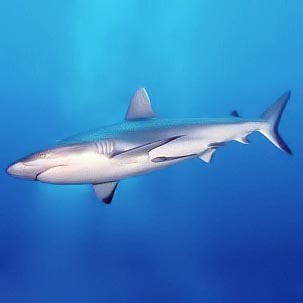
A shark, which the Cunard liner Samaria struck when 150 miles from Galway on her voyage from New York, was removed from the vessel’s bow when she arrived in Galway.
The Belfast Newsletter 11th September, 1849
cmsied 101138
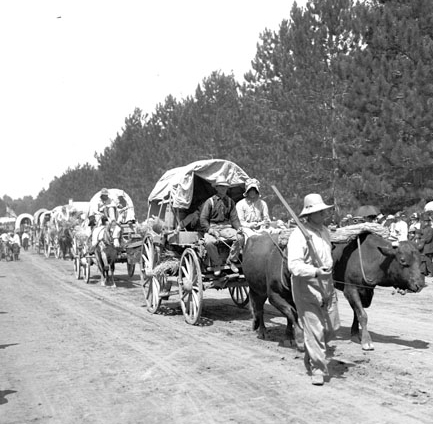
JOURNEY TO CALIFORNIA.
So now the Golden Age is come,
The Golden Country lies before us,
We leave the plough, we quit the loom,
And merrily we chant in chorus,
“The Golden Country lies before us.”
Away! Away! across the sea,
Thro’ forest vast and wild Savannah,
With fearless heart and footstep free,
And fed with joy’s celestial manna,
We cross the lone and wild Savannah.
Away! Away! our hopes burn bright,
The Golden Country lies before us,
Nor rest by day nor sleep by night,
But forward still, and chant in chorus,
“The Golden Country lies before us.”
We travel thro’ a lordly land,
A land of Dream, a realm of Faery,
Here shine white lakes, and near them stand
Tall trees of graceful shape and airy,
All mirrored in those lakes of Faery.
A marble city rises here,
A Golden Country gleams before us,
Soft lawns, delicious shades appear
Yet linger not, but chant in chorus,
“The Golden Country lies before us.”
Yes, we have left the enchanted ground
Of Dream and delicate Illusion,
But see what flowers are blooming round,
And wooing us with bright profusion.
One moment stay, ’tis no illusion.
O never care for idle flowers,
The Golden Country lies before us;
Leave poetry for boys, be ours
The truth of life; and chant in chorus,
“The Golden Country lies before us.”
We leave the Sunflower with the Sun,
The Torch-flower burning by the river,
The Trumpet-flower to wear alone
His blue and scarlet robe for ever;
We cross the plain, we ford the river.
Ah now! ah now! the mountains rise,
The Golden Country gleams before us,
The wealthy man alone is wise,
Is king of men – the chant in chorus,
“The Golden Country lies before us.”
Ah stay! behold those seven small Lakes,
Beneath enamoured woodlands shining,
Mid rustling leaves the breeze awakes,
The bright moss, with an emerald lining,
Clothes pine and cedar, rustling, shining.
The Hills, the Lakes, the Flowers are gone,
The Golden Country gleams before us,
Youth’s visions faded one by one,
The man is wise; and thus, in chorus,
We chant the Golden Land before us.
Is this your Promised Land? Is this
The wealth, the wisdom that you proffer?
Is this your sober, waking bliss?
Is this the sceptre that you offer?
Take hence the throne – the crown ye proffer.
Amid red rock and desert sand,
The Golden Country lies before us,
Famine and Hunger hand in hand,
Behind us Death, the Judgment o’er us,
The Golden Country gleams before us.
We left the still pure land of Dreams,
The fairy world of Art and Beauty,
Of Love and Faith where sunny gleams
Colour and warm the waste of Duty,
And half transfigure it with Beauty.
Ah! this is not the world we sought,
No Golden Country gleams before us;
O give us back our Lofty Thought,
Our Faith, our God, our Heaven restore us,
There gleams no Golden Land before us.
EPPI Enhanced British Parliamentary Papers on Ireland Seventy-fourth Annual Report of the Commissioners of Public Works in Ieland, with appendices for 1905-1906 MARINE WORKS ACT, 1902 2nd Ed. VII., c 24 p8 Since our last Report the only additional work taken in hands under the Marine Works Act, was that at Kinvarra, County Galway. The marine work at this place, comprising the restoration of the pier and wharf walls, together with a new storm wall and other minor improvements, was certified by Their Excellencies the Lords Justices under the Act in July 1905. It was put in hands at once under the direction of the Board’s own officers, and it has been satisfactorily completed since the close of the financial year.
Albury Banner and Wodonga Express 7th April, 1911 p36
A clever ruse adopted to trap the alleged writer of a threatening letter was described at Galway, Ireland. An American named Michael Walsh was remanded in connection with an attempt to obtain money from Count Blake. A letter was written to the count, who resides near Kinvara, threatening that if he did not leave £10 under a specified stone he would ‘get the same death as did Leech’s horse’ which was shot a fortnight ago.
Count Blake, acting on police advice, left an envelope containing two half-crowns under the stone and Walsh was caught by the police after he had removed the envelope and put it in his pocket.
The Richmond River Herald and Northern Districts Advertiser 13th July 1920 p4
(abridged)
On Sunday morning at 2 o’clock, the house of John Killeen, a labourer, living near Kinvara, was fired into. One bullet lodged in Killeen’s chest and the other fell beside him on the bed. Dr Connolly immediately was on the scene and had him removed to the County Infirmary where the bullet was extracted.
Killeen is a laborer employed by Mr Fergus O’Dea Kinvara who holds some land at Seamount from Mrs Nally, Kinvara. The division of the property has resulted in a strong agitation among the surrounding tenants. Mr O’Dea surrendered part of his land and Killeen and others took up an acre or so each. On Monday Mr Killeen walled in his portion.
By January 1848 temporary fever hospitals were established in Kinvarra and Killeenavau (G01/12/7, p28). In April 1848 the Board accepted the tender of Martin Linnane ‘for the erection of Fever sheds near Kinvarra for one hundred patients at one pound two shillings per foot lineal measurement…’ (G01/12/7, p122). The Board at this time also accepted the tender of Michael Nilan for the erection of fever sheds adjoining the Workhouse, costs divided as follows, Office sheds at £1.1.6 per foot, fever sheds including bedsteads at £1.3.6 per foot, finding and setting boilers at £1.6 pre gallon, and clothes stores £0.12.6 per foot (G01/12/7, p124).
Dublin, May 25.— The modern evils of the dance halls and the laxity of parental control formed the theme of the addresses of the Irish Hierarchy during the present season of visitation for administering Confirmatiion. Speaking in Tuam, the Most Rev. Thomas P. Gilmartin, Archbishop – of Tuam, said that laxity of parental control was too apparent, and that as a consequence too many young people attended dances, which he called nothing less than ‘orgies of sensuality held in devils’ dens.’ ‘Ireland is at present at the parting of the ways between pagan morals and a Catholic country,’ ‘ said Dr Gilmartin. ‘Combination is needed to build up the nation in the glorious traditions of the past; in this uplifting, the girls are the greatest influence.’
In Galway, the Right Rev, Thomas O’Doherty, Bishop of the United Dioceses of Galway and Kilmacduagh, said that dance halls were practically on all occasions dangerous to morals, and that ‘even the Government’ was alarmed about the abuses practiced in many of the, uncontrolled dance halls. The Bishop also denounced the evils of mixed bathing, which, he said, had led to the most ‘shameful thing in the history of mankind,’ the evil of beauty competitions. He was pleased to say that attempts to introduce mixed bathing in Galway had been, unsuccessful. The Right Rev. Patrick Collier, Bishop of.Ossory, speaking at Callan, urged parents to renew control, which he said has fallen to a low level in the last 15 years. Religion had suffered, he said, through the weakening of the family and the breakdown of parental control.
First registered postage stamp of Victoria, Australia 1 shilling, 1855 Wikipedia.org1861
The Argus (Melbourne) 17th October, 1861 p1
ELLEN GALVIN, late of Kinvarra, County Galway, Ireland – your sister Bridget is anxious to hear from you. Inquire Sergeant Johnston, William Street Police Barracks, Melbourne. Also Mary Scanlon, late of Kinvarra, to inquire for her niece at same place.
The Sydney Morning Herald 25th October, 1849 page 3
GO TO IRELAND.
(From the Times, June 15. – abridged)
A SEASON comes in every year when English- men are converted into a nation of tourists.
The high-pressure Parliamentary, professional, and commercial occupation is taken off, and the enjoyment of the holiday-making is in proportion to the irksomeness of the previous confinement. We are a good deal laughed at by foreigners for our roving propensities—they are never at the pains to consider the true explanation of the fact. It is because we work so hard that, when we find an opportunity, we travel so fast and so far. We are but changing our occupation after all, and making a business of our amusement.
An English traveller does his work as conscientiously as the most trustworthy bagman. He purchases one of Mr. Murray’s handbooks for a particular district, and verifies the indications it contains. He checks off the mountains, ruins, and galleries, and is very careful in communicating to Mr. Murray any information he may practically glean as to the qualities of inns and the peculiarity of diet. ” Tourism” is, in fact, a duty of annual recurrence, and must be discharged.
Ballybranigan EJO’D
This year, unfortunately, the continent is sealed to pleasure-seekers. To which of the old remembered spots shall a tourist convey himself and his family? To be sure, if he has a taste for Dutch pictures there is the Hague, and the flat plains of the peaceful lHollanders. Between this and Turkey a traveller must make his election if he desire to travel in continental parts. In Paris a man’a dressing-case and the bonnet-boxes of his helpmate might at any moment be converted into the topmost ornaments of a tasty barricade. If a summer party should try the Rhine, this is but another word for offering themselves as targets to the Trans Rhenane marksmen. A corpulent merchant or a dust conveyancer who should adventure his person at Baden would, as a matter of course, in twenty-four hours find his head decorated with a gaily-plumed hat, and himself marching under the greenwood tree to various Republican airs of an exciting character. Prussia won’t do. Saxony with its beautiful capital is still worse. Who would willingly try the Danube and Austria ? The Italian peninsula is out of the question. From desecrated Venice to that city which has been so rashly styled Eternal, and thence to Naples, all is trouble, disorder, or actual warfare. For this year the Continent is hermetically sealed to all but the most adventurous and irresponsible tourists.
We are so far happy in the British isles, that it is rather an advantage to those amongst us who love beautiful scenery for its own sake to be turned back upon our own country. The impulse to “take a run upon the continent” when we have a month to spare is too strong to contend against. Now, whether we will or no, we must fall back upon our own resources. There are the Scotch Highlands and the English lakes; there are North and South Wales-Snowden and the Vale of Festiniog ; Chepstow and the Wye ; there is Devonshire with the Dart and the Exe ; there are the southern counties with all their beautiful home scenery. All these points are more or less visited by all wanderers.
IRELAND
There is one portion of the British isles, however, which, as far as beauty and variety of scenery are concerned, yields to no other, but yet remains comparatively unknown. How few are the persons who, except for business purposes, have visited the southern and western districts of Ireland? One occasionally meets a stray sportsman who has gone salmon-fishing in the Shannon, or spent a season in Connemara, but these are rare exceptions to the rule.
Ireland, by mere tourists, not being natives of the country, is rather less frequented than the Spanish Peninsula, and yet it would be easy to point out in it districts which, once seen, would hang in the recollection for ever as spectacles of natural beauty. There is the Bay of Dublin; nearly the whole of the county of Wicklow; the counties of Waterford and Cork; Kerry with the Killarney Lakes; the South Riding of Tipperary with the Golden Vale; portions of Limerick; Clare with the Mohir Cliffs and its fine coast scenery; Galway with its magnificent bay; Connemera with the Killeries, and districts of Mayo,
If a tourist should visit the spots we have just indicated he would return with the conviction, that beautiful as continental scenery may be, there are points in Ireland which may stand competition with the show districts of any other country.
In the advertising columns of The Times of this day will be found an advertisement to which we wish to give every support in our power. An agreement has been come to between the London and North-Western Railway Company, the Chester and Holyhead Railway Company, and the Great Southern and Western Railway Company, by which tourists can be transported from London to Killarney and back for £6 in the first, and £4 in the second class.
They will have an opportunity given them of visiting the Cove of Cork and the beautiful scenery of the south of Ireland. Other advantages are offered, particulars of which will be found in the advertisement. There is no way in which a fortnight could be more profitably or ” enjoyably” spent than in such a trip; but, independently of this, we wish to recommend the scheme to public attention for other considerations.



 The Burren and Beyond